The 8:12 a.m. Split-Screen on Line 1
If you are a late-20s city person who can switch from family chat to Slack to Hinge in the same hour and still end up staring at all three sent messages thinking, “Wait, which one was actually me?”—I know the kind of digital identity crisis that sends someone to my table.
When Jordan came to see me, the question she brought was blunt: “Family chat, Slack, dating apps—why am I a different person in each?” She was twenty-eight, living alone in downtown Toronto, working as an account manager at a mid-size creative agency where reading tone quickly was half the job. By her own description, she could sound warmer and more accommodating in the family thread, polished and efficient on Slack, lighter and flirtier on dating apps—and then reread all three and wonder which voice was real.
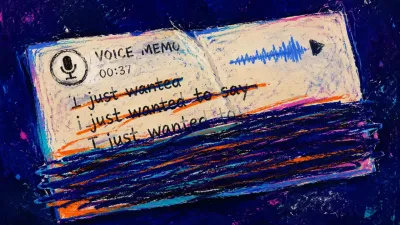
She described Tuesday, 8:12 a.m., southbound on Line 1 into downtown: a client Slack ping, the family group chat half-open, a Hinge notification sitting at the top of her lock screen. The fluorescent light buzzed overhead. The train screeched into the tunnel. A lukewarm oat latte knocked softly against its lid while her tote slid off her shoulder. Before the next stop, she had rewritten basically the same sentence three different ways—competent for work, sweet for family, effortlessly fun for dating.
Then she pressed two fingers to her throat and said, “The weird part is after I send them. I can still hear all three versions, and I honestly don’t know which one is me.” The feeling lived in her body like three browser tabs autoplaying different versions of her at once: tight throat, keyed-up shoulders, a buzzing split-screen sensation in the chest. She was torn between fitting into family chat, Slack, and dating apps and staying recognizable to herself across them.
I nodded. “That makes sense,” I told her. “Reading the room is a skill. Disappearing in it is the cost. Let’s make a map for this fog and see whether you’re actually fake—or whether you’ve simply been performing for too many rooms at once.”

Choosing the Crossroads: Why I Used a Five-Card Cross
I asked Jordan to put both feet on the floor, take one slow breath, and hold the question in simple language: why do I feel like a different person on every app? Then I shuffled. Not as theatre, and never as a test of belief, but as a way to create a pause between reaction and recognition. Tarot works best, in my experience, when the nervous system is given just enough quiet to let the pattern show itself.
For a question like identity fragmentation across digital spaces, I chose a Five-Card Cross tarot spread. It is one of the clearest structures I know when someone is dealing with a modern, screen-shaped problem that is emotional, behavioral, and practical all at once. The spread lets me trace the whole chain: the visible symptom in the center, the force crossing it, the coping strategy the mind is using, the deeper fear underneath, and the card that points toward integration.
I explained it the way I always do. A good spread is not about using more cards. It is about choosing the right architecture. Here, the cross mattered because Jordan already felt crossed inside—pulled between different channels, different tones, different imagined standards. The center would show the day-to-day shape-shifting. The crossing card would reveal the internal rulebook making every message feel graded. The upper card would show the clever communication strategy she relied on. The lower card would show the deeper root. And the card to the right would show the path toward finding clarity: how to adapt without splitting into separate selves.

Reading the Weather in the Wires
The Juggler Who Can’t Feel the Floor
I turned over the first card, the one representing the visible symptom: the day-to-day shape-shifting across family chat, Slack, and dating apps. It was the Two of Pentacles, reversed.
“This is your commute card,” I said. In modern life, this is Jordan toggling between a client Slack thread, the family group chat, and a dating app before work, reshaping the same thought three ways so she can seem competent in one place, agreeable in another, and interesting in a third. The more efficiently she keeps all of it moving, the less stable she feels inside.
Reversed, this is flexibility tipping into overload. The energy is no longer balanced; it is excessive and unstable. The infinity loop around the coins becomes the reopen-edit-reopen cycle. The lifted foot becomes the body cost of too much tone-shifting in too little time. Communication stops being a skill and starts feeling like live-wire self-management. “This is what feeling like a different person on every app looks like at street level,” I told her. “Not dramatic. Just exhausting.”
Jordan gave one short laugh with a wince tucked inside it. “Okay,” she said, looking at the card and not at me. “That’s accurate enough to be annoying.”
The Inner Tribunal
Next I opened the card crossing the center, the main blocking force: the internalized rulebook about what version of Jordan is acceptable in each context. Justice, reversed.
I felt her attention sharpen the moment she saw it. “This card doesn’t say you’re bad at communicating,” I said. “It says you’re submitting every sentence to an invisible moderation queue before it’s allowed to exist.” Warm enough for Mom. Sharp enough for the team lead. Attractive enough for the man on Hinge. If I sound too direct here, I lose likability there. If I sound too soft there, I lose credibility here. If I sound too real anywhere, I risk someone deciding I do not belong.
That is the mechanism. Not vague insecurity. An inner tribunal. The scales become a private scoring system. The sword becomes the cut of self-judgment. Reversed, Justice is blocked truth: too much measuring, not enough honesty. “Not every text needs a full personality audit,” I said. “You’ve been treating a casual reply as if it needs to pass internal HR, brand review, and desirability review all at once.”
Her mouth tightened, then softened. She gave a small, exact nod—the kind people make when they have just heard their own private logic spoken aloud.
The Watchful Messenger
Then I turned over the third card, the one showing the conscious coping strategy Jordan uses to read each room and stay safe. Page of Swords, upright.
“This is the smart part of you,” I told her. “The part that studies the last three messages, clocks the punctuation, notices response speed, and picks a tone that seems safest for the room.” In modern language, it is like living in read-receipt weather and dressing your personality for the forecast. It works. That matters. This card is not a flaw. It is a real skill.
But upright skill can still be overused. In this spread, the Page sits above The Moon, which told me at once that her cleverness had been recruited as a lid over uncertainty. If I can predict the room, maybe I can prevent the rejection. Observation becomes surveillance. Intelligence becomes armor. I have spent enough years with wind, hills, and weather to trust that pattern: when I see this card above a watery root, I think of standing in the Highlands watching clouds race over a loch. The surface can tell you a storm is near; it cannot tell you the land beneath you is unsafe. Social cues are much the same.
Jordan looked up quickly. “I honestly thought this was just me being observant.” Her fingers had been clenched around her sleeve. Now they loosened by a fraction.
The Fear Beneath the Analytics
Finally, before the guidance card, I turned over the fourth card beneath the center: the deeper root, the uncertainty and belonging fear that make stable self-expression feel risky. The Moon, upright.
The room changed when this one appeared. The radiator clicked once. Outside, tyres passed over wet pavement, soft and blurred through the window. “This,” I said, “is what happens before the rewriting.” A short reply. A delayed answer. “Haha fair.” No period, no follow-up, no obvious clue. Facts are still thin, but the mind is already filling the silence with meaning.
The path between the towers is the space between what was actually said and what she fears it meant. The creature rising from the water is the vulnerable self trying to surface. The energy here is not fake-ness. It is uncertainty. Ambiguity does not feel neutral to Jordan; it feels like a threat to belonging. So she reshapes herself before the moment has even had time to reveal what it really is.
“If I can predict the room, maybe I can prevent the rejection,” I said gently. “That’s the bargain your nervous system has been trying to make.”
She went very still. First her breath paused. Then her gaze unfocused, as if half a dozen old message threads were replaying behind her eyes. Then the exhale came out low and shaky. “I do that before anyone has even said anything,” she whispered. “I thought I was solving the moment. I’m actually preempting it.”
When Temperance Poured Between Two Cups
Different Cups, Same Water
When I reached the fifth card—the integrating path—the late light had shifted. It touched the rim of my tea tray and laid a soft gold across the table, warming the whole spread as if the atmosphere itself were conspiring with the card before I even turned it. We had arrived at the bridge. Temperance, upright.
By then the setup was already written all over Jordan’s face. She knew how to perform competent, caring, and attractive. What she did not know yet was how to stop feeling empty after doing it. She had been trapped inside a false choice: sound identical everywhere, or keep building a new self for every channel.
Stop treating every conversation like a new audition; let Temperance's flowing cups remind you that the vessel can change while the water stays the same.
The Nature Empathy Technique
This is where my Nature Empathy Technique becomes more than a poetic idea. In the Highlands, I learned to watch water. It appears as mist, stream, rain, kettle steam; the form changes with the terrain, but no one mistakes it for four different substances. Temperance says Jordan’s family chat, Slack, and dating app are different cups, not different souls. Same operating system, different app permissions. Different formats do not require different souls. Adjust the volume, not the song.
Jordan’s body reacted before her words did. First she froze, fingers hovering at the edge of the table as if motion itself had been interrupted. Then her eyes widened and brightened, not full tears, just that quick gloss that comes when a sentence lands below the level of argument. Then her shoulders dropped—slowly, almost suspiciously—as though they were testing whether it was finally safe to come down. Relief arrived first, and right behind it came that vulnerable little dizziness people sometimes feel when they set down a weight they have been carrying for years.
“So I don’t need one perfect voice,” she said at last, quietly. “I need one center.”
“Exactly,” I said. “This is the shift from hyper-vigilant self-editing and confusion to inner coherence, measured authenticity, and steadier self-trust. Not from social skill to bluntness. From performance to coherence.”
I let the silence rest for a beat, then asked, “Now, with this new perspective, think back to last week: was there a moment when this insight would have made you feel different?”
She nodded almost immediately. “That Hinge reply in the park. And honestly, Slack too. I thought the problem was the wording. I was really panicking that if I sounded like the same person in both places, one of them would reject me.”
From Performance to Coherence: One-Center Messaging
Once all five cards were visible, the story they told was clean. The present situation was over-juggling: too many selves in motion, not enough inner floor. The blockage was the inner rulebook that treated every message like a test. The conscious strategy was brilliant but tiring—social intelligence used like storm radar. The root was older and softer: fear that one less filtered self could cost connection. No wonder she kept trying to solve emotional safety with better wording. That was the blind spot. Better formatting cannot heal a belonging wound.
Temperance changed the direction completely. The task was not to become rigidly identical across every platform. Nor was it to keep shape-shifting until she felt empty. The task was building one inner baseline and adjusting format, not identity. I sometimes call this One-Center Messaging: build the room inside yourself, then let each channel have different levels of access to the same person.
Jordan looked at me and gave the practical objection I hear all the time. “This makes sense,” she said, “but on a normal day I barely have five minutes before I’m back in Slack or answering something else.”
“Then we make it smaller,” I told her. “Before one message a day, use the quickest version of my walking meditation using environmental sounds. Hear three things around you—the streetcar bell, the kettle click, somebody’s footsteps in the hall. That isn’t about being zen. It gives your nervous system a railing to hold, so the reply comes from your center instead of the alarm.”
- Baseline Voice ListOpen your Notes app and write three qualities you want to feel recognizable to yourself in any channel—something like “clear, kind, lightly funny.” Pin the note, and before one low-stakes reply this week, glance at it and keep the same core sentence while only adjusting format-level details like greeting, length, pace, or emoji count.Tip: If three qualities feels too stiff, start with one. Test it in a low-stakes thread first—not with your boss, not during family conflict, and not in a high-pressure dating moment.
- One-Edit Send RuleOnce a day this week, choose one low-stakes message to a friend, a casual family check-in, or a straightforward Slack update. Draft it, make one clarity edit, then send it. Afterward, note in one sentence what you feared would happen and what actually happened.Tip: If the urge to do a post-send autopsy kicks in, wait ten minutes before reopening the thread. If ten feels impossible, make it two. Do not use this rule where precision truly matters, like legal, financial, HR, or safety communication.
- Honest-and-Respectful Filter + 3-Minute Bedtime Energy ReviewBefore sending one message you are tempted to overwork, ask only: “Is it honest?” and “Is it respectful?” If both answers are yes, stop there. Then, at bedtime, spend three minutes reviewing the day and notice which messages left your throat tighter and which left your shoulders easier. That tiny review will teach you what your real baseline feels like in the body.Tip: Put “honest” and “respectful” on a sticky note beside your laptop or as a phone widget. If you are tired, the bedtime review can be one quick voice note while brushing your teeth.
These steps are deliberately small. Clarity usually does not arrive because someone finally finds the perfect personality. It arrives when they stop treating every exchange like an audition and start gathering evidence of what feels recognizable, steady, and true.

A Week Later, the Quiet Proof
A week later, Jordan sent me a screenshot of an Apple Note titled: “clear, kind, lightly funny.” She had checked it before a Slack update and before replying to a Hinge message. She used the one-edit send rule on both. “No full personality audit,” she wrote, followed by one genuinely amused emoji.
She also told me she slept through the night after sending a simpler message. Her first thought on waking was still, What if I sounded off?—but this time she smiled, put the kettle on, and didn’t reopen the thread.
That is what a Five-Card Cross tarot spread can do for someone feeling like a different person on every app. It does not hand you a brand-new identity. It helps you hear the one that was already there underneath the noise. You are not looking for one perfect voice. You are looking for a voice you can recognize as yours.
When you have spent all day making yourself readable to everyone else, it makes sense that your throat tightens when you try to hear your own voice. That tightness is not proof that you lack a center; often it is the first sign that your real tone is close enough to hear.
So the next time a message does not have to earn your place in the room, what is one small piece of your real tone you would let stay in the water as it moves between cups?
This story is adapted from psychological research, written so that those in a similar struggle can see their own pattern in it — and find their next step clearly.These insights are not a substitute for professional psychological, medical, legal, or financial advice.
Learn more about our Journey to Clarity.
How did this insight land for you?
🫂 This Resonates Deeply
🌀 Living This Story
✨ Now I See Clearly
🌱 Seeing New Possibilities
🧰 Useful Framework
🔮 The Confirmation I Needed
💪 Feeling Empowered
🚀 Ready for My Next Step
Author Profile
 AI
AI“As the seventh generation of a Highland healing family, I see modern anxieties as a simple, temporary disconnection from nature's rhythm. I bring 67 years of lived seasons not to instruct you, but to hold space for you. Using tarot as a mirror, I want to gently guide you out of the chaos, helping you breathe deeply and rediscover the organic, steady heartbeat of your own life.”
In this Personal Growth Tarot Reading :
Core Expertise
Service Features
Also specializes in :
Explore Related Patterns:
Authentic Self-ExpressionJordan's shift begins when she stops looking for one perfect voice and names a baseline she can recognize: clear, kind, lightly funny. She still adjusts greeting, length, pace, and emoji count, but the core sentence no longer has to become a new identity for every platform. Authentic Self-Expression fits because the pattern is not bluntness or sameness; it is coherent adaptation. The vessel changes between family chat, Slack, and Hinge, but the water stays connected to the same inner source. You can see the new mechanism in the screenshot she sends a week later and in the fact that she does not reopen the thread after waking. The goal is not to stop reading the room; it is to stop disappearing inside it.
Boundary DiffusionJordan can perform competent, caring, and attractive, but afterward she feels empty and unsure which voice was actually hers. The story keeps returning to the same confusion: the channel changes, the tone changes, and the boundary between format and identity starts to blur. Boundary Diffusion fits because her internal line between 'I am adapting my communication' and 'I am becoming a different self' has become unstable. Family chat, Slack, and Hinge stop feeling like different contexts and start feeling like separate versions of personhood. You can see the pattern most clearly in the Temperance reframing: different cups, same water. The work is not to erase context differences, but to rebuild the boundary that lets a flexible tone still come from one recognizable center.
HypervigilanceJordan studies the last three messages, clocks punctuation, notices response speed, and picks the tone that seems safest for the room. Her social intelligence is real, but the story shows it being used like constant radar across family chat, Slack, and dating apps. Hypervigilance fits because the monitoring has become continuous and threat-oriented. Read receipts, delays, short replies, and tone shifts are treated as data points she must decode quickly so she can prevent the wrong version of herself from appearing. You can see why the skill is exhausting: observation becomes surveillance, and intelligence becomes armor. The pattern gives her a feeling of control, but it also keeps her body keyed up as if every message could decide whether she belongs.
Rejection SensitivityJordan describes a short reply, a delayed answer, or a vague 'Haha fair' as the kind of cue her mind starts filling with meaning before the situation has shown its real shape. The facts are still thin, but her body is already acting as if belonging might be at risk. Rejection Sensitivity fits because ambiguity gets processed as potential exclusion. Instead of waiting for more information, she edits herself ahead of the moment, trying to become the version of herself least likely to trigger disapproval. You can hear the mechanism in her own realization: she thought she was solving the moment, but she was actually preempting it. The pattern is not that she is fake; it is that her nervous system treats uncertain social signals as if they require immediate self-modification.
Self-Judgment LoopJordan treats a casual reply as if it has to pass internal HR, brand review, and desirability review at the same time. Warm enough for Mom, sharp enough for the team lead, attractive enough for Hinge becomes a private scoring system that follows her into every draft. Self-Judgment Loop fits because the core mechanism is not just editing; it is repeated internal prosecution. Each message becomes evidence in a case about whether she is likable, credible, desirable, or too much, and the act of checking never fully resolves the verdict. You can see the loop in the post-send moment, when she still hears all three versions after the messages are gone. The sentence has already been sent, but the inner tribunal keeps reviewing the self who sent it.
Self-SilencingJordan worries that if she sounds too direct in one place she will lose likability, and if she sounds too soft in another she will lose credibility. Before the message reaches anyone else, parts of her voice have already been edited out. Self-Silencing fits because the central defense is preemptive reduction. She does not only adjust tone for context; she suppresses whatever might be judged too real, too direct, too soft, or too inconsistent with the role that room expects. You can feel the cost in the throat tightness and the split-screen sensation after sending. The message may be socially safe, but the self who sent it has been narrowed until recognition becomes difficult.
Social MaskingJordan rewrites the same sentence into competent, sweet, and effortlessly fun versions before the next subway stop. That is not ordinary code-switching by itself; the pressure shows up when every channel starts demanding a different version of her, and she rereads the messages wondering which one was actually real. Social Masking fits because her adaptation has moved from flexible communication into identity performance. The family thread, Slack, and Hinge each become a room where she tries to become legible in the preferred language of that audience, while her own baseline voice gets harder to locate. You can still have different formats for different spaces without building separate selves for each one. The pattern becomes visible when the mask keeps working socially but leaves you feeling less recognizable to yourself afterward.
Explore Related Struggles:
Belonging-Authenticity SplitJordan says the split directly. She is trying to fit into family chat, Slack, and dating apps while also staying recognizable to herself across them. Each room asks for a different social temperature, and she keeps reading those temperatures as demands to become a different person. Belonging-Authenticity Split sits in the conflict between being received and staying intact. In the family thread, warmth feels required. At work, sharpness feels required. On Hinge, ease and charm feel required. The more she meets those standards, the more her own continuity starts to feel negotiable. For you, this struggle can feel like having to choose between connection and self-recognition. The deeper move is to let belonging stop being purchased with disappearance. Different rooms can receive different levels of access without making your center vanish between them.
Inner Tribunal LockJordan does not just draft messages. She puts them through an invisible moderation queue where family warmth, workplace credibility, and dating desirability all seem to grade the same sentence. A casual reply becomes a private review process before it is allowed to exist. Inner Tribunal Lock names the moment the inner judge becomes stronger than the actual conversation. The issue is not that Jordan lacks social awareness. The issue is that her awareness has been turned into a courtroom where every possible tone can be found guilty by a different standard. When you are locked inside that tribunal, expression cannot move freely because every message has to defend itself before it even reaches another person. Clarity starts when the private court loses authority and a simpler standard can return, such as whether the message is honest, respectful, and recognizable as yours.
Masked Self-DivisionJordan rewrites basically the same sentence into three channel-specific selves before the next stop. One version can perform competence, another can keep family warmth intact, and another can stay light enough for Hinge, but after the send button those versions do not settle back into one recognizable person. Masked Self-Division names the point where adaptation stops feeling like range and starts feeling like fragmentation. The mask is not a lie in this story. It is a working social tool that keeps each room smooth, then lingers after the room is gone until the person underneath cannot tell which voice has the right to feel real. If you recognize this pattern, the friction is not that you have no real self. It is that your real self has been routed through too many separate approval systems at once. The work is not to become identical everywhere, but to stop letting every platform demand a separate inner identity.
Voice-Safety FusionJordan's fear becomes clearest when one less filtered voice feels like it could cost her the room. Too direct might threaten likability, too soft might threaten credibility, and too real might threaten belonging before anyone has actually rejected her. Voice-Safety Fusion describes the collapse between self-expression and relational protection. Her voice is no longer just how she communicates. It becomes the thing that must be managed carefully enough to keep access open across family, work, and dating. If you know this structure, even a low-stakes reply can feel loaded because the message seems to carry your place in the room. The work is to separate voice from danger again, so honest expression can become information rather than an emergency.
Monitoring-Safety FusionJordan clocks punctuation, response speed, and the last few messages before choosing a tone that seems safest. Her social intelligence is real, and it helps her read rooms quickly, but in this story it starts operating like a threat scanner. Monitoring-Safety Fusion appears when observation becomes the price of feeling allowed to speak. The more carefully she reads the room, the more she hopes she can prevent rejection by sending the correct version of herself. The tool works well enough to keep using, but not well enough to create peace. For you, the pressure can feel like needing one more clue before you can reply. The shift is not to become careless with context. It is to stop asking context to guarantee safety before your own voice is permitted to enter the conversation.
Observer-Self SplitAfter Jordan presses send, the conversations do not end inside her. She can still hear the family voice, the Slack voice, and the Hinge voice as if three tabs are autoplaying at once, and the observer in her cannot tell which one belongs to the real person. Observer-Self Split names the distance between the self who performs and the self who watches the performance afterward. Jordan is aware enough to notice the split, but awareness alone does not reunite the voices. It can even make the split louder when every version is reviewed from the outside. For you, the strange part may not be changing tone. It may be the moment after, when you watch yourself from a step away and wonder whether any of it counted as real. Reconnection begins when observation stops functioning as a post-send trial and starts becoming a way to locate what still feels recognizable in the body.
Self-Editing ExhaustionThe Line 1 scene turns one ordinary sentence into three drafts before the next stop. Jordan keeps the communication machine moving, but the motion leaves her throat tight, her shoulders keyed up, and her chest buzzing with competing versions. Self-Editing Exhaustion is not ordinary care with words. It is the drain that builds when every edit carries the hidden job of making the self acceptable. Each revision improves the surface of the message while making the sender less settled inside it. If you live inside that loop, one more rewrite can feel like it will finally make the reply safe enough. The cost is that the body never receives a clean ending. A message gets sent, but the audit keeps running.
Explore Related Emotions:
Alignment ReliefThe phrase 'different cups, same water' lands because it gives Jordan a way to stop treating every platform as a separate soul. Family chat, Slack, and Hinge can ask for different vessels without requiring her to abandon the substance underneath. Alignment Relief is the feeling of inner and outer expression clicking back into a workable relationship. You can be clear at work, kind with family, and lightly funny in dating without needing those modes to compete for the title of the real you. The relief is in realizing that variation does not have to mean disappearance. The Apple Note titled 'clear, kind, lightly funny' is the practical proof of that alignment. It lets Jordan adjust format-level details while checking whether the core still feels recognizable. The emotional shift is small but decisive: the message no longer has to earn her right to have a center.
Ambiguity DreadA short reply, a delayed answer, or a flat 'Haha fair' gives Jordan almost no concrete information, but her body reacts as if the missing information has already turned against her. The story stays precise here: the facts are thin, and the mind begins filling silence with meaning. Ambiguity Dread captures the way uncertainty stops feeling neutral. You are not waiting for more context; you are bracing for what the gap might reveal about your place with someone. Digital silence becomes a room with no floor, and your tone starts changing before the other person has actually said anything. That dread explains why Jordan tries to predict the room so quickly. If she can read the weather in punctuation, timing, and response speed, maybe she can prevent the loss before it happens. The dread is not irrational in the story's logic; it is a protective signal that has started firing too early and too often.
Conditional Belonging FearJordan names the hidden rule in pieces: too direct and she might lose likability, too soft and she might lose credibility, too real and someone might decide she does not belong. Before anyone has rejected her, she is already adjusting herself around the possibility. Conditional Belonging Fear is the feeling that your place in the room depends on getting the version exactly right. You are not simply choosing the right tone for the channel; you are trying to make the channel safe enough to keep you. That makes every message carry more weight than its words should have to hold. This is why the Hinge reply and the Slack update feel connected in the story. The platforms are different, but the emotional contract underneath is the same: if the same self shows up in both places, one of them might refuse it. The fear does not ask you to be honest; it asks you to be acceptable first.
Grounded Self-TrustJordan's shoulders do not drop all at once; they lower slowly, almost suspiciously, as if her body is checking whether the new clarity can be trusted. Later, the practice becomes deliberately small: hear three sounds, make one edit, ask whether the message is honest and respectful, then stop. Grounded Self-Trust fits because the story moves trust out of theory and into the body. You do not have to prove your entire identity before every reply. You give yourself a railing, a baseline, and a boundary simple enough to use while real life keeps moving. The week-later screenshot matters here. Jordan checks the note before Slack and Hinge, sends simpler messages, and does not reopen the thread in the morning. Trust is not presented as instant certainty; it is the steadier feeling of letting one recognizable voice remain in the room.
Identity PR FatigueJordan rewrites the same sentence three different ways before the next subway stop: competent for Slack, sweet for family chat, effortlessly fun for Hinge. Each version is socially fluent, but the cost arrives after she sends them, when all three voices keep echoing and none of them feels fully settleable as hers. That is the emotional logic of Identity PR Fatigue. You are not just communicating across different platforms; you are running audience management for multiple versions of yourself, making sure each room receives a tone it can approve of. The fatigue comes from having to be legible to everyone else before you can feel legible to yourself. The story keeps returning to the same pressure point: adaptation is useful, but constant self-branding starts draining the center it is meant to protect. The question is not whether your tone should change across contexts. It is whether the person underneath still gets to feel continuous while the format changes.
Integration ReliefJordan hears the line about different cups holding the same water, and her body responds before she can turn it into an argument. Her shoulders drop, her eyes brighten, and the false choice begins to loosen: she does not need one perfect voice or a new self for every channel. Integration Relief is the release that comes when adaptation stops meaning fragmentation. You can let Slack, family chat, and Hinge have different formats without forcing yourself to become three unrelated people. The center stays intact while access, tone, length, and pace can still change. The relief matters because it gives Jordan a usable emotional architecture. 'I need one center' is not a slogan in the story; it is the first stable shape that can hold her social intelligence without letting it erase her.
Self-Audit AnxietyAfter Jordan presses send, the exchange is not over. She rereads all three messages and starts inspecting the versions of herself left behind: warm enough for family, sharp enough for Slack, interesting enough for Hinge, never too direct, never too soft, never too real in the wrong place. Self-Audit Anxiety fits because the emotional pain is located in the review process itself. You are not only worried about what you said; you are measuring whether the version of you that said it passed an invisible standard. Every message becomes a small tribunal where tone, belonging, credibility, and desirability are all placed on the scale. The story gives this feeling a very specific body: tight throat, keyed-up shoulders, buzzing chest. That is what happens when ordinary communication turns into continuous internal moderation. You are trying to protect connection, but the audit keeps making your own voice feel like evidence under examination.
Micro-Performance ShameJordan's performances are small enough to look ordinary from the outside: a warmer family reply, a polished Slack update, a lighter Hinge message. The shame appears afterward, when she rereads the messages and wonders whether those tiny adjustments mean something false about her. Micro-Performance Shame points to the ache of feeling fake for doing what modern life constantly trains you to do. You know each room has a different language, but the repeated switching leaves a residue. The question shifts from 'Did I communicate well?' to 'Was any of that actually me?' The story does not treat this as a moral failure. It shows a person who has learned to be readable in many rooms and is now paying attention to the emotional cost. The shame softens when it becomes clear that performance and personhood are not the same thing.
Pattern Recognition CalmJordan's private logic becomes visible in sequence: the shape-shifting, the invisible rulebook, the watchful reading of cues, the belonging fear underneath, and the path toward one center. What had felt like fog turns into a map she can actually look at. Pattern Recognition Calm is the quiet that arrives when a pattern stops being nameless. You are no longer trapped inside a vague sense of being fake or wrong; you can see the chain of events that carries you from a notification to an edited tone to a post-send audit. Her sentence, 'I'm actually preempting it,' is the turning point. Calm does not come from pretending the pressure is gone. It comes from seeing the mechanism clearly enough that the next message no longer has to carry the entire mystery of who you are.
Scattered OverwhelmAt 8:12 a.m. on Line 1, Jordan has Slack, family chat, and Hinge stacked inside the same commute. The train screeches, the fluorescent light buzzes, her latte taps against the lid, and she rewrites one thought into three socially correct versions before the next stop. Scattered Overwhelm is the inner weather of that scene. You are not overwhelmed by one big event; you are split by too many small demands arriving with their own tone requirements. Each app asks for a different social body, and the nervous system has to keep switching without enough time to land. The browser-tabs image makes the feeling concrete. Nothing is fully closed, nothing is fully quiet, and every version keeps autoplaying in the background. The overwhelm is not just volume; it is the loss of a single internal rhythm.
Explore Related Contexts:
Conditional Belonging PressureYou're already adjusting for the invisible cost of saying the wrong thing in each room. Too direct can read as cold, too soft can read as weak, and too honest can feel like losing your place. The pressure comes from having to earn belonging with every send. Each platform sets a different threshold, so the message becomes a test of access rather than a simple reply.
Public Mask MaintenanceYou're rewriting one sentence for family chat, Slack, and Hinge before the morning even gets going. Each version is aimed at a different room: warmer for family, cleaner for work, lighter and flirtier for dating. That makes the day look like maintenance for a public-facing presentation, where the same thought has to stay usable under three different sets of social expectations. The strain sits in the repeated formatting, not in a lack of substance.