Waiting to Start Your Own Life?

Define the waiting pattern, examine its related tarot cards, and follow how it appears across selected reading insights.

Deferred Life Syndrome
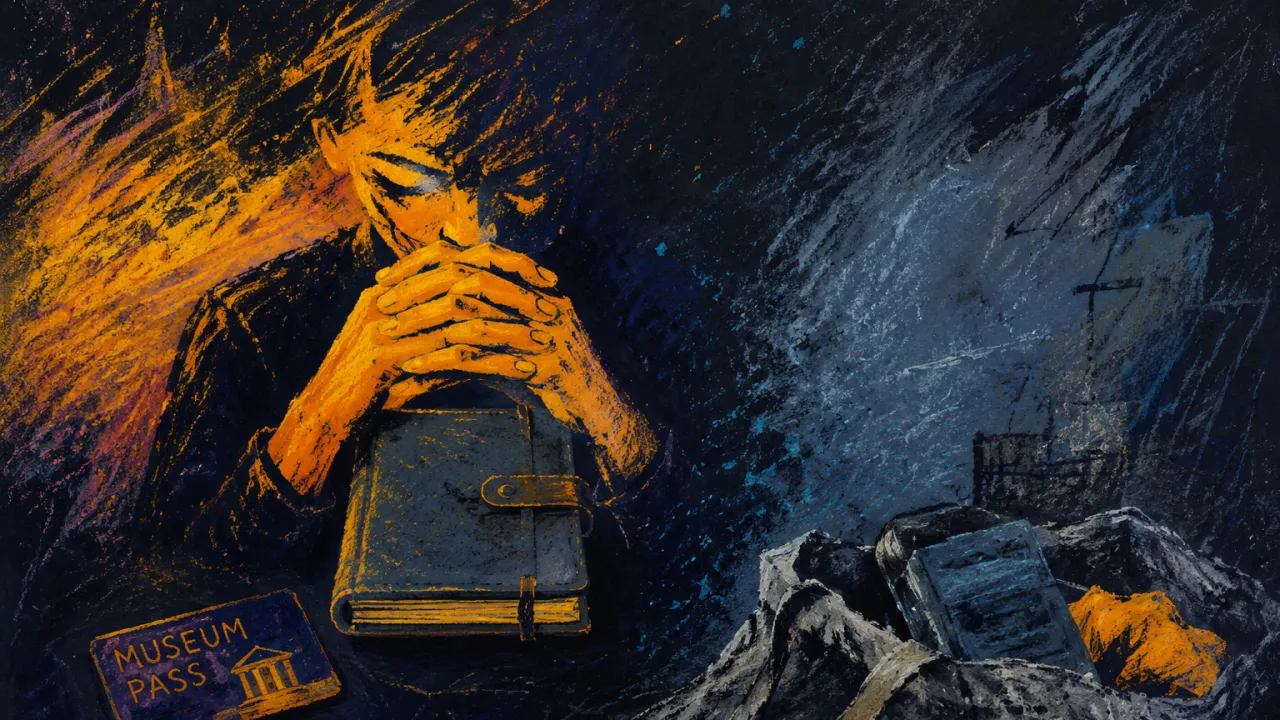
A rigid figure clasping a closed planner beside an unused museum pass and half-packed tote, amber fading into blue-grey.

What is this really?

Deferred Life Syndrome is a non-clinical label for an avoidance loop: you keep postponing trips, hobbies, rest, relationships, or using things you own until work, money, confidence, or circumstances finally feel settled. Waiting helps you avoid uncertainty, disappointment, and the exposure of choosing before you can guarantee the outcome. Yet each delay makes the future feel like the only place your life can begin, while the present becomes a holding room you keep tidying instead of inhabiting, much like the figure in the Two of Wands, holding the world while remaining behind the battlement.

Why did it happen?

When choosing too soon risked criticism, disappointment, or wasted effort, waiting for a calmer mood, a finished task, or safer timing may have helped you feel less exposed. Now the same inner pattern keeps moving the starting line; the subconscious loop can leave your shoulders raised, your chest hollow, and your mind tired from preparing for a life that never quite becomes today.

How does it feel?

  • A friend sends a link for a Saturday trip; you open your calendar, press your lips together, type "maybe after this month," then leave the message in drafts. In that pause, your shoulders may stay lifted and your breath may remain shallow even after the screen goes dark. You can let the hesitation be present without turning it into a verdict.
  • At work, you tick off a major task, minimize the window without leaning back, and open the next deadline before the check mark has settled. Afterwards, your jaw may remain set, and the expected release may never reach your chest. It is okay to notice that flatness without forcing another feeling.
  • On a quiet Sunday, you set an unused museum pass beside a half-packed tote, scan next month's calendar, and close the planner without choosing a date. As your fingertips press the cover flat, your chest may feel fluttery and oddly hollow. That unfinished moment can remain unresolved for now.
  • When someone you like asks about plans for the next few months, you smooth the edge of a napkin, glance toward the door, and answer, "Let's see when things settle down." In the seconds after, warmth may rise across your face while your hands turn cool against the table. Not having a clear answer in that moment is allowed.
  • You open a blank sketchbook, line up three pens by color, watch one more tutorial, then close the cover before making the first mark. Your fingertips may hover for a beat, followed by a low drop in your chest and a tired heaviness behind your eyes. There is room for that response to be present as it is.

Deferred Life Syndrome in Tarot Cards

Deferred Life Syndrome shows up in the reflex to keep rest, connection, and meaningful choices waiting until conditions feel settled. Your fingertips may hover for a beat above the first mark, while Jungian archetypal theory provides a framework for understanding that pause. The Tarot Cards below reflect the pattern's unconscious dynamics; here are the cards connected to this waiting loop.

The Hermit
Reversed
The solitary figure stands on a mountain holding a lantern whose light reaches only a small area of the path. Reversed, the image shows private reflection becoming withdrawal, where keeping the light contained protects you from the uncertainty of bringing an unfinished self into ordinary experience. You may keep searching inward for a final answer before allowing life to provide feedback through action and contact. The retreat feels thoughtful, but it can turn self-observation into another room where beginnings are always postponed.
Wheel of Fortune
Reversed
The great wheel turns through rising and falling figures, with symbols moving around a cycle that no single person controls. Reversed, the image highlights the defensive wish to manage timing from the outside, as though life must wait until the cycle stops changing before participation is safe. You may keep searching for a better turn of events rather than making a bounded choice within the turn that is already happening. The waiting protects against bad timing in the short term, while making every changing season feel like preparation for the next one.
The Hanged Man
Reversed
The figure hangs from the tree with the body inverted and the head calm, presenting suspension as a state that could contain insight. Reversed, the posture shows growth work becoming a delay mechanism, where another round of reflection is used to avoid the uncertainty of practicing a new way of living. You may collect realizations about the pattern while keeping the behavioral threshold untouched. The insight is not false, but it becomes inert when the future is required to feel safer before the learning can enter the present.
The Moon
Upright
The moon illuminates a winding path unevenly while a dog, a wolf, and a crayfish respond to different signals in the landscape. The layered scene mirrors anticipatory anxiety, where the mind keeps scanning for hidden problems and postpones presence until uncertainty can be eliminated. You may feel busy preparing for possible disappointment even when no immediate threat has materialized. The mental activity can look like responsibility, but it keeps attention anchored to an imagined future and leaves today's experience waiting for a clearer emotional forecast.
Judgement
Reversed
An angel raises a trumpet above figures emerging from enclosed coffins, turning the scene into a visible summons from containment toward participation. Reversed, the call is psychologically resisted, not because the possibility is absent but because answering it would require leaving the familiar preparation room and being evaluated in a new life. You may wait for a more convincing signal that you are ready to begin again. The delayed response preserves the old explanation of who you are, while the unfinished call keeps future change more comfortable than present commitment.
The World
Reversed
The central figure moves within a wreath that frames a complete cycle, surrounded by four stable witnesses. Reversed, the completed circle becomes an impossible entry requirement, showing how you can keep a new identity or practice outside the frame until every unresolved element has been corrected. You may interpret ordinary incompleteness as evidence that growth has not really started. The standard keeps the present in remediation, while the future self remains protected from the ambiguity of being unfinished and active at the same time.
Four of Cups
Upright
The figure's crossed arms and lowered gaze turn the body away from an offered cup, while the tree creates a quiet enclosure around the stillness. The posture reflects emotional gatekeeping, where feelings and available experiences are kept at a distance until they seem important, safe, or perfectly timed enough to deserve attention. You may notice the present but refuse to metabolize it, telling yourself that a fuller response can happen later. That postponement reduces immediate emotional demand, yet it also makes the inner world feel flat and disconnected from the choices available now.
Seven of Cups
Upright
The figure faces a cloud of cups containing different images, each one offering a possible identity, achievement, or life without a grounded next action. The scene captures potential hoarding, where imagining who you could become protects you from the limits and accountability of choosing one developmental path. You may keep collecting courses, plans, and possible selves while postponing the ordinary repetition that would turn one possibility into lived capability. The fantasy stays expansive because it has not yet had to meet time, fatigue, or imperfect results.
Four of Pentacles
Upright
The figure presses one pentacle against the chest, keeps two beneath the feet, and balances another on the head, sealing every coin inside a rigid bodily perimeter. You can see the defensive logic of conditional permission in that posture, where using what you own feels unsafe until money, energy, or circumstances appear permanently secure. The holding pattern turns resources into evidence that life must wait rather than material that can support life now. A hobby remains unopened, a trip remains unbooked, and ordinary pleasure is postponed because containment temporarily lowers uncertainty while quietly narrowing your present.
Seven of Pentacles
Upright
The figure pauses beside a living crop and evaluates its progress before gathering anything from it. The image mirrors a growth standard in which transformation must become visible and complete before you grant yourself permission to participate, rest, or trust that change is already happening. You may keep checking whether you have improved enough to begin the life you imagine. That measurement protects against the disappointment of trying before mastery, but it also makes development feel like a waiting period rather than something practiced inside the present.
Eight of Pentacles
Upright
The artisan focuses on one pentacle while a wall of completed pieces extends behind, making disciplined practice look almost self-contained. The visual captures self-improvement as a safety behavior, where skill-building feels more controllable than exposing an unfinished identity to real experience. You may keep polishing the capacity to live rather than using the capacity you already have. Because another improvement is always possible, the future self remains protected from the ordinary evidence that growth includes imperfection and repetition.
Two of Swords
Upright
The figure holds two swords crossed over the chest and wears a blindfold, turning an unresolved inner conflict into a physically sealed posture. The image shows how not knowing what you feel can become a reason to postpone contact with the feeling until a clean answer appears. You may keep emotions in an undecided category because naming one would create responsibility, grief, or change. The internal pause can feel controlled, but it leaves the psychological material active beneath the surface and keeps the present from being processed.
Eight of Swords
Upright
The blindfolded figure stands among swords with loose bindings and open terrain beyond, creating a visual distinction between restriction and the belief that restriction is total. The scene shows how limiting beliefs can make growth conditional on a changed environment, a different confidence level, or a future in which risk has disappeared. You may wait for the world to release you before testing what is possible within the present boundary. That protects the current self from failure, but it also prevents new evidence from challenging the belief that change must happen first.
Two of Wands
Upright
The figure holds a globe against the battlement and looks toward a broad horizon, keeping the imagined world in hand while the body remains behind stone. The visual captures future-self idealization, where the person you might become receives more psychological space than the ordinary actions available today. You may keep refining a vision of a settled, confident, or successful self and postpone the small practice that would make that identity less hypothetical. Planning feels constructive because it preserves the ideal, but it also protects the ideal from contact with limitation.
Three of Wands
Upright
The figure watches three ships travel across the water from a fixed shore, with professional expansion represented as something moving elsewhere. The image reflects a career pattern in which you wait for recognition, market conditions, or a response to return before allowing yourself to act as though the next stage has begun. You may remain focused on what an employer, industry, or opportunity will deliver while postponing the smaller actions that would make the transition real. The horizon stays promising because your own position has not yet been tested.
Ten of Wands
Upright
The worker bends under a bundle of wands that obscures the face, while the destination is close enough to see but not to inhabit. The blocked view gives overwork a defensive function, because carrying more lets you postpone the vulnerable question of whether your current career arrangement is sustainable or meaningful. You may keep promising yourself that rest, a new role, or a personal goal can begin after the next delivery. The load keeps renewing itself, and the career becomes a system where responsibility is always more urgent than living beyond it.

Deferred Life Syndrome in Tarot Card Reading Insights

For those who keep rest, connection, and meaningful choices waiting until conditions settle, others have brought the same pause into their readings and noticed what appeared in the cards. Below are Tarot Reading Insights where this waiting pattern appeared.
Psychological patterns related to Deferred Life Syndrome