When Celebration Becomes a Social Test

Explore how seasonal gatherings test inclusion, the Tarot Cards connected to that pressure, and related reading insights.

Holiday Belonging Pressure
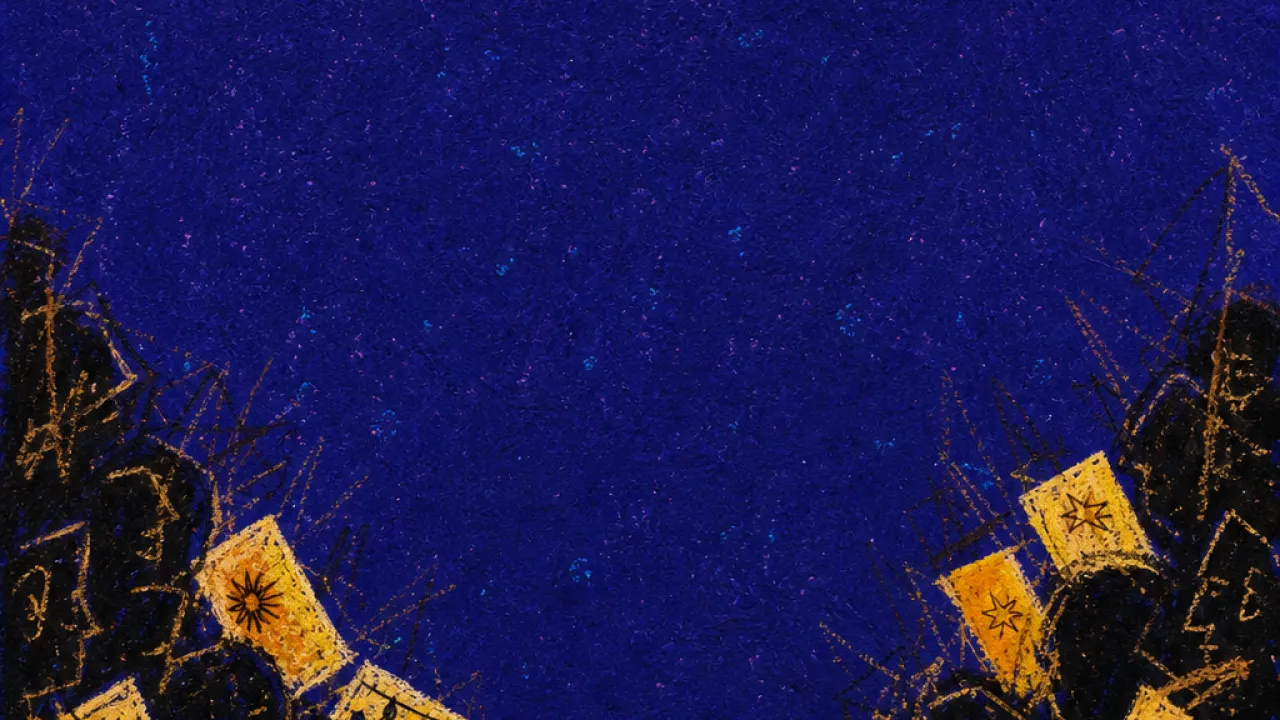
A solitary figure with shoulders drawn inward as silhouettes and invitations narrow the space beside a glowing table.

What is this situation?

Holiday Belonging Pressure — the season arrives, and suddenly every invitation, empty calendar square, travel plan, and social post seems to ask whether you belong somewhere visible. From the first office-party announcement or family group chat, plans begin to form around you: hosts collect headcounts, couples claim plus-ones, friends divide limited seats, and relatives ask where you are going, where you are staying, and who you are bringing. Each answer can be treated like a status update rather than a practical detail. Invitations carry layers you did not create, including travel costs, time-off limits, old seating patterns, and traditions with little room for change. Some invitations arrive late enough to feel like an afterthought; others never arrive, while photos from the gathering appear in your feed. When you attend, the room may expect cheerfulness, personal updates, participation in old roles, and a place in the group photo. When you decline or split your time between households, messages can turn the decision into a negotiation. Meanwhile, shop windows, ads, movies, and social feeds repeat the same crowded-table image as if connection has one approved format. Your shoulders tighten as notifications stack up, and your stomach drops when a plan changes or a casual question exposes an empty slot. By the time the date arrives, celebration has become a visible test with rules set by hosts, budgets, schedules, and established circles, much like the Five of Pentacles, where two figures move through snow while a bright stained-glass window remains above and apart from their path.

Why it's not you?

The problem is not that you are failing at the holidays; the season is being organized around a public display of access, availability, and closeness. Invitations, plus-one rules, travel costs, probing questions, and curated group photos create the pressure by making belonging appear measurable. That pressure comes from the setup, not from a personal shortcoming.

Holiday Belonging Pressure in Tarot Cards

Holiday Belonging Pressure is the seasonal setup in which invitations, plus-one rules, personal questions, and group photos make inclusion look measurable. The tightening in your shoulders as notifications stack up is one way that setup lands in the body. It is an environmental and structural dynamic, reinforced by social rituals that repeatedly sort people into visible circles. The Tarot Cards below mirror the contours of this situation without deciding what your holidays should look like.

The Hierophant
Upright
A ceremonial authority faces two followers between stone pillars, with crossed keys marking the institution's sanctioned entry point. The arrangement mirrors a family tradition governed by elders, recognised roles, and rules that participants are expected to treat as settled. Upright, the ritual provides continuity and a visible place for people already recognised by the structure. You may receive belonging through participation, but the same clarity can pressure you to accept the assigned seat, bring an approved partner, answer personal questions, or follow a format that does not account for your present life.
Reversed
A formal teacher, two kneeling followers, twin pillars, and crossed keys organise belonging around a single sanctioned authority. The image captures the inherited cognitive rule that a legitimate holiday must involve the correct table, family role, partner status, and visible participation. Reversed, that authority loses its unquestioned legitimacy, but the people beneath it do not automatically receive a supported alternative. You may recognise that the crowded-table standard is too narrow while still measuring yourself against it, because media, relatives, and peers continue to reward the old script more visibly than any self-defined format.
The Lovers
Reversed
A naked pair stands beneath an angel, separated by a mountain and framed by two different trees. The public blessing resembles the cultural ideal of the recognised couple, while the mountain captures the practical divide between partners, families, and holiday traditions. Reversed, the shared field no longer produces an aligned decision or equal recognition. You and a partner may face incompatible household expectations, restricted plus-one access, or pressure to present unity in public while one person's family, budget, or schedule quietly determines the plan.
The Hermit
Upright
A solitary traveller holds a lantern above a snow-covered path, supported by a staff and separated from any visible crowd. The image challenges the holiday equation that solitude automatically means exclusion by showing a complete, directed figure whose light remains functional outside the approved gathering. You may need to distinguish chosen quiet, temporary aloneness, and actual support deprivation rather than collapsing them into one social failure. The upright lantern makes that differentiation available, rebuilding belonging as an assessable relationship to support and place rather than a headcount captured in one seasonal photograph.
Reversed
A lone figure stands on a cold summit holding a small lantern and staff, with no visible group or shelter sharing the landscape. The height and distance mirror the social isolation exposed by an empty holiday calendar while crowded rooms remain visible elsewhere. Reversed, solitude loses the protected quality of chosen withdrawal and becomes disconnection reinforced by inaccessible plans. You may want company without having a credible entry point, or decline one unsuitable invitation only to discover that the season offers few public alternatives outside the couple-and-family format.
Wheel of Fortune
Upright
A large wheel turns among rising and descending figures while four fixed witnesses occupy the card's corners. The rotation mirrors the annual return of invitations, travel questions, family scripts, and social comparison, while the stationary witnesses resemble institutions and media repeating the same approved celebration image. Upright, the cycle is moving rather than permanent, and its recurrence makes the pressure structurally predictable. You may encounter different guest lists or plans each year, but the same seasonal machinery repeatedly converts timing, access, and visible attendance into a referendum on belonging.
The Hanged Man
Reversed
A figure hangs by one ankle from living wood, with one leg free and a halo surrounding his head. The suspension resembles waiting for hosts to confirm numbers, friends to reveal plans, or relatives to finish negotiating a schedule while your own calendar remains unusable. Reversed, the halo no longer converts delay into useful perspective; the pause becomes a holding pattern controlled by other people's decisions. You may receive an invitation only after preferred guests decline, or remain unable to make alternate plans because a family answer keeps shifting, leaving the holiday timeline open for everyone except you.
Temperance
Upright
An angel transfers water between two cups while standing with one foot on land and one in water, and a path runs toward a distant opening. The image mirrors a couple blending two family systems, travel schedules, and sets of traditions without pretending that their demands are identical. You may be negotiating alternating years, divided days, or a new shared ritual under pressure from both sides. The upright exchange keeps integration possible, but the measured pour shows that a sustainable romantic holiday structure depends on proportion and mutual recognition, not on satisfying every external claim at once.
The Devil
Upright
Two figures stand chained to a raised pedestal beneath an imposing central figure, yet the loops around their necks remain visibly loose. The scene mirrors a holiday status system that binds belonging to consumption, couple presentation, mandatory cheerfulness, and public proof while making those conditions feel unavoidable. You may keep chasing invitations or visible plans because the system threatens shame whenever the chain loosens. The upright image makes both constraint and slack observable, allowing the attachment to be audited as a social contract rather than mistaken for an essential truth about what connection requires.
The Moon
Upright
A narrow path runs between two towers under moonlight while a dog and wolf react from opposite sides and a creature rises from the water. The landscape resembles the uncertainty created by vague invitations, delayed confirmations, curated social posts, and the need to infer whether a place in the group is real. You may fill missing information with comparisons or threat-heavy interpretations because the social field supplies images without reliable context. The upright moon still illuminates an actual path, allowing uncertainty to remain uncertainty while the difference between visible facts and projected holiday meaning becomes clearer.
Three of Cups
Reversed
Three friends lift their cups in a compact circle, with their faces and bodies oriented toward the shared centre. The arrangement captures the intimacy of a private friendship ritual while also showing how easily a completed trio can leave no visible place for another person. Reversed, mutual celebration hardens into clique logic, selective disclosure, or friendliness that does not extend to real access. You may participate in the everyday group chat yet discover that holiday plans were made elsewhere, revealing an inner circle that the public friendship never named.
Four of Cups
Upright
A seated figure folds his arms before three cups while a fourth cup is extended from a cloud at his side. The image closely resembles a friend invitation arriving after disappointment, overload, or ambiguity has stripped the offer of its appearance as uncomplicated connection. You may genuinely have access and still find that accepting requires returning to an old role, performing cheerfulness, or ignoring how the invitation was handled. The upright scene keeps the offered cup present, preserving choice while exposing why availability alone does not make a friendship gathering emotionally or socially neutral.
Ten of Cups
Reversed
A couple raises their arms beneath a rainbow of cups while children play beside them and a home anchors the background. The complete tableau closely resembles the family image repeated through holiday advertising, films, greeting cards, and curated posts. Reversed, the image remains culturally visible but loses credibility as a description of the actual household. You may be asked to reproduce the group photo while conflict, estrangement, split schedules, unequal partner recognition, or conditional support sits outside the frame.
Two of Pentacles
Upright
Two pentacles rotate inside one loop as the figure shifts between them and ships move across uneven water. The scene reflects divided family holidays in which two households remain active claims, each with travel demands, meal times, traditions, and an expectation of visible priority. You may become the moving infrastructure between family systems while each household experiences only the portion of time it receives. The upright loop shows that a practical split can be created, but it also exposes how the labour and blame of maintaining that balance become concentrated in one person.
Three of Pentacles
Reversed
A craftsperson stands before two formally dressed figures holding plans inside a cathedral-like workspace. The scene links practical contribution, institutional recognition, and access to the people who evaluate whether someone belongs in the working structure. Reversed, that recognition channel breaks down, and the office holiday event can expose who has access to informal networks beyond the job description. You may be expected to attend and perform team closeness while invitations, table groupings, partner recognition, or after-party access reveal that your professional inclusion remains conditional.
Five of Pentacles
Upright
Two figures cross a snowy street while an illuminated window marks warmth and community above them. The spatial divide closely matches finding out that close friends gathered without you, especially when their photos make the protected inside visible from your position outside it. Upright, the pair's shared movement keeps friendship support from being reduced to one inaccessible room or invitation. You may still have reciprocal connections, but a particular friend-group structure, host decision, or resource limit has failed to provide entry, making the exclusion concrete without making it universal.
Six of Pentacles
Reversed
A standing figure weighs and distributes coins while two others wait below for what he decides to release. The unequal positions resemble a friend who controls the venue, guest list, spare bed, transport, or plus-one allocation and therefore determines who can participate. Reversed, friendship hospitality becomes discretionary and status-bearing rather than reciprocal. You may be asked to show gratitude for a late seat or conditional invitation while the friend holding the resources avoids naming how their choices rank people inside the group.
Ten of Pentacles
Reversed
An elder sits beneath a family arch while a couple, child, dogs, and accumulated pentacles occupy the same inherited space. The multigenerational setting closely resembles a traditional holiday gathering organised around lineage, property, established roles, and continuity. Reversed, the arch becomes a controlled threshold and tradition stops adapting to the people expected to sustain it. You may face fixed seating, unequal partner recognition, travel assumptions, financial disparities, or senior relatives who treat attendance as a debt owed to the family structure.
Two of Swords
Upright
A seated figure crosses two equal swords over her chest while a blindfold blocks her view of the moonlit water and divided islands behind her. The balanced blades mirror two competing holiday claims, and the separated landforms evoke households or social circles that cannot easily be combined. Upright, the stillness protects a temporary decision space even though it cannot resolve the underlying conflict. You may be asked to choose between a partner and family, two households, or an invitation and your own capacity, while both sides present their preference as the neutral or obvious answer.
Eight of Swords
Upright
A blindfolded figure stands loosely bound inside a fence of swords, with wet ground underfoot and a distant stronghold behind her. The sword enclosure resembles the reactions attached to every holiday option, while the blindfold captures how guilt, incomplete information, and unspoken rules can make the available exits difficult to recognise. Upright, her feet remain free and the sword line contains gaps, so the choice is constrained without being physically impossible. You may be able to attend, decline, split your time, or make a separate plan, yet each route carries a social cost imposed by hosts, relatives, or established circles rather than by the decision alone.
Nine of Swords
Upright
Nine swords hang in a dense row above a person sitting awake in bed, while a patterned quilt remains wrapped around the body. The overhead line resembles stacked notifications, unanswered invitations, changing plans, and anticipated questions continuing to occupy attention after the practical conversation has stopped. Upright, the figure is awake to the burden rather than numbed to it, and the bed creates a boundary where the social pressure becomes observable. You may replay whether a late invitation was sincere, forecast reactions to declining, or compare your empty calendar with other people's posts, carrying a public belonging test into private recovery time.
Four of Wands
Reversed
Four garlanded wands form a ceremonial threshold while figures raise bouquets near a distant home or castle. The scene presents homecoming, celebration, and entry into a recognised gathering as one unified image. Reversed, the decorated threshold no longer guarantees a stable welcome. You may arrive at the family home only to be placed back into an old role, negotiate divided attendance, or discover that participation depends on performing cheerfulness and accepting rules that were set before you arrived.
Five of Wands
Upright
Five people raise crossing staffs in the same crowded space, with no shared direction or stable centre. The scene resembles limited holiday seats, overlapping invitations, competing friendship claims, and several people trying to secure recognition inside plans that cannot accommodate everyone equally. You may feel required to compete for inclusion or prove that your presence should be prioritised. The upright activity keeps participation possible, but the crossing staffs reveal a zero-sum social design in which coordination has been replaced by visible contest.
Six of Wands
Reversed
A crowned rider occupies the centre of a public procession while the surrounding crowd confirms his visible standing. Reversed, the wreath no longer provides stable recognition, echoing the internal crash that follows comparing an empty calendar with other people's crowded holiday feeds. You may convert invitations and group photos into a scoreboard even when those signals are curated, temporary, and controlled by external audiences. The disrupted procession reveals the hidden metric being used, making it possible to examine why public recognition has been mistaken for secure belonging.
Seven of Wands
Upright
A single figure braces on elevated ground while six staffs press upward toward his position. The image resembles a family group chat after a decline, shortened visit, separate accommodation plan, or refusal to resume the role expected at the holiday table. You may have made a practical decision and still face repeated appeals, accusations, or triangulated pressure. The upright defender retains footing and a workable position, making clear that the conflict is being generated by the family's refusal to treat your availability as a boundary rather than shared property.
Eight of Wands
Reversed
Eight staffs remain suspended over open land before reaching the settlement below. Reversed, their common direction fails to produce a clean arrival, matching late invitations, delayed confirmations, and plan changes that leave too little time to book travel or commit elsewhere. You may be told to remain flexible even while every passing day increases cost and narrows alternatives. The blocked movement makes timing power visible: hosts and established groups can delay, while the practical consequences of waiting accumulate on the person whose place is uncertain.
Ten of Wands
Upright
Ten staffs fill the carrier's arms, obscure his forward view, and bend his posture as he approaches the town. The destination is reachable, but holiday participation has been converted into a load of hosting, travel, gifts, emotional presentation, and schedule management that one body must transport. You may still complete every plan and appear reliable in every room, while the structure leaves almost no visibility or recovery capacity. The upright path preserves agency, yet it also exposes the cost of making belonging contingent on how much seasonal labour you can carry without dropping.

Holiday Belonging Pressure in Tarot Card Reading Insights

Others have brought Holiday Belonging Pressure into readings after navigating invitations, changing plans, and public displays of togetherness. The Tarot Reading Insights below present what surfaced in those readings.
Psychological Contexts Related to Holiday Belonging Pressure