A grounded look at launch pressure, matching tarot cards, and reading insights for navigating a first-release cycle.
Version 1 Release Cycle
What is this situation?
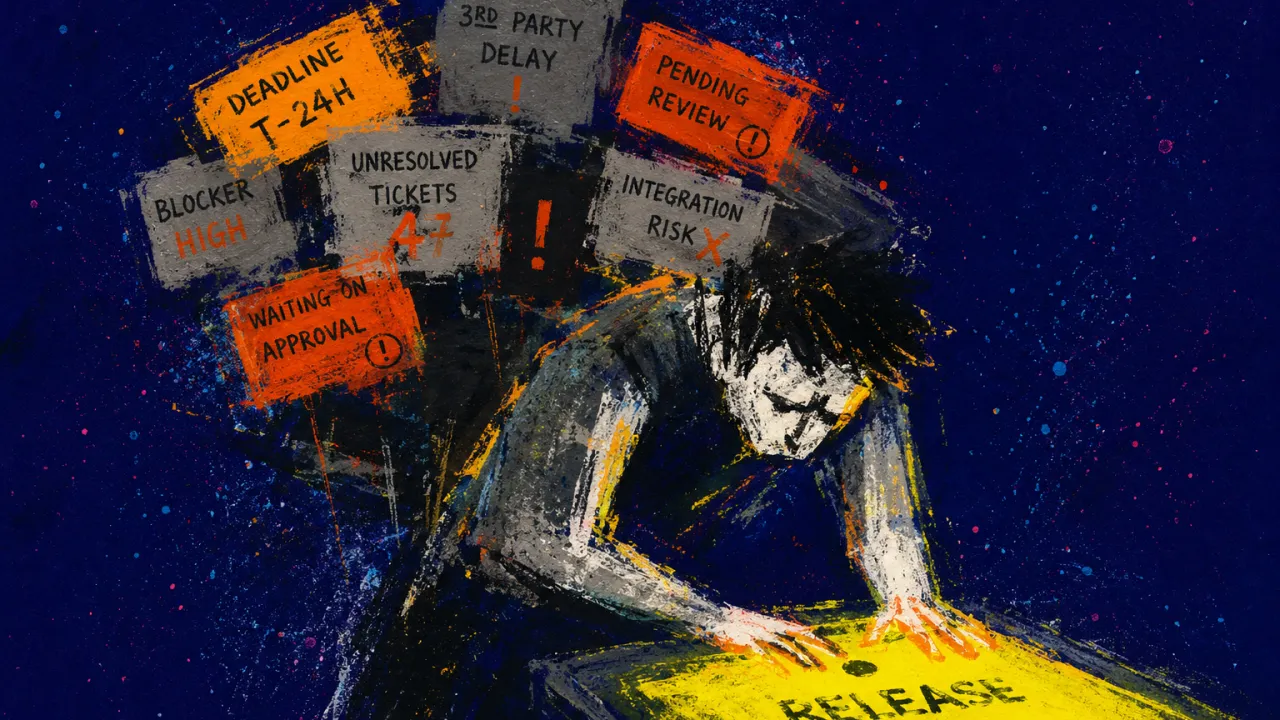
Version 1 Release Cycle — you enter it the moment the roadmap stops looking like a plan and starts behaving like a countdown. At first, it sounds manageable: one first release, one shared deadline, one product everyone agrees needs to get out the door. Then the calendar tightens, the sprint board fills with tickets that were supposed to be “small,” and every meeting turns into a negotiation between what was promised, what is broken, what can be cut, and what someone higher up still wants to add. Designers are asked to polish screens that engineering says may still change; developers are fixing bugs while product is rewriting acceptance criteria; marketing wants copy before the feature names are final; QA keeps finding edge cases that no one has time to fully discuss. The room, the Slack channel, the stand-up, the release doc — they all start to feel like different versions of the same pressure point. You are expected to stay calm, responsive, and precise while the definition of “done” keeps moving, and even after you close your laptop, your mind is still checking the dependency chain: who is blocked, what hasn't been tested, what could break in front of users. The work is not just building Version 1; it is absorbing every unfinished decision that gets pushed toward the launch date, much like the figure on the Two of Pentacles, trying to keep both coins in motion while the ships behind him rise and fall on rough water.
Why it's not you?
The issue is not that you are failing to keep up; the cycle is built around shifting deadlines, incomplete information, and last-minute dependency pressure. When “done” keeps changing and every team is waiting on every other team, the strain belongs to the release environment itself. This is a launch system asking for certainty before it has created the conditions for certainty.
Version 1 Release Cycle in Tarot Cards
Version 1 Release Cycle has a way of turning every hour into another launch dependency, where the sprint board, QA thread, stakeholder comment, and calendar invite all seem to press on the same narrow point. The tight chest you feel when another blocker appears five minutes before sign-off belongs to an environmental, structural dynamic, not to a personal lack of stamina. The Tarot Cards below mirror the shape of that dynamic: the work that keeps multiplying, the trade-offs that won't stay still, and the pressure to ship something usable while the floor is still moving.
The charioteer stands above two differently coloured sphinxes without visible reins, holding a vehicle whose components must move together despite their opposing orientations. You occupy a similar delivery structure when design, engineering, product, QA, and marketing share a deadline but respond to different risks, incentives, and definitions of readiness. The city behind the chariot and the open road ahead preserve a viable route to launch. Upright control comes from visible alignment and disciplined direction, not from pretending one coordinator can personally generate every team's movement; the card makes shared vector control the central career resource.
The figure pours liquid between two cups while keeping one foot on land and one in water, making integration the physical centre of the image. Reversed, that transfer stops functioning as a stable flow: product revises criteria while engineering builds, design polishes a moving target, QA returns edge cases, and marketing waits for names that are not final. The cups still exist, but the pathway between them is obstructed by mismatched cadence and ownership. The card therefore locates the strain in the handoff system, where you are asked to create coherence after each team has already acted on a different version of the release.
The wreath surrounds a central figure while four fixed witnesses hold the corners of the scene, creating an image of publicly recognised completion. Reversed, the professional milestone remains almost visible but cannot be formally closed because product, engineering, QA, marketing, and leadership are not using the same completion criteria. The wreath is still present, so the team's work has not vanished and the release is not necessarily a failure. The blocked career structure lies in sign-off: you are asked to own an endpoint that the organisation repeatedly redefines, exposing your work to evaluation against requirements that arrived after execution.
The silhouetted figure faces seven cups displaying attractive rewards, concealed figures, risks, and status symbols. You face a similar field when each stakeholder presents a feature, polish request, fix, or launch promise as individually important while the combined set exceeds Version 1 capacity. The cups remain visible in the upright scene, so the option space can be examined rather than obeyed as one undifferentiated demand. The clouds reveal the structural problem: scope choices are being made among projections and promises before each item's dependency cost, test burden, and effect on the release date are fully grounded.
The juggler keeps two pentacles circulating through one linked loop while uneven ships move behind him. You are performing a career role built around continuous switching: translating between teams, reordering tickets, tracking blockers, and keeping stakeholder expectations moving even when none of those streams is fully stable. The upright figure retains balance and responsiveness, which makes adaptive coordination a genuine professional resource. The loop also reveals the limit of that resource: agility can manage bounded variation, but it cannot create certainty for a launch system that keeps adding new variables faster than it resolves old ones.
The craftsperson, two collaborators, and architectural plan occupy the same worksite, placing shared interpretation at the centre of production. Reversed, proximity does not produce coordination: design, engineering, product, QA, and marketing may all attend the same meetings while building from different assumptions about scope, readiness, and done. The plan remains physically present but loses its function as a shared source of truth. The blocked professional pathway is therefore collaborative rather than technical; you cannot produce one coherent Version 1 when each discipline is executing a different version of the agreement.
The worker leans on his tool beside a crop of pentacles that has grown but has not yet become a finished harvest. Reversed, the evaluation interval is compressed or denied, mirroring a Version 1 calendar that asks for shipment before testing, integration, and acceptance decisions have had enough time to mature. The visible crop proves that real work exists, but its state does not automatically establish readiness. The blocked timing path appears when the launch date is treated as evidence that the product must be done, forcing you to translate incomplete maturation into a binary go-or-no-go decision.
The artisan sits at a bench producing pentacles one after another, with completed pieces displayed beside the work still in progress. Reversed, that craft loop is disrupted by changing specifications and compressed review time; you may polish an interface, fix a bug, or test a flow only to have the underlying acceptance criteria move again. The repeated pentacles show real labour, but the pathway from repetition to reliable quality has been blocked. The release environment is consuming craftsmanship as rework while still expecting Version 1 precision, separating visible output volume from the conditions required for dependable execution.
The blindfolded figure holds two swords across the body while rocky water and a distant shore remain behind her. Reversed, the temporary balance of the crossed blades cannot hold because the decision frame itself is unstable: you are being asked to choose among shipping, fixing, cutting, or adding while acceptance criteria and dependency information continue to change. The barrier is not a lack of decisiveness. The inverted scene exposes a choice system that withholds the stable facts needed to compare options, then allows the deadline to decide by default. That blocked pathway turns prioritisation into information overload and makes every selection feel provisional.
The resting figure lies beneath three wall-mounted swords while a fourth remains within reach beside the body. Reversed, the image shows a pause whose physical setting survives but whose psychological function has been blocked; you stop typing, yet the mind continues scanning who is blocked, what is untested, and which late change could break the launch. The chamber cannot contain the swords as external objects because the release system has provided no dependable stopping rule. The card locates the inner friction at the boundary between unfinished work and protected attention, revealing how ambiguous ownership keeps operational questions active inside personal mental storage.
The bound and blindfolded figure stands inside a loose enclosure of swords while a distant structure remains visible beyond the wet ground. You may appear responsible for forward movement while being blocked by upstream approvals, unstable criteria, unavailable owners, or testing that cannot begin until another team finishes. The enclosure contains gaps and the bindings are not a permanent wall, so the upright scene preserves the possibility of mapping constraints precisely. Its realism matters: the route does not open through confidence alone; it becomes legible when the release system distinguishes actual dependencies from the totalising message that everything is blocked.
The seated figure wakes in bed beneath nine swords arranged across the dark wall, while the patterned quilt keeps the external world physically close to the body. You may leave the office or close the laptop, yet the release system remains mentally active as a sequence of blockers, untested paths, missing decisions, and possible user-facing failures. The swords are visible and countable in the upright image, which prevents the pressure from becoming an unknowable personal flaw. The card makes the pathway legible by showing that the mind is caching unresolved operational risk after the organisation has failed to contain it within working structures and working hours.
Five figures raise their wands into the same crowded space, with no shared formation separating collaboration from collision. You encounter that structure when every launch meeting brings valid but competing demands from product, design, engineering, QA, marketing, and leadership into one compressed decision arena. The conflict is visible and active in the upright scene, which means differences can still be named rather than hidden in private workarounds. The pathway remains open when competing priorities become explicit inputs to release governance; without that structure, the meeting consumes energy while the underlying ownership conflict survives unchanged.
The figure holds higher ground against six wands rising from below, defending a position while wearing mismatched footwear. You are placed in that stance when Version 1 scope has technically been set but late feature requests, polish demands, and executive additions continue to challenge the boundary from multiple directions. The elevated ground provides an upright resource: a release boundary exists and can be made visible. The mismatched shoes also show the career cost of defending it without full preparation or institutional backing, especially when the person protecting delivery capacity is not the person with final product authority.
The eight wands travel through open air in the same direction, already in motion and too far advanced to resemble a planning exercise. You experience this shift when the roadmap becomes a countdown and requests, fixes, approvals, and messages begin arriving faster than teams can fully contextualise them. The open landscape provides a visible route, so the upright momentum can support delivery when workstreams are genuinely aligned. The card also exposes the timing condition: speed is useful only when the moving pieces share a destination; otherwise, launch acceleration compresses unresolved coordination into the final window.
The bandaged figure grips one wand while eight others form a guarded line behind him. You are in the last-mile phase where earlier rounds of bugs, reversals, and scope negotiations remain present as operational memory, making every new issue look capable of reopening the whole release. The figure is tired but standing, and the boundary of wands is already built. Upright, that structure preserves a path through the final stretch by making accumulated risk visible; it does not pretend that the launch is fresh, effortless, or protected from another late change.
The carrier gathers all ten wands into one bundle, taking responsibility for a load so dense that it blocks his view of the road. You may be assigned a product role but end up carrying status reconciliation, dependency chasing, risk translation, missing approvals, and the emotional labour of keeping the launch calm. The town ahead shows that completion remains possible, giving the upright burden a finite destination rather than a permanent identity. The image still exposes a career structure in which concentrated responsibility narrows strategic visibility and makes one worker's capacity the unofficial contingency plan for the release.
No cards available for this filter.
Version 1 Release Cycle in Tarot Card Reading Insights
When you're inside a Version 1 Release Cycle, other people have brought the same launch pressure, last-minute blockers, and unfinished decisions into readings. The insights below shift from the cards themselves into what surfaced when this kind of release environment was part of the question. Tarot Reading Insights from sessions shaped by this cycle.