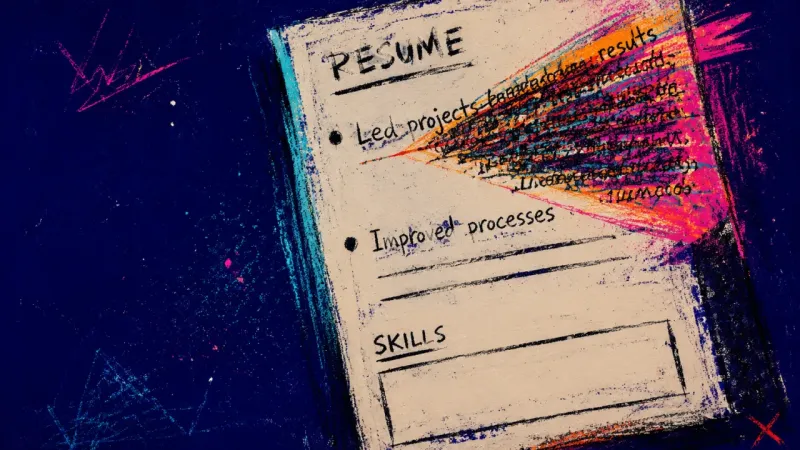
Finding Clarity in the 9:46 p.m. Resume Tab
You’re an early-career professional in Toronto who can handle real work all day—but one half-finished resume file can trigger a full-on imposter syndrome spiral.
Jordan said it like they were admitting a weird secret, even though their eyes told me they’d been carrying it for months.
“It’s always the same,” they told me. “9:46 p.m. on a Monday. Dim laptop screen. Cursor blinking in an empty Skills section like it’s judging me. The radiator clicks. My phone buzzes with a LinkedIn notification. And my jaw tightens because the page looks… thin.”
As they spoke, I watched their hand drift to their face—thumb pressed against the hinge of their jaw, like they were trying to physically keep the thoughts from spilling out.
“I want change,” Jordan said, voice a little sharper on the last word, “but I don’t want to be seen trying. And the second I open the doc, it’s like… my whole career can be judged in ten seconds.”
There’s a particular flavor to shame when it’s wrapped around something practical. It doesn’t announce itself. It tightens your chest like a drawstring. It makes the simplest task feel like you’re walking into a spotlight with no script.
I leaned forward across my little café table, the one by the window where the morning light hits the worn wood. “We’re not going to treat this like a character flaw,” I said. “We’re going to treat it like a pattern—something we can see clearly, name clearly, and work with.”
I let the sentence land, then softened my voice. “If your half-finished resume turns into a courtroom in your head, that’s not because you’re lazy. It’s because your nervous system thinks ‘visibility’ equals ‘danger.’ Our journey today is about finding clarity—enough clarity to take one next step without waiting to feel fearless.”

Choosing the Compass: The Transformation Path Grid (6) Tarot Spread
I slid a small tray between us—two demitasse cups and my well-worn tarot deck. The café wasn’t open yet, but the street already smelled like coffee; the kind of smell that makes a whole block feel more awake than it is.
“Before we read anything,” I said, “take one slow breath. Not to be mystical—just to help your brain stop sprinting. We’re going to ask one focused question: Why does my half-finished resume trigger imposter syndrome—and what’s the next step?”
I shuffled slowly, the way I do between pulling a perfect shot and wiping down the counter: steady hands, no drama. The goal is not to summon fate. The goal is to give your mind a structure when it’s been stuck in a loop.
“Today, we’ll use a spread I designed for moments exactly like this,” I told them. “It’s called the Transformation Path Grid (6) · Context Edition.”
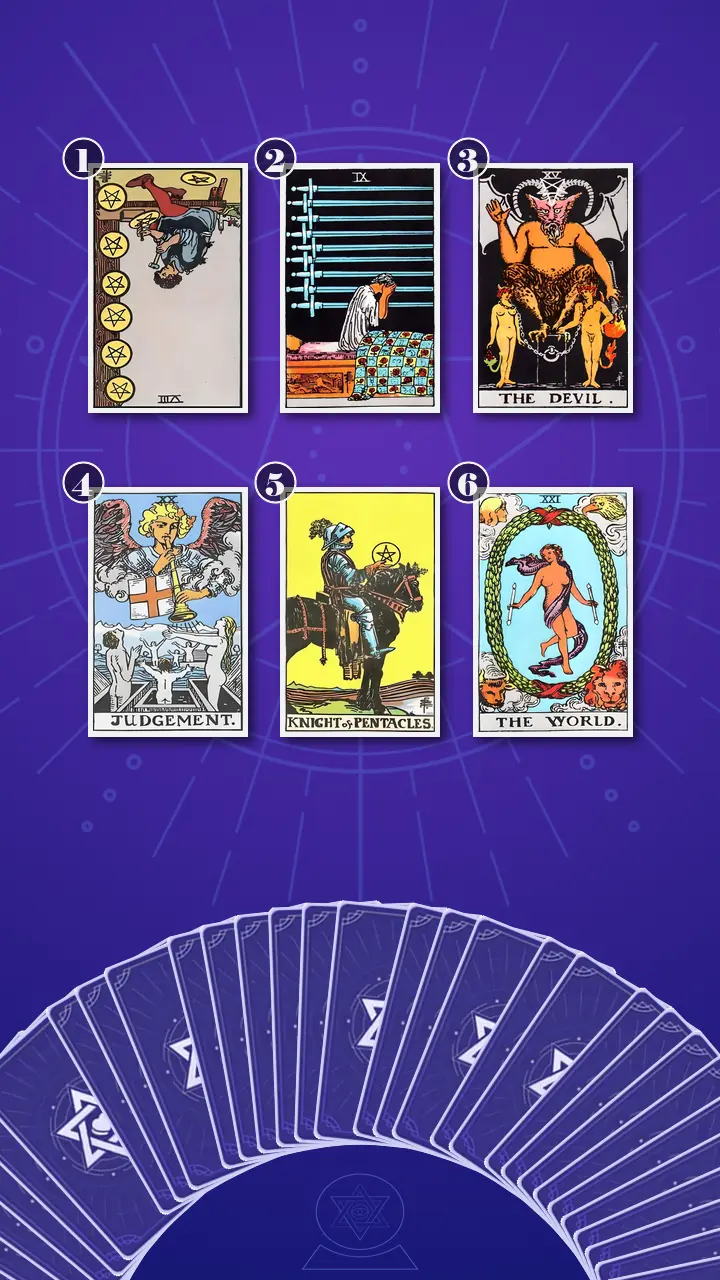
To you, reading along: this is the kind of tarot spread for resume anxiety and imposter syndrome that works because it behaves like a workflow. It’s a 2x3 grid you read left-to-right like a build plan: Present, Blockage, Root on the top row—then Catalyst, Action, Integration on the bottom row. We diagnose what’s happening, name why it keeps happening, and then translate insight into a grounded next step. No vague reassurance. Just a map.
I tapped two spots as I explained. “This first card will show the surface loop—what you do the moment you open the resume. This second card will pinpoint the real-time blockage—what spikes the spiral. And the fourth card is our pivot: the perspective shift that turns evaluation into growth.”
Reading the Map: When an Earth Task Gets Hijacked by Air Fear
Position 1: The safety move you make the moment you open the file
I turned over the first card. “Now we’re looking at the card that represents the surface symptom: the specific, observable ‘half-finished resume’ behavior loop in the present.”
Eight of Pentacles, reversed.
“This is the craftsman card,” I said, tracing the edge of the image with my fingertip. “Workbench. Repetition. Skill. And reversed, it’s not that you’re not working—it’s that your work isn’t turning into a finished artifact.”
I put it into Jordan’s real life, exactly where it lives: “It’s 9:30 p.m. and you’re at your desk in Toronto with your resume open. You spend 40 minutes tweaking spacing, swapping templates, and rewriting the first two bullets to sound ‘more senior’—but the sections that would actually prove your impact stay blank. You feel busy, yet weirdly stuck, like the work doesn’t count unless it looks flawless.”
I watched Jordan’s mouth pull into a quick, bitter little smile—half laugh, half wince.
“That’s… wow,” they said, letting out a short breath that wasn’t quite relief. “That’s too accurate. Even a little cruel.”
“I know,” I said gently. “And notice what that reaction tells us. You’re not failing at effort. You’re using effort as a shield. The reversed energy here is blocked Earth: the tangible task of writing proof gets replaced by ‘craft’ that never has to risk being seen.”
I leaned back. “If it has to be perfect to be shared, it will stay private forever.”
Position 2: The real-time blocker that spikes imposter syndrome
I turned over the next card. “Now we’re looking at the card that represents the primary blockage: what specifically spikes imposter syndrome and stops completion in real time.”
Nine of Swords, upright.
The café was quiet enough that I could hear the refrigerator hum behind the bar. That low, steady noise felt like the card: a dark room where the mind gets loud.
“This,” I said, “is the 1 a.m. mock trial.”
And I didn’t say it like a metaphor. I said it like an observation. “It’s after midnight and you’re in bed, laptop open, rereading one bullet like it’s evidence in court. Your chest is tight, your breathing is shallow, and you can practically hear an imaginary recruiter thinking, ‘They’re not qualified.’ Instead of writing the next bullet, you keep re-reading and re-phrasing to prevent a rejection that hasn’t even happened.”
I paused. “You’re not stuck on formatting—you’re stuck on exposure.”
Jordan swallowed, the kind of tight swallow that moves the whole throat. Their eyes flicked down to the card and then away, like it had called them out by name.
“Here’s the hidden step,” I said, keeping my tone clean and non-judgmental. “You’re not editing a document. You’re pre-writing the rejection email in your head.”
I asked the question that breaks Nine of Swords open: “If you had to write the exact sentence you fear a recruiter would conclude about you from this draft—what would it be, word for word?”
Jordan’s fingers clenched, then released. “Probably… ‘This person has nothing real.’”
“Good,” I said, and I meant it. “Not good that you fear it—good that it’s visible. Air fear loves fog. The moment you name the sentence, it loses some power.”
Position 3: The deeper chain underneath the spiral
I turned over the third card. “Now we’re looking at the card that represents the deep root: the underlying belief attachment driving the shame-and-comparison response to the resume.”
The Devil, upright.
Jordan’s shoulders rose a fraction. The Devil can feel like an insult if you read it literally. I never do.
“This isn’t ‘you’re bad,’” I said immediately. “This is ‘you’re bound.’ And the detail most people miss is the most important: the chains are loose.”
I translated it into the behaviors that look normal on the surface: “You catch yourself writing your resume like it’s a confession you have to defend—softening claims, over-explaining, trying to pre-empt every possible critique. You refresh LinkedIn for comparison, then edit again so you won’t feel ‘found out.’ The trap isn’t your skills; it’s how tightly you’ve tied being employable to being worthy.”
I kept my voice warm, because shame already thinks it deserves punishment. “When did ‘employable’ start meaning ‘worthy’?” I asked.
Jordan stared at the card, then at their hands. Their expression softened, like something unclenched behind their eyes.
“I don’t know,” they said quietly. “But it feels… true. Like if I don’t present it flawlessly, I’m not allowed to apply.”
“That’s The Devil as the Binder,” I said. “It tells you you’ll be safe if you’re impressive. But the cost is you never get to be real. And you never get feedback, because you never ship.”
I let the café’s coffee smell do what it does—grounding, ordinary, human. “A resume is a draftable artifact, not proof of your worth,” I said, and I watched Jordan’s shoulders drop a millimeter. Not solved. Just less alone.
When Judgement Spoke: The Courtroom-to-Call Reframe
Position 4: The catalyst shift that unlocks movement
Before I turned the fourth card, I felt the room go still in that particular way it does right before the espresso machine hits the right pressure—quiet, then ready.
“Now we’re looking at the card that represents the catalyst shift: the perspective change that loosens the pattern and reorients evaluation into growth,” I said. “This is the bridge.”
Judgement, upright.
The trumpet on the card looked almost loud against the soft café light.
“In modern life,” I told Jordan, “this is the moment you stop asking, ‘Am I good enough to apply?’ and you ask, ‘What’s the next role that would help me grow, and what evidence do I already have?’ You open an email and type: ‘Resume draft—could you review 3 bullets for clarity?’ It’s small. It’s bounded. It turns imagined judgment into real feedback.”
I saw Jordan’s face tighten for a second—like they wanted the relief without the risk.
Setup (the stuck moment):Jordan had been treating the resume like a final verdict. Every blank section felt like proof. Every bullet felt like it had to represent their entire career. They were waiting to feel qualified before writing—so the act of writing became a test they couldn’t pass without perfect confidence.
Delivery (the sentence that changes the room):
Stop treating the resume as a courtroom and start treating it as a trumpet call—respond with one honest draft and let it evolve.
I didn’t rush past the silence that followed. I let it echo the way a café does when you’ve just turned off the music and all that’s left is the hum of the building.
Reinforcement (what it looks like in the body, in real time): Jordan’s breath froze for a half beat—like they’d been bracing for impact. Their eyes lost focus, not in distraction, but in that strange way people look when they’re replaying a memory at double speed. Then their shoulders dropped, slow and involuntary, as if their body understood the message before their mind signed off on it. Their jaw loosened a fraction. They pressed their tongue to the back of their teeth, blinked hard once, and let out a visible exhale that made their whole chest soften.
“But if it’s a call…” they said, voice rougher than before, “then it doesn’t mean I was wrong about everything, right? It just means I’ve been… scared.”
“Exactly,” I said. “Judgement isn’t punishment. It’s recognition. It’s answering without needing a guarantee.”
And this is where I brought in one of my café-born tools—my own way of making timing feel tangible. “I use something I call Sacred Timing,” I told them. “In coffee, there’s a peak flavor window. If you wait too long for the ‘perfect moment,’ the shot goes flat. Your resume has a peak window too—not for perfection, for response. We’re going to use a tiny window so your nervous system doesn’t have time to put you on trial.”
“Here’s the practice,” I said, keeping it simple enough to be doable on a Tuesday night: “Set a 7-minute timer. Open your resume and add ONE ‘ugly-but-true’ bullet using: ‘Did X using Y to achieve Z.’ No formatting, no synonyms, no template changes. When the timer ends, stop—even if it’s imperfect. If your chest tightens or you feel yourself spiraling, close the file on purpose and write one line: ‘A draft is allowed to be awkward.’”
I met their eyes. “Now, with this ‘courtroom vs trumpet call’ lens—think back to last week. Was there a moment when you opened the file and froze, when this could have changed the next ten minutes?”
Jordan nodded, small and real. “Wednesday. I opened it, saw the blank section, and immediately started looking at Canva templates. If I’d treated it like a call… I could’ve just written one ugly bullet and been done.”
“That,” I said, “is the first step from shame-driven freeze to reality-based confidence. Not confidence as a mood. Confidence as evidence.”
Position 5: The grounded next step that actually works this week
I turned the fifth card. “Now we’re looking at the card that represents the actionable next step: the most grounded, repeatable behavior to complete and share a draft this week.”
Knight of Pentacles, upright.
“This is the anti-spiral card,” I said, and Jordan gave a tiny, surprised laugh—like they’d been waiting for permission to be boring.
“In your life, it looks like this,” I said. “You set one rule: one 25-minute session equals one completed subsection. No templates. No font tweaks. Just content. You write three ‘Did X using Y to achieve Z’ bullets, save, and stop. It feels almost boring—and that’s the point. The steadiness is what breaks the spiral.”
“Think of it like a Duolingo streak,” I added, a little wry. “Not a personality test. Process over mood.”
Jordan’s posture shifted—less curled inward, more forward. Their thumb was off their jaw now. Their hands were resting on the table like they belonged there.
Position 6: What “done” looks like when it’s not a verdict
I turned the final card. “Now we’re looking at the card that represents integration: what ‘done’ looks like internally—how to hold a coherent story without tying it to worth.”
The World, upright.
“This is completion as coherence,” I said. “Not ‘I’m perfect.’ Not ‘I’ve finished my whole career.’ Just: ‘This version holds together.’”
I gave Jordan the modern translation. “You save a dated version—‘Resume_April_v1’—and it finally reads like one connected arc instead of scattered scraps you’re apologizing for. You do a clarity pass, not a self-worth pass. Then you attach it to one application and hit submit, not because you feel invincible, but because the draft is complete enough to participate in the real world.”
Jordan stared at The World for a beat. “I like that,” they said. “A version. Not a verdict.”
The One-Page Plan: From Imposter Syndrome to Actionable Next Steps
Here’s the story your spread told, stitched into one thread: you’re doing an Earth task (a resume—proof on paper), but Air fear hijacks it (thought loops, imagined judgment). So your brain reaches for a defense that looks productive—templates, rewording, polishing—because it lets you avoid the real risk: being seen. Underneath that, The Devil shows the quiet attachment that keeps the loop alive: somewhere along the way, “employable” got fused with “worthy.”
Judgement breaks the spell by redefining evaluation. Not punishment, but response. Not “prove it,” but “try it.” Then the Knight of Pentacles takes that new meaning and turns it into a system. The World finishes it with versioning: ship v1, let real life give you data, and iterate.
Your cognitive blind spot is subtle but brutal: you’ve been assuming that feeling qualified is the prerequisite for writing. But this spread points to the opposite sequence—writing and sharing create the evidence that makes you feel more grounded.
Your transformation direction is clear: shift from treating the resume as proof of your worth to treating it as a draftable artifact that improves through small submissions and feedback.
I slid a napkin toward Jordan and wrote three moves—small enough to start, specific enough to matter. I’m writing them for you the same way.
- The 7-Minute “Ugly-but-True” Bullet (Sacred Timing)Tonight (or the next time your chest tightens at the file), set a 7-minute timer. Open your resume and add one bullet using: “Did X using Y to achieve Z.” No formatting, no synonyms, no template changes. Stop when the timer ends.If you feel the urge to “just fix the layout,” treat that as the cue you’re slipping into the courtroom. Close the doc on purpose and write one line in Notes: “A draft is allowed to be awkward.”
- No Templates Until Content Exists (72-hour rule)Put a sticky note on your laptop or a Notion banner that says: “No templates until content exists.” For the next 72 hours, you are not allowed to touch fonts, margins, or layouts until each role has at least 2 bullets.If you break the rule, don’t restart the whole resume. Just return to content with one “Did X using Y to achieve Z” line. Small course-corrections count.
- The 3-Bullets-for-Clarity Ask (Courtroom-to-Call)Within 48 hours, send one message to one trusted person: “Could you review 3 bullets for clarity? Not the whole resume—just these.” Copy/paste only the three bullets. That’s it.Choose someone who won’t turn it into a performance review. Your goal is data collection, not permission. If it helps, label the message: “v1 feedback.”
Before Jordan left, I offered one more small tool from my café life—because bodies remember scents faster than they remember pep talks. “If you want,” I said, “use Aroma Anchoring. Pick one smell—coffee, vanilla, even laundry detergent—and only use it during your 7-minute bullet sessions. Over a week, that scent becomes a signal: ‘We’re drafting, not proving.’”

A Week Later: The Quiet Proof
Six days later, I was wiping down the counter for closing—my usual energy-cleaning ritual, lights dimmer, chairs up, the soft clink of porcelain—when my phone buzzed.
Jordan had texted a screenshot. A file name, nothing glamorous: Resume_Jordan_Apr08_v1. Under it: three new bullets, plain language, measurable outcomes. Then one line: “Sent 3 bullets to my friend. Didn’t die. They said it was clear.”
In a second message, they added: “I still felt weird hitting send. But it wasn’t the full-body flinch. More like… nervous, but able.”
That’s what I mean when I say clarity doesn’t always arrive as certainty. Sometimes it arrives as a small loosening—jaw unclenched, chest less tight, one honest version attached to one application, submitted from a café table alone, with the city moving outside the window like it always does.
I thought of the spread as a whole: the courtroom dissolving into a call, the call turning into a routine, the routine turning into a version you can ship. A resume doesn’t have to prove you’re worthy. It just has to be clear enough to let the world respond.
When a half-finished resume makes your chest go tight, it’s not laziness—it’s the moment your brain turns a working document into a referendum on whether you’re allowed to be seen.
If your resume could be just “v1, honest and workable,” what’s one small line you’d be willing to add today—purely as a response, not a performance?
This story is adapted from psychological research, written so that those in a similar struggle can see their own pattern in it — and find their next step clearly.These insights are not a substitute for professional psychological, medical, legal, or financial advice.
Learn more about our Journey to Clarity.
How did this insight land for you?
🫂 This Resonates Deeply
🌀 Living This Story
✨ Now I See Clearly
🌱 Seeing New Possibilities
🧰 Useful Framework
🔮 The Confirmation I Needed
💪 Feeling Empowered
🚀 Ready for My Next Step
Author Profile
 AI
AI“For twenty years, I’ve listened to stories unfold over the warm aroma of coffee. I don’t believe life’s complexities always require grand theories to be solved; often, we just need a safe place to tidy up our reality. I don’t offer high-minded preaching—just grounded, heartfelt insights to help you regain your sense of control amidst the clutter of daily life.”
In this Personal Growth Tarot Reading :
Core Expertise
Service Features
Also specializes in :
Explore Related Patterns:
Visibility AvoidanceJordan's strongest sentence is not simply that the resume is unfinished; it is that they want change but do not want to be seen trying. The half-finished file becomes dangerous because it would show effort before certainty, ambition before proof, and a draft before polish. Visibility Avoidance works as a protective strategy. By keeping the resume private, Jordan avoids the immediate discomfort of being evaluated, but they also lose access to the one thing that could correct the fear: real feedback from a real person. The bounded ask for three bullets matters because it changes exposure from a total performance into a controlled experiment. For You, the repair is not to wait until visibility feels safe; it is to make visibility small enough that the nervous system can stay online while reality responds.
Visibility Shame LoopJordan says they want change, but they do not want to be seen trying. That line gives the whole resume loop its emotional logic: the pain is not only the writing task, but the visibility that comes with letting an unfinished professional self be witnessed. The shame loop starts when the resume becomes a courtroom. Every blank section feels like proof, every bullet feels like it has to represent the whole career, and the safest move becomes staying private through more polishing, more comparison, and more delay. Visibility Shame Loop fits because the pattern feeds on the exact moment before response. You are not avoiding ambition; You are avoiding the exposure of being in progress. The next step has to be small and bounded because the goal is to let visibility become survivable before it becomes confident.
Imposter SyndromeJordan can handle real work during the day, but the half-finished resume file turns that lived competence into something they suddenly cannot trust. The blank Skills section, the imagined recruiter, and the feared sentence, "This person has nothing real," show how the draft becomes a reality test for whether their achievements are legitimate. The mechanism is not laziness or lack of ability. It is a credibility threat: once the resume asks You to make competence visible, the mind starts treating ordinary gaps, rough wording, and unfinished bullets as evidence that You have been overestimating yourself. That is why Imposter Syndrome fits this story so tightly. The issue is not that Jordan has no proof; it is that the moment proof must be organized and shown, the inner audit turns hostile and makes a workable draft feel like exposure of fraud.
PerfectionismJordan spends 40 minutes adjusting spacing, swapping templates, and rewriting the first bullets to sound more senior while the sections that would actually show impact stay blank. That behavior looks like effort from the outside, but inside the story it functions as a safety ritual: if the resume is not flawless yet, it does not have to be seen yet. Perfectionism here is not high standards in a clean, useful form. It is a defense against exposure. The mind sets an impossible entry requirement, then uses the failure to meet that requirement as the reason to delay applying, asking for feedback, or finishing the draft. For You, the trap is that polish starts pretending to be readiness. The resume does not need to become a perfect verdict on Your whole career; it needs to become a clear enough version that can receive real-world response.
Mind ReadingJordan can practically hear an imaginary recruiter deciding, "They're not qualified," even though no recruiter has seen the draft. The mind supplies a verdict in advance, then treats that imagined response as if it were evidence. Mind Reading becomes the cognitive engine underneath the editing loop. Jordan rereads and rephrases to prevent a rejection that has not happened, which means the resume is being shaped around a projected critic rather than a real reader. For You, naming this matters because the feared audience is not the same as actual feedback. The next step is not to outsmart every imagined recruiter; it is to put three clear bullets in front of one grounded person so the mind has data instead of projection.
Achievement FusionJordan names the core bind when employable starts meaning worthy. From that point, the resume is no longer a practical document; it becomes a compressed self-evaluation where every unfinished line seems to say something about whether they deserve to apply. Achievement Fusion turns external markers into identity proof. The draft has to protect the self, not just communicate work history, so any imperfection feels personally dangerous rather than technically editable. For You, separating the artifact from worth is the central reframe. A resume can be incomplete, awkward, revised, and still useful; Your value does not need to be settled before the document is allowed to exist.
CatastrophizingJordan opens a half-finished resume and the mind jumps from one empty Skills section to the fear that their whole career can be judged in ten seconds. A narrow, fixable gap in a document becomes a global threat to professional legitimacy. Catastrophizing is the escalation mechanism. It compresses the future into the worst possible outcome, then makes the body respond as if that outcome is already happening: tight chest, shallow breathing, jaw locked, one bullet reread like courtroom evidence. For You, the useful audit is scale. The actual task is one bullet, one subsection, one version; the catastrophizing mind keeps calling it a final verdict. Shrinking the action is not lowering standards, it is correcting the threat level.
Comparison TrapJordan refreshes LinkedIn while working on the resume, then returns to the draft feeling more exposed and less real. Other people's polished career signals become the backdrop against which Jordan's unfinished page looks thin. Comparison Trap is not just noticing other people's progress. It is using their visible highlight reel as the standard for Your private draft, then letting that mismatch restart the cycle of editing, softening, and hiding. For You, the trap is that comparison feels like research while it is actually narrowing the mind around deficit. The resume needs evidence from Your actual work, not another round of measuring an unfinished version against someone else's finished performance.
Defensive OverexplainingJordan writes the resume like a confession they have to defend, softening claims and over-explaining before anyone has questioned them. The bullet point stops being a clean signal of impact and becomes an argument against an imagined critique. Defensive Overexplaining is a protection strategy against being misunderstood or exposed. It tries to close every possible interpretive gap in advance, but the cost is that the resume becomes heavier, less direct, and harder to finish. For You, the shift is from defense to evidence. A strong bullet does not need to apologize for existing; it needs to state what happened clearly enough for a real reader to respond.
Strategic AvoidanceJordan does not abandon the resume completely. They stay near it through templates, wording changes, spacing tweaks, and repeated rereading, which makes the avoidance harder to detect because it looks like work. Strategic Avoidance names that specific structure: staying busy around the edge of the feared action while avoiding the part that would create exposure. The mind gets the comfort of effort without the risk of completion, feedback, or submission. For You, the pattern breaks when the definition of progress becomes behavioral and concrete. One completed subsection, one ugly-but-true bullet, or one bounded feedback request gives the task an outcome that avoidance cannot easily disguise.
Explore Related Struggles:
Identity Verdict LockJordan keeps opening a half-finished resume and experiencing it as more than a document. The blank Skills section, the thin page, and the fear that a recruiter could judge the whole career in ten seconds all turn a working draft into a verdict chamber. You are not only deciding what to write next; you are carrying the pressure that every bullet might decide whether you are legitimate enough to apply. That is why the file freezes in place. A practical artifact has absorbed identity-level stakes, so unfinished content feels like evidence against the self. The lock becomes tighter when 'employable' starts meaning 'worthy.' Once those two ideas fuse, sending a draft is no longer a normal step in a job search. It becomes exposure to a verdict you are trying to survive before any real person has even responded.
Inner Tribunal LockJordan rereads one bullet like evidence in court and can already hear the imaginary recruiter concluding, 'This person has nothing real.' Before the resume has reached anyone, the mind has staged the rejection, delivered the critique, and started editing against it. You are not simply preparing for feedback; you are living inside a private trial that keeps producing new objections. Each rephrase promises safety, but it also keeps the document trapped in the courtroom where no draft can ever be ordinary enough to send. The lock holds because imagined judgment feels faster and louder than real response. Naming the feared sentence breaks part of the spell, not by denying the fear, but by moving it from fog into language where it can be examined instead of obeyed.
Visibility-Execution SplitJordan says it plainly: they want change, but they do not want to be seen trying. The resume sits exactly at that pressure point, because finishing it means the private desire for movement has to become something another person can read, assess, and respond to. You are caught between execution and exposure. The next step is not technically mysterious, but the body reacts as if the document is a spotlight. The cursor blinks, the jaw tightens, the page looks thin, and forward motion starts to feel like stepping into judgment without enough armor. This is why small visible actions carry so much weight in the story. A three-bullet feedback request works because it narrows the exposure enough for execution to restart. The struggle is not a lack of effort; it is the split between wanting the door to open and not wanting anyone to witness you reaching for it.
Perfect Readiness TrapJordan keeps waiting for the feeling of being qualified to arrive before writing the resume in a shareable form. The problem is that the very actions that could create that grounded feeling, drafting, sending three bullets, receiving clarity feedback, are delayed until confidence feels complete. You are trying to become ready in private for a process that requires contact with the real world. That makes readiness impossible to finish, because every unfinished section becomes another reason to postpone the evidence-building step. The trap loosens when the resume becomes a version rather than a verdict. A dated v1, one rough bullet, or one bounded feedback request gives you contact with reality before the mind can demand perfect certainty as the entry fee.
Performance-Worth FusionJordan describes the resume as if it must defend the whole person behind it. A blank section does not stay a blank section; it starts to feel like proof that there is not enough substance, not enough experience, not enough right to be in the room. You can handle actual work, but the resume asks you to convert that work into a public claim. The friction starts there: performance evidence is being asked to carry personal worth, so every sentence feels overburdened before it is even finished. When being employable and being worthy occupy the same space, improvement becomes hard to approach cleanly. Editing a bullet is no longer just editing a bullet. It feels like adjusting the terms under which you are allowed to be taken seriously.
Craft Ceiling LockJordan spends forty minutes adjusting spacing, swapping templates, and polishing the first two bullets while the sections that would show impact stay empty. The effort is real, but it circles the surface of the task instead of crossing into the proof that would make the resume usable. You are using craft to stay close to progress without entering the part that can be judged. The file changes, the layout improves, and the session looks productive, but the document remains unfinished because polish is absorbing energy that content needs. This is a ceiling because the same skill that usually helps you refine work becomes the limit on shipping it. The resume does not need more aesthetic control at that moment; it needs one awkward, true bullet that can survive being imperfect.
Readiness LoopJordan opens the file, sees the thin page, and freezes before the next useful sentence can appear. The body reacts first: jaw tight, chest tight, attention locked on the blank space where evidence should go. You are caught in a loop where writing requires confidence, but confidence is supposed to come from the writing. That circular demand makes the resume feel impossible at the exact moment it is only incomplete. The story breaks the loop through small timed action: one ugly-but-true bullet, one 25-minute subsection, one three-bullet clarity ask. Each move treats readiness as something built through contact, not something you must possess before you begin.
Explore Related Emotions:
Imposter Exposure FearJordan opens the resume at 9:46 p.m., sees the empty Skills section, and their jaw tightens before a single useful sentence is written. The file is half-finished, but the body responds as if the page has already become an audience. You want change, yet you do not want to be seen trying, because the visible draft feels like it can expose the gap between your real work and the polished person you think employers expect. That is the emotional logic of Imposter Exposure Fear: the fear is not just that the resume is unfinished, but that an unfinished draft will reveal you as less capable than you are. The next step begins when visibility is made smaller. One ugly-but-true bullet and one bounded clarity ask let you be seen in a controlled, factual way, so exposure becomes information rather than a total personal test.
Capability ShameThe page looks thin, the cursor blinks in the empty Skills section, and the feared sentence finally comes out: 'This person has nothing real.' A missing bullet stops feeling like missing content and starts feeling like evidence against your competence. Capability Shame lives in that collapse between a draft artifact and a verdict on your worth. You can handle real work all day, but the resume asks you to translate work into proof, and the blank space makes your actual ability feel strangely unreal. The story loosens this by separating employable from worthy. A resume can be a rough inventory of evidence, not a moral receipt for whether you are allowed to apply.
Cautious MomentumSix days later, the screenshot shows Resume_Jordan_Apr08_v1, three plain bullets, and a message sent to a friend for clarity. Jordan still feels weird hitting send, but the body no longer reacts with a full-body flinch. Cautious Momentum is progress that does not require certainty. You are still aware of the risk of being seen, yet the action is small and honest enough that movement can happen alongside discomfort. The phrase 'nervous, but able' is the emotional center here. The next step is not becoming fearless; it is proving to yourself that a workable version can leave your private loop and survive contact with real feedback.
Grounded AgencyThe plan narrows the task to a 7-minute ugly-but-true bullet, a 25-minute subsection, and a three-bullet clarity ask. The limits are not there to make the task smaller in meaning; they are there to give you leverage. Grounded Agency is the feeling of having a handle again. You do not have to wait for fear to disappear, and you do not have to solve your whole career in one sitting; you only have to create one piece of evidence that can be revised. This matters because the story keeps returning to control that looked productive but did not move anything forward. Agency returns when control is redirected into boundaries, timing, and one real submission.
Performance FreezeForty minutes go into spacing, templates, and rewriting two bullets to sound more senior while the impact sections stay blank. Your effort is not absent; it is trapped in activity that keeps the resume private. Performance Freeze shows up here as motion without completion. You are busy enough to avoid calling it avoidance, but the task that would prove impact never receives the first imperfect line, so the body gets the sensation of working while the future remains paused. The way through is deliberately boring: one timed subsection, no template changes, save and stop. The goal is not to feel inspired; it is to break the freeze by letting a small piece of real content exist.
Verdict DreadJordan describes the resume as a courtroom: every blank section feels like proof, every bullet has to represent the whole career, and an imaginary recruiter is already reading the rejection into the page. The document stops being a working file and becomes a private trial. Verdict Dread is the pressure of treating evaluation as final before any real feedback has happened. You are not only afraid the resume will be reviewed; you are bracing as if one imperfect draft could close the case on your future. The shift from courtroom to call matters because it gives evaluation a different shape. A bounded review of three bullets turns judgment into response, and response gives you something specific to revise.
Clarity ReliefJordan names the exact sentence they fear a recruiter would conclude, and the fog around the resume gets less powerful. The shoulders drop a fraction because the threat has a shape now instead of spreading across the whole page. Clarity Relief is not a high-confidence glow; it is the small bodily release that comes when the hidden sentence is pulled into daylight. You can see the loop - polish, compare, pre-defend, freeze - and once it has edges, it becomes workable. The relief stays grounded because it leads to a next move: one honest bullet, one versioned file, one narrow feedback request. Clear naming turns the resume from a referendum into a task you can actually touch.
Explore Related Contexts:
Career Visibility ParalysisJordan can handle real work during the day, but the moment the resume tab opens, the task changes from documenting experience to being visible in a hiring market. The blank Skills section, the blinking cursor, and the LinkedIn notification all turn a private file into a public-facing test of whether their early-career record will hold up under review. That is why the resume triggers more than ordinary procrastination. The document is the gate between private competence and external scrutiny, and Jordan keeps getting stuck at the exact point where their work would need to become readable to someone else. Templates, spacing, and rewording provide motion without exposure, so the task stays active but unfinished. Career Visibility Paralysis captures the outside pressure in the story: a career move requires public evidence before Jordan feels ready to be seen. The next step is not to become fearless; it is to create a smaller visibility unit, such as one clear bullet or three bullets sent for limited feedback, so the market-facing process becomes structured instead of overwhelming.
Evaluation Pressure LoopJordan describes the resume as if the whole career could be judged in ten seconds: the blank Skills section, the imagined recruiter, the repeated rereading of one bullet like evidence in court. Even before anyone has reviewed the document, the hiring system is already present in the room as a silent evaluation frame. The loop forms because the resume is a short artifact carrying too much external weight. A single bullet has to represent competence, readiness, seniority, and employability at once, so Jordan keeps editing to prevent a rejection that has not happened yet. The task becomes less about writing and more about managing anticipated judgment. Evaluation Pressure Loop fits because the pressure does not come from a single deadline or one person’s opinion. It comes from a wider career environment where resumes, recruiter scans, LinkedIn signals, and application screens compress a person’s work history into a few fast-readable lines. The practical exit is to replace imagined evaluation with bounded evaluation: one small draft, one clear feedback ask, one limited piece of data from the real world.
Safe Visibility TrialJordan does not jump from a frozen resume tab to a full public career reveal. The action is deliberately smaller: send one trusted person three bullets for clarity, not the whole resume, not a performance review, not a request for permission. Safe Visibility Trial fits because the story’s next step builds a protected edge around exposure. The audience is limited, the scope is narrow, and the purpose is clear, which lets Jordan practice being seen without handing the entire career story over to a vague judging crowd. This is the practical bridge between the resume spiral and real career movement. You turn visibility from a threat into a controlled experiment: one small piece of evidence, one bounded response, one adjustment. The point is not to hide forever; it is to create conditions where being seen becomes survivable enough to repeat.
Version 1 Release CycleJordan’s breakthrough comes when the resume becomes a dated version instead of a final verdict: Resume_Jordan_Apr08_v1, three plain-language bullets, measurable outcomes, and one small feedback request. The story moves from private polishing to a release cycle where the draft can be seen, tested, and improved. Version 1 Release Cycle names the external structure that makes the next step workable. The resume does not need to carry the whole career at once; it needs to become a usable artifact that can participate in the real world. Saving a v1, sharing three bullets, and attaching one version to one application create a feedback path instead of a closed loop. This is the strongest constructive context in the story. You are not being asked to perform confidence on command; you are building a lightweight system where evidence accumulates through small submissions. Each version gives the outside world a chance to respond, which is what private over-editing can never provide.
Productivity TheaterJordan spends 40 minutes changing spacing, swapping templates, and rewriting the first two bullets while the sections that would prove impact stay blank. The session looks productive from the outside, but it avoids the part of the task that would turn work history into evidence. That makes the resume file a stage for Productivity Theater. The visible activity is real, but it is not moving the document closer to market contact, feedback, or submission. Polishing becomes a low-risk substitute for the higher-risk exchange of writing something specific enough to be reviewed. This label connects directly to the next step because the story’s solution is built around removing the theater. No templates until content exists, one ugly-but-true bullet, and a dated v1 all force the task back into evidence production. You regain agency by making the work small enough to finish and concrete enough to leave the private loop.