What Are They Measuring?

A grounded look at hidden evaluation rules, related tarot cards, and reading insights from others facing unclear standards.

Performance Criteria Black Box
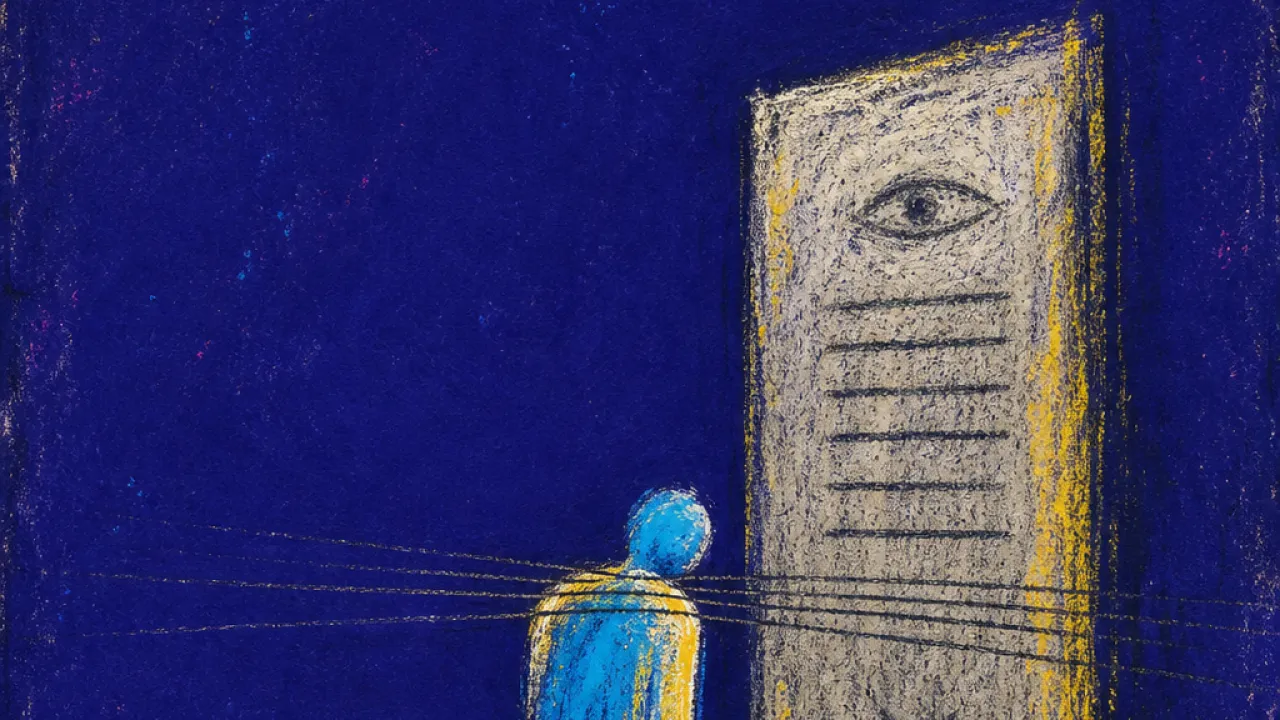
A solitary figure under invisible measuring lines before a sealed panel, with marks pressing into the shoulders

What is this situation?

Performance Criteria Black Box — you step into a class, workplace, internship, creative platform, or promotion track where everyone says the expectations are clear, but the rules only become visible after you have already missed them. At first you try to follow what is written down: the rubric, the job ladder, the brief, the KPI sheet, the feedback doc, the vague phrase about “showing more impact.” Then the meetings start to reveal another layer: someone tells you your work is strong but not “strategic enough,” your manager says you need more ownership but cannot name what ownership would look like, a professor marks you down for something that was never in the assignment, a client says the deliverable is “not quite there,” or an algorithm quietly stops showing your work without explaining why. You ask for specifics and get phrases that sound useful until you try to act on them: be more proactive, raise the bar, increase visibility, demonstrate leadership, improve quality, read the room. The power sits with people or systems who can see the scoring sheet while you are forced to guess from the outside, and every round of feedback seems to move the target a few inches farther away. Your days start filling with over-preparation, second drafts no one asked for, extra check-ins, careful screenshots, comparison with people who seem to pass the hidden test without being told the test exists. The cost is not just more work; it is the way your body braces before every review, submission, dashboard refresh, or one-on-one, waiting to find out which invisible rule you failed this time. You are not dealing with simple ambition or normal feedback anymore; you are being evaluated inside a sealed box, much like the blindfolded figure on the Eight of Swords, surrounded by barriers and unable to see where the open path actually is.

Why it's not you?

The problem is not that you cannot take feedback or that you are missing some obvious standard. The problem is that the standard is being withheld, shifted, or translated into vague language after the fact. A Performance Criteria Black Box turns evaluation into guesswork and then treats the confusion as if it belongs to you.

Performance Criteria Black Box in Tarot Cards

When the Performance Criteria Black Box keeps changing what counts after the work is already done, the tightness in your chest is part of the scene, not a private flaw. This is an environmental, structural dynamic: authority holds the rubric, controls the feedback loop, and leaves you trying to perform against moving targets. The cards below do not decide whether the system is fair; they reflect the shape of being evaluated through rules you are not allowed to see. Here are the Tarot Cards that tend to mirror this kind of situation.

The High Priestess
Upright
The scroll resting in the High Priestess's hands is partly revealed and partly concealed, while the veil behind her separates the visible learning space from a deeper layer of knowledge. The scene presents information as available within the institution but not equally available to everyone approaching it. That is the hidden curriculum inside a class where successful students seem to understand tone, depth, citation style, or argument structure that the assignment never explained. You are not necessarily missing an obvious instruction; the course may be relying on tacit academic knowledge while presenting its outcomes as though every student received the same map.
The Emperor
Reversed
The Emperor's armour, stone seat, and fixed posture display the institutional authority expected to create dependable boundaries. Reversed, the authority remains powerful while the boundary becomes personal and unstable, allowing the evaluator's preference to function as a rule without being published as one. That is the structure of a professor who adds requirements after submission, treats “quality” as self-evident, or marks according to conventions absent from the brief. You are encountering discretionary academic power presented as neutral assessment; naming that distinction keeps one authority figure's opaque standard from becoming a total judgment of your capacity to learn.
Justice
Reversed
Justice's scales and sword remain symbols of assessment when reversed, but the image no longer supports confidence that measurement and verdict are aligned. The authority to award the grade survives even when the balance between disclosed requirements and applied criteria has broken down. That is the concrete problem when an assignment loses marks for something absent from the brief or when two comparable submissions appear to be judged by different standards. You are facing a procedural inconsistency in academic evaluation, and identifying the missing criterion is more precise than treating the result as a global statement about your ability.
The Hanged Man
Upright
The suspended figure hangs from a fixed structure with one leg bound, while the halo around his head signals that observation remains possible even when forward motion is unavailable. The pause has a visible cause: movement is constrained by the frame holding the body, not by an absence of effort. A promotion, resubmission, or review cycle becomes similarly suspended when the gatekeeper cannot define what readiness would look like or when the threshold changes after every attempt. You cannot time the next push against a milestone that has not been disclosed, but you can separate an externally imposed holding pattern from a supposedly personal failure to move fast enough.
The Moon
Upright
The Moon hangs above a narrow road that runs between two towers, while a dog and wolf react to the same uncertain signal from opposite sides. The destination exists, but the low light prevents the traveller from seeing which details on the path are reliable and which are projections produced by poor visibility. That is the structural problem of trying to set a long-range career or educational direction through feedback such as “be more strategic” or “show greater impact.” You can still recognize that a path is present, but the system has not supplied enough observable milestones to distinguish progress from compliance theatre; the uncertainty belongs in the navigation conditions, not in a verdict about your potential.
Three of Pentacles
Reversed
Three people gather around skilled work and an architectural plan beneath the stone arches, creating a visual model of assessment through shared design. Reversed, the plan no longer operates as common ground: critique continues, but the student, group, and evaluator may each be working from a different definition of the task. That is what happens when a project rubric shifts, a critique panel disagrees internally, or group work is graded against expectations never established during production. You can produce careful work and still miss a target that was not collectively scoped; the breakdown sits in the assessment architecture, not automatically in the craftsmanship.
Eight of Pentacles
Reversed
The repeated pentacles, carving tool, and solitary workbench become a closed redrafting circuit when the card is reversed. Practice is still happening, but the learner has no trustworthy external reference for deciding whether repetition is building mastery or merely chasing the marker's latest preference. That mirrors overworking every assignment, adding material nobody requested, and producing multiple drafts because each grade exposes another unstated rule. You are supplying more academic labour to a course that has not supplied a stable success condition; separating learning from speculative compliance makes the real cost visible.
Two of Swords
Upright
The blindfolded figure holds two swords in a rigid balance while the uneven rocks in the water remain outside her field of view. The options are physically present, but the information needed to compare their consequences has been blocked, forcing stillness to perform the work that evidence should be doing. Opaque evaluation creates the same bind when you must choose which revision to prioritize, whether to submit again, or whether to remain on a track whose threshold keeps moving. You are not facing a clean preference test; you are being asked to make a consequential choice while the evaluator retains the comparison criteria, so the first useful distinction is between genuine indecision and a decision environment starved of facts.
Seven of Swords
Upright
The figure carries several swords away from a camp while looking back, leaving two blades behind and keeping distance from the group. Information and strategic advantage are visibly uneven: one party acts with partial possession while the wider setting remains outside a shared conversation. That asymmetry mirrors a promotion or review process in which the operative rules circulate through backchannels, selective sponsorship, or undocumented manager conversations. You do not need to assume a coordinated plot to recognize that the information economy rewards people with private access; documenting what was said and comparing it with published criteria can reveal the structure without turning every uncertainty into self-blame.
Eight of Swords
Upright
The blindfold prevents the central figure from checking the positions of the swords, while the loose cloth and incomplete enclosure show that her felt restriction is being shaped by unavailable information. The body must remain cautious because it cannot verify where movement is safe. Repeated exposure to hidden criteria can create the same internal operating mode before reviews, submissions, or dashboard refreshes. You may start second-guessing competent work because every evaluation can disclose a new rule; the useful psychological audit is to locate how much of that self-monitoring is being generated by an objectively unpredictable system.
Nine of Wands
Upright
The bandaged figure grips one wand while watching the line of eight behind him, his posture prepared for another impact even though no attacker is visible. The barrier offers some protection, but it also records how repeated encounters have trained the body to remain on guard. That is the internal residue of reviews that repeatedly introduce criteria after the work is done. You may enter every manager meeting, critique, or grade release ready to defend receipts and reconstruct earlier instructions; the guarded state is understandable evidence of pattern recognition, while the standing wand preserves your ability to observe where vigilance is useful and where the system is consuming it without return.

Performance Criteria Black Box in Tarot Card Reading Insights

When someone brings a Performance Criteria Black Box into a reading, the question is often less about effort and more about what cannot be seen from inside the evaluation process. These readings show how others have sat with hidden rubrics, moving targets, and unclear feedback through the cards. Tarot Reading Insights from sessions involving this kind of pressure.
Twelve Tabs, a Blank Slide—Then a Question Put the Draft in Motion

Twelve Tabs, a Blank Slide—Then a Question Put the Draft in Motion

Topic:Study Tarot Reading

Struggle:Unspoken Expectation Load

Context:Hidden Curriculum Gap

Closing Slack, Reopening Figma, Then Asking What the Draft Needed

Closing Slack, Reopening Figma, Then Asking What the Draft Needed

Topic:Career Tarot Reading

Struggle:Feedback Disconnection

Context:Upward Management Trial

From Reopening the Slack Thread to Letting One Clean Repair Stand

From Reopening the Slack Thread to Letting One Clean Repair Stand

Topic:Introspection Tarot Reading

Struggle:Consequence Lock

Context:Work Life Boundary Creep

Over-Editing for Interviews—and How to Show Up Without Disappearing

Over-Editing for Interviews—and How to Show Up Without Disappearing

Topic:Choice Tarot Reading

Struggle:Belonging-Authenticity Split

Context:Personal Brand Performance

The 3:18 PM Tab-Switch Shuffle—and the Moment 'Done' Spoke Up

The 3:18 PM Tab-Switch Shuffle—and the Moment 'Done' Spoke Up

Topic:Career Tarot Reading

Struggle:Rest-Permission Split

Context:Productivity Theater

No Notes Wasn’t Missing Data: How I Learned to Measure Work Fairly

No Notes Wasn’t Missing Data: How I Learned to Measure Work Fairly

Topic:Career Tarot Reading

Struggle:Performance-Worth Fusion

Context:Productivity Theater

AI Replaceability Panic at Work—And How to Become Reliably Impactful

AI Replaceability Panic at Work—And How to Become Reliably Impactful

Topic:Career Tarot Reading

Struggle:Self-Optimization Martyrdom

Context:AI Policy Grey Zone

From KPI Hypervigilance to Calm Agency: Rewriting the Gold-Star Script

From KPI Hypervigilance to Calm Agency: Rewriting the Gold-Star Script

Topic:Career Tarot Reading

Struggle:Permission Paralysis

Context:Productivity Theater

From Intake-Form Freeze to a First Draft: Learning to Submit One Line

From Intake-Form Freeze to a First Draft: Learning to Submit One Line

Topic:Personal Growth Tarot Reading

Struggle:Clarity-Exposure Split

Context:Reflection Structure Trial

The 8:41 p.m. Rejection Tab—And the Moment It Turned Into Data

The 8:41 p.m. Rejection Tab—And the Moment It Turned Into Data

Topic:Introspection Tarot Reading

Struggle:Inner Tribunal Lock

Context:Feedback Void

From Peer-Eval Dread to Bounded Honesty: A 7-Minute Reset at Work

From Peer-Eval Dread to Bounded Honesty: A 7-Minute Reset at Work

Topic:Study Tarot Reading

Struggle:Internal Authority Collapse

Context:Direct Communication Trial

Trying to Sound Impressive Was the Trap: How I Went Proof-First

Trying to Sound Impressive Was the Trap: How I Went Proof-First

Topic:Career Tarot Reading

Struggle:Projection-Connection Split

Context:Networking Launch Window

Psychological Contexts Related to Performance Criteria Black Box