Measured By Invisible Rules

A grounded look at opaque review processes, matching tarot cards, and tarot reading insights from similar evaluation pressure.

Review Criteria Black Box
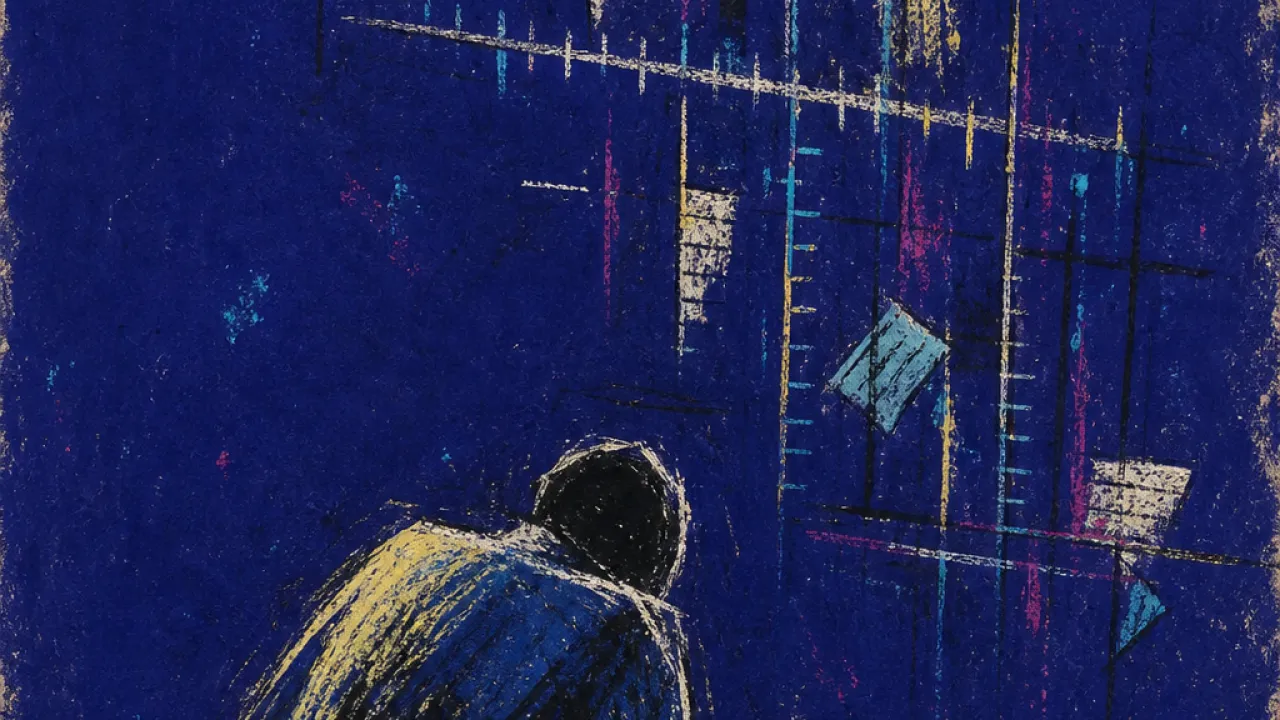
A bent figure over scattered documents while unseen hands shift rulers behind a sealed panel in deep indigo space

What is this situation?

Review Criteria Black Box — you submit the application, portfolio, performance packet, promotion evidence, grant pitch, or assessment form, and the moment it leaves your hands, the process disappears behind a sealed door. The instructions sounded clear at first: meet the rubric, show impact, demonstrate growth, align with priorities, provide examples. But once the review starts, the rules become foggy. One person tells you to be concise, another asks why you did not include more detail; one round rewards boldness, the next seems to punish anything that does not match an unwritten template. You refresh a portal, wait for an email, reread a two-line rejection, or sit through feedback that says “not quite there” without naming where “there” is. The reviewers hold the scoreboard, the language, the timing, and the final explanation, while you are left trying to reverse-engineer the shape of a standard from scattered hints. Your days start filling with tiny edits and second guesses: changing a sentence, rebuilding a deck, rewriting a self-review, asking peers what they included, scanning forums for clues, trying to make your work legible to people who will not show you the full map. The exhaustion does not come from effort alone; it comes from being evaluated inside a system that can move the target after you have already aimed, much like the figure on the Eight of Swords, blindfolded among upright blades while the structure around them decides where movement is allowed.

Why it's not you?

The issue is not that you failed to read the room perfectly; the room was never fully shown to you. Vague rubrics, shifting feedback, hidden priorities, and unexplained decisions create a process where confusion is built into the setup. When the standard is withheld, the burden of decoding it should not be placed entirely on you.

Review Criteria Black Box in Tarot Cards

Review Criteria Black Box turns the review itself into the pressure point: you are asked to meet a standard that is never fully shown. The tightness in your shoulders after every refreshed portal or vague feedback note belongs to the environmental, structural dynamic of being evaluated through rules you cannot inspect. These Tarot Cards do not solve the decision or name the hidden rule; they reflect the outline of being held inside an opaque process.

The High Priestess
Upright
The partly hidden scroll, veiled background, and guarded space between the pillars create a direct image of knowledge that exists but is not equally accessible. In an academic review, the written brief is the visible fragment, while the marker's preferred argument style, disciplinary conventions, and tacit definition of “critical” work remain behind the institutional veil. You may turn to classmates, past papers, or forum threads because informal networks appear to hold pieces of the missing curriculum. The upright scene preserves the difference between partial evidence and certainty: examples and recurring feedback can reveal patterns, but they do not become a substitute for standards the assessing institution should make legible.
Wheel of Fortune
Reversed
The large wheel, shifting figures on its rim, and watchful figure above it place different actors at unequal positions around the same moving system. Reversed, the review cycle still turns, but its sequence no longer provides a dependable signal: deadlines move, priorities change between rounds, and an apparently stable rubric is applied differently after you have already aimed. You experience that instability as pressure to predict the next turn rather than evaluate the process you were actually given. The image locates the volatility in the institutional cycle, distinguishing genuine timing changes from the harsher conclusion that every missed window or delayed result must reflect a personal failure to anticipate hidden rules.
Justice
Reversed
The scales, sword, and seated authority visually promise that academic evidence will be weighed against a stable and knowable rule. Reversed, the assessment may still display a rubric while markers apply unpublished conventions, alter interpretations between students, or issue a grade without showing how the submitted work mapped to each criterion. You are left with a number, category, or brief comment but no auditable chain between evidence and outcome. The inverted scales locate the uncertainty in procedural consistency, preventing an unexplained mark from being treated as a fully transparent measure of what you understand or can produce.
The Hanged Man
Upright
The suspended figure hangs from a fixed frame with his hands out of view, unable to accelerate the scene through ordinary effort. That physical pause mirrors the period after you submit a packet and the process disappears behind a sealed door, leaving the reviewers in control of sequence, timing, and release of information. The illuminated head keeps the upright suspension from becoming empty passivity. It frames the waiting period as a distinct information state in which more polishing cannot alter material already under review; what can become visible is the boundary between the institution's delay and the pressure you feel to keep performing productivity while no decision is available.
The Moon
Upright
The winding path between two distant towers is lit by reflected moonlight rather than full daylight, while the dog, wolf, and emerging creature respond differently to the same uncertain terrain. The scene closely mirrors a review process in which published criteria outline a route but hidden priorities, mixed signals, and partial explanations prevent you from seeing how that route is actually judged. You still have a visible path, so the uncertainty is not evidence that no direction exists. The card distinguishes low-information navigation from personal incompetence: the institution has supplied enough light to demand movement, but not enough transparency for you to know whether the next career step, resubmission, or portfolio direction matches the operative standard.
Judgement
Reversed
The trumpet above the waiting figures depicts an authoritative call that changes how the people below are classified. Reversed, an academic verdict such as a mark, rejection, required revision, or failed funding decision arrives without transmitting the reasoning needed to connect the result to the submitted evidence. You know that a judgment has occurred but not how the panel reached it or what “not yet” specifically requires. The muffled evaluative scene separates the administrative finality of the result from its usefulness as feedback, preventing a poorly explained decision from posing as a complete account of your learning or research capacity.
Three of Pentacles
Reversed
The maker, two evaluators, and visible architectural plan form a literal assessment scene built around a shared standard. Reversed, that shared reference breaks down: a supervisor, second marker, and programme rubric can each define quality differently, leaving you to revise the same essay, thesis, or proposal against incompatible expectations. You may interpret the contradiction as proof that the work is fundamentally deficient, even when the evaluators have not aligned their own criteria. The reversed collaboration scene exposes an academic governance problem in which disagreement at the review level is transferred into your workload without a clear owner or adjudication process.
Eight of Pentacles
Reversed
The student-like craftsperson repeats the same detailed task while completed pentacles accumulate around the workbench. Reversed, practice turns into speculative reworking: paragraphs, citations, slides, methods sections, or application statements are repeatedly rebuilt without calibrated feedback about what the marker considers sufficient. You may produce more versions while learning less from each cycle because the assessment standard remains outside the workshop. The reversed card reveals a feedback-design problem, separating disciplined study from labour generated by an institution that requests improvement without providing a stable target for that improvement.
Ace of Swords
Reversed
The crowned sword emerging from a cloud is an image of language capable of making a clean distinction, but reversed the blade cannot establish that line. An assignment brief may use apparently exact terms such as “analyse,” “evaluate,” “original contribution,” or “critical engagement” while markers leave their expected depth and evidence thresholds unstated. You can therefore comply with the wording and still be told that the work missed what the wording supposedly required. The inverted sword exposes definitional opacity inside the assessment system, distinguishing a student's ability to read instructions from the institution's responsibility to make those instructions operationally clear.
Two of Swords
Upright
The blindfolded figure holds two evenly weighted swords across a closed posture, with a broken shoreline and open water behind her. The image captures your choice between competing review instructions such as being concise or adding detail, preserving an authentic portfolio voice or matching an unwritten template, and resubmitting or withdrawing when neither option can be compared against a visible standard. The upright balance keeps both options available, but the blindfold shows why more internal debate cannot manufacture the missing evidence. The decision bottleneck sits in the information structure: reviewers have externalised the choice onto you while retaining the criteria that would make one path meaningfully preferable to the other.
Eight of Swords
Upright
The blindfold, bindings, upright swords, and distant building place the assessed person inside a rule-filled environment whose boundaries cannot be clearly inspected. In study, the swords become rubric clauses, marker expectations, and disciplinary conventions, while the blindfold captures the gap between having instructions and understanding how those instructions will actually be graded. You can become afraid to move beyond a narrow, defensive version of the assignment because every choice might violate an unseen preference. The visible spaces between the swords keep the analysis grounded: the assessment structure restricts informed movement, but an opaque grade does not establish that your knowledge or academic potential is equally restricted.
Nine of Swords
Upright
Nine swords line the dark wall above a person sitting upright in bed, turning unresolved thoughts into a visible overnight environment. After an opaque review, the repeated blades resemble every phrase from the brief, every unexplained comment, and every alternate packet version being mentally replayed because the official decision supplied no stable account of what happened. You may keep trying to solve the review internally after the institution has withheld the evidence needed to solve it accurately. The scene makes the psychological cost visible without treating it as the original defect: repeated second-guessing is being fed by an external explanation gap, and the review's silence is not proof that the harshest private interpretation is the correct one.
Five of Wands
Upright
Five people raise crossing staffs without a visible referee or common formation, turning the field into competing interpretations rather than coordinated work. In study, the scene resembles supervisors, markers, or panel members offering incompatible instructions about scope, theory, evidence, format, or how much detail the same submission should contain. You can spend an entire revision cycle trying to obey every voice at once because the institution presents them as one review. The upright visibility of the conflict allows the contradiction to be named at system level: the problem may be unresolved evaluator disagreement, not a hidden synthesis that you have somehow failed to discover.

Review Criteria Black Box in Tarot Card Reading Insights

When Review Criteria Black Box shows up, people often bring the same suspended feeling into readings: the sense of being measured while the measuring tool stays out of view. The readings below move from the cards into how this kind of opaque review process appears in Tarot Reading Insights.

After Her Boss Rewrote Every PR, She Authored the Final Revision

After Her Boss Rewrote Every PR, She Authored the Final Revision

Topic:Career Tarot Reading

Struggle:Feedback Disconnection

Context:Upward Management Trial
A Green PR at 11:47 p.m.: From Founder Rewrites to Shared Ownership

A Green PR at 11:47 p.m.: From Founder Rewrites to Shared Ownership

Topic:Career Tarot Reading

Struggle:Control Lock

Context:Founder Mode Overreach

Missing Context Triggered Withdrawal; A Draft PR Kept Work Visible

Missing Context Triggered Withdrawal; A Draft PR Kept Work Visible

Topic:Career Tarot Reading

Struggle:Responsibility-Authority Split

Context:Information Gatekeeping
Feedback Paralysis: One Critique Note Became a Visible Figma Test

Feedback Paralysis: One Critique Note Became a Visible Figma Test

Topic:Study Tarot Reading

Struggle:Internal Authority Collapse

Context:Upward Management Trial

Academic Rejection Felt Like a Verdict; One Application Stayed Open

Academic Rejection Felt Like a Verdict; One Application Stayed Open

Topic:Study Tarot Reading

Struggle:Recognition-Progress Split

Context:LinkedIn Performance Loop

At 10:47 p.m., Revision Fatigue Turned Toward One Testable Change

At 10:47 p.m., Revision Fatigue Turned Toward One Testable Change

Topic:Study Tarot Reading

Struggle:Feedback Disconnection

Context:Thesis Research Bottleneck
Code-Review Micromanagement: Asking for the Rule Before Rewriting

Code-Review Micromanagement: Asking for the Rule Before Rewriting

Topic:Career Tarot Reading

Struggle:Feedback Disconnection

Context:Upward Management Trial
The Draft That Felt Pointless: One Question Before the Next Pass

The Draft That Felt Pointless: One Question Before the Next Pass

Topic:Study Tarot Reading

Struggle:Craft Ceiling Lock

Context:Safe Visibility Trial

Four Approved PRs: From a Mandatory Final Pass to a Peer-Owned Merge

Four Approved PRs: From a Mandatory Final Pass to a Peer-Owned Merge

Topic:Career Tarot Reading

Struggle:Responsibility-Authority Split

Context:Authority Approval Bottleneck

10:52 p.m., Two Drafts Open—And the Rule That Ended the Spiral

10:52 p.m., Two Drafts Open—And the Rule That Ended the Spiral

Topic:Study Tarot Reading

Struggle:Inner Tribunal Lock

Context:Safe Visibility Trial

From Anxious Doc-Checking to a Bounded Review Cycle in Shared Docs

From Anxious Doc-Checking to a Bounded Review Cycle in Shared Docs

Topic:Personal Growth Tarot Reading

Struggle:Feedback Disconnection

Context:Always On Availability

Psychological Contexts Related to Review Criteria Black Box