When Growth Becomes the Cage
Explore self-optimization as sacrifice, the Tarot cards that mirror it, and readings where this pattern shows up.

Self-optimization Martyrdom
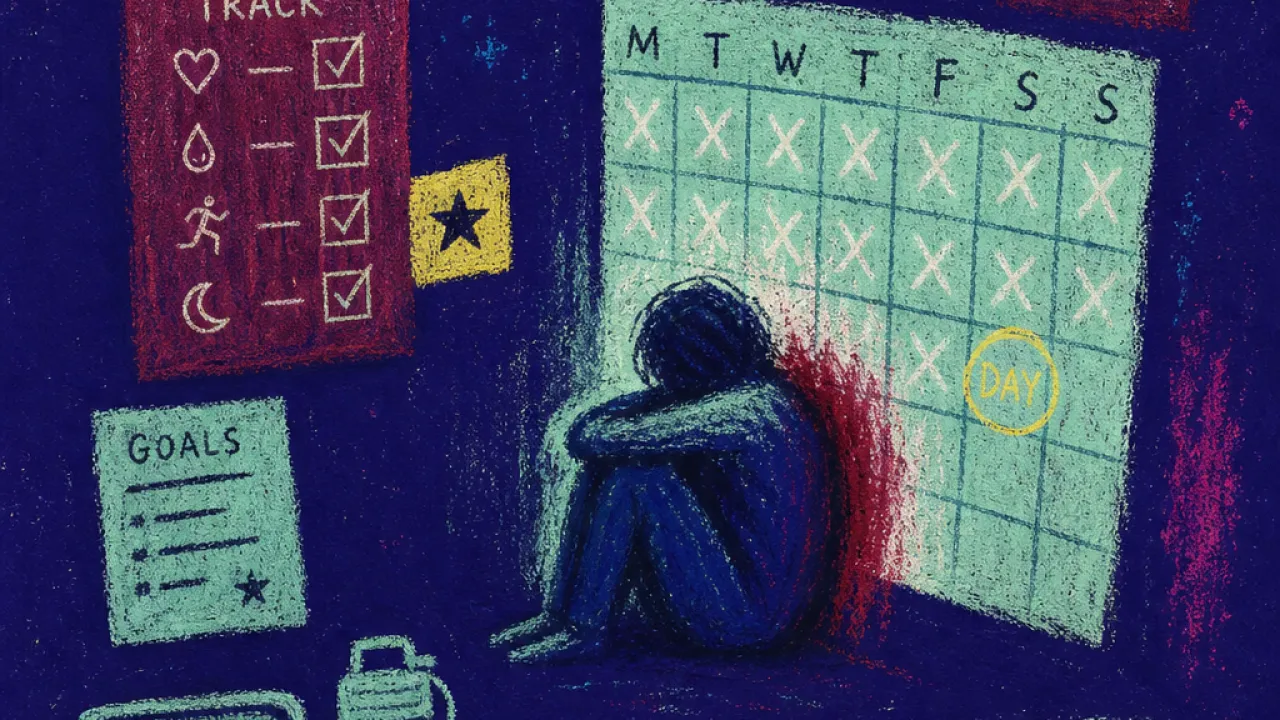
What does this feel like?
Self-Optimization Martyrdom — you know it in the quiet second after you finish a workout, close the habit tracker, or log the meal, when the checkmark appears and your body should feel relieved, but instead there is only the next thing to tighten. You stand in the kitchen with your water bottle in one hand and your phone in the other, already rearranging tomorrow: earlier alarm, cleaner food, less scrolling, more steps, better focus, a more efficient version of you who somehow deserves rest only after the system is perfect. Your shoulders have been slightly raised all day, your eyes feel dry from reading advice you have already read before, and your stomach drops whenever a plan gets messy, because a missed routine does not feel like a normal human fluctuation; it feels like evidence that you are slipping. You call it discipline, healing, getting your life together, staying on track, but somewhere along the way the language that was meant to return you to yourself became a private contract with no ending. Even rest has to justify itself now: sleep is recovery, food is fuel, journaling is processing, a walk is regulation, silence is mindfulness, and nothing is allowed to simply exist without becoming proof that you are improving. The strange part is that the system often looks clean from the outside. Your calendar is tidy, your routines are impressive, your answers sound composed, and people may see consistency where you feel a small room closing around you. What unsettles you is not that you do not want to grow; it is that growth has started asking for the same payment every day, and the payment is your softness, spontaneity, appetite, boredom, play, and ordinary unmeasured life. You keep lifting the altar because the altar is green and alive, but your own body has less and less room beneath it, much like The Hanged Man, haloed and suspended from a living tree, where the pose can look meaningful even while hidden hands and one bound point keep the body from returning to the ground.
What's pulling at you?
You're not failing at self-improvement; you're caught between wanting a life that feels clearer and needing every choice to prove you are still improving. One side of you wants rest, pleasure, and ordinary mess back; the other side treats any loose edge as a sign that you need another reset. The result is a system that was built to support your life but now asks your life to support the system.
How It Shows Up?
- You wake up and check the sleep score before you notice how your body feels; the number decides the mood of the room before your feet touch the floor. Your shoulders are already lifted, your eyes feel gritty, and a small heaviness settles behind your ribs when the app says you missed the target. The day begins under the neat glow of a checkmark, like The Hanged Man's halo making stillness look purposeful. You can let the number be information without turning it into a verdict.
- You finish a task at work or school and immediately open another tab about better focus, better notes, better systems, as if completion only counts when it becomes the next upgrade. Your hands hover over the keyboard, your jaw stays tight, and your breathing sits high in your chest while the screen fills with one more method. The desk starts to feel like the Eight of Pentacles' bench, useful at first, then small enough to fold your whole body around it. You can complete one thing without making yourself the next project.
- A friend texts, 'Want to grab dinner tonight?' and your first response is not yes or no, but a fast scan of macros, budget, bedtime, gym timing, and whether one unplanned meal will disturb the week. Your thumb pauses above the reply, your stomach tightens, and the back of your eyes feels hot from calculating a life that was supposed to feel lighter. The Ten of Wands feeling is quiet here: not dramatic, just one more living thing added to the bundle. You can want structure and still leave room for one unmeasured hour.
- At a party, class, or coworking table, someone jokes about being lazy, and you laugh a half-second late because you are busy deciding whether you are allowed to be that casual. Your face holds the smile, your shoulders stay squared, and your chest feels held in place by the need to look composed, disciplined, and fine. There is a King of Swords sharpness in the room when your own inner voice starts sounding like a command. You can let the moment be social without turning it into an audit.
- On Sunday night you build the reset: meal plan, laundry, calendar blocks, workout slots, screen limits, skincare, hydration, the tidy little bridge into the version of you that will finally make everything manageable. By the time the list is done, your hands are cold, your eyes ache, and your body feels like it has been left outside the plan it created. The Star's endless pour is in the glow of the phone: restoration drawn as output, again and again. You can stop with one box unchecked and still belong to your own evening.
Self-optimization Martyrdom in Tarot Cards
Self-Optimization Martyrdom lives in the moment your routines stop supporting your life and your life starts serving the routines. You can feel it in the lifted shoulders, dry eyes, tight chest, and the small drop in your stomach when an unplanned dinner interrupts the system. From an existential perspective, the structural framework here is about growth becoming proof of seriousness instead of a return to living. The Tarot Cards below make that outline visible.
Self-optimization Martyrdom in Tarot Card Reading Insights
When self-improvement starts feeling like a private contract you can never complete, others bring that same loop into readings too. The shift from cards to readings shows how this struggle appears around routines, ambition, rest, and the future self that keeps moving ahead. Tarot Reading Insights on Self-Optimization Martyrdom.
One Blank Checkbox, No Restart: Rethinking an Overloaded Routine
Topic:Personal Growth Tarot Reading
Struggle:Capacity Misalignment
Context:Routine Reset Trial
Side-Hustle Guilt Canceled Drinks; Then Tuesday Stayed Work-Free
Topic:Career Tarot Reading
Struggle:Ease-Productivity Split
Context:Founder Mode Overreach

A Blank Figma Canvas Reframed What Side-Hustle Growth Must Protect
Topic:Choice Tarot Reading
Struggle:Achievement-Meaning Collapse
Context:Decision Criteria Black Box

Wellness Perfectionism: Keeping Structure Without Losing Aliveness
Topic:Introspection Tarot Reading
Struggle:Willpower Dependence Trap
Context:Wellness Optimization Trap

AI Replaceability Panic at Work—And How to Become Reliably Impactful
Topic:Career Tarot Reading
Struggle:Self-Optimization Martyrdom
Context:AI Policy Grey Zone