Always Expected to Know?

Explore this academic pressure pattern through grounded situation language, related tarot cards, and tarot reading insights from similar sessions.

Model Student Performance Trap
What is this situation?

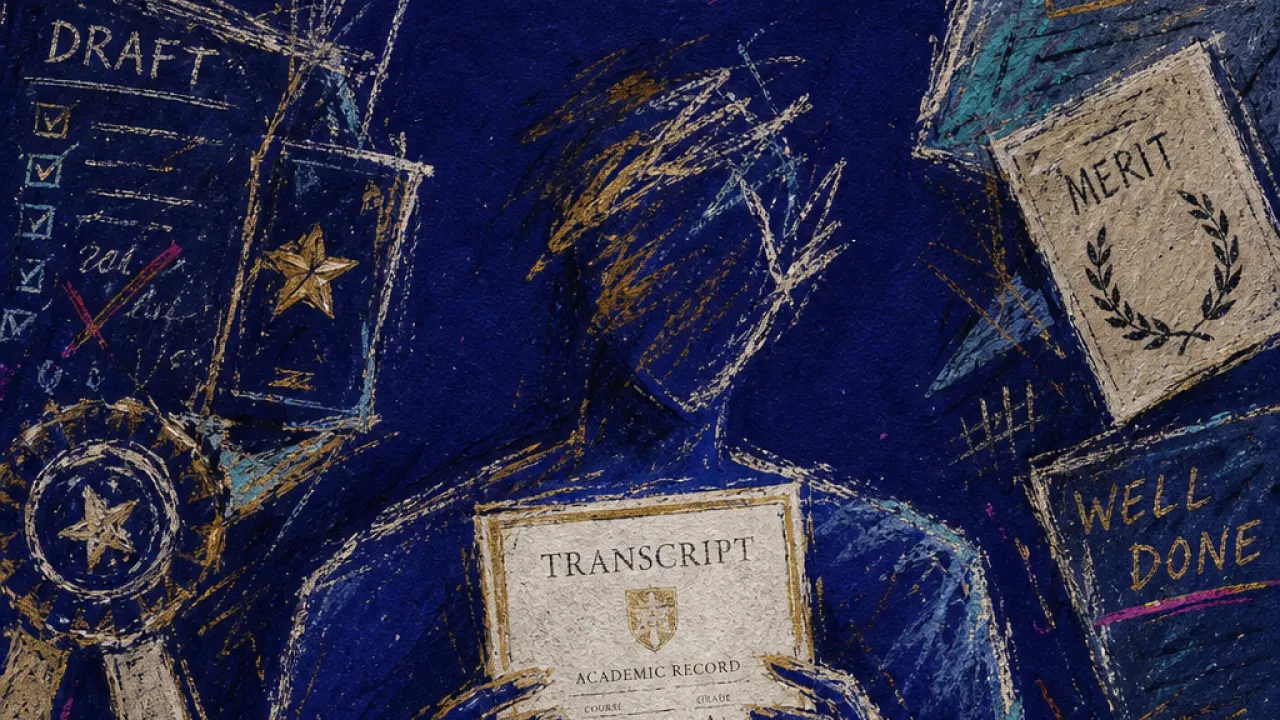
Model Student Performance Trap — you enter the semester already carrying a reputation before you have opened the first reading, because teachers, tutors, classmates, parents, supervisors, or scholarship committees know you as the capable one. At first it looks like recognition: the high grade, the polished essay, the group project everyone trusts you to organize, the email that gets a quick warm reply because you sound prepared. Then the role starts arriving before you do. In class, you hesitate before asking a basic question because the room is used to you having answers; in group chats, people tag you when the plan is messy; in office hours, you explain the confusion so neatly that it stops sounding urgent; at home or online, every award, score, internship, acceptance, or clean transcript becomes another public proof that you are still on track. The pressure is not just to study, but to make studying look controlled: drafts have to be presentable, notes have to be aesthetic, questions have to sound advanced, grades have to stay high, and any delay needs a tidy explanation. You learn to submit the version of yourself that seems grateful, organised, fast, calm, and easy to guide, even when the assignment is unclear, the feedback is thin, the workload is stacking, or the course has not given you enough room to actually learn. Over time, the audience around your record becomes part of the workload, and the ordinary mess of learning gets pushed backstage, much like The World, where a figure is held in a perfect central pose inside a wreath while watchers frame the scene from every side.

Why it's not you?

The problem is not that you are weak, ungrateful, or secretly not smart enough; the problem is that the academic environment has turned competence into a public role you are expected to keep performing. Grades, praise, scholarships, group reliance, and teacher approval can become a structure that rewards looking finished before the work has had room to be unfinished. That pressure belongs to the role, not to your worth as a learner.

Model Student Performance Trap in Tarot Cards

When the Model Student Performance Trap is running your school life, the tight shoulders, careful emails, and polished submissions are not random habits; they are responses to an academic role that keeps asking you to look finished. This is an environmental, structural dynamic where grades, praise, program status, and visible competence start shaping what can be shown and what has to stay hidden. The cards below do not decide whether you are capable or not; they reflect the outline of a role that has become heavier than the learning itself. Here are the Tarot Cards that tend to mirror this kind of academic performance pressure.

The World Reversed
The exposed figure holds a perfect central pose inside a wreath of completion, watched from all sides by the surrounding figures. The image can harden into an academic showcase where the student is expected to appear integrated, capable, and finished before the work is actually allowed to be unfinished. That is the trap of being known as the high performer, the scholarship student, the gifted one, the reliable group member, or the person who always has it together. You are not only doing schoolwork; you are maintaining a public academic image that leaves little room for confusion, rough drafts, or a visible learning curve.
Ace of Cups Reversed
The white dove, marked disc, lotus flowers, and golden cup create a highly polished scene of purity, composure, and acceptable reception. The vessel sits at the center as something that must remain upright, beautiful, and ready to receive what comes from above. In school, that visual order can become the pressure to be the ideal student: calm, grateful, prepared, high-scoring, and easy to guide. Confusion, partial drafts, slow comprehension, and ordinary academic messiness get pushed outside the approved image. The card exposes the trap by showing how much effort it takes to maintain the perfect receiving posture. You may be praised for seeming composed while the actual learning process needs more room for trial, correction, and visible incompleteness.
Six of Cups Reversed
The boy's offering is careful, polished, and socially legible inside an orderly environment. The scene can become a performance of being pleasing, prepared, and harmless before any messy process is allowed to show. In study, that maps to the old model student role where every draft, answer, grade, and email has to look impressive before it can exist. You are not facing a simple productivity issue; the card reveals an academic performance script that makes rough learning feel socially unsafe.
Seven of Cups Upright
The figure faces a gallery of idealized outcomes: the wreath of recognition, the jewels of reward, the head of reputation, and the veiled image of a more complete self. The body is placed below these symbols, as if academic worth must be measured against a public display of excellence. That arrangement gives the Model Student Performance Trap its pressure. Study stops being only a learning process and becomes a stage where grades, participation, program prestige, and visible competence have to prove that you are becoming the right kind of student. The Seven of Cups exposes the performance layer inside that pressure. It helps separate the academic image being maintained from the learning structure that actually needs support, feedback, time, and room to be imperfect.
Nine of Cups Reversed
The cups sit above the figure like a flawless public record, while the crossed arms harden into a guarded brace. The achievement display is no longer just evidence of completed work; it becomes a structure the body must hold up. In academic life, this is the trap of being known as the reliable high scorer, the gifted student, the scholarship kid, the perfect applicant, or the one who always has it handled. The outer pressure comes from the audience around the record: teachers, peers, family, transcripts, supervisors, or the student's own public identity inside the institution. The reversed structure of the card reveals how performance can become heavier than learning. It shows a stage where every new assignment is filtered through the need to protect the row of cups, and that makes it harder to experiment, ask basic questions, submit imperfect drafts, or change direction cleanly.
Ten of Cups Reversed
The ten cups arranged in a flawless arc create a standard hovering over the entire scene. Beneath it, every figure appears placed, legible, and coordinated, leaving no visible allowance for drafts, confusion, delay, or partial progress. In academic life, that becomes the trap of being the student who is always expected to know, perform, and deliver. The card reveals how a polished learner identity can become an external structure: grades and competence are rewarded so publicly that admitting a real skill gap feels like stepping outside the only role the environment recognizes.
Page of Cups Reversed
The Page looks composed, pleasant, and capable while holding the chalice that defines his role. His body presents a socially acceptable image of the young keeper: charming, attentive, and visibly in control of the delicate object. In school, that image becomes the external script of the good student. The problem begins when likability, natural talent, neatness, and emotional composure become the role you have to maintain, even when the work is confusing or the system has stopped supporting real learning. The reversed Page exposes the cost of performing academic ease. You may be holding the cup well enough for others to assume everything is fine, while the private space around the task becomes too small to admit uncertainty, ask basic questions, or let the struggle be seen before it hardens into a bottleneck.
Four of Pentacles Reversed
The pentacle balanced at the crown makes achievement sit directly on top of identity. The figure has to keep his body stiff, centered, and socially presentable because one small shift would make the visible symbol of value fall first. In an academic setting, that visual structure maps onto the pressure to remain the model student: high grades, clean participation, impressive discipline, and no visible uncertainty. The posture is not just possession; it is maintenance of a public academic image that has become too fragile to move freely. You are not looking at ordinary ambition here. The card exposes how performance can turn into a locked position, where asking for help, submitting a messy draft, changing direction, or admitting confusion feels like dropping the crown in front of everyone.
Eight of Pentacles Reversed
The craftsman's diligence is staged in an open space, with completed coins displayed and the working body bent below them. The products stand taller than the person making them, turning effort into something that can be inspected. In school, that visual structure becomes the model student performance trap: grades, neat submissions, visible discipline, and praise can harden into a role that leaves little room for confusion, rest, or honest recalibration. The card shows how public competence can become a narrow workstation. You may still be producing impressive evidence while the learning process underneath has no space to be messy.
Nine of Pentacles Reversed
The robe, the posture, the garden, and the trained falcon create an image of immaculate competence. Nothing in the scene looks improvised; every visible surface has been prepared for recognition. In academic life, that can become the pressure to look like the student who always has the answer, the grade, the plan, and the controlled response. The card reveals the cost of maintaining a polished academic identity when the real work needs experimentation, rough drafts, and permission to be incomplete.
Ten of Pentacles Reversed
The child peeking from behind the mother sits inside a scene already filled with status symbols: crest, estate, elder, ordered pentacles, and a household arranged for recognition. The younger figure is present, but the role has already been framed by the family's visible success. In academic life, this becomes the pressure to be the impressive student rather than the learning student. Grades, deadlines, university name, awards, and polished submissions become a public identity to protect, which can freeze real learning when the work is messy, unfinished, or uncertain. The card names the stage on which the performance is happening. Once the role is visible, you can tell the difference between academic discipline and the exhausting maintenance of an image.
Page of Pentacles Reversed
The pentacle sits directly in the Page's line of sight, high enough to organize his posture and visible enough to become a standard. Under pressure, the object stops being a learning tool and becomes the thing the body must keep displaying. Within study, that maps onto being trapped in the performance of diligence: grades, praise, perfect notes, and visible productivity start to define whether the student role looks legitimate. You are seeing an academic environment where measurable proof can crowd out flexible understanding, and where reclaiming clarity starts with separating learning from being seen as a good student.
Knight of Pentacles Reversed
The knight's armor, upright posture, and careful presentation of the pentacle create a public image of reliability. The body is protected and impressive, but it is also sealed inside the role it is displaying. In academic life, this maps to the pressure of being the dependable high performer, the responsible student, or the person who is expected to keep producing without visible friction. The structure names the external role as part of the load, so the question becomes how much of the performance is protecting your learning and how much is trapping it.
King of Pentacles Reversed
The crown, ornate robe, hidden armor, and still posture create an image of achievement that has to be continuously held together. In academic life, that can become the role of the reliable high performer, the scholarship student, the top grader, or the person everyone expects to manage pressure without visible strain. You are not only completing assignments. You are maintaining a visible academic identity, and the card shows how that role can become heavier than the work itself when excellence turns into a position you are not allowed to step out of.
Eight of Swords Reversed
The red robe gives the figure a vivid public presence, while the pale bindings make that presence rigid and constrained. She is highly visible in the scene, yet the visible image does not match the amount of movement available to her. That is the academic trap of being known as the capable one, the high achiever, the scholarship student, the reliable group member, or the person who always understands. The role creates recognition, but it can also make basic confusion, unfinished drafts, and requests for help feel socially unavailable. The card names the pressure of performing competence while losing access to ordinary learning behaviors. It does not reduce the issue to pride; it shows how reputation itself can become a binding when the academic environment rewards looking composed more than being honestly supported.
Nine of Swords Upright
The white nightgown places the figure in private vulnerability, yet the swords above her keep the room arranged like a public evaluation chamber. Even in bed, the body is still performing the aftermath of standards it cannot put down. This is the academic shape of the model student role. You may be treated as reliable, high-achieving, organized, or naturally capable, but that role can become a trap when every grade and deadline is read as proof that the persona must remain intact. The card exposes the cost of being valued mainly through performance. Beneath the visible discipline, the structure leaves little legitimate space for confusion, revision, uneven learning, or needing support before the mask cracks.
Page of Swords Reversed
The Page is a junior attendant carrying a serious weapon, dressed simply but positioned as if vigilance is already his assigned role. That imbalance between youth and duty is the visual core of the model student performance trap. In academic life, this appears when being capable becomes a social contract: always prepared, always articulate, always okay with extra pressure, and never visibly confused. The role may look like recognition from the outside, but it narrows the range of needs you are allowed to show. The card exposes the cost of becoming the symbol of competence before the support behind that competence has been protected. You are not just holding knowledge; you are being asked to hold an identity that may leave too little room for learning in public.
Knight of Swords Reversed
The knight's polished armor, decorated gear, and fierce forward posture create the image of someone expected to be ready, sharp, and impressive at all times. In the reversed texture, that equipment becomes a costume of competence that cannot easily admit uncertainty. That is the academic role trap of being treated as the fast one, the smart one, the reliable one, or the student who always has an answer. The environment keeps rewarding visible command while quietly removing permission to struggle, revise, ask basic questions, or slow down. You are not failing the role; the role has become too narrow for real learning. The card exposes the difference between performing intelligence and building knowledge, which is where agency can begin to return.
Queen of Swords Reversed
The crown, white robe, upright spine, and vertical sword make the Queen look composed enough to become a standard. Every visible detail is controlled, polished, and held at a distance from ordinary mess. For You, this points to the academic role where being the competent one becomes a public costume. The card reveals how external praise, grades, and expectations can turn clarity into performance, until your school life is organized around never appearing confused, late, or unfinished.
King of Swords Reversed
The King's posture is immaculate: upright spine, controlled expression, clean robes and a sword held with no visible tremor. The scene presents intellectual authority as something polished, severe and constantly on display. In academic life, that becomes the model student trap, where you are expected to look composed, articulate and correct before the messy process of learning has had room to exist. Drafts, confusion and uncertainty get pushed out of sight because the role demands visible mastery. The card makes the performance layer visible. You are not failing because the process is messy; the academic stage may be rewarding the appearance of finished thought while quietly starving the conditions that make real understanding possible.
Four of Wands Reversed
The raised garlands face outward, turning the foreground into a display of composure, success, and social approval. The pillars may be sturdy, but the reversed pressure gathers around the surface of the ceremony: what must be shown, who is watching, and how polished the achievement is expected to look. In academic life, this becomes the trap of performing the ideal student role. Grades, scholarships, family expectations, cohort status, or teacher approval can push you to look organized and grateful while the actual learning system underneath is strained, unfinished, or dependent on constant presentation. The card gives that pressure a visible frame. You are not dealing only with study habits; you are negotiating an audience, a role, and a decorated version of achievement that may be absorbing energy needed for reading, drafting, revision, and honest feedback.
Six of Wands Reversed
The wreath, the red cloak, the raised wand, and the elevated horse turn the rider into a visible emblem of success. In the reversed texture, the body is not just celebrating achievement; it is being held in a fixed display posture where the public role becomes harder to set down. For a student, this mirrors the trap of being known as the reliable high achiever, the scholarship student, the honors kid, or the one who always performs. You still have agency, but the card exposes the structure around you: recognition has become a role script, and the academic system may now reward the image of competence more than the honest process of learning.
Seven of Wands Reversed
The figure’s height separates him from the field below, but it does not give him rest. His elevated place makes him visible, useful, and constantly answerable, while the surrounding wands keep testing whether he can hold that status. In academic life, the model student role can become a trap when good grades, reliability, or early success turn into an expectation that You will always know, always perform, and always withstand pressure. The same position that once offered recognition starts requiring constant defense. Seven of Wands reveals the cost of being placed on a pedestal inside a competitive learning environment. The task is not to abandon competence, but to see where the role has stopped supporting Your growth and started consuming Your room to be a learner.
Ten of Wands Upright
The wands are heavy, but they are also neat, vertical, and visually disciplined. The carrier's body disappears behind the organized bundle, making the scene less chaotic than it is costly. That is the trap of the model student role: the outside world sees order, output, polish, and reliability, while the person carrying it has less room to be a learner with limits, confusion, or uneven capacity. The performance becomes convincing enough that the load keeps being assigned. You can read the card as a distinction between visible achievement and sustainable learning. It shows where academic identity has been narrowed into always being the one who can carry it, submit it, and make it look clean.
Page of Wands Reversed
The ornate clothing, upright wand, and formal herald posture create a strong image of readiness, but the setting around the Page remains barren. In academic life, that split matches the pressure to look like the capable student before the actual learning infrastructure is in place. You may be carrying the signal of competence because the room has rewarded that signal before. The card exposes the performance layer around grades, class participation, and public confidence, then separates it from the quieter question of whether the course is giving you enough real ground to stand on.
Knight of Wands Reversed
The plume, armor, salamander tunic, and upright wand create a polished image of courage and competence before the journey has actually unfolded. The rider looks prepared, but the visual emphasis falls heavily on display. For the model student role, that image becomes a trap when praise attaches to composure, speed, and achievement more than to sustainable learning. You are not only doing schoolwork; you are maintaining a public academic self that can hide how thin the support underneath has become.
Queen of Wands Reversed
The Queen's composure is highly visible: crown, throne, lions, sunflowers, and wand all gather around a figure who is expected to look capable. When this structure tightens, the public image of confidence becomes a position that has to be maintained rather than a natural expression of readiness. In academic life, that maps onto the role of the model student: the one who is expected to know the answer, lead the group, impress the tutor, keep grades clean, and make struggle look temporary or invisible. The trap is external because the room keeps rewarding the performance of certainty even when the learning process needs uncertainty. This card reveals the cost of being fixed in an impressive academic image. It gives you a way to separate genuine competence from the pressure to stay permanently polished under evaluation.
King of Wands Reversed
The crown, fiery robe, and full throne display make competence visible before any action happens. The body holds its role so completely that there is almost no informal space left outside the performance of control. For study, this becomes the model student trap: looking capable turns into an external role that others keep rewarding, even when the actual learning system needs help, revision, or softness. You are not only doing academic work; you are maintaining the image of someone who should never need support.

Model Student Performance Trap in Tarot Card Reading Insights

For anyone caught in the Model Student Performance Trap, school can start to feel less like a place to learn and more like a place where the polished version of you has to keep showing up. Others have brought this same pressure into readings when grades, drafts, praise, and public competence became too tangled to sort out alone. Tarot Reading Insights from sessions that circle this academic performance role.
Psychological contexts related to Model Student Performance Trap