Is One Slip Everything?

Define the binary verdict loop, then see tarot cards and Tarot Reading Insights that reflect the same inner split.

Black-and-white Thinking
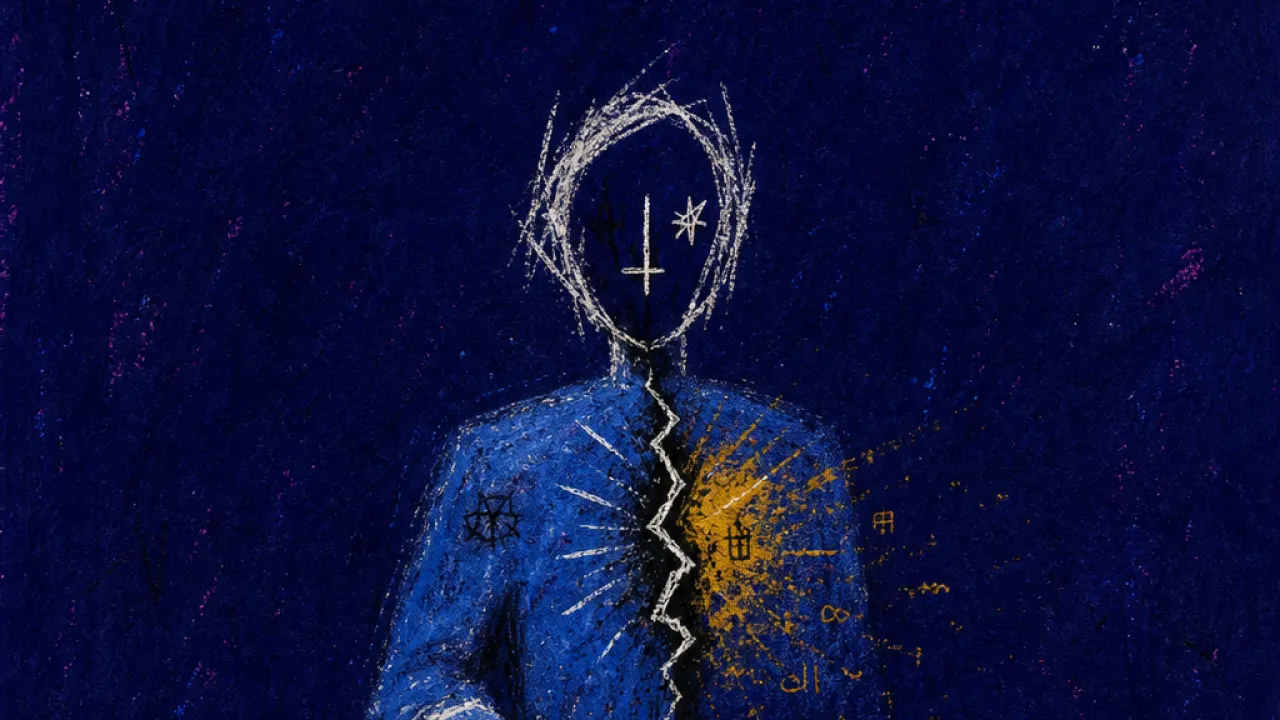
What is this really?

You sort decisions, relationships, feedback, and ordinary days into hard categories: right or wrong, safe or unsafe, success or failure. One late reply, one weak draft, or one missed routine can stop feeling like partial information and start sounding like the final ruling on the whole thing. Underneath, this all-or-nothing cognition is your mind trying to reduce uncertainty before it becomes too uncomfortable to hold. The binary filter gives you a clean edge to grab, a fast cognitive shortcut that quiets the internal argument and makes the next move feel clearer. But the more you force life into two verdicts, the more your ambiguity tolerance shrinks: nuance starts feeling like danger, ordinary course correction feels like betraying the verdict, and the mixed middle disappears behind a binary gate, much like the High Priestess held between the black and white pillars, with the veil hiding the space where a third meaning could have opened.

Why did it happen?

In earlier settings where slowing down, asking one more question, or holding mixed signals made you feel exposed, quick sorting may have helped you move before the tension became too much. Now the same subconscious loop can switch on before a situation has finished unfolding, turning one comment, delay, or mistake into a full verdict. The result is a quiet inner fatigue: your chest tightens, your attention narrows, and the middle ground disappears before you can check whether it is available.

How does it feel?

  • You see a friend's message bubble disappear, lock your phone, then unlock it and reread the last three texts, your thumb hovering over their name. In that pause, your stomach may drop and your jaw may set, as if the whole connection has been placed under a bright light. Let the unfinished signal stay unfinished for a moment; it does not have to become a full verdict right now.
  • When a manager, tutor, or professor points out one change, you nod once, press your lips together, and copy the comment word for word while the rest of the page fades out. Afterward, heat may rise in your face, your shoulders may lift, and your breathing can turn shallow. It can be held as one piece of information before any wider meaning is decided.
  • After one late start or missed workout, you slide the planner shut with two fingers, leave the shoes by the door, and stop checking the rest of the day's list. Your chest may feel heavy and your hands may go restless, as though the day has already been stamped. The rest of the afternoon can remain open, even while the stamp is still there.
  • While choosing between two plans, you draw a hard line down the page, write pros on one side and cons on the other, then circle the same word until the paper dents. Your forehead may tighten and your neck may go rigid as the middle space gets harder to look at. Pausing between sides is allowed; not knowing can stay in the room.
  • At night, you replay one awkward sentence, pull the blanket higher with a small wince, and whisper a quick verdict under your breath. The throat can feel dry, with pressure gathering behind the eyes, even before you can name what changed. The reaction can be noticed without sentencing the whole self.

Black-and-white Thinking in Tarot Cards

When a message bubble disappears and your stomach drops, the binary verdict loop is already trying to turn mixed evidence into a clean ruling. From a Jungian archetypal theory lens, this pattern can be read as the psyche losing its middle line between opposites. The cards below do not choose a side; they mirror the unconscious dynamics of that narrowed frame. These are the Tarot Cards that map the split.

The High Priestess Upright
The black and white pillars frame the Priestess like two absolute gates, while her body holds a precise middle line that refuses drift. The architecture makes contrast feel solid, clean, and morally charged, as though the threshold can only be understood by dividing it into sharply opposed sides. In timing questions, that geometry easily becomes Black-and-White Thinking. You start reading seasons as either right or ruined, progress as either on track or too late, and hesitation as either wisdom or failure. The card shows how a mind can use strict contrast to manage uncertainty, but that same contrast strips away the messy middle where real timing usually has to be negotiated.
Reversed
The black and white pillars are impossible to miss. They frame the card with a stark visual split, while the Priestess holds the center so firmly that the threshold itself starts to feel like a line between absolutes. When that balance is lost, the symbols of discernment turn into a private courtroom. That is the logic of Black-and-White Thinking in introspection. You may sort every reaction into healed or broken, wise or self-deluded, pure or contaminated, and then punish yourself for landing on the wrong side of the line. The card connects because its architecture of polarity shows how quickly inner discernment can become rigid judgment when ambiguity is no longer tolerated.
The Hierophant Upright
The card organizes the scene through sanctioned channels: one center, one vertical path, one clear hierarchy, and strict separation between who teaches and who receives. Even the symbols of access sit inside a system of rank and order rather than in open circulation. In personal growth, that structure can harden into Black-and-White Thinking. One method becomes the right path, one rupture becomes proof you are off track, and complexity starts to feel like contamination instead of information. The pattern creates fast certainty, but it makes iterative growth feel illegitimate the moment it stops looking clean.
Reversed
The black-and-white pattern at the Hierophant's feet and the rose-lily split in the followers' garments divide the field into paired opposites before any personal nuance appears. Combined with the strict frontal symmetry, the scene rewards clean sorting over ambiguity. That visual logic becomes Black-and-White Thinking when it hardens in the inner world. You may judge emotions as pure or contaminated, healed or regressed, aligned or wrong, because binary categories feel safer than mixed truth. The card exposes how that rigidity protects order at first, then turns against you by making shadow material look like failure instead of information.
The Lovers Reversed
The card splits itself into stark symbolic camps: one tree speaks of enduring life, the other of knowledge and temptation, while angel and serpent hover over the choice like competing moral narrators. The layout invites the mind to sort reality into sacred versus dangerous, pure versus contaminated. When this pattern takes over, you stop auditing trade-offs and start judging options as if one choice will prove who you are. You may feel clearer for a moment, but the clarity is brittle, because it erases nuance, mixed outcomes, and the third route that only appears once the binary loosens. The card shows how moral polarization can impersonate certainty inside a decision.
The Chariot Upright
The black and white sphinxes sit side by side but do not soften into one another; they sharpen the whole front of the card into a visual argument between opposing directions. Even the moons on the armor split feeling into contrasting faces, reinforcing a world where inner signals arrive as paired absolutes rather than blended data. In a choice reading, that symbolism easily maps onto a mind that reduces complexity so it can feel more governable. You may notice this pattern when a decision with many shades gets compressed into right or wrong, safe or reckless, success or failure. That split creates temporary clarity, which is why it is such an efficient defense. The cost is that it hides mixed outcomes, reversible steps, and third-path options that only become visible once the polarity loosens.
Reversed
The card puts opposites directly in front of you: black and white, smiling and crying, one side against the other. In its functioning state, that tension can be harnessed. In reversed form, the same visual setup becomes a split system that organizes reality through opposition instead of integration. That is the structure of Black-and-White Thinking. You may sort inner material into clean categories like evolved or embarrassing, strong or weak, acceptable or dangerous because division feels more manageable than complexity. In introspection, the cost is high: the very parts that need to be understood stay stranded on the wrong side of the split.
Strength Reversed
The imagery keeps circling around a narrow threshold: the lion's mouth is either contained or released, the white robe stands against the red body, and the loop above the head suggests one circuit that is supposed to keep working without interruption. When that visual logic turns rigid, nuance thins out and the whole scene starts hinging on a single binary of holding or failing. That is the mechanism of Black-and-White Thinking in daily life design. One late night, one missed workout, one cluttered counter, or one skipped meal gets inflated into proof that the whole system is broken. Instead of adapting, the mind totalizes the slip, and the routine collapses under the weight of that verdict.
Justice Reversed
The two pillars, the vertical sword, and the hard symmetry organize the image into clean divisions that look decisive and morally legible. The visual field leaves little room for mess, overlap, or unfinished interpretation. That is exactly how Black-and-White Thinking feels from the inside: clarity purchased by flattening complexity. In personal growth, one missed habit, one awkward performance, or one uncertain day can get ruled as total failure instead of partial data. You may swing between innocence and guilt, progress and fraud, discipline and collapse, because the mind wants a verdict more than a process. Justice reversed shows how the hunger for a clean judgment can override the slower truth of real development.
Death Reversed
The card is built from stark oppositions: black armor against a white horse, a black flag carrying a white rose, and a sun that may be either rising or setting. The image refuses a single emotional category even though its contrasts are visually severe. In the reversed texture, the mind can turn that contrast into all-or-nothing interpretation. Inner change becomes total collapse or total rebirth, shame or purity, failure or liberation. The psyche loses access to the more difficult middle ground where something can be ending and still carry value. In introspective work, this pattern makes shadow material feel extreme. You may believe you must either destroy the old self completely or defend it completely, when the deeper task is to separate what needs to die from what still deserves integration.
The Tower Reversed
The lightning in The Tower is a single overwhelming line through darkness, and the whole composition follows it into rupture. Once that strike dominates the field, the eye has little space to hold contradiction, context, or partial truth. Black-and-White Thinking in love appears when the relationship is sorted into absolute safety or absolute threat. A good moment can make everything feel certain; one rupture can make the whole bond feel false. The falling bodies show why the pattern feels convincing. Under relational shock, the mind reaches for a total verdict because ambiguity feels like free fall, but that verdict can erase the mixed evidence needed for real repair.
The Moon Reversed
The two towers frame the horizon like a gate, and the dog and wolf divide the foreground into tame and wild responses. The road appears to pass through one narrow opening, even though the landscape around it is wider than the gap. Black-and-White Thinking takes that visual split and turns a decision into an all-or-nothing test. You may believe there are only two clean choices, stay or leave, accept or reject, when the actual terrain may contain staged moves, mixed strategies, or a third route not yet visible.
Ace of Swords Reversed
The blade creates one hard vertical division through an open field. Its two edges imply opposing directions, and the eye is pulled into a single narrow line rather than a wide range of possible positions. Black-and-White Thinking grows from that narrowed cognitive geometry. In personal growth, the mind can reduce an entire process into evolved or failing, disciplined or lazy, clear or lost, as if one mistake has the power to define the whole structure. You can read the card's double edge as a warning about mental compression. The pattern reveals where clarity has become too sharp to hold complexity, turning growth into a binary test instead of a living process.
Two of Swords Reversed
The two swords frame the moon like an inner verdict waiting to be delivered. Their symmetry reduces a complex emotional landscape into two opposing lines, while the woman sits alone as if the entire psyche must choose one side and reject the other. That is the cognitive pressure of Black-and-White Thinking. Mixed motives, partial truths, and contradictory feelings become hard to tolerate, because the mind wants one clean category that will end the tension. In introspection, this pattern can turn shadow work into self-prosecution. The card reveals how the demand for a pure answer can make integration impossible, because the shadow usually arrives in ambiguity, not in a perfectly labeled form.
Ten of Swords Reversed
The ten swords create a complete visual sentence, and the dark sky makes that sentence feel sealed. From the fallen position, there is little visible middle ground between total defeat and distant dawn. Black-and-White Thinking in lifestyle design works the same way. You may read the day as either perfectly structured or completely ruined, the room as either aesthetic or hopeless, the routine as either fully maintained or not worth continuing. The card exposes the cost of that split. When the mind demands total restoration, small repairs lose legitimacy, and the system stays pinned because partial recovery does not feel real enough to count.
Knight of Swords Reversed
The sword creates one dominant line of attention, and the whole environment seems to submit to that same direction. Wind, clouds, trees, horse, and rider are pulled into a single vector with almost no visible countercurrent. In the reversed texture, that one-way force becomes a cognitive narrowing. The mind loses tolerance for gradients, timing, and mixed evidence; it wants the clean cut of yes or no, success or failure, evolved or stuck. In personal growth, Black-and-White Thinking appears when You judge your development as either healed or broken, disciplined or worthless, on track or completely lost. The card reveals how the need for mental sharpness can become a blade that cuts away the complexity required for real change.
Queen of Swords Reversed
The sword creates a strict vertical axis, clean and uncompromising against the softer clouds around it. The distant trees and small watercourse remain in the background, present but not central to the Queen's line of judgment. When this visual logic becomes strained, the mind reduces a complex emotional field to a single decisive sign. In love, one delayed reply, one imperfect phrase, or one mismatch in tone can become the whole story. The card shows how useful discernment can become rigid when it loses contact with context. The pattern is not clarity itself; it is clarity narrowed so tightly that nuance starts to feel like danger.
King of Swords Reversed
The sword draws the eye into one clean line, and the throne gives that line the authority of judgment. In the reversed texture, the mind stops using the blade to clarify and starts using it to split the family field into right and wrong, loyal and selfish, honest and manipulative. Black-and-White Thinking often appears in families when ambiguity feels dangerous. If a relative has repeatedly blurred responsibility or used guilt to override your reality, clean categories can feel like protection. They give the nervous system fast certainty when nuance feels like a trap. The card shows the cost of that certainty. A sword can cut through confusion, but it can also cut away complexity that may be necessary for adult repair. The pattern keeps you mentally safe by making the situation legible, while limiting your ability to hold mixed truths without losing your ground.

Black-and-white Thinking in Tarot Card Reading Insights

For anyone who turns one weak draft, one missed routine, or one message gap into a full verdict, others have brought the same split into readings. After the Tarot Cards frame the split, the next layer is seeing how it appears when someone sits with it in a spread. Below are Tarot Reading Insights where this pattern shows up.

Psychological patterns related to Black-and-white Thinking