Focused, or trapped?

Define the narrowing pattern, explore tarot cards that mirror it, then browse reading insights where similar focus appears.

Tunnel Vision
What is this really?

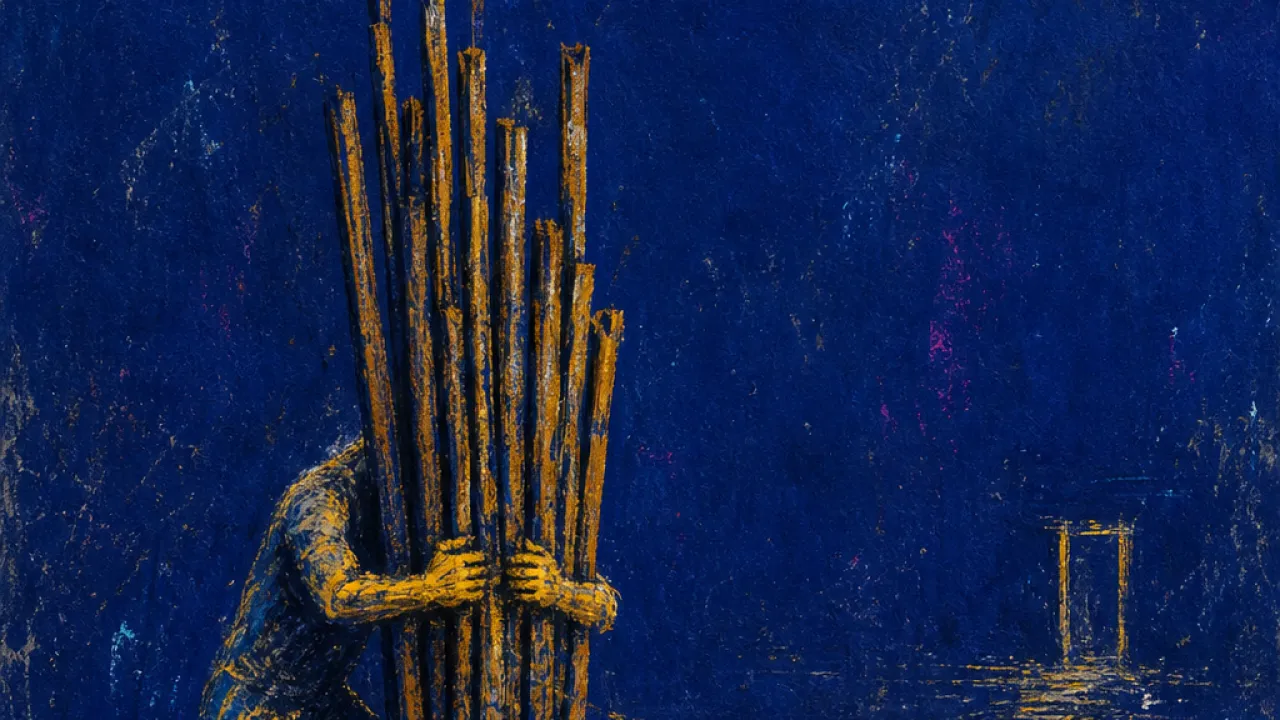
You lock onto one option, one endpoint, or one explanation and keep moving as if everything outside that line has faded into background noise. The focus gives your nervous system a cleaner task: reduce the decision map, quiet the overload, and make the next step feel manageable. Yet the clearer the path appears, the more your peripheral awareness disappears, leaving you pushing forward with less feedback than you think you have, much like the Ten of Wands, where the bundle in the man's arms becomes the very screen blocking his view.

Why did it happen?

At some point, narrowing your attention may have helped you get through overload: one task, one path, one answer was easier to hold than a room full of competing signals. Now the same inner pattern can keep running after the pressure has changed, making your mind return to the brightest option while your body feels more cramped, rushed, or mentally spent.

How does it feel?

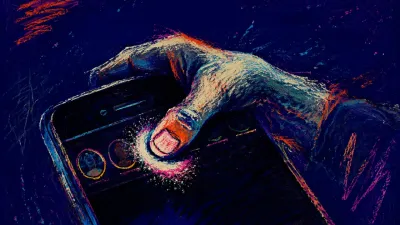
  • You keep a browser tab open for the same application, deadline, grade, or message, clicking refresh with your jaw set while the rest of the screen goes blurry around it... in that moment, your breath may sit high in your chest, as if your body is waiting for one signal to decide everything. Let that pause exist before you turn it into proof.
  • During a meeting, you write down the one comment that stung and underline it twice, while the compliments and neutral feedback stay untouched in the margin... afterward, your shoulders may stay lifted, and your stomach may feel tight around that single sentence. It can simply be noticed as a signal passing through your system.
  • When a friend replies with fewer words than usual, you reread the message, tilt the phone closer, and scroll back for clues in their punctuation... your eyes may feel fixed and dry, with a small pressure building behind your forehead. Not knowing the full context is allowed to remain unresolved for a moment.
  • Alone at night, you rearrange the same plan again and again: one route, one timeline, one metric that has to work, with your hand hovering over the notes as if moving a bullet point could settle it... your neck may stiffen, and the room can start to feel smaller than it is. You can let the plan be unfinished without forcing an answer right away.
  • At work or school, you push through the next deliverable with your head down, skipping water, feedback, or a different method because the endpoint is already in sight... your hands may feel clenched, and your thoughts may run in a narrow track that is hard to interrupt. This is a place to create space, not a verdict on your effort.

Tunnel Vision in Tarot Cards

That moment when one endpoint becomes the whole decision map is where Tunnel Vision starts to show itself. You might notice it in the shallow breath and locked shoulders that arrive when you keep refreshing one possible outcome. Jungian archetypal theory gives this narrowing a symbolic language without turning it into a verdict. These cards mirror the unconscious dynamics beneath that single-line focus; the Tarot Cards below make that corridor visible.

Six of Wands Reversed
The crossed wands, repeated vertical staffs, and central laurel pull attention into one highly visible line of movement. The procession looks triumphant, but its visual force also narrows the field; everything in the scene points toward continuing the parade. That is how Tunnel Vision forms in a choice: one option becomes so symbolically bright that alternatives lose psychological reality. The mind does not simply prefer one path; it stops scanning the full decision map. For You, the risk is mistaking the most obvious or applauded option for the only viable option. The pattern reveals where momentum, status, or public clarity may be hiding a third path, a delayed exit, or a quieter option with a better risk profile.
Eight of Wands Reversed
The wands cross the sky in a single shared direction, so uniform that the whole field begins to obey their line. Their order is powerful, but in reversal that order can become too narrow to admit any other signal. This is the visual logic of Tunnel Vision inside the psyche. One interpretation gathers speed and starts organizing every memory, feeling, and bodily cue around itself. The mind may believe it is getting closer to the truth, while actually losing peripheral awareness. You may notice this when introspection keeps returning to one explanation that feels sharp but strangely airless. The card points to the moment where focus stops being clarity and becomes a cognitive corridor with no side exits.
Nine of Wands Reversed
The figure's gaze does not survey the whole landscape; it cuts toward one side. His hands stay fixed on the wand, and the row behind him organizes the scene into a defensive corridor. Attention becomes a weapon pointed in one direction. In friendship, Tunnel Vision appears when one cue becomes the whole story. A delayed reply, a private hangout you were not invited to, or a flat tone can take over the entire field of interpretation. The wider history of care, context, and mutual repair drops out of view. The reversed Nine of Wands makes this especially sharp because the defense starts consuming perception. The fence still promises safety, but the mind begins using it as a narrow frame. You are not seeing nothing; you are seeing one thing so intensely that the rest of the friendship cannot get enough space to speak.
Ten of Wands Upright
The wands rise directly in front of the man's head, narrowing what his body can see while the distant building remains the only obvious direction. The scene has movement, but the field of attention is reduced to getting the bundle to the endpoint. Tunnel Vision takes hold when academic pressure collapses attention onto one marker: the deadline, the exam, the grade, the final submission. You may keep pushing toward that single point while missing feedback, rest cues, better methods, or the fact that the workload itself needs redesign. The card frames focus as both useful and risky: direction is preserved, but the wider learning system disappears from view.
Reversed
The wands form a wall in front of the man's face, narrowing what he can see while the house ahead gives his movement a single endpoint. The physical composition turns the whole scene into forward pressure with limited perspective. In the reversed state, that narrowed field becomes a cognitive trap. The mind locks onto one relational outcome: get the commitment, keep the relationship, reach the milestone, prove the effort was worth it. Tunnel Vision appears when You keep orienting by the goal while losing contact with whether the relationship is actually mutual, alive, and emotionally safe enough for You. The Ten of Wands is precise because the destination is visible. The issue is not having no goal; it is having a goal so dominant that it blocks the wider read of the bond. The pattern asks for perspective because moving forward can still be a form of avoidance when the load itself is controlling what You are allowed to see.
Page of Wands Reversed
The Page's gaze and body are organized around the wand, while the surrounding desert stays largely unscanned. In the reversed texture, the upright symbol does not simply inspire; it captures the field of attention and makes the rest of the landscape feel secondary. Tunnel Vision forms when one charged signal becomes the organizing center of a decision. A choice can start to feel obvious not because the whole terrain has been mapped, but because the mind has narrowed around the option that produces the strongest spark. The card exposes the difference between focus and capture. You are being shown where attention has mistaken intensity for completeness, and where the decision needs a wider scan before the chosen signal is allowed to dominate the board.
Knight of Wands Reversed
The wand, gaze, horse, and raised front legs all press the eye forward, while the desert details sit low beneath the motion. The composition makes the destination feel dominant, and the surrounding terrain becomes background noise. Tunnel Vision appears when a career target becomes so absorbing that the wider power field disappears. You may lock onto a promotion date, manager response, title, exit plan, or proof of progress while missing stakeholder dynamics, lateral options, skill gaps, and timing signals. The card connects the pattern to a narrowed attentional field, not to a lack of ambition. The drive is real, but it becomes costly when the mind treats one forward path as the only path. The audit restores the terrain around the target so that ambition stops flattening the map.
King of Wands Reversed
The King's gaze fixes forward, and the wand forms a single vertical line from hand to ground. In the reversed field, that clean direction can narrow into a channel where only one route, one outcome, or one interpretation remains visible. Tunnel Vision appears in academic life when the mind locks onto a grade, method, supervisor comment, school, topic, or future identity until every other option loses reality. The study system may keep applying the same strategy even after comprehension, retention, or output has stopped improving. The card's desert setting intensifies the mechanism because the landscape offers little visual interruption. Without deliberate perspective shifts, focused fire becomes a closed corridor, and the student mistakes intensity for accuracy.

Tunnel Vision in Tarot Card Reading Insights

For anyone who keeps orienting by one endpoint while the rest of the field drops away, other readings have held that same narrow corridor. Here is how similar cards appeared when someone sat with that pattern in a spread. Below are Tarot Reading Insights that speak to this focus trap.
Psychological patterns related to Tunnel Vision