Need a clean verdict?

A clear definition of Moral Certainty, related tarot cards, and reading insights that show how this pattern can feel.

Moral Certainty
What is this really?

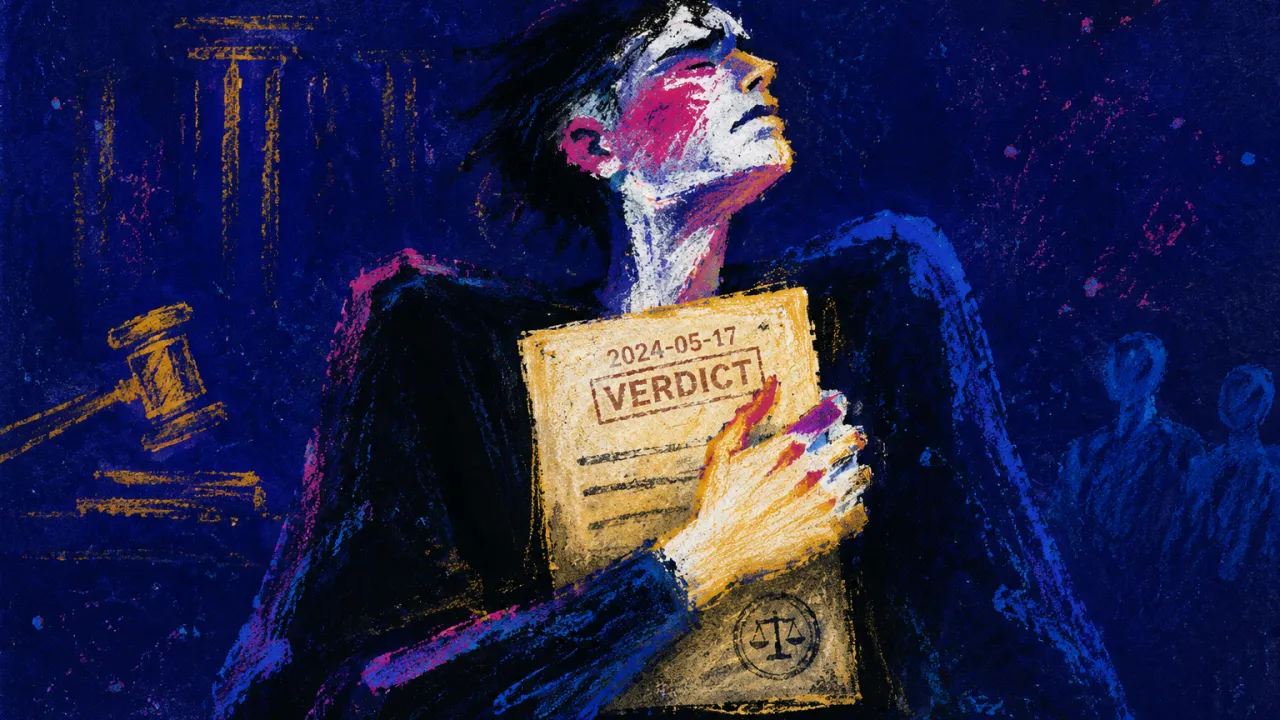
With Moral Certainty, you turn messy conflict, feedback, or choices into a clean moral ruling: who was fair, who crossed a line, which option is pure, and what a decent person would do. The defense mechanism is understandable; when cognitive dissonance makes the room feel slippery, a firm verdict protects your boundaries and gives your body a floor to stand on. Yet the cleaner the verdict gets, the less room there is for doubt, grief, desire, partial accountability, or repair, until your inner court sits above the living ground it was meant to judge, much like the Ace of Swords' crowned blade held in bright air while the barren land below remains untouched.

Why did it happen?

At some point, a clear ruling may have been the only thing that stopped a blurred situation from pulling you under: naming what happened, who crossed a line, and what you would not keep absorbing. Now the same inner pattern can demand a final ruling before you can breathe, so every mixed conversation starts feeling like a court where doubt has to be converted into evidence. That subconscious loop can leave you mentally polished but physically braced, with a tired pressure in your chest long after the argument is over.

How does it feel?

  • In a group chat after a tense message, you reread your reply, delete the softer sentence, and leave the shortest line on the screen; your thumb hovers over send for one extra beat... in that pause, your jaw may set and a hot strip of pressure may run across your chest. Let the heat be noticed before it has to become the whole verdict.
  • During a meeting, you sit a little taller, click open the document with timestamps, and say, 'That's not what happened,' before the other person has finished; the room gets quieter around the edges... your neck may tighten and your breath may climb high into your throat. It is enough to register the tightness without forcing an instant ruling.
  • At a family table, when someone says, 'We all played a part,' you press your fork flat against the plate, give one precise nod, and start listing dates; as the words line up, your shoulders may lift toward your ears and your stomach may feel hard. The body can stay guarded for a moment without being pushed to soften on command.
  • When a friend says, 'I'm sorry, but,' you blink once, smile without showing teeth, and repeat their earlier sentence back almost word for word; after it lands, your hands may feel cool and your throat may go dry. A dry throat can be allowed to exist without turning the whole conversation into a test.
  • Late at night, you open your Notes app, reorder paragraphs until your side reads airtight, and rehearse the reply you would give if challenged; afterward, your eyes may feel gritty while your body stays oddly alert under the blankets. The unsettled feeling can be present for a moment without needing a final sentence.

Moral Certainty in Tarot Cards

Moral Certainty shows up in the moment a messy exchange has to become a clean verdict, and your jaw sets before the room has finished speaking. From a Jungian perspective, archetypal theory gives this stance a symbolic language without turning it into a verdict about you. The cards below trace the unconscious dynamics of a mind turning principle into armor and doubt into evidence. Here are the Tarot Cards that mirror this pattern.

Ace of Swords Upright
The sword pierces the crown with exactness, while the palm and olive branches hang on either side as symbols of victory and peace. The image makes correctness look elevated, balanced, and almost untouched by the barren ground below. Moral Certainty forms when the need to be clear hardens into the need to be unquestionably right. In friendship conflict, this pattern can make a person believe that the cleanest explanation of the issue also makes them the fairest person in the room. The Ace of Swords can expose this because its brilliance has a double edge. You may be naming something real, but the pattern asks whether the blade is opening truth or using truth to avoid humility, repair, and the discomfort of mutual accountability.
Five of Swords Upright
The five swords do not create a clean line of resolution; they point in different directions across a field where no one is facing anyone else. The foreground figure still holds the weapons of the argument, while the others retreat with bowed heads, leaving the scene mentally sharp but emotionally unrepaired. The planted sword gives one position the feeling of certainty. It stabilizes the body, but it also locks the mind into a narrow frame where being correct becomes more important than staying honest with the whole emotional field. The scene shows how a thought can become a shield, then a wall. Moral Certainty appears when your introspection becomes organized around proving that one interpretation is unquestionably right. It can feel clean, even empowering, because it reduces ambiguity. But the card reveals the hidden cost: the more the mind depends on being right, the less room it has to metabolize guilt, grief, envy, or doubt without turning them into evidence for the case.
Knight of Swords Upright
The sword rises above the knight like a visible axis of conviction, while the armor gives his charge a hard, closed outline. His gaze is fixed, the horse is committed, and the surrounding field appears secondary to the direction already chosen. This is how conviction can become a defense structure. The sword can represent clarity, but in this posture it also shows the risk of treating one mental position as the only clean path through complexity. The armor does not just protect the knight from attack; it protects the mission from contradiction. In personal growth, Moral Certainty appears when You identify so strongly with being clear, disciplined, or evolved that feedback starts to feel like contamination. The card reveals how a useful inner code can become rigid enough to block the very cognitive upgrade it claims to serve.
Queen of Swords Reversed
The Queen's throne carries symbols of justice, transformation, and mental sovereignty, while the sword stands upright as a clean instrument of judgment. The image can feel composed and fair, but its very composure can harden into a closed system. In the reversed field, the problem is not having standards; it is mistaking the feeling of clarity for final truth. You may use growth language, boundaries, or self-awareness to make your interpretation feel morally complete before contradiction has been allowed to enter. In personal growth, Moral Certainty blocks evolution by making the current self feel already elevated above the lesson. The card reveals where sharp perception has become defensive closure, and where real transformation may require letting a cherished interpretation be questioned.
King of Swords Upright
The King's throne, sword, and fixed frontal posture create an image of settled principle. His expression does not search the room for emotional feedback; it announces that a standard has already been formed. Moral Certainty grows from that same structure. In a family system where reality has been blurred by guilt, denial, comparison, or pressure, certainty can feel like the only stable ground. It protects you from being pulled back into confusion, but it can also make every disagreement feel like a test of character. The card's severity shows how easily clarity becomes a closed court. You may be right about the pattern, but the psychological audit asks whether righteousness has become the defense that prevents nuance, grief, or partial repair from entering the conversation.
Reversed
The crown, sword, and throne form a closed architecture of authority. The king is high above the mound, facing forward with a stern expression, and the blade turns thought into law. Reversed, this structure can make principle feel more important than emotional evidence. That is how Moral Certainty emerges in introspection. You may decide too quickly which feelings are mature, acceptable, rational, or justified, and which ones should be dismissed before they are understood. The mind protects its self-image by making a verdict before the deeper material has a chance to speak. The card shows the risk of confusing clarity with closure. A clean principle can organize the psyche, but when it becomes too sealed, anger, envy, need, and shame get rejected as morally inconvenient rather than examined as meaningful data.
Seven of Wands Upright
The elevated figure faces the lower wands from a visible high point under a clear, hard sky. The scene gives him perspective, but the same height also tempts the body to treat the argument as a question of who gets to stand above whom. That is the structure of certainty as a defensive brace. You may use being right to keep family confusion from pulling you under, yet the wand can become a rigid proof of innocence instead of a flexible tool for contact.
King of Wands Reversed
The lion emblems, crown, and fiery colors all intensify the King's image of conviction. In reversal, those symbols can stop functioning as self-mastery and start functioning as proof: the body already knows, the gaze already decides, the throne already authorizes the interpretation. Moral Certainty forms when a belief system becomes too polished to receive impact data. In friendship, this often appears through phrases like being honest, being loyal, or saying what everyone is thinking, while the deeper mechanism is a defense against ambiguity and accountability. You may be reading the situation sharply, but the card asks whether the sharpness has become a closed loop. When certainty becomes identity, friends are no longer met as separate perspectives; they become evidence for or against the version of the story your nervous system has already crowned.

Moral Certainty in Tarot Card Reading Insights

For anyone who turns a messy exchange into a clean verdict before their chest unclenches, others have brought this same pattern into readings. After the cards, you can see how Moral Certainty sounds when someone sits with it out loud. Below are Tarot Reading Insights where this pattern appears.

Psychological patterns related to Moral Certainty