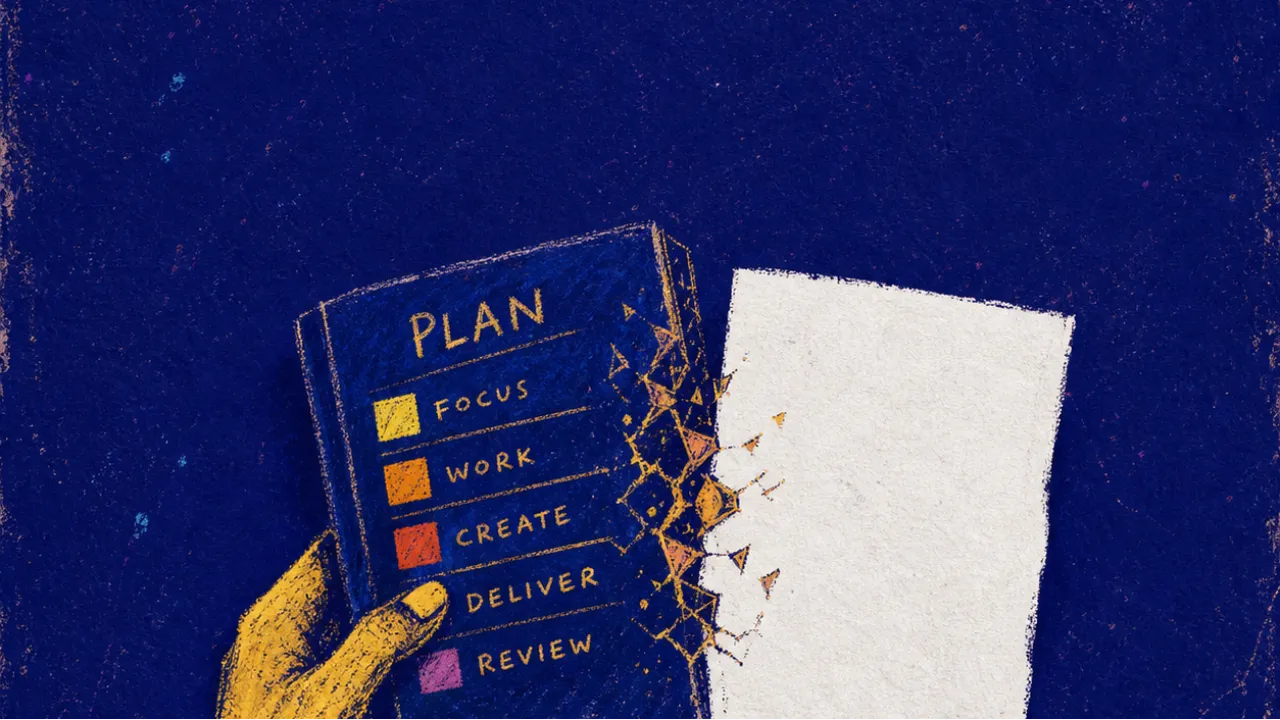
Visible effort that never quite touches the task is the signal here. You may recognize it in your thumb pressing into the planner margin while the blank document stays open. From a Jungian archetypal theory lens, that split between visible responsibility and the untouched field has a clear symbolic language. Here are the Tarot Cards that mirror that unconscious dynamic.
Knight of Pentacles ReversedThe pentacle is handled with care, the armor is in place, and the horse is ready, but none of that readiness touches the soil. The image can look responsible while still showing a body protected from the field where the real work happens. Productive Procrastination in study has that exact texture. Notes get reorganized, planners get refined, desks get reset, slides get reread, and the activity feels legitimate because it resembles studying. The card exposes the difference between visible effort and contact with the task. You may be spending energy, but the pattern asks whether that energy is entering the learning field or circulating inside a safer performance of preparation.
Queen of Pentacles ReversedThe hands remain occupied with the pentacle while the wider garden stays maintained around her. In reversal, that busyness can become a substitute for crossing the threshold into the unknown, because the object in the lap keeps offering one more thing to refine. Psychologically, the pattern turns preparation into a defense against exposure. For you, personal growth can look active from the outside while still avoiding the moment that would actually test the new habit, the new identity, or the new level of visibility.
King of Pentacles ReversedThe King's left hand stabilizes the pentacle on his knee while the whole scene remains seated, stocked, and still. The gaze keeps returning to the object already owned, and the estate around him becomes a closed maintenance field. Productive Procrastination appears when managing the study system replaces contact with the demanding task. You may reorganize notes, rebuild trackers, adjust the setup, or reread familiar material because those rituals preserve control without forcing the academic output to be tested.
Ace of Swords ReversedThe hand looks active, the sword looks ready, and the whole scene announces potential, yet nothing in the barren landscape has actually been cut, shaped, or changed. The image can hold a convincing performance of readiness while the real contact point remains missing. Productive Procrastination uses that same convincing surface. You may highlight, reorganize, build trackers, and gather articles because those actions feel academically legitimate, while the exposed task of writing, answering, submitting, or asking for feedback stays untouched.
Two of Swords ReversedThe woman's arms cannot hold those swords forever. In the reversed texture of the image, the balanced posture becomes an exhausting loop: effort is being spent to maintain the appearance of control, while the body produces no forward motion. Productive Procrastination works the same way in academic life. You may reorganize notes, rebuild a schedule, reread sources, polish citations, or search for another article because these tasks feel legitimate, but they keep you away from the exposed act of drafting, submitting, or being evaluated. The crossed swords show why the behavior is hard to interrupt: the activity is not random delay, it is a defense against imperfect visibility. The mind stays busy to avoid the moment where the work becomes real enough to be judged.
Four of Swords ReversedThe knight’s stillness is orderly, composed, and almost ceremonial, with the hidden sword beneath the body preserving capacity without bringing it into use. Nothing in the image looks chaotic, which is exactly why the delay can feel legitimate. Productive Procrastination grows from this kind of controlled suspension. The system stays busy inside preparation rituals: organizing, reflecting, optimizing, and refining the conditions under which action will supposedly become safe. In personal growth, this pattern appears when You keep improving the container for change instead of entering the change itself. The card shows the seductive calm of preparation when it becomes a socially acceptable way to avoid being tested by reality.
Six of Swords ReversedThe ferryman is visibly working: the oar is long, the boat is loaded, and the route has already begun. Yet the six swords make the vessel heavier, so motion does not automatically equal efficient progress. The scene carries the strange tension of effort that is real but not necessarily aimed at the most exposing part of the journey. That is the academic texture of Productive Procrastination. You may be doing something measurable, reorganizing notes, color-coding readings, building a study tracker, or refining a research plan, while the task that would actually be judged stays untouched. The card's psychology sits in the difference between movement and passage. The boat is not still, but the weight of the swords shows how mental structure can become a disguised delay when it lets you feel responsible without crossing the threshold into visible output.
Seven of Swords UprightThe figure is visibly active, but his activity is angled away from the camp rather than into direct encounter with it. The five swords make the movement look purposeful, yet the awkward bundle also shows how much energy is being spent maintaining a side route. That is the physical logic of Productive Procrastination in study. You can be surrounded by notes, tabs, highlighters, saved lectures, and revised schedules while the actual academic risk point remains untouched. The body is moving, the mind is busy, but the task that would test understanding has been displaced by a safer performance of preparation. The Seven of Swords sharpens this pattern because the action looks strategic enough to justify itself. You may not feel like you are procrastinating because the substitute tasks are academically adjacent. The card exposes the difference between work that reduces threat and work that actually creates learning.
ReversedThe figure is undeniably busy: he moves quickly, grips multiple swords, balances an awkward load, and performs the whole action with tactical concentration. Yet the scene also makes the incompletion impossible to miss, because two swords remain behind and the camp itself has not been directly addressed. Productive Procrastination is the Seven of Swords logic turned inward. Motion becomes a way to avoid contact with the real maintenance point. In lifestyle systems, You may clean, optimize, research, restyle, or rebuild a tracker while sleep, food, recovery, bills, and body care remain the two swords still standing in the ground.
Eight of Swords ReversedThe scene is full of tension, but almost nothing is moving. The woman’s body is held in place, the swords stand like a list of problems, and the blindfold pushes all navigation into the mind instead of the environment. Productive Procrastination appears when that mental activity starts impersonating progress. In lifestyle systems, the person may research the perfect routine, redesign the planner, organize the app stack, save reset videos, or write a detailed blueprint while the room, sleep schedule, meal rhythm, or physical routine remains unchanged. The energy is real, but it circulates inside the enclosure. The card makes the cost visible: planning becomes another bandage when it prevents contact with the first physical step. You are not seeing absence of effort; You are seeing effort trapped in a format that avoids direct reality testing.
Page of Swords ReversedThe Page's red boots and windblown posture suggest movement, yet the twisted body keeps attention looping between the path and the weapon. When that motion folds inward, movement becomes busy tension rather than direction; the figure expends energy without clearly leaving the ridge. For study, that visual loop becomes organizing notes, cleaning a document, color-coding readings, or rebuilding a study schedule while the actual essay or exam practice stays untouched. You are doing something real, but the pattern shows how low-risk productivity can protect you from the task that carries judgment.
Ace of Wands ReversedLeaves fall from the wand even though the wand itself has not been planted or used. The image contains motion around the object, but the central tool remains suspended above the work surface, creating the impression of activity without contact. Productive Procrastination works the same way in academic life. Notes get rewritten, folders get organized, reading lists get expanded, and the student can feel close to the assignment while still avoiding the exposed act of writing, solving, or submitting. The pattern is not a lack of effort; it is effort routed around the place where evaluation could actually enter.
Two of Wands ReversedFrom the battlement, surveying looks disciplined: the figure is upright, focused, and apparently engaged with the future. Yet the physical scene contains no descent from the wall, no contact with the road, and no visible act of building the next step. Productive Procrastination forms when planning becomes active enough to feel responsible but insulated enough to avoid contact with the real task. You may reorganize apps, refine schedules, buy containers, rebuild dashboards, or research routines while the core lifestyle issue remains untouched. The card's castle makes this pattern especially clear. The observation point is useful until it becomes the whole activity; then the system keeps producing the feeling of progress while protecting you from the discomfort of lived implementation.
Three of Wands ReversedThe hand on the wand, the fixed gaze, and the distant ships create a scene full of activity signals while the body remains still. Everything appears organized around movement, yet no physical crossing happens. In the reversed state, that arrangement becomes a convincing substitute for action. You can map the routine, arrange the tools, optimize the setup, and feel temporarily stabilized by the ritual of preparation. Productive Procrastination fits because the card shows how planning can borrow the emotional texture of progress while leaving the core behavior untouched.
Four of Wands ReversedThe garlands hang beautifully across the wands, and the figures hold their celebratory objects in a repeated raised gesture. When the ritual becomes too absorbing, the image can turn into motion around completion rather than movement into the work itself. That is the psychological loop of Productive Procrastination. The card reversed shows a protected academic canopy that feels active because it is organized, decorated, and socially readable, but the hardest cognitive crossing still waits beyond the frame. In study life, this can look like planners, notes, routines, setup, and micro-celebrations replacing active recall, drafting, problem sets, or direct feedback. The pattern is not laziness; it is a defense that chooses safe productivity over contact with uncertainty. Four of Wands makes the disguise visible because the scene contains real structure, but the structure can become a holding area when You keep polishing the threshold instead of crossing it.
Five of Wands ReversedThe reversed Five of Wands turns the busy surface into an inefficient loop. The wands are still moving, but the movement keeps getting absorbed by collision, interruption, and reactivity. Productive Procrastination uses that exact structure. You keep cleaning, tweaking, researching, reorganizing, color coding, or restarting because these actions look responsible, but they delay the more uncomfortable decision about what must be reduced, protected, or sequenced. The lifestyle system stays busy enough to avoid being redesigned. The card makes the avoidance visible without moralizing it. The problem is not that you are doing nothing; it is that doing something has become a defense against doing the structurally relevant thing.
Ten of Wands ReversedThe reversed carrying motion turns the journey into an energy loop: the body keeps moving, but the load remains the central fact. The wands still block the view, and the destination no longer feels like a clean finish so much as another reason to keep straining. That is Productive Procrastination in a lifestyle system. The defense hides avoidance inside useful motion, so You can stay busy with tasks that are real while avoiding the harder structural decision: what needs to be dropped, redesigned, or allowed to remain unfinished. The Ten of Wands makes this pattern visible because every wand can look necessary when held in a neat bundle. The reversed pressure asks whether the visible effort is actually solving the overload, or whether it is preserving the feeling of progress while the deeper architecture stays untouched.
Page of Wands ReversedThe Page grips the wand carefully, holding the object of action upright while standing still in an open desert. The body is close to movement, but the scene freezes at the moment before actual use. The wand is handled, displayed, and charged with intention, yet the ground shows no visible track of sustained work. Productive Procrastination lives inside that exact pause. The mind stays near the task by touching its symbols: the schedule, the notes, the app, the reading list, the color-coded system, the rewritten plan. Because these actions orbit the work, they can feel responsible while quietly avoiding the moment where comprehension or output would be tested. In study, this pattern often appears when the task carries evaluation pressure. You may keep preparing the container because the real academic action would produce evidence: a draft, an answer, a score, a gap in memory. The card makes the defensive choreography visible, showing where preparation has become a safer substitute for contact with the work itself.
Knight of Wands ReversedThe knight is fully arranged for a journey, yet the horse is still suspended at the threshold, performing readiness rather than crossing the desert. Armor, wand, reins, and emblem all signal preparation, but the physical scene has not become forward progress. Productive Procrastination in study has the same architecture: the system creates visible preparation to avoid the more exposing act of producing. You may rewrite notes, rebuild the study plan, organize sources, or perfect the workspace because preparation feels defensible, while the blank page or exam recall would reveal what is not yet integrated.
No cards available for this filter.