Avoiding the thing that matters?

A clear look at shame-driven delay, the tarot cards that mirror it, and reading insights where this pattern appears.

Shame-driven Delay
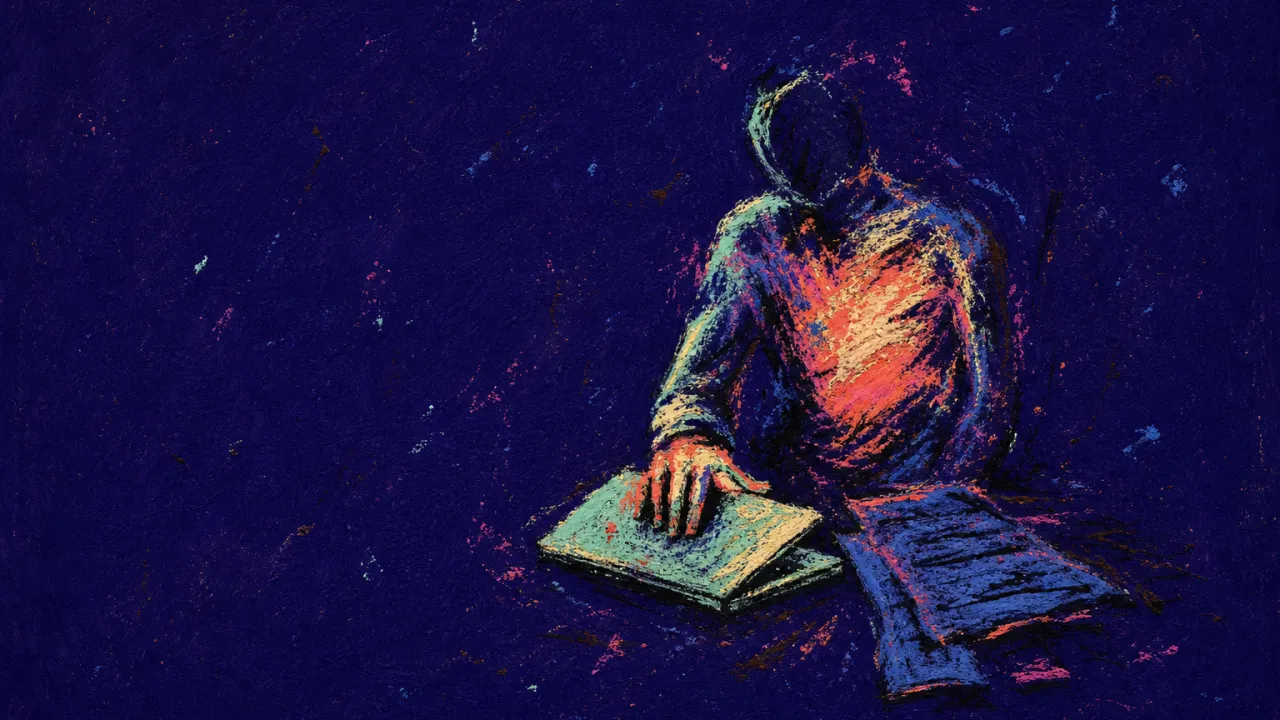
A figure presses a half-open laptop shut beside an unfinished draft, with coral light fractured against dark blue-black

What is this really?

You keep delaying the task you care about most: the email that needs a reply, the draft that matters, the application you swear you will start after one more reset. Part of you is trying to avoid the hot flash of being seen before you feel ready, using postponement as a way to protect your self-respect from one more imagined mark against it. Yet the delay gives you a few minutes of air only to make the task feel heavier each time you return, until you are standing inside your own unfinished proof like the blindfolded figure in the Eight of Swords, surrounded by blades that mark every route you are afraid to take.

Why did it happen?

At some point, waiting may have helped you avoid the sting of being corrected, rushed, laughed at, or measured before you felt steady enough to be seen. Your body learned that if you did not begin, no one could point to the imperfect version yet. Now that same inner pattern can turn ordinary tasks into locked rooms, leaving you mentally tired before anything has even happened.

How does it feel?

  • You open the assignment, rename the file, adjust the heading twice, then close the laptop before writing the first line. In that pause, your chest may feel tight and your face may heat up, as if the blank page is already looking back at you. Let the pause be visible for a moment; it can exist without becoming a verdict.
  • You see a message asking for an update, swipe it away, then keep checking the lock screen every few minutes without replying. Afterward, your stomach may sit heavy and your thumbs may hover over the keyboard, starting and deleting the same sentence. Not answering yet is information, not a final identity.
  • You add the task to tomorrow's list with a neat checkbox, then rewrite the list so it looks controlled even though the item stays untouched. Your shoulders may creep upward, and there may be a thin buzzing behind your eyes when you look at the same line again. You can notice the body bracing without forcing an explanation right away.
  • You tell someone, "I'm nearly done," while your cursor sits in the middle of a half-finished draft you have not opened in days. The moment after saying it, your throat may dry out and your breathing may go shallow, like the room has become slightly smaller. It is okay to register the gap without making it bigger than it is.
  • You wait until the last possible hour, move quickly, skip meals, and finish with your jaw clenched and tabs scattered across the screen. When it is over, relief may arrive with a hollow drop in your ribs instead of satisfaction. That crash can be treated as a signal to slow down, not as proof against you.

Shame-driven Delay in Tarot Cards

That moment when the blank page starts to feel like it is looking back at you is where shame-driven delay becomes visible. The tight chest, heated face, and hovering cursor are not separate from the pattern; they are how it shows up in the body. Jungian archetypal theory offers a way to read this as an inner image of exposure, hiding, and suspended movement. The cards below reflect the unconscious dynamics beneath that delay; here are the Tarot Cards that may mirror it.

The Hanged Man
Reversed
The figure's halo and composed face suggest that a pause can support a changed perspective, while the tied ankle makes that pause embodied rather than abstract. In reversal, self-observation can become another holding pattern when insight is collected to avoid the vulnerability of practicing something differently. You may understand why shame produces delay and still postpone the small experiment that would challenge the cycle. The pattern then uses insight as proof that growth is underway, even while behavior remains protected from visible imperfection.
The Devil
Upright
The two figures remain connected to the same pedestal, while their loose collars suggest that recognizing the bond is part of understanding its power. The scene reflects a developmental system in which shame, avoidance, and temporary relief repeatedly confirm one another until delay begins to look like an identity. You may postpone growth practices because each imperfect attempt activates the belief that you should already be different. The pattern then offers escape from that exposure and later uses the escape as proof that change is impossible, preserving the cycle through self-confirmation.
Judgement
Reversed
The open coffins, lifted arms, and commanding trumpet depict a transition that requires emergence into visibility. In reversal, growth can be stalled by the belief that you must first justify the earlier delay, repair your self-image, or become a more acceptable version of yourself before answering. You may treat development as something that begins after shame has been resolved rather than through a different relationship with shame. The unanswered call then repeats, showing that the bottleneck is not absence of aspiration but the demand to emerge without an imperfect history.
The World
Reversed
The wreath encloses a central figure at the apparent end of a cycle, while the four corner figures make the scene feel witnessed from every direction. In reversal, the last step of an academic project can feel more exposing than all the work before it because submission converts a revisable object into something that can be graded. You may leave a paper nearly finished, continue checking references, or delay pressing submit even after the essential work is present. The pattern preserves control over the imagined final quality, but each extension increases shame and reduces the opportunity for a clean ending.
Eight of Pentacles
Reversed
The repeated pentacles show skill as a series of visible iterations rather than a single perfect performance. In reversal, the same sequence becomes a hierarchy of self-comparison, so practice is postponed unless the next attempt can immediately support the identity of being competent. You may avoid beginner-level repetition because ordinary mistakes feel beneath the person you believe you should already be. The pattern protects self-image by withholding practice, then uses the resulting lack of progress as evidence that growth would be embarrassing.
Two of Swords
Upright
The blindfolded figure holds two swords crossed evenly across her chest, while rocks interrupt the water behind her and a crescent moon hangs above the scene. The balanced weapons preserve a defensive stalemate, capturing how keeping options equal can prevent any choice from becoming visible evidence of flawed judgment. You may continue comparing, request more information, or postpone the decision until one option feels impossible to criticize. Shame makes uncertainty feel like incompetence, so nonchoice protects you from being wrong while quietly allowing time, energy, and external options to decide on your behalf.
Seven of Swords
Upright
The backward glance, partially removed swords, and distant tents place the figure between the task and the people who might notice what is missing. This divided posture mirrors the cognitive load of hiding academic delay, where attention shifts from learning to managing the appearance of progress. You may avoid a supervisor, tell classmates that the paper is nearly done, or keep changing the explanation for why a draft is unavailable. Shame frames honest status information as more threatening than continued concealment, even though concealment makes asking for help progressively harder.
Eight of Swords
Upright
The figure's bindings appear restrictive but not mechanically absolute, while the blindfold prevents her from testing what movement is available. This makes the image especially precise for a limiting belief maintained through nonexperimentation: if you do not begin imperfectly, the feared verdict can never be disproved. You may wait to feel confident before practicing the very behavior that would build confidence. The growth gap persists because shame demands evidence of readiness in advance, while the nervous system can only learn safety and competence through bounded contact with unfinished action.
Nine of Swords
Upright
The covered face conceals the figure from no external observer, while the swords remain suspended inside the private room. This is a precise image of shame continuing after the original audience is absent, with unfinished tasks stored as repetitive internal accusations. You may interpret the intensity of dread as proof that the task is dangerous or that your delay is unforgivable. The card's enclosed scene helps separate emotional amplification from external fact, making the hidden loop visible without dismissing the pressure you feel.
Six of Wands
Reversed
The rider moves above a crowd with a laurel fixed to the raised wand, making professional success conspicuous and socially witnessed. In reversal, visibility can activate fear that the image of competence will not survive closer examination, turning opportunities into occasions for delay. You may postpone an application, presentation, portfolio launch, or request for promotion because being considered would make your actual readiness inspectable. Shame prefers the protected identity of someone who could succeed later, but this postponement blocks the evidence that could produce a more realistic professional self-concept.

Shame-driven Delay in Tarot Card Reading Insights

For anyone who keeps moving a task to tomorrow because opening it feels like being examined, others have brought this same delay into readings. The shift from cards to readings shows how this pattern can appear when someone sits with the unfinished thing instead of only naming it. Below are Tarot Reading Insights that speak to this pattern.

After Deleting an Apology, Three Lines Lead Back to the Study Group

After Deleting an Apology, Three Lines Lead Back to the Study Group

Topic:Study Tarot Reading

Struggle:Perfect Readiness Trap

Context:Study Group Integration Trial

When Office Hours Feel Like a Test: Bringing One Unfinished Question

When Office Hours Feel Like a Test: Bringing One Unfinished Question

Topic:Study Tarot Reading

Struggle:Perfect Readiness Trap

Context:Academic Collaboration Trial

Moving the Red Card Again, Then Sending a Realistic Timeline Update

Moving the Red Card Again, Then Sending a Realistic Timeline Update

Topic:Lifestyle Tarot Reading

Struggle:Productivity Shame Bind

Context:Always On Availability

Advisor Email Perfectionism: From Imagined Verdict to Clear Request

Advisor Email Perfectionism: From Imagined Verdict to Clear Request

Topic:Study Tarot Reading

Struggle:Control Lock

Context:Advisor Power Imbalance

A Swiped-Away Check-In Led to One Repair and a Visible Record

A Swiped-Away Check-In Led to One Repair and a Visible Record

Topic:Personal Growth Tarot Reading

Struggle:Agency-Variance Split

Context:Productivity Theater

Inside the Accountability Evasion Cycle: Return Before the Gap Grows

Inside the Accountability Evasion Cycle: Return Before the Gap Grows

Topic:Personal Growth Tarot Reading

Struggle:Social Accountability Tension

Context:Accountability Evasion Cycle

Three Open Tutoring Slots, Two Renamed Folders, Then One Booking

Three Open Tutoring Slots, Two Renamed Folders, Then One Booking

Topic:Study Tarot Reading

Struggle:Clarity-Exposure Split

Context:Readiness Mismatch Cycle

Twelve Tabs, a Blank Slide—Then a Question Put the Draft in Motion

Twelve Tabs, a Blank Slide—Then a Question Put the Draft in Motion

Topic:Study Tarot Reading

Struggle:Unspoken Expectation Load

Context:Hidden Curriculum Gap

Group Chat Dread on the Streetcar, Then a Two-Line Way Back In

Group Chat Dread on the Streetcar, Then a Two-Line Way Back In

Topic:Social Tarot Reading

Struggle:Social Self-Judgment Lock

Context:Group Chat Tribunal

PTO Guilt Before Friday: Moving From Proof Load to Proportion

PTO Guilt Before Friday: Moving From Proof Load to Proportion

Topic:Choice Tarot Reading

Struggle:Inner Tribunal Lock

Context:Productivity Theater

Cold Takeout, Therapy Tabs, and the Night Booking Changed Meaning

Cold Takeout, Therapy Tabs, and the Night Booking Changed Meaning

Topic:Choice Tarot Reading

Struggle:Masked Self-Division

Context:Support Access Barrier

Streetcar Breakup Draft, Then the Queen of Swords Cut Through Static

Streetcar Breakup Draft, Then the Queen of Swords Cut Through Static

Topic:Family Tarot Reading

Struggle:Autonomy Guilt Bind

Context:Breakup Closure Limbo

Psychological Patterns Related to Shame-driven Delay