Why Are You Carrying Both Sides?

Explore how uneven relationship effort unfolds, the Tarot Cards that mirror it, and related Tarot Reading Insights from sessions.

Relationship Reciprocity Gap
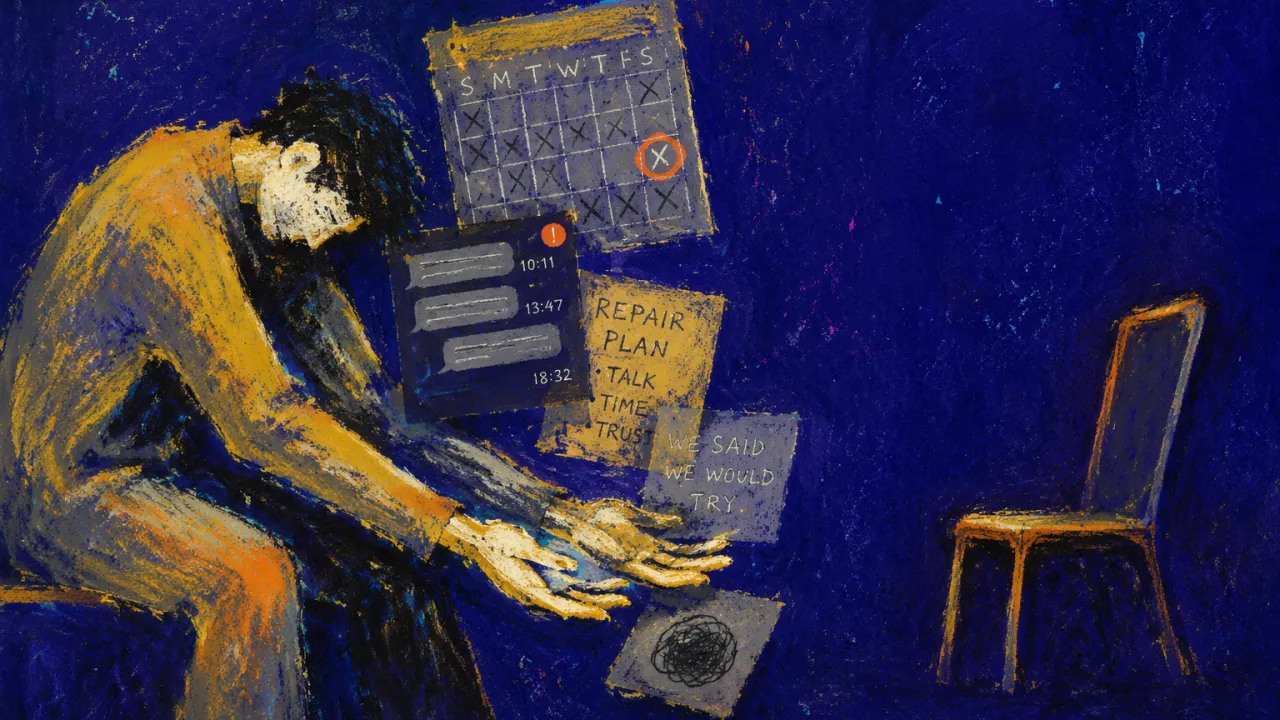
A solitary figure leans over open palms layered with calendars and message threads as an opposite chair recedes.

What is this situation?

Relationship Reciprocity Gap is what you are living when keeping the connection active quietly defaults to you. It starts with small things: you send the first text after a quiet day, suggest when to meet, remember the deadline they mentioned, and ask the follow-up question that keeps their news from dropping into silence. On your phone, over dinner, and after a disagreement, the same arrangement repeats: you create the opening, they step into it, and little happens unless you start again. When plans drift, you reschedule; when a conversation goes flat, you revive it; when something lands badly, you are the one who returns to repair it. They may be warm and engaged once you have made contact, which makes the imbalance easy to overlook, but their effort remains occasional while yours supplies the relationship's continuity. If you stop reaching out, the chat stalls, the calendar empties, and the distance grows without either person naming it. Your shoulders stay braced over the next message or unfinished plan, and time that should feel shared becomes another round of tracking what has not been answered, arranged, or acknowledged. From the outside, the relationship may still look close; in practice, most of its upkeep is gathered into one person's arms, much like the Ten of Wands, where a lone figure carries the entire bundle toward the town.

Why it's not you?

Reciprocity cannot be produced by one person's effort; it requires both people to initiate, respond, and return for repair. When those actions repeatedly default to one side, the imbalance belongs to how the relationship is operating, not to a failure in the person carrying its upkeep.

Relationship Reciprocity Gap in Tarot Cards

In a Relationship Reciprocity Gap, the connection keeps moving because one person repeatedly starts the contact, makes the plans, and reopens difficult conversations. The braced shoulders over another unfinished message register an environmental and structural dynamic: shared upkeep is being distributed unevenly, regardless of how carefully one person manages it. The Tarot Cards below reflect the visible contours of that one-sided load.

The Lovers
Reversed
Two exposed figures stand beneath an angel with a mountain rising between them, but the reversed scene prevents that openness from settling into a stable shared alignment. Attraction, recognition, and emotional access may still exist, while the practical route through initiation, planning, and repair remains blocked on one side. You are not choosing between caring and not caring; you are confronting whether the relationship is being actively chosen by two people. The inverted structure separates chemistry from co-authorship, making unequal maintenance a decision criterion rather than another problem for your effort to absorb.
Justice
Reversed
A crowned figure holds a sword in one hand and balanced scales in the other, but the reversed scene removes stable access to fair measurement and accountability. The relationship's visible closeness can therefore outweigh the less visible evidence about who initiates, organises, remembers, and returns after conflict. You may be treated as equally responsible for the bond while carrying much more of what keeps it functional. The inverted scales name the structural contradiction: equal relationship status does not guarantee an equal share of relationship labour, especially when your compensation prevents the imbalance from producing an immediate breakdown.
The Hanged Man
Upright
A figure hangs by one foot from a living wooden frame, motionless but alert, with a halo marking the perspective available inside the pause. Nothing in the scene advances through force, which mirrors the moment when you stop sending the next text or rescuing the unfinished plan and allow the relationship's existing momentum to reveal itself. You may experience the silence as wasted time because your usual action could restart contact immediately. The suspended position turns that delay into structural information: if the connection remains immobile without your intervention, the stoppage identifies where its movement has been coming from.
Temperance
Reversed
Water travels between two cups held by an angel who stands with one foot on land and one in water, but the reversed scene deprives that transfer of a stable channel. A relationship that needs energy to move in both directions instead relies on you to restart circulation whenever conversation, planning, or repair runs dry. You may still experience moments of harmony after making contact because the emotional ingredients are present. The blocked flow reveals why those moments do not establish reciprocity on their own: connection is being restored through your repeated regulation rather than sustained by a rhythm both partners maintain.
Two of Cups
Reversed
Two figures face one another with separate cups beneath the winged lion and intertwined staff, but the reversed scene prevents their symmetry from becoming a reliable channel. Emotional recognition may still occur when you meet or make contact, while the repeated movement toward connection fails to originate from both sides. You can experience real warmth in the exchange and still be the person who keeps arranging the exchange itself. The blocked cup-to-cup structure names the distinction between mutual feeling in a moment and mutual responsibility for ensuring that another moment happens.
Four of Cups
Upright
A seated figure folds his arms beneath a tree while three cups remain on the ground and a fourth is offered from a cloud. The opening is materially available, but the closed posture shows why an offered conversation, plan, or repair attempt cannot become an exchange through availability alone. You can keep presenting new ways back into contact, and your partner may eventually engage with one of them. The image separates the existence of an invitation from reciprocal participation: your offer remains real, but uptake and the next independent offer belong to the other side of the relationship.
Eight of Cups
Upright
Eight cups stand in an incomplete arrangement while a cloaked figure walks toward a difficult mountain path beneath the moon. The cups are still present, which reflects why leaving is complicated when the relationship contains warmth and history, but the visible gap shows that emotional material alone has not produced a mutually sustained bond. You may be weighing whether to remain the person who keeps the cups arranged or to stop organising the relationship around another person's occasional participation. The open path does not declare an outcome; it makes the exit option visible when continued connection depends on you repeatedly returning to fill the same structural absence.
Two of Pentacles
Upright
One figure loops two pentacles continuously between his hands while ships pitch across waves behind him. His available skill keeps the movement intact, mirroring how you coordinate dates, revive conversations, and absorb shifting plans so the romantic connection does not visibly drop. You may look like the more organised or flexible partner because you can keep adapting. The lone juggler reveals the deeper arrangement: your competence has become the relationship's continuity mechanism, while mutual planning remains an expectation without a second pair of hands.
Three of Pentacles
Reversed
A craftsperson and two collaborators gather beneath a stone arch with a plan in view, but the reversed structure blocks coordinated work around the shared build. The relationship may have a visible form and agreed importance, yet initiation, scheduling, and repair are not being carried out through an effective partnership. You become the project manager, follow-up lead, and repair crew because leaving any role empty allows the connection to stall. The inverted worksite exposes the operational problem beneath the intimacy: the bond is being discussed or enjoyed by two people but maintained through one person's recurring labour.
Six of Pentacles
Reversed
Coins pass from a robed giver toward two kneeling figures while a scale hangs in his other hand, but the reversed scene destabilises both distribution and measurement. Attention, planning, and repair enter the relationship according to an uneven channel, leaving one person with greater control over when effort appears and the other compensating for what does not arrive. You may receive warmth once you initiate, which can make each exchange feel generous in isolation. The inverted scales reveal the larger pattern: responsive moments are not the same resource as independently offered effort, and the relationship remains dependent on what you first place into circulation.
Seven of Pentacles
Upright
A worker leans on a hoe beside a crop heavy with pentacles, pausing to inspect what sustained labour has produced. Messages, dates, remembered details, and repaired disagreements form a similar visible investment, while the solitary worker raises the question of whose effort has generated the relationship's apparent growth. You may keep investing because the bond contains real value and occasional returns. The field nevertheless provides a structural audit: a connection can grow around one person's consistency without becoming mutually cultivated, and waiting for a different yield does not erase the labour pattern already visible.
Eight of Pentacles
Upright
A lone artisan sits at a bench, producing one pentacle after another while completed pieces form an orderly vertical sequence. The visible craft mirrors the repeated small actions through which you maintain the relationship: initiating, remembering, checking in, planning, and repairing are all completed with practiced consistency. You may be capable of doing this work well enough that the staffing problem disappears behind the quality of the result. The solitary workshop exposes what polished continuity can hide: relationship skill remains valuable, but a partnership cannot become reciprocal merely because one person performs its maintenance expertly.
Two of Swords
Upright
A blindfolded figure holds two crossed swords at the shoreline while still water and a distant crescent moon frame the pause. Both options remain physically present, but the guarded posture shows why choosing between another message and deliberate non-initiation can feel less like freedom and more like testing whether the relationship exists without your intervention. You are deciding between preserving continuity through familiar effort and withholding that effort long enough to observe what the other person contributes. The pause does not create the reciprocity gap; it makes an existing one harder to hide, turning indecision into an audit of who reopens contact when your hands remain still.
Ten of Wands
Upright
Bent beneath ten bundled wands, a lone figure carries the entire load toward a town that remains within reach. The relationship can therefore keep moving because your effort is available, but the single body under the bundle makes the distribution problem impossible to separate from the apparent progress. You send the message, make the plan, remember the detail, and return after conflict, so warmth can reappear whenever you reopen the route. The image names the cost of that continuity: what looks like a functioning partnership may actually be one person's capacity carrying every unfinished relational task forward.

Relationship Reciprocity Gap in Tarot Card Reading Insights

When a Relationship Reciprocity Gap leaves one person carrying contact, plans, and repair, others have brought the same uneven exchange into their readings. The Tarot Reading Insights below show what appeared in those sessions.