Post-Flirt Limbo: From Chasing Answers to Choosing a Boundary

The Blue-Lit Commute: Finding Clarity in Post-Flirt Limbo
If you are an early-career marketing coordinator in Toronto, you may know the moment a flirtatious text thread goes quiet between campaign tasks and your phone turns into a second work dashboard for decoding response times. That was the first thing I recognized when Casey sat down with me and said she could not stop chasing clarity after the flirting stopped.
At 8:47 p.m. on a Tuesday, I had watched her reopen the chat on the TTC, scrolling from a warm voice note to a flat one-word reply beneath the blue glow of her screen. The brakes squealed. Wet coats gave the carriage a faint damp smell. Her phone felt warm in her palm, and her shoulders tightened toward her ears.
She looked at me and said, I am not asking for a fairytale. I am asking for the part of the story that explains the silence. She had reread the last exchanges, checked Instagram Active Status, drafted a What changed? message, deleted it, and told herself that one more detail might reveal the exact moment the tone changed.
I heard the contradiction clearly: she wanted an explanation so she could release the attachment, yet the search for an explanation was keeping the attachment alive. Longing had become a browser tab behind her ribs, refreshing itself whenever the real conversation stayed still.
I told her, You are not asking for too much by wanting direct communication. We can look at the pattern without turning the other person into a villain or turning the silence into a verdict on your worth. Today, we can give the unanswered question a shape, then find the part of the next step that belongs to you.

A Six-Card Map for an Unexplained Fade-Out
I invited Casey to put both feet on the floor and take three unforced breaths. As she named the question again, I shuffled slowly. For me, this is not a performance of mystery. It is a small psychological doorway: the hands become occupied, the mind stops racing long enough to notice what it already knows, and the question moves from a private loop into something we can examine together.
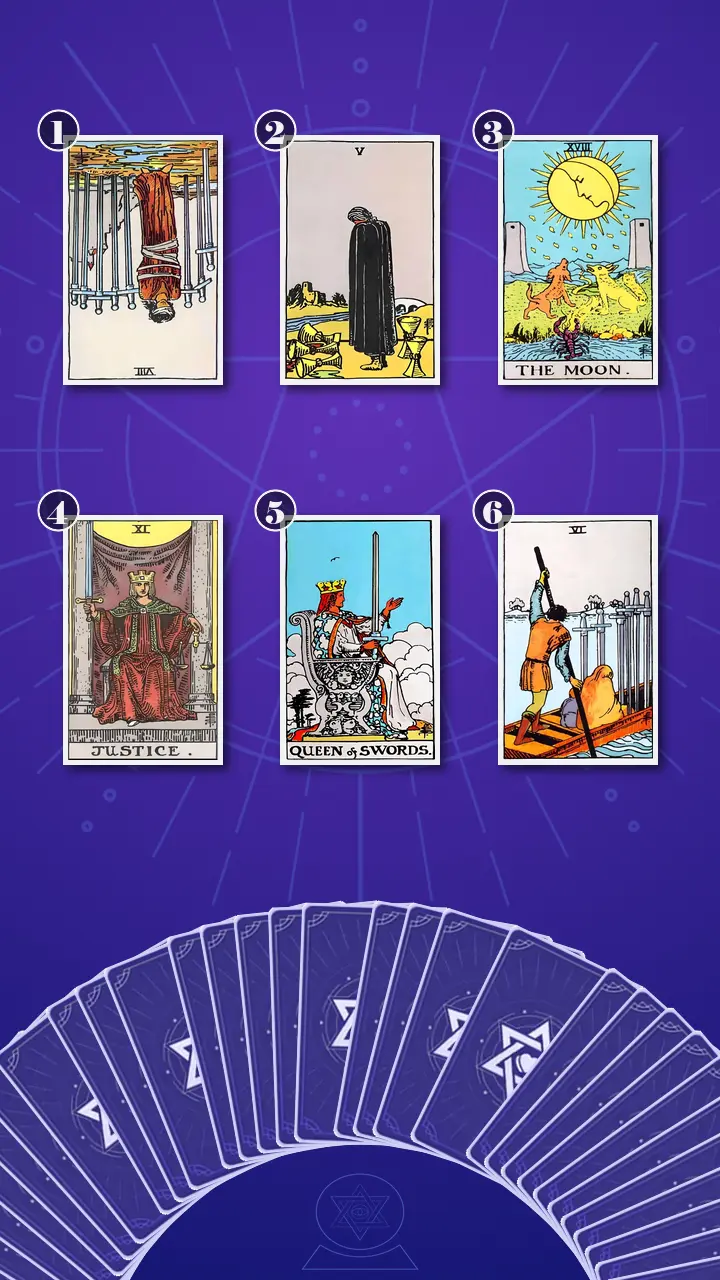
For this reading, I chose the Transformation Path Grid (6) · Context Edition, a six-card relationship tarot spread for tracing a pattern rather than predicting another person's intentions. The consultation question described a self-reinforcing chase after a romantic fade-out, not a simple choice between two external options. A broad Celtic Cross could diffuse that causal chain, and a Decision Cross would assume Casey was choosing between clearly defined alternatives that were not actually in front of her.
The grid gave us a more economical map. The upper row would show the present loop, the emotional blockage, and the attachment-rooted ambiguity beneath it. The lower row would show the clarity pivot, the boundary Casey could control, and the integration direction. I explained to her and to anyone reading along that this is one way tarot works as a reflective tool: card meanings in context create a sequence of questions, and the answers become useful when they return us to observable behavior, choice, and actionable advice.
I would read from the first card across the top, drop to the fourth card as the hinge, and then move through the final two positions. The map would ask not only why the checking continued, but what could interrupt it without demanding instant closure.
Reading the Loop Without Shaming It
The Chat That Pretends to Be a Clue
Now I turned over the card representing the present loop: the concrete post-flirt behavior of rereading messages, checking activity, and chasing clarity after communication becomes quiet.
It was the Eight of Swords, in reversed position.
The card showed a blindfolded figure surrounded by swords, but the reversal mattered. The enclosure was becoming visible. Casey already knew, somewhere beneath the repeated checking, that the chat was not offering new information. At 8:47 p.m. on the TTC, she was still scrolling through the same conversation as if the next reread might be the missing key. The blindfold became selective attention to tiny digital clues. The bindings became drafted-and-deleted follow-ups. The swords became the message history that felt impossible to leave.
This was Air in a contracted state: thought moving quickly but not moving anywhere. The reversal suggested the first loosening of the trap, while the position showed that recognition had not yet become a boundary. I said, The clue hunt can feel like connection while keeping you connected to the absence. I asked her to notice the difference between having more details and having more clarity. One more punctuation mark might be information, but it could not automatically tell her what the other person intended or what she should accept.
I used the inner sentence I had heard underneath her story: I know this search is keeping me stuck, but stopping feels like giving up on the answer. That distinction mattered. I did not want to shame the checking, because it had been trying to give her temporary focus and a sense of contact. I wanted to show her the cost of the strategy without calling the strategy a character flaw.
Casey did not nod. She let out a small laugh with a bitter edge and said, That is almost cruelly accurate. Her thumb stopped above the thread, then moved away from it. I answered, I am not using the card to scold you. I am using it to make the loop visible enough that you can choose what happens during the next urge. The fact that the search helped you cope does not mean it has to keep managing your attention. Her fingers loosened around the phone case, though she kept the screen face down beside her.
What the Silence Spilled
Now I turned over the card representing the emotional blockage: the disappointment and felt rupture that make the unanswered ending difficult to release, without treating betrayal as an established fact.
The card was the Five of Cups, upright.
I described the figure's lowered gaze and the three spilled cups in front of them. On a quiet Saturday evening, Casey had stared at the last disappointing exchange until it seemed to fill the entire room. The card did not prove that betrayal had occurred. It named the felt rupture, the hurt that had become large enough to hide the two upright cups behind her: supportive friends, her own self-respect, and future reciprocal possibilities that had not disappeared simply because this conversation had gone quiet.
This was Water carrying disappointment through the spread. The emotional energy was not excessive because Casey cared; it was narrowed because the hurt had taken over the available line of sight. I told her, We can name what was spilled without declaring that everything is spilled. You can be hurt by the lack of a direct closing conversation and still refuse to turn that hurt into a conclusion about your value.
Her shoulders folded slightly. She wrapped both hands around a cup of tea that had gone cool and said, I can handle rejection better than being left with a question. I let the sentence stand before answering. I said, That tells me the question is carrying more than curiosity. It is carrying a request to be treated honestly. Wanting that is reasonable. The part we need to examine is whether continued searching is bringing you closer to honest treatment or only keeping you available to its absence.
The Active Status Under the Moon
Now I turned over the card representing the attachment-rooted interpretation: how incomplete information, fear, and the need to explain the stop in flirting turn ambiguity into a reason to keep investigating.
It was The Moon, upright.
The Moon showed a path between two towers, with a dog, a wolf, and a crayfish emerging around it. I connected the image to the night-time phone screen: the familiar warmth of the flirtation on one side, the unfamiliar silence on the other, and the emotionally charged route between them. When the other person appeared active online but did not answer, Casey had treated the green dot like weather radar for someone's feelings. A delayed reply, a changed tone, or a Hinge profile update seemed to demand interpretation. None of those digital traces could establish motive.
The Moon was uncertainty in excess and grounded evidence in short supply. Its light was real enough to affect the landscape, but not clear enough to reveal the whole route. I asked Casey to make three separate lines in a blank note:
What I know: the replies became sporadic, and there was no direct closing conversation.
What I am guessing: they met someone, changed their mind, or I misread the connection.
What I am afraid this means about me: I was not worth honest communication.
I named the Betrayal-Closure Lock carefully. It was an interpretation of rupture, not proof that betrayal had objectively occurred. The distinction protected both truth and dignity. Casey could acknowledge the impact without claiming access to the other person's inner life.
First, her stomach dropped and her hand pressed lightly against her chest. Then her eyes lost focus, as if the Active Status dot, the missing emoji, and the last voice note were replaying on a dim screen behind the room. Finally, she released a long breath and whispered, What I am afraid this means about me. Her body had reached the sentence before her mind could argue with it.
I told her, The Moon does not ask you to solve the night. It asks you to stop mistaking the emotional intensity of uncertainty for evidence about someone else's motive. The fear may be telling you that honest communication matters to you. It is not qualified to tell you what your worth is.
When Justice Cut Through the Clue Hunt
The Clarity Pivot: Justice, Upright
The room became unusually quiet before I touched the fourth card. Outside my window, a streetcar bell sounded once and then faded. I turned over the card representing the clarity pivot: the self-exploration practice that separates observable communication from projected motives and restores a fair personal standard.
It was Justice, upright.
The scales and upright sword gave the reading a different kind of air. Justice would not decide what the other person intended. She would ask what was said, what was done, what was never promised, how the pattern affected Casey, and what level of reciprocity Casey was willing to participate in. The direct gaze of the figure was the opposite of hidden-meaning hunting. It looked at the available evidence without pretending that incomplete information was complete.
I told Casey about the diagnostic lens I had developed during fifteen years as a perfumer. I call it Intimacy Distance Calibration. In fragrance, too little space between scent molecules can become suffocating, while too much diffusion can make the scent disappear before it reaches anyone. I use that metaphor to ask whether a relationship is suffering from emotional suffocation or detached coldness. I do not use it to invent a diagnosis for someone who is not in the room. I use it to measure how much space the interaction is occupying in the person who is.
Then I applied my Boundary Permeability Assessment: where does Casey's identity end and the other person's intention begin? Their motive belonged to them. Casey's participation, attention, and standard for reciprocity belonged to her. The boundary was not a wall and it was not punishment. It was the edge of her own skin, made visible.
At 8:47 p.m. on the TTC, Casey had reopened the chat beneath the blue phone light, compared a missing emoji with last week's warmth, and drafted the same question again. Her shoulders rose as if one more detail could determine whether the connection mattered and whether she had mattered within it.
Stop treating another person's explanation as the price of closure; weigh what is observable, name what you require for reciprocity, and let Justice's scales and upright sword cut through the belief that more pursuit must produce certainty.
For three seconds, Casey's thumb froze above the note. Her breath stopped high in her chest, and the muscles at the corners of her mouth tightened as if she were bracing for another notification. Then her gaze slipped out of focus; I watched her replay the TTC, the missing emoji, and the Active Status dot, not as evidence but as scenes she had been asking to convict her. Her fingers closed around the phone case, released it, and opened again. When she looked at the two columns, her shoulders sank a fraction. A damp shine gathered in her eyes. She breathed out through parted lips, a shaky sound that was almost a laugh. For one instant, the room's silence felt too large: without the chase, she had to choose what mattered to her, and that freedom carried its own small vertigo. Then she said quietly, So I can acknowledge that it hurt without claiming I know why. I nodded. Her face was still tender, but no longer asking the unanswered question to certify her worth.
I said, Now, use this new perspective to remember last week. Was there a moment when separating what you knew from what you imagined could have made the next ten minutes feel different?
Casey wrote one sentence beneath Observable fact: The communication became sporadic and there was no closing conversation. Beneath Interpretation, she wrote: The silence proves I was not important enough to receive honesty. She stared at the second sentence, then crossed out the word proves. I watched the change happen in a very small movement of ink.
I told her, Facts can be incomplete without making your worth incomplete. This was the emotional shift I wanted to protect: not from hurt to instant happiness, but from chasing another person's perfect explanation to self-authored clarity, proportionate boundaries, and calmer movement toward reciprocal connection. The question could remain unanswered without keeping her psychologically open to it.
The Sentence That Leaves Room to Breathe
The Queen of Swords and the One-Sentence Reciprocity Rule
Now I turned over the card representing the controlled action: one direct boundary, communication choice, or self-respecting experiment that does not require deciding what the other person intended.
The card was the Queen of Swords, upright.
The Queen's sword was not a weapon for making someone confess. It was one precise sentence. Her steady gaze meant facing the pattern without romanticizing it, and her open hand meant that direct communication could remain candid without becoming coercive. I translated the card through a language Casey already used at work. A clean creative brief names the observable pattern, states the requirement, and stops before adding paragraphs of proof to make the request undeniable.
I offered her this frame: I have noticed..., I am looking for..., so I will.... Casey wrote, I have noticed our communication has become sporadic, and I am looking for consistent reciprocity, so I am going to step back.
She asked, What if writing it is just another way to get them to answer? I told her that was exactly the kind of question Justice had made possible. She did not have to send the sentence. She could draft it in Notes, read it once, and let it become a private decision rule. If she chose to send it, the purpose would be to communicate her boundary, not to force a particular emotional result. If she kept it private, the boundary would still be real.
Her hand moved away from the keyboard. She deleted a second paragraph about the history of their dates, then a third paragraph explaining why she was not being dramatic. The blank space after the sentence made her blink. I saw the difference between communicating a need and building a case for why she deserved to have one.
Carrying the Lesson, Leaving the Loop
The Six of Swords and a Different Direction
Now I turned over the card representing the integration direction: carrying forward the lesson about reciprocity while gradually moving attention out of post-flirt limbo.
It was the Six of Swords, upright.
The boat was moving from choppy water toward calmer water, but it still carried six swords. I told Casey that this was not a promise that she would forget the conversation or wake up indifferent. It was a picture of transition: taking the useful lesson with her while leaving the full transcript behind. She could carry the knowledge that direct reciprocity mattered without carrying every unanswered message into the next date, the next workday, or the next quiet evening.
I connected the card to a later TTC ride. One small transition could be muting the thread for the first ten minutes of a commute, placing the phone in her bag, and noticing which thought returned when the usual checking route was unavailable. The point was not to perform indifference or erase the hurt. It was to supply the Earth that the spread lacked: one observable experiment, one physical change, one choice she could reverse whenever she needed.
Casey looked toward the window, where the tunnel lights moved across the glass in regular intervals. She did not look triumphant. She looked tired, and then a little less crowded inside. Her phone remained face down. After a moment, she said, I think I have been waiting for permission to stop investing. I answered, You can give yourself that permission without pretending the connection meant nothing.
The Boundary Before Explanation
When I placed the six cards in their grid, the sequence became a short, honest story. The Eight of Swords reversed showed Casey noticing the mental enclosure while still returning to it. The Five of Cups showed why noticing was painful: disappointment had narrowed the room until the unanswered exchange seemed to be the only important object inside it. The Moon revealed the root, where incomplete information became emotionally charged and where fear began writing motives into the silence.
Justice was the hinge. It did not convert uncertainty into certainty. It converted uncertainty into a fair question: what communication pattern is actually available, and what standard does Casey want to apply to her own participation? The Queen of Swords gave that standard language. The Six of Swords gave it direction.
The cognitive blind spot was not that Casey lacked intelligence or evidence. It was treating another person's explanation as the condition that made her own boundary legitimate. The clue hunt felt like research, but it was also postponing grief, postponing self-trust, and keeping attention attached to an unavailable interaction. My transformation direction was simple: record observable facts, name the reciprocity boundary, and choose one small next step without claiming to know the whole story.
I reminded Casey that tarot had not revealed a hidden motive or guaranteed a romantic outcome. It had offered a structured way to see the loop, test an interpretation against facts, and return authority to the person living the consequences. She was not waiting for the cards to decide. She was using the cards to hear her own judgment without the noise of repeated checking.
The Two-Column Clarity Check
- Separate the fact from the storyFor the next three urges to check this week, open a Notes app on the TTC, at your desk, or at home and write one observable fact and one interpretation about the last exchange. Set a 30-minute timer, then decide freely whether checking or contacting still serves the reciprocity you want.Start with one recent exchange and a two-minute timer if the full exercise feels too large. The interpretation column is for noticing, not proving.
- Draft one clean boundaryIn Notes, write one sentence addressed to the situation rather than a case against the person: I have noticed our communication has become sporadic, and I am looking for consistent reciprocity, so I am going to step back. Read it once, add no second paragraph, and wait until the next day before deciding whether to send it.Keeping the sentence private is a valid boundary. Contact is optional; extracting reassurance is not the assignment.
- Use the Blank Space ProtocolOn one commute this week, mute the thread or place your phone in your bag for the first ten minutes. Notice the thought that rises, then put one reciprocal connection, ordinary plan, or enjoyable task into the next open evening without using it to prove that you have moved on.Treat the blank space as oxygen, not a permanent wall. You can reverse the setting at any time; the practice is designed to restore choice and comfortable emotional distance.
I called these steps small on purpose. A boundary does not become more valid because it is dramatic. In a relationship, as in scent, space can let the truth of an interaction arrive without forcing it to fill every room.

A Quieter Ride Home
Six days later, Casey sent me a message: I muted the thread for one TTC ride and slept through the night. This morning I still thought, What if I am wrong? Then I made breakfast before answering the question.
I held onto the bittersweetness of that update. The doubt had not vanished, and she had not pretended that the fade-out was harmless. But the question was no longer deciding when she was allowed to eat, sleep, work, or trust herself. Her attention had moved one small stop away from the old loop.
I thought of that as the first quiet proof of her Journey to Clarity. The Six-position Transformation Path Grid had not supplied a perfect explanation. Casey had turned incomplete facts into a standard she could hold, chosen a proportionate boundary, and begun moving toward reciprocal connection. The cards were a map; she was the person with her hand on the route.
When a flirtation goes quiet, your chest can stay tight as you refresh the thread, because stopping the search can feel dangerously close to agreeing that you were not worth a clear ending. You can carry the lesson without carrying every unanswered message.
If you could let the available facts stand without making them explain your worth, what small boundary or moment of attention would you feel curious enough to choose next: one quiet TTC stop, one muted thread, or one clean sentence that leaves room to breathe?