Can You End It Alone?
Explore the struggle's lived shape, related tarot cards, and session insights from people who brought the same unfinished ending to readings.

Closure-authority Split
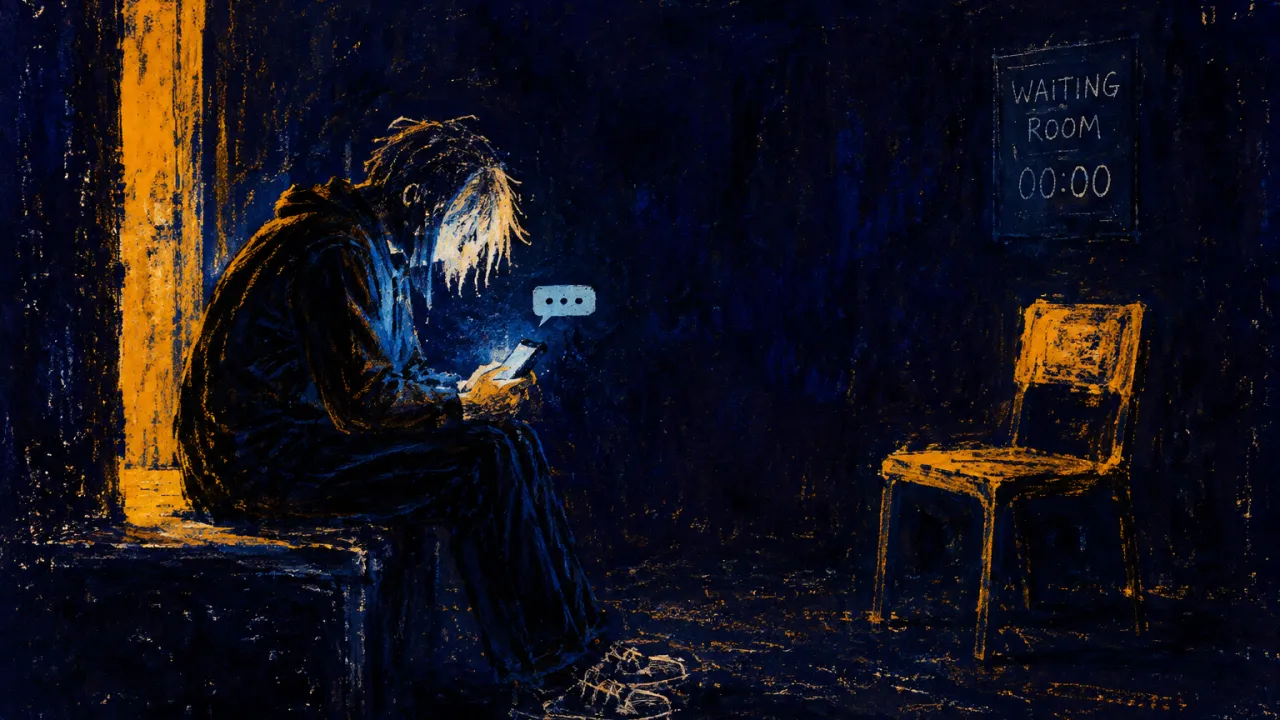
What does this feel like?
Closure-Authority Split is the deadlock of knowing something has ended while still feeling that only the other person can make the ending official. At 12:47 a.m., you reopen a chat you already archived and reread the last four lines, watching the empty space beneath them as if the right explanation might still appear there. Your eyes feel hot, your shoulders have crept upward, and your thumb rests over the keyboard while the same thought circles: if they would just explain, apologize, or admit what happened, then you could finally put it down. You can list the facts clearly. They stopped replying, the decision was made, the connection changed, or the opportunity passed. Yet closing it yourself feels uncomfortably close to saying it did not matter, that your version does not count, or that they get to leave without naming what their silence cost. So you stop contacting them but do not stop waiting. You delete the draft but keep the screenshots. You tell friends you are done, then feel your chest tighten when a notification appears. The difficulty is not that you cannot see the ending; it is that recognition and permission seem to live in different hands. Days continue, but part of your attention stays booked for a reply, a final meeting, a verdict, some clean sentence that will convert what happened into something you are allowed to call finished. The existential cost is a life kept partly in pending status, with an unavailable answer retaining authority over your time and meaning, much like the Eight of Cups, where a cloaked figure walks away under the moon while the cups behind them remain visibly incomplete.
What's pulling at you?
You can see enough to know the connection or chapter is over, while the ending still feels valid only if the other person explains, apologizes, or confirms it. Moving on without that answer can feel like erasing what mattered; continuing to wait keeps your own timeline tied to a response you cannot produce.
How It Shows Up?
- At 12:47 a.m., you open the archived chat, scroll to the final message, and wait for typing dots that have not appeared in weeks. The phone becomes like the lantern held by The Hermit, lighting the same few lines while the rest of the room disappears; your eyes sting, your shoulders lift, and your thumb hovers over a draft you promised not to send. You can place the screen facedown without deciding what the silence means tonight.
- When a friend asks why you still think about it, you say, 'I just want one honest answer,' then study their face to see whether that sounds reasonable. Your half-smile holds a second too long, your chest feels packed, and your fingers tighten around your glass as you try to fit months of ambiguity into one casual sentence. You are allowed to answer only as far as words are available today.
- You finish a project, submit the final file, and receive no clear confirmation from your manager, client, or professor, so you reopen it several times to check for something you missed. Your hand stays fixed on the trackpad, your shoulders remain raised, and the completed document feels oddly unfinished without someone else's approval beside it. The tab can remain closed for the next hour, even if that approval has not arrived.
- At drinks with friends, someone mentions the person or place connected to the unfinished ending, and your expression goes still before you arrange it into a neutral smile. The room keeps talking, but for one suspended beat you are inside the Two of Swords' pause; your ribs hold a shallow breath and your shoulders turn slightly inward. The moment can pass without requiring you to announce whether you are over it.
- While you wait at a crosswalk, your phone buzzes and your whole torso goes still before you even see the screen. Your palm warms around the phone, your chest tightens, and your shoulders rise; when the alert is only a delivery update, the release is small and strangely tiring. That first reflex can pass without becoming a verdict on whether you have moved on.
Closure-authority Split in Tarot Cards
Closure-Authority Split lives in the gap between knowing an ending has happened and waiting for someone else to make it official. It shows up physically when an ordinary notification pulls your shoulders upward and tightens your chest before you even read the sender's name. From an existential view, its structural framework concerns who gets to declare that your time, meaning, and attention are no longer pending. The Tarot Cards below mirror the visible contours of that deadlock.
Closure-authority Split in Tarot Card Reading Insights
When an ending feels valid only after someone else confirms it, other people have carried the same waiting, replaying, and unfinished questions into readings. The Tarot Reading Insights below gather what surfaced in those sessions.

Waiting for Family Repair Before Letting Go? A Defined Pause
Topic:Family Tarot Reading
Struggle:Inherited Repair Burden
Context:Family Estrangement Threshold

At 11:47 p.m., Breaking No Contact Gives Way to a 24-Hour Pause
Topic:Love Tarot Reading
Struggle:Insight-Integration Gap
Context:Accountability Evasion Cycle

She Reopened the Chat Until a 24-Hour Pause Changed the Question
Topic:Love Tarot Reading
Struggle:Reciprocity Deficit
Context:Slow Fade

Reopening the Old Chat After Ghosting: Letting Silence Count
Topic:Love Tarot Reading
Struggle:Idealization-Reality Split
Context:Ghosting After Intimacy

When Silence Becomes a Self-Verdict: Separating Facts from Story
Topic:Love Tarot Reading
Struggle:Vulnerability Without Containment
Context:Ghosting After Intimacy

Post-Flirt Limbo: From Chasing Answers to Choosing a Boundary
Topic:Love Tarot Reading
Struggle:Pain-Narrowed Vision
Context:Post-Flirt Limbo

Waiting for Family Acknowledgment: Choosing Contact Based on Behavior
Topic:Family Tarot Reading
Struggle:Family System Overidentification
Context:Family Script Pressure

When a Missing Detail Became the Breakup Trap: Choosing One Boundary
Topic:Love Tarot Reading
Struggle:Memory-Loyalty Bind
Context:Insight Integration Window

After a Public Breakup: A Seven-Day Boundary Toward Private Closure
Topic:Love Tarot Reading
Struggle:Metric-Compass Fusion
Context:Public Breakup Fallout

After a Sudden Breakup: From Clue-Seeking to Self-Authored Closure
Topic:Love Tarot Reading
Struggle:Support Access Split
Context:Insight Integration Window