Can the Glow Hold Weight?

Name the gap between a glowing ideal and lived evidence, then view matching tarot cards and reading insights.

Idealization-reality Split

What does this feel like?

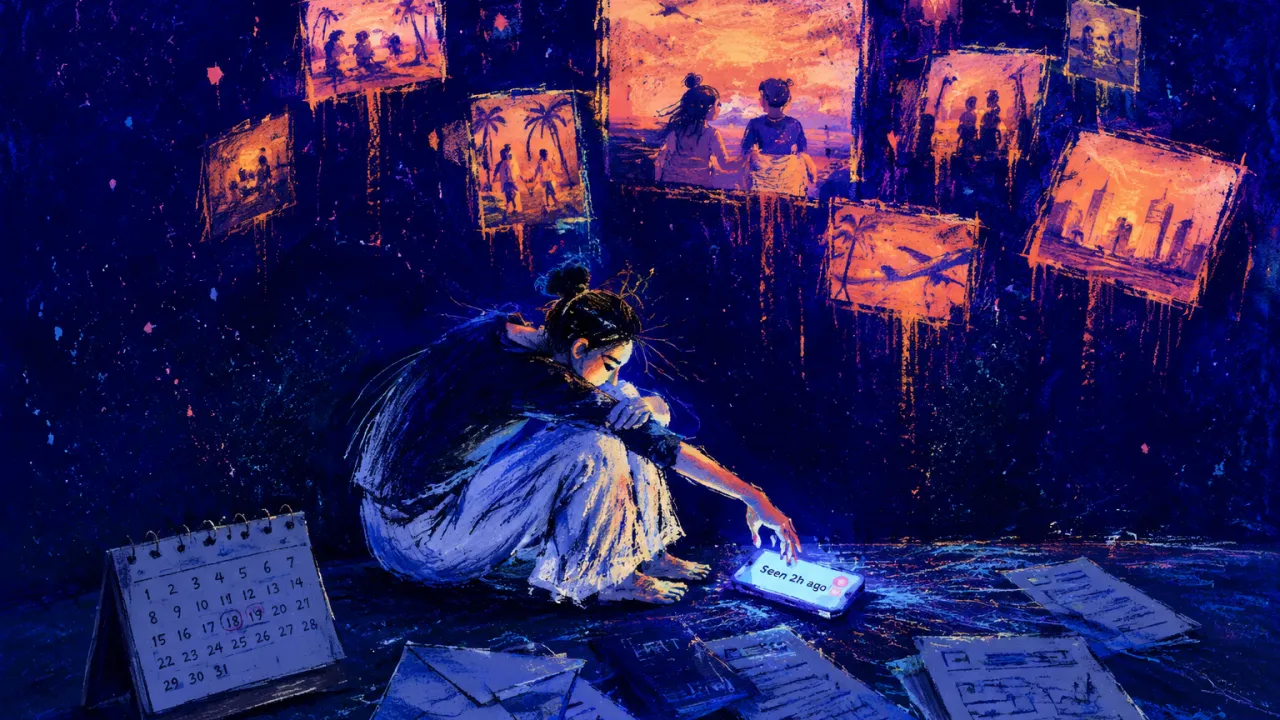
Idealization-Reality Split - you notice it in the moment your phone lights up and your body answers before your mind can. One ordinary message, one job post, one look across a room, one sentence that almost says what you wanted to hear, and suddenly the whole thing glows: the relationship becomes a future, the opportunity becomes a new life, the person becomes a sign, the choice becomes the doorway you have been waiting for. Your chest lifts first, almost sweetly, and then something lower in your body tightens, because part of you can already feel the difference between the image and the ground. You keep trying to hold both at once: the version that feels rare, meaningful, cinematic, almost clean enough to trust, and the version that keeps asking dull, inconvenient questions about timing, reciprocity, money, repair, effort, and what actually happens after the first rush passes. You are not making things up; the beauty is often there, and that is what makes the split so hard to name. The chemistry may be real, the promise may be sincere, the dream may carry a piece of you that has been waiting a long time to be recognized. But then the evidence arrives in small physical ways: the stomach drop after a delayed reply, the shoulder tension while you refresh the email, the little heat behind your eyes when someone's behavior does not match the role your mind had given them. You start editing the facts to protect the feeling, or editing the feeling to survive the facts, and either way you lose contact with the plainness of what is in front of you. The cost is not simply disappointment; it is the exhaustion of living with one foot in an imagined future and one foot on uneven ground, trying to step forward without letting either side collapse, much like The Fool with face lifted toward the bright sky, white rose in hand, while the cliff waits inches from the next step.

What's pulling at you?

You are not confused because you cannot see; you are stuck because two convincing things are asking to be believed at once: the beautiful version that gives everything meaning, and the ground-level evidence that asks for pace, proof, and repair. One side wants to protect the glow because it feels rare; the other keeps noticing timing, reciprocity, cost, and consistency.

How It Shows Up?

  • You wake up on a Sunday with no plans and still feel like you are late to a version of your life that should already be happening. You lie there with your phone on your chest, flipping between apartments, jobs, people, trips, and bodies that all seem to belong to a cleaner timeline than yours. Your throat feels dry, your ribs feel tight, and the room around you looks too ordinary compared with the bright cup in your head. You can let the morning stay small without making it answer for your whole future.
  • Someone you are dating takes longer to reply, and your mind instantly splits the room in two: on one side, the connection as it felt at its brightest; on the other, the plain fact of a silent screen. You reread old messages until the words start to feel staged, your stomach drops, and your thumb hovers over a text you are not sure you want to send. The glow is still there, but so is the ground under it, like a foot near the edge of a cliff. It is allowed to pause before you turn the silence into a verdict.
  • At work or school, you catch yourself staring at a job posting, grad program, creative role, or city move that seems to solve everything just by being named. For a few minutes, the future feels crisp: the title, the desk, the clothes, the new version of you walking into the room. Then your shoulders creep up, your jaw tightens, and the details start arriving one by one - money, hours, skill gaps, politics, fatigue. You can notice the charge around the image before deciding whether it can hold weight.
  • You are out with friends, and everyone is talking about plans, relationships, moves, launches, glow-ups, the next thing. You laugh at the right times, but part of you is watching the room from a distance, comparing every messy human moment with an invisible picture of how connection is supposed to feel. Your chest gets warm, your smile stays in place a second too long, and you feel the strange loneliness of being surrounded by people while measuring your life against an airborne version of itself. It is fine to step outside for air without needing a better explanation.
  • There is a fixed place in your body where the split keeps showing up: the stomach drop after new evidence, the tight neck when the fantasy has to bend, the forehead pressure from trying to keep two versions of the same thing alive. You may feel it while brushing your teeth, waiting for the train, reading an email, or lying in bed with the blue light on your face. The body keeps asking for ground while the mind keeps arranging the image in the clouds. You can take the signal seriously without forcing an instant answer.

Idealization-reality Split in Tarot Cards

Idealization-Reality Split lives in the gap where the glowing version of someone, a path, or a future feels more coherent than the evidence under your feet. You feel it when your stomach drops after a small inconsistency, or when your shoulders tighten while you keep protecting the bright image. Seen through an existential lens, the structural framework is simple: your longing is trying to keep meaning intact while your body is asking for contact with the ground. The Tarot Cards below make that outline visible without explaining it away.

The Fool Upright
The white rose, lifted face, bright sun, and joyful posture sit in the same frame as the cliff. The visual field holds innocence and consequence together, but the Fool’s attention privileges the upward story over the foot-level facts. Idealization-Reality Split becomes visible when the inner narrative of renewal outruns the body’s contact with reality. You may recognize the sincere desire to heal, start over, forgive, become lighter, or trust the unknown, while the unprocessed material underneath still has weight. The card witnesses the split without shaming the longing. It shows how a beautiful internal story can be true in intention and still incomplete as a map, especially when inner work turns brightness into a way of not looking down.
Reversed
The white rose, bright sun, and jubilant face sit inches from a drop. The image is not lying about the purity of the feeling, but it also does not let the feeling erase the physical fact of the cliff. In love, this is the split between the beautiful story and the relational terrain that must still be walked. Chemistry, potential, innocence, and hope can all be real while still failing to answer whether the bond has reciprocity, timing, and repair. The card gives the split a clean edge. It shows why the romantic image can feel so convincing, and why the body may still need proof from the ground before trusting the leap.
The Magician Upright
The Magician stands among red roses and white lilies, with the same red and white polarity repeated on his clothing. Desire and purity are not separated in the image; they are arranged together around a figure whose gesture binds the higher and lower fields without dissolving their difference. In love, that visual pairing can describe the split between the partner as a real person and the partner as a vessel for longing, meaning, and projection. You may feel both the physical pull of the connection and the urge to protect an ideal version of it, which makes ordinary inconsistency feel disproportionately destabilizing. The table keeps the scene staged, as if the relationship must remain symbolically coherent before it can be touched in its messier human form. The struggle appears where romantic meaning becomes so charged that reality starts to feel like an interruption rather than the place where love has to prove itself.
Reversed
The Magician gathers red and white, roses and lilies, upward reach and downward pointing, spiritual gesture and material tools into one controlled field. Reversed, the image can stop feeling integrated and start feeling split between a flawless ideal and the ordinary matter that refuses to disappear. In introspection, that split often appears as the pressure to become the version of yourself who is fully healed, fully aligned, fully conscious, and never reactive. The actual self, with its fatigue, shame, desire, resentment, and unfinished history, then feels like evidence of failure rather than material for integration. The card names the fracture between the self-image you are trying to manifest and the reality that must be included for the work to become honest. It does not ask you to choose one side; it shows why the split itself has been draining the inner field.
The Lovers Reversed
The garden is lush, the angel is radiant, and the lovers appear placed inside a scene that already looks meaningful. Yet the actual human exchange remains sparse: separate bodies, divided gazes, different trees, and no shared touch at the center. In love, a powerful story can start carrying more weight than the relationship's lived evidence. You may keep protecting the meaning of the connection because it feels rare, fated, or transformative, while the daily reality of mismatch, distance, or uneven desire keeps asking for a clearer reading. The reversed Lovers exposes the split between symbolic beauty and relational fact. It names the strain of loving the frame around the relationship while quietly struggling with what the relationship can actually hold.
The Hanged Man Reversed
The halo around the Hanged Man's head illuminates an inverted body that is still physically tied. The image holds revelation and restriction in the same frame, so the brightness around the mind can make the suspended state feel purposeful even while the rope remains unchanged. In romantic attachment, that structure appears when meaning becomes strong enough to compete with evidence. You may read distance, waiting, or inconsistency as proof of depth, while the actual relationship pattern continues to keep you upside down and unable to stand on what is real.
The Tower Upright
The lightning-struck tower shows a structure that looked immovable until one clean fracture exposes its instability. The crown falls, the walls burn from within, and the people inside are forced out into open air before they can choose a graceful exit. That is the visual shape of a relationship ideal breaking under direct evidence. You are not just reacting to one bad moment; you are watching the image of the bond separate from the facts now visible in front of you. In love, this struggle appears when the version of the relationship you protected no longer matches the behavior, silence, avoidance, or rupture you are actually living with. The card does not flatten the bond into failure; it locates the exact split between what the relationship was supposed to mean and what it can no longer hide.
The Star Reversed
The largest star dominates the sky while the kneeling body remains small, low, and physically tied to land and water. In the reversed field, the distant point of brightness can become more compelling than the ground-level evidence of where the body is actually positioned. That image fits the split between loving a relationship's possible future and living inside its present form. You are not wrong for seeing light, but the card draws a hard boundary between guidance and projection, between what shines above the bond and what the bond can actually sustain.
The Sun Reversed
The Sun’s brightness is repeated through the rays, flowers, wreath, feather, flag, and the white horse beneath the child. In reversal, that repetition can turn clarity into saturation, where one radiant image becomes the only reference point the scene is allowed to use. In love, this marks the split between the relationship as it feels at its brightest and the relationship as it behaves under ordinary pressure. You may keep orienting around chemistry, innocence, potential, or the sense that the connection is special, while practical mismatches and unmet needs struggle to register as equally real. The card does not deny the light. It shows how light can become blinding when it is used to overrule every shadow that would help you see the whole relationship.
The World Upright
The central figure is surrounded by repeated signs of wholeness: the laurel oval, the head wreath, the paired wands, the flowing scarf, and the balanced creatures at the corners. Everything in the image seems to answer itself, while the dancer floats without ordinary ground beneath her feet. In love, that visual perfection can become a private measuring system. You may compare the relationship to an image of seamless alignment, then treat every awkward silence, mismatch, or unmet need as proof that the bond has fallen short of what it was supposed to be. The card's completion imagery gives this struggle its exact outline. The issue is not wanting too much from love; it is using an ideal of total integration as the ground, then feeling destabilized when real intimacy arrives with friction, timing gaps, and separate nervous systems.
Four of Cups Upright
Three cups stand on the ground while a fourth cup appears from the cloud, and the figure looks toward neither. The image separates tangible emotional evidence from an elevated, almost unreachable version of fulfillment, leaving the body suspended between what is present and what is imagined. In love, that split can make an available partner, apology, conversation, or commitment feel strangely insufficient. The relationship may contain real material, but the inner measure of love is attached to a cleaner, safer, more absolute image that no ordinary exchange can fully match. Idealization-Reality Split fits because the card does not show simple rejection. It shows two different planes of emotional meaning occupying the same scene, while You sit inside the gap between the love that can be touched and the love that feels like it should arrive from somewhere else.
Six of Cups Upright
The cups in this scene are not filled with water; they hold flowers, fragrance, and a preserved image of innocence. The courtyard glows with a fairy-tale clarity, while ordinary adult complexity is pushed behind the walls and into the background. Idealization-Reality Split appears when the inner world uses a polished memory as the standard for what safety, care, or happiness should feel like. You may not be rejecting the present consciously, but the psyche keeps measuring present experience against an edited emotional image that reality cannot reproduce. The Six of Cups anchors this split through the beauty of its objects. The flowers are real, but they are not drinkable; the memory is precious, but it cannot fully feed the current self unless the idealized frame is seen as a frame.
Seven of Cups Upright
The cups are full of images, not usable substances, and they are held by clouds instead of ground. The laurel even carries the small warning of the skull, placing the shine of achievement beside an undertone of cost. Family longing can work through that same split. You may keep reaching for the image of the family that could finally understand you, while the grounded history of contact keeps giving different evidence; the struggle lives in the gap between the glowing cup and the hand that cannot actually hold it.
Reversed
The laurel wreath promises victory, yet a skull sits beneath it, turning the image of success into a container with an unseen cost. Around it, the other cups float on cloud rather than ground, polished enough to attract devotion but unsupported by real terrain. Idealization-Reality Split is the reversed pressure of this image. In personal growth, the ideal self can become so complete in the mind that real practice feels like a downgrade, because reality introduces friction, repetition, limits, and evidence. The card shows why the split becomes painful. The vision is not empty; it is too visually coherent, too seductive, too clean. You are caught between the fantasy of a finished self and the imperfect conditions that any actual self must pass through.
Ten of Cups Upright
The adults look upward toward a luminous pattern of cups while their feet remain in the ordinary world of grass, water, children, and home. The card holds two coordinates at once: the radiant ideal above and the lived emotional environment below. In introspection, that vertical split can become a private measurement system. You may keep comparing your actual inner state against a beautiful internal image of what peace, healing, love, or maturity should feel like. Idealization-Reality Split names the strain of living under an emotional rainbow that is easier to admire than to inhabit. The card gives the split a visible form: the psyche reaching toward a completed image while the body still has to live inside an unfinished human day.
Knight of Cups Upright
The Knight's attention is magnetized by the cup, even as the horse carries him toward a landscape that still has to be negotiated. The cup can hold meaning, invitation, and promise, but it cannot replace the practical knowledge of how to cross the stream. In academic life, the same structure appears when a subject, program, research identity, or future credential becomes more vivid than the actual terrain of doing the work. The ideal is not false, but it can become so bright that the workload, feedback loops, and ordinary skill gaps are seen too late. The distant hills matter because they are visible without being mapped. This card gives your struggle a clean boundary: the beautiful academic story is real as motivation, but it becomes costly when it stands in for contact with the reality that must be crossed.
Queen of Cups Upright
The Queen's gaze is absorbed by the ceremonial chalice rather than the open shoreline around her. The cup is beautiful, symbolic, and closed, so it can hold an image of love more perfectly than any ordinary exchange could. That visual structure mirrors the split between a relationship as imagined and a relationship as lived. You can become attached to the potential, the feeling, or the private story around someone, while the real person remains partly outside the frame that your inner world has polished.

Idealization-reality Split in Tarot Card Reading Insights

The idealization-reality split often shows up when the imagined bond, role, or future stays brighter than the exchange, schedule, or choice you are living through. From here, the page shifts from the card mirror to readings where others brought the same gap into the spread. Tarot Reading Insights from sessions.

Psychological struggles related to Idealization-reality Split