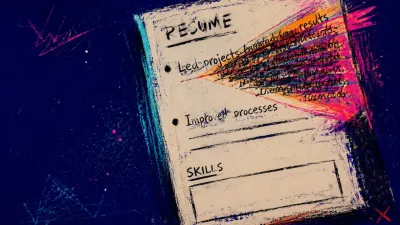
Finding Clarity in the Calendar Pop-Up
You’re an early-career project coordinator in Toronto, and a simple calendar reminder can trigger instant deadline panic—like “Sunday Scaries,” but for a Tuesday 3 PM due time.
Jordan said it like they were quoting a fact they hated knowing about themselves.
When they sat down across from me, I could still see Monday night on them—the kind of night where the laptop glow is the only light in a condo living room, your phone is warm from doom-scrolling, and you keep nudging commas and spacing in a doc that was already “fine.” The radiator clicks. Somewhere through the wall, a neighbour’s TV laughs at the wrong time. And even in the quiet, Slack timestamps feel loud.
“It’s not the work that scares me,” Jordan told me, palms flat on their thighs like they were trying to pin themselves to the chair. “It’s the moment I have to be seen.”
They described the loop: a deadline reminder hits, their stomach drops before they even open the file, and suddenly they’re in a private trial. A manager’s “How’s it going?” turns into a cross-examination. A teammate posting “shipped it” becomes evidence against them. They’ll over-edit, over-polish, reformat headers nobody asked for—anything to delay the one thing that matters: sending it.
What they wanted was simple and honestly reasonable: to meet deadlines confidently and be seen as reliable. The thing that kept hijacking them was just as simple, and far more brutal: the fear that if anything is late or imperfect, they’ll be judged as incompetent or careless.
The panic wasn’t abstract. It had a body. Jordan’s jaw held tight like it was clamping a scream back into place; their breathing stayed shallow, like their lungs didn’t trust the room. It reminded me of watching a market open on a trading floor—nothing had happened yet, but the air already braced for impact.
“Okay,” I said, keeping my voice steady on purpose. “We’re not going to treat this like a personality flaw. We’re going to treat it like a pattern you learned—one that can be updated. Let’s make a map through the fog. Today is a Journey to Clarity, not a verdict.”

Choosing the Compass: The Four-Layer Insight Ladder Spread
I asked Jordan to take one slow breath in through their nose, and a longer breath out—nothing mystical, just a way to signal to the nervous system, we’re here now. While they held the question in mind—Why do deadlines still trigger panic, and what’s my next step?—I shuffled.
“For this,” I said, “I’m using a spread I call the Four-Layer Insight Ladder · Context Edition.”
Here’s why this layout works so well for deadline anxiety at work, especially when perfectionism and old feedback are tangled together: it separates the symptom (what you do and feel under pressure) from the trigger imprint (the old note, the old tone, the old moment), and then from the deeper rule you built to survive it. Once we can name those layers, we can interrupt the loop with a practical next step instead of more self-blame.
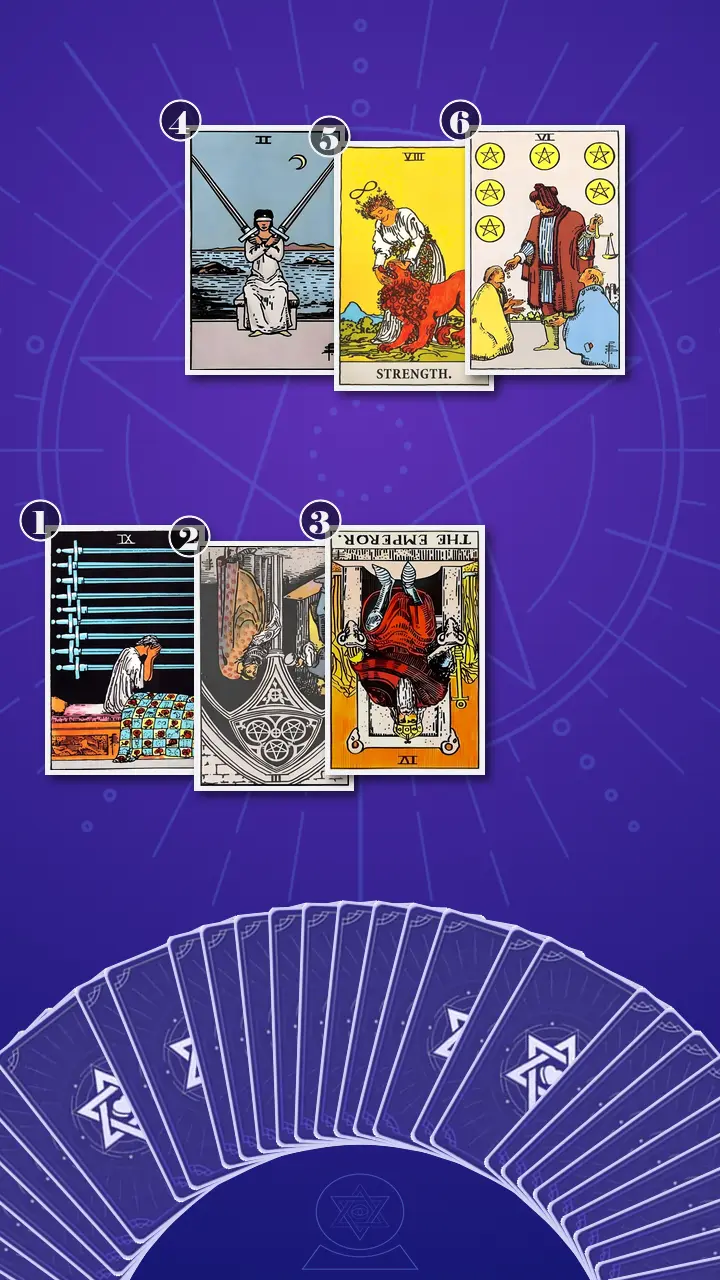
I pointed to the stepped shape of the cards as I laid them down. “Position 1 shows the surface symptom—what deadline panic looks like on your screen and in your body. Position 3 is the foundation—what inner authority belief turns a schedule problem into a threat. Position 5 is the key shift, the medicine. And Position 6 is the grounded next step—something socially realistic you can do this week, not a fantasy version of you.”
Card Meanings in Context: The Loop, the Trigger, the Rule
Position 1 — Surface symptom: the most observable deadline-trigger behavior and immediate mental load.
“Now flipping over,” I said, “is the card that represents the surface symptom—what’s happening on the surface, the most observable deadline-trigger behavior and immediate mental load.”
Nine of Swords, upright.
There it was: the private, dark room of the mind. Not the office. Not the manager’s face. Not the actual deliverable. The mind’s night-shift—running a prosecution case while the rest of the world is asleep.
“This is like 3:22 AM,” I told Jordan, using the exact modern translation the card demanded. “You’re half-awake, replaying an old late-work note like it’s happening live. Before you even open your laptop, you’ve already imagined the Slack thread, the disappointed tone, the performance review language—like you’re drafting a case against yourself.”
The energy here isn’t “you’re bad at time.” It’s Air overload: thought pressure in excess, spiraling into catastrophic forecasting. The Nine of Swords doesn’t ask, What’s due? It asks, What does this due date mean about you? That’s why the chest tightens before the task even begins.
“Perfection is a hiding place that looks like productivity,” I added, watching to see if it landed.
Jordan let out a quick laugh that sounded like it scraped their throat on the way out. “That’s… yeah. That’s too accurate,” they said, and the smile was half there, half bitter. “Like, rude. But accurate.”
I nodded. “It can feel a little brutal when the pattern is described cleanly. But clean is good. Clean means we can work with it.”
Position 2 — Trigger imprint: the old feedback/late-work memory and how it still frames today’s deadlines.
“Now flipping over,” I said, “is the card that represents the trigger imprint—the old feedback/late-work memory and how it still frames today’s deadlines.”
Three of Pentacles, reversed.
In the traditional image, this is teamwork and craft—learning in public, building something with others. Reversed, it warps into being graded. Collaboration turns into evaluation. Feedback turns into a scoreboard.
“This,” I said, “is you drafting a simple status update—three lines, totally normal—then deleting it because you picture your manager reading it as evidence you’re behind. So you go silent, work harder in private, and accidentally create the exact surprise you feared.”
The energy here is Blockage. The Pentacles want steady, visible craftsmanship. Reversed, that steady visibility gets blocked by fear of critique. And when visibility gets scary, the nervous system tries to protect you by making everything private and final-only—which is exactly what makes deadlines tighter.
I asked, gently but directly, “What’s the line from that old note? Not the whole email—just the piece that still replays.”
Jordan’s eyes flicked down and left, like their brain had pulled a file from a cabinet. “It was short,” they said. “Like… ‘Please don’t let this be late again.’ That was it. But it felt… sharp.”
“Short notes can hit hardest,” I said. “Because your mind fills in the rest with whatever you fear most.”
Position 3 — Root mechanism: the inner rule or authority belief that turns deadlines into threat.
“Now flipping over,” I said, “is the card that represents the root mechanism—the inner rule, the authority belief that turns deadlines into threat.”
The Emperor, reversed.
Reversed Emperor isn’t a lack of discipline. It’s discipline turned into self-attack. It’s an inner boss voice that confuses control with safety, and mistakes with loss of respect.
“This is you treating the due date like a moral test,” I said, grounding it in the modern-life scenario. “You make an overly strict plan, cut sleep, and add rules no one asked for—because a part of you believes control is the only thing keeping you from being labeled unreliable.”
Then I used the contrast that always clarifies this card for high performers: “There’s a difference between an inner protector and an inner prosecutor. The protector says, ‘Let’s create structure so we’re safe.’ The prosecutor says, ‘If we slip, we deserve punishment.’”
In my mind, I flashed to my old life—Wall Street, screens everywhere, time pressure baked into every decision. The best leaders I ever worked under weren’t the ones who barked “no excuses.” They were the ones who made the plan simpler under stress. Structure as support, not a weapon.
Jordan swallowed, hard. Then they exhaled like they’d been holding a breath they didn’t know they had. “Oh,” they said quietly. “Yeah. That’s… that voice.”
“And that voice,” I said, “is why a deadline feels like judgement day. It’s not just a schedule; it becomes a character trial.”
The Freeze Response That Looks Like Productivity
Position 4 — Protector pattern: the specific way they ‘stay safe’ that accidentally increases time pressure.
“Now flipping over,” I said, “is the card that represents the protector pattern—the way you stay safe that accidentally increases time pressure.”
Two of Swords, upright.
“This is the blindfold card,” I said. “The panic UI. Options disappear.”
And then I gave it to Jordan exactly as life looks: “You have the draft and the ‘final’ version open side by side. You keep toggling between them, fixing small things, waiting for a moment of certainty that never arrives—while the clock quietly does what clocks do.”
In terms of energy dynamics, this is Balance that becomes paralysis. The Two of Swords is trying to protect your heart—crossed arms, crossed blades. But under a deadline, it becomes a stall tactic dressed up as caution.
I narrated the montage, quick-cut style, because this card lives in motion that goes nowhere: “Two versions of the same doc open. Slack notifications piling up. Google Calendar flashing. Cursor hovering over ‘Send’ while you rewrite the first sentence again.”
Jordan nodded, and then a half-laugh slipped out—the uncomfortable kind, like being caught doing something you didn’t realize had a name. “You’re not scared of the work. You’re scared of being seen,” they said, repeating it back to me like they were testing if it was allowed to be true.
“Exactly,” I said. “And the stall makes total sense as protection. It just has a brutal long-term cost.”
When Strength Spoke: A Calm Rule for the 60 Seconds Before “Send”
Position 5 — Key shift: the most transformational reframe and inner capacity to practice under pressure.
I let my hands pause above the next card for an extra beat. The room felt quieter—not in a dramatic way, just in the way it gets quiet when someone finally stops arguing with themselves and starts listening.
“Now flipping over,” I said, “is the card that represents the key shift—the transformational reframe and inner capacity you can practice under pressure.”
Strength, upright.
Not force. Not hustle. Not another stricter system built at 1 AM. Strength is regulated courage. Gentle hands. A lion that doesn’t get punched into submission—just met.
“Right before you send anything,” I said, tying it to real life, “you stop arguing with your inner critic and do a tiny regulation ritual: long exhale, shoulders down, one clear action. You don’t become fearless—you become steady enough to deliver without self-attack.”
Setup: “If you’ve ever watched the calendar reminder pop up and instantly felt your stomach drop—then found yourself changing one more line, one more font, one more bullet—this is the moment where the due date stops being a schedule… and starts feeling like a verdict.”
Stop treating the due date like a lion that will devour your reputation; meet it with steady hands, a slowed breath, and one brave deliverable—Strength over force.
Reinforcement: Jordan’s reaction didn’t come out as a big epiphany sentence. It came out in layers, the way real nervous systems shift.
First, a brief freeze: their breath hitched, and their fingers stopped fidgeting with their sleeve mid-motion. Then the cognition seeped in: their gaze went unfocused for a second, like they were replaying every midnight “rescue plan” they’d built in Notion and every time it still didn’t make them feel safe. Then the emotion released: a slow exhale, longer than the inhale, and their shoulders dropped—just a few millimeters, but enough that I could see their neck look less braced.
“That feels… doable,” they said, and their voice surprised them a little. “Like… I don’t need a tougher personality. I need a calmer pre-send moment.”
That was the pivot. Force vs leadership. Bully yourself into shipping vs guide yourself into shipping.
Here’s where I brought in one of my own tools—because Strength isn’t one-size-fits-all. “I use something I call a Potential Mapping System,” I told Jordan. “It’s basically an energy profile. Under pressure, some people are Sprinters—they do best with short bursts and quick sends. Others are Deep Thinkers—they create safety through refinement, but they can get trapped in endless polishing.”
I looked at the spread, then back at them. “You read like a Deep Thinker under stress. Your gift is quality. Your trap is using quality as fear management.”
“So the Strength move for you isn’t ‘work harder,’” I continued. “It’s: regulate for 60 seconds, then choose one delivery action that can’t be endlessly polished.”
I leaned in slightly, keeping it practical. “Now, with this new frame, think back to last week: was there a moment right before you hit send—or didn’t—where this would have changed how you felt?”
Jordan blinked, eyes a little brighter. “Thursday,” they said immediately. “11:58 PM. I had the update drafted. I deleted it three times. If I’d… just led myself for a minute instead of negotiating with that voice… I would’ve sent something.”
“That’s the exact shift,” I said. “This isn’t about becoming a different person. This is from performance-triggered panic and shame around being ‘seen’ to calm, values-based reliability through small visible increments.”
Position 6 — Next step: one grounded, socially realistic action that builds repeatable deadline trust.
“Now flipping over,” I said, “is the card that represents the next step—one grounded, socially realistic action that builds repeatable deadline trust.”
Six of Pentacles, upright.
“This is the scales,” I said. “Not vibes—agreements.”
And then I translated it into modern work life: “Instead of disappearing until the last minute, you send an early checkpoint and ask one scope question. The deadline stops being a private crisis and becomes a shared plan—measurable, adjustable, and way less personal.”
Energy-wise, this is Balance moving into Earth: coordination, resourcing, reciprocity. It’s the antidote to the isolation implied in the reversed Three of Pentacles. The Six of Pentacles says: you don’t prove worth by suffering silently; you build reliability by being findable and predictable.
“A due date isn’t a verdict—it’s a coordination point,” I said, and Jordan’s face softened like something inside them finally unclenched around that sentence.
Actionable Advice: The 60-Second Strength Reset + Coordination-First Deadlines
I pulled the whole ladder together into one story, because people don’t change from isolated insights—they change when the insight becomes a narrative they can recognize mid-spiral.
“Here’s what your spread says,” I summarized. “The Nine of Swords is the symptom: your mind turns deadlines into a private prosecution. The Three of Pentacles reversed is the trigger imprint: collaboration and updates feel like being graded, so you go quiet until you can appear ‘final.’ Underneath it, the Emperor reversed is the root rule: an inner authority voice equates control with worth and mistakes with humiliation. That pushes you into the Two of Swords protector pattern—freezing while looking busy. The medicine is Strength: calm, compassionate leadership in the minute before you act. And the application is the Six of Pentacles: turn deadlines into shared agreements—scope, checkpoints, realistic expectations—so you’re not carrying the whole thing alone.”
The cognitive blind spot I wanted Jordan to see was simple: they kept trying to solve a nervous-system alarm with more mental control. More planning. More polishing. More self-interrogation. But the transformation direction is the opposite: lead the body first, then make a small visible move.
To make it practical, I used one of my own frameworks—my 5-Minute Decision Tools. It’s a tri-axis check that stops overthinking from pretending it’s “being responsible.” Advantage / Risk / Breakthrough. We don’t need a perfect plan; we need a small experiment and a weekly calibration.
- The 60-Second Strength ResetBefore one deadline this week, set a timer for 60 seconds. Feet on the floor. Inhale 4, exhale 6 (longer exhale). Unclench your jaw on purpose. Then immediately do one irreversible delivery action: send a 3-sentence status note, attach the rough draft, or book a 10-minute alignment call.If your chest spikes and your brain says “this is pointless,” shorten it to 30 seconds. This is practice, not punishment.
- The 3-Sentence Progress Note (48-hour checkpoint)48 hours before the next due date, send a message (Slack or email) with: (1) what’s done, (2) what’s next, (3) one question that clarifies scope or priority. Keep it boring and specific—coordination, not confession.Use a template so you don’t overthink tone. Remind yourself: you’re not asking for permission to exist—you’re coordinating work.
- Three Non-Negotiables + Optional PolishPick one deliverable and write, inside the doc itself, your three non-negotiables (what must be true for it to ship). Label everything else “optional polish.” When you feel the urge to over-edit, ask: am I improving a non-negotiable, or am I doing fear management?If you’re a Deep Thinker, optional polish is where you can disappear for hours. Put a 15-minute cap on it and ship v1.

A Week Later: Small Visibility, Less Lion
A week later, Jordan messaged me—no long explanation, just a screenshot of a Slack update draft in their Notes app.
“Did the 60-second thing,” they wrote. “Sent the 3 sentences 2 days early. Didn’t die. Also… my manager replied with one line: ‘Perfect—ship v1 Friday.’ I slept like a person.”
It wasn’t a fairy tale ending. Jordan added, “Still felt the spike in my chest. But it passed faster. And I didn’t open Notion at midnight to build a new system.”
That’s the kind of proof I trust: not “I’ll never feel anxious again,” but “I can feel it and still deliver one brave thing.” In our Journey to Clarity, the cards didn’t promise a new personality. They offered a new relationship with pressure: Strength in the minute before action, and Six of Pentacles in the systems around it.
When the clock gets loud, it’s not the task that crushes you—it’s the old fear that being late or imperfect will expose you as someone who can’t be trusted.
If deadlines were allowed to be coordination instead of a verdict, what’s one small ‘visible increment’ you’d be willing to share before you feel ready?
This story is adapted from psychological research, written so that those in a similar struggle can see their own pattern in it — and find their next step clearly.These insights are not a substitute for professional psychological, medical, legal, or financial advice.
Learn more about our Journey to Clarity.
How did this insight land for you?
🫂 This Resonates Deeply
🌀 Living This Story
✨ Now I See Clearly
🌱 Seeing New Possibilities
🧰 Useful Framework
🔮 The Confirmation I Needed
💪 Feeling Empowered
🚀 Ready for My Next Step
Author Profile
 AI
AI“I spent years in the intense, high-stakes world of Wall Street. I know exactly how isolating and heavy the weight of uncertainty can feel in the dead of night. I use strategic, commercial logic not to be cold, but to protect you from unnecessary friction. Think of me as a fellow traveler who has walked the same rocky path—offering sharp but deeply supportive wisdom to help you clear the fog and confidently win your narrative back.”
In this Study Tarot Reading :
Core Expertise
- Academic ROI Auditing: Objectively evaluating the strategic yield of a specific degree, major pivot, or high-investment research direction.
- Institutional Resource Leverage: Treating mentor relationships and university networks as strategic assets requiring proactive upward management.
Service Features
- The Research Sunk-Cost Audit: A rigorous decision framework to calculate whether to strategically pivot or persevere in a stalled academic project.
Also specializes in :
Explore Related Patterns:
CatastrophizingA manager's simple 'How's it going?' becomes a cross-examination in Jordan's mind, and a teammate's 'shipped it' becomes evidence against them. Before the file is even open, the imagined Slack thread, disappointed tone, and performance-review language are already playing. That is Catastrophizing: the nervous system treats a deadline cue as if the worst social and professional outcome is already underway. You are not responding only to the task; you are responding to a projected chain of judgment where one imperfect moment becomes proof of incompetence or carelessness. This pattern explains why the panic arrives so early. The body reacts before the work begins because the mind has already fast-forwarded to exposure, criticism, and loss of trust. The practical correction is not to debate every fear in your head, but to interrupt the forecast with a concrete coordination move: a short progress note, one scope question, or a clear version-one send.
Freeze ResponseJordan's freeze does not look like doing nothing. It looks like two document versions open, Slack notifications piling up, the cursor hovering near 'Send,' and another sentence being rewritten while the deadline gets closer. That is why Freeze Response fits this story. You are not choosing laziness or carelessness; your system is bracing under perceived evaluation. The body tightens, breathing gets shallow, options collapse, and the safest available action becomes motion that avoids the irreversible exposure point. The pattern loosens when the body gets a smaller job than 'be fearless.' The 60-second Strength reset gives your nervous system a bridge from immobilized vigilance into one concrete action. The goal is not to erase the spike; it is to feel the spike and still send one visible increment.
Perfectionism-Driven AvoidanceJordan's calendar reminder does not lead straight into task execution; it leads into polishing, reformatting, version toggling, and delaying the send. The work is already described as mostly fine, but the visible handoff still feels unsafe, so refinement becomes a protective ritual. That ritual is the core mechanism of Perfectionism-Driven Avoidance. You are not simply trying to make the deliverable better; you are using quality control to postpone the moment where the work can be judged. The defense makes sense because it creates a temporary feeling of control, but it also keeps the deadline trapped inside a private pressure chamber. The pattern becomes costly because every extra polish move buys short-term relief while increasing time pressure and reducing communication. The next step in the story works because it separates real standards from fear management: define the three non-negotiables, cap optional polish, regulate for 60 seconds, and make one visible delivery action before certainty arrives.
Strategic VisibilityJordan's next step is not to expose everything at once; it is to send a small, structured signal 48 hours before the deadline. The three-sentence progress note makes the work visible enough to coordinate without turning visibility into a performance. Strategic Visibility is the healthier mechanism emerging in the story. You choose the size, timing, and purpose of what gets seen. That gives your nervous system a contained way to practice exposure while giving the team enough information to adjust scope, priority, or expectations. This pattern directly answers the 'next step' part of the question. Reliability becomes repeatable when visibility happens before panic peaks. You do not wait until the work is criticism-proof; you share a clear increment early enough for the deadline to become a shared plan.
Visibility AvoidanceJordan says the work itself is not what scares them; it is the moment they have to be seen. That line anchors the whole pattern: status updates, draft sharing, and sending are not neutral work steps, but exposure points. Visibility Avoidance is the coping mechanism that follows. You reduce the risk of judgment by keeping the work private until it feels final enough to survive scrutiny. In the short term, that lowers the discomfort of being watched; in the long term, it creates silence, time pressure, and the exact last-minute surprise you were trying to prevent. The story's repair is a controlled form of visibility. A three-sentence progress note is small enough not to feel like a public performance, but visible enough to rebuild trust. You are practicing being findable before you feel perfectly ready.
Authority HypervigilanceJordan's current deadlines are filtered through the old note: 'Please don't let this be late again.' That short line still gives ordinary work cues an evaluative charge, so a manager's check-in can feel like a trial and a teammate's update can feel like evidence. Authority Hypervigilance names the scanning pattern here. You are watching for signs that someone with evaluative power has already decided you are behind, careless, or unreliable. The mind fills in tone, consequence, and judgment before the actual conversation happens. This is why the next step has to include visible coordination rather than more private effort. A 48-hour checkpoint gives authority a real signal to respond to, instead of leaving your nervous system alone with imagined verdicts. You are not submitting yourself for grading; you are making the work legible and adjustable.
Control CopingJordan responds to deadline fear by tightening the system: stricter plans, extra rules, less sleep, more private pressure, and more mental surveillance. The due date stops being a schedule and starts acting like a moral test. Control Coping is the mechanism underneath that move. You try to create safety by increasing control, because part of you has learned that control is what protects you from being seen as unreliable. The problem is that control becomes a self-attack when it is used to prevent shame rather than support action. The story's shift is important because it does not remove structure; it changes what structure is for. A 60-second reset, a three-sentence checkpoint, and a scope question turn structure back into support. You still act responsibly, but the deadline no longer has to be managed through private pressure and punishment.
Self-Judgment LoopJordan's deadline panic is organized like a private trial. A late-work note from the past still supplies the charge, and each current cue becomes possible evidence that they are incompetent or careless. Self-Judgment Loop is the repeated move from event to verdict. You are not only asking, 'Is this on time?' You are asking, 'What does this prove about me?' That shift turns ordinary work pressure into identity threat. The way out is not to win the trial in your head. The way out is to stop treating the deadline as a courtroom and return it to its real function: coordination. A small visible increment gives you behavioral evidence of reliability without requiring you to first feel innocent, perfect, or fully calm.
Assertive CommunicationJordan's practical move is a three-sentence progress note: what is done, what is next, and one scope or priority question. That turns the deadline from a private test into a shared work agreement. Assertive Communication fits because the new behavior is direct without being dramatic. You are not confessing failure or asking for permission to exist; you are making the work legible, clarifying expectations, and giving others a chance to coordinate before the last minute. This matters because silence has been protecting Jordan from immediate visibility while increasing long-term pressure. A clear checkpoint gives the relationship a healthier structure: specific information, realistic adjustment, and less mind reading on both sides.
Emotional RegulationJordan's key shift begins in the minute before action: feet on the floor, longer exhale, jaw unclenched, shoulders down, then one irreversible delivery move. The story does not ask them to become fearless; it asks them to become steady enough to act. Emotional Regulation is the coping mechanism that makes this possible. You interrupt the body-level alarm before the mind turns the due date into a verdict. That matters because more planning and more self-interrogation have been feeding the loop rather than calming it. The regulation step works because it gives panic a practical sequence. Slow the body, reduce the threat charge, then send the status note, rough draft, or alignment question. You are building reliability through a repeatable nervous-system bridge, not through self-punishment.
Inner CriticJordan's mind does not simply remind them to meet the deadline; it starts building a prosecution case. The internal voice turns lateness or imperfection into evidence that they are incompetent, careless, or untrustworthy. Inner Critic fits because the pressure is being enforced from inside as much as from outside. You are carrying an internal authority that confuses accountability with punishment. It pushes harder when you are already scared, which makes the task feel less like coordination and more like self-defense. The useful shift is the difference between an inner protector and an inner prosecutor. The protector creates structure so you can act; the prosecutor uses structure to shame you into compliance. The 60-second reset works because it interrupts the courtroom tone and gives leadership back to the part of you that can act without self-attack.
Productive ProcrastinationJordan keeps working, but the work has shifted away from the decisive requirement. The document is already usable, yet the attention goes to commas, spacing, headers, and first-sentence rewrites while the send button remains untouched. Productive Procrastination names that disguised delay. You are not avoiding the deadline by doing something obviously unrelated; you are avoiding the vulnerable action by doing adjacent work that feels responsible. The behavior gives temporary relief because it lets you stay in motion without crossing the exposure threshold. The correction is to separate shipping criteria from fear-driven polish. Once the non-negotiables are met, optional polish needs a boundary. That boundary protects your reliability from a coping loop that feels productive while quietly making the deadline harder.
Explore Related Struggles:
Identity Verdict LockJordan says it plainly. The work itself is not the frightening part, the moment of being seen is. A calendar pop-up can pull the old line back into the room, and suddenly lateness or imperfection feels like evidence that they are careless, incompetent, or not to be trusted. The lock forms when a due date stops being a coordination point and becomes a verdict on identity. You are not only trying to send a file; you are trying to prevent one imperfect timestamp from becoming a character ruling. That is why more self-pressure cannot fully solve it. The next step is to treat the deadline as an agreement with adjustable parts, where an early checkpoint can create clarity without putting your whole self on trial.
Social Accountability TensionJordan's next step is not another private system built at midnight. It is an early checkpoint, one scope question, and a boring progress note that turns the due date into a shared plan. The tension is that accountability has been carrying the feel of grading. You need other people in the loop for deadlines to become realistic and adjustable, but being in the loop also touches the old fear that any update will be read as failure. When accountability becomes coordination instead of confession, the social field stops acting like a courtroom. You are still visible, but visible in a specific, practical way that lets trust accumulate through small, predictable signals.
Visibility-Execution SplitJordan keeps reaching the point where the work is functionally ready, then the last visible move jams. Two versions stay open, Slack keeps stacking up, and the cursor hovers over 'Send' while another sentence gets rewritten. The split is not between capable and incapable. It is between execution and exposure. You can move through the task, but the delivery step makes the work visible to a manager or teammate, so the same action that would finish the deadline also activates the fear of being evaluated. That is why the next step has to be small and irreversible rather than grand. A three-sentence status note, a rough draft attachment, or a short scope question gives execution a visible shape before the pressure has time to turn the final click into a personal test.
Visibility-Isolation SplitJordan describes drafting a simple status update, then deleting it because the manager might read it as proof they are behind. The protective move is to go quiet, work harder in private, and reappear only when something looks final. That isolation makes sense as armor, but it damages the very trust Jordan wants to build. You become less findable at the exact point where shared timing, scope, and expectations would reduce the pressure. A small visible increment changes the geometry of the deadline. The goal is not full exposure before you feel ready, but enough early visibility that the work can become shared again instead of staying trapped as a private crisis.
Inner Tribunal LockBefore Jordan even opens the file, the mind has already drafted the Slack thread, the disappointed tone, and the performance review language. A manager's simple 'How's it going?' becomes cross-examination, and a teammate's 'shipped it' becomes evidence against them. The struggle is the courtroom running before the event. You are carrying the manager, the teammate, the old note, and the imagined verdict inside the same private room, so the body braces for impact even when no one has actually criticized the work. The way out begins by refusing to argue the whole case in your head. A regulated 60-second pause followed by one visible action gives the present moment new evidence, instead of letting the old prosecution keep deciding what the deadline means.
Productivity-Safety FusionMonday night stays on Jordan through the laptop glow, the warm phone, and the tiny edits to a document that is already fine. The actions look responsible from the outside, but their function has shifted from improving the work to buying one more minute before exposure. That fusion is what makes productivity feel calming and punishing at the same time. You get a short hit of safety from polishing a header or rebuilding a plan, while the deadline tightens and the real delivery action stays untouched. The useful move is to separate craft from protection. Once the three non-negotiables are met, optional polish needs a hard container, because quality is valuable here only until it stops serving the deliverable and starts serving the alarm.
Explore Related Emotions:
Capability ShameJordan's stated fear is brutally specific: if anything is late or imperfect, they will be judged as incompetent or careless. The fear is not only that the task will miss the mark, but that the task will reveal something unacceptable about them. Capability Shame is the sting underneath the deadline panic. You are not just trying to submit good work; you are trying to avoid the feeling of being fundamentally exposed as not good enough for the role. That is why private overwork can feel safer than early visibility. If the work is not yet seen, the imagined judgment can be postponed. The way out begins when capability is measured through realistic coordination and delivery, not through endless private proof-building.
Exposure DreadJordan repeats the central line back: they are not scared of the work, they are scared of being seen. The draft can exist privately, the update can sit in Notes, and the file can be polished for hours, but the pressure spikes at the moment another person can witness it. Exposure Dread is the feeling of being made visible before you feel fully protected by perfection. You keep the work private until it looks final because unfinished visibility feels too risky, as if a normal checkpoint could expose something permanent about your value. The story shows that hiding does not mean not caring. Jordan wants to be reliable so badly that visibility becomes overloaded with proof. The emotional repair starts when an update can be treated as coordination, not a confession.
Feedback DreadThe old late-work note is only one line, but Jordan can still pull it up internally with precision: "Please don't let this be late again." The present deadline gets filtered through that old tone, so a simple status update can feel like walking back into the same sharp moment. Feedback Dread fits because collaboration has started to feel like being graded. You expect the response before it arrives, and the imagined response carries enough force to make silence feel safer than checking in. That silence is protective in the short term, but it gives the fear more room to write the story alone. The shift is not to ignore feedback; it is to make feedback smaller, earlier, and more specific so it stops arriving as a verdict after too much private pressure has built up.
Grounded AgencyJordan's workable move is a three-sentence progress note sent two days early: what is done, what is next, and one question about scope or priority. The deadline becomes something shared and adjustable instead of something carried alone until the last possible moment. Grounded Agency names the feeling of getting power back through realistic structure. You are not trying to control every possible reaction; you are creating a small agreement that gives the work edges, timing, and a place for another person to respond. The follow-up proves why this matters. Jordan still feels the chest spike, but it passes faster, and they do not build a midnight system to feel safe. Agency returns through one visible increment, not through perfect confidence.
Verdict DreadJordan says the work itself is not what scares them; it is the moment they have to be seen. A manager's casual "How's it going?" becomes a cross-examination, and a teammate's "shipped it" starts to feel like evidence against them. Verdict Dread names the way a deadline turns into a character trial. You are not just worried about whether the deliverable is late; you are bracing for the idea that lateness or imperfection will be read as proof that you are incompetent, careless, or unreliable. That is why the old note still has so much voltage. "Please don't let this be late again" was short, but Jordan's mind fills the white space around it with tone, consequence, and imagined loss of respect. The next step begins by separating the due date from the courtroom inside it.
Deadline Doom SpiralThe calendar reminder hits before Jordan even opens the file, and their stomach drops as if the deadline has already started judging them. You can see the spiral in the room itself: laptop glow, warm phone, Slack timestamps, and tiny edits made to a document that was already fine. Deadline Doom Spiral fits because the due time becomes less about a task and more about a rapidly expanding forecast of what could go wrong. The mind jumps from calendar pop-up to imagined Slack thread to performance review language, creating a pressure system where the future arrives all at once. The important signal is that Jordan keeps moving but not delivering. Over-editing, reformatting, and hovering over Send become ways to buy a few more seconds from the imagined fallout, which is why the body reacts before the actual work has even begun.
Performance FreezeJordan has the draft and the final version open side by side, Slack notifications piling up, and the cursor hovering over Send while the first sentence gets rewritten again. From the outside, it looks like effort; from the inside, the delivery point has gone rigid. Performance Freeze names that stuck state where action narrows right when visibility matters most. You are technically doing things, but the one action that would complete the loop becomes the hardest point to cross. This is why the freeze can be easy to miss. It wears the costume of productivity: one more header, one more comma, one more system in Notion. The emotional cue is not laziness or lack of care; it is a body trying to delay exposure by staying busy around the edges.
Regulated CourageRight before sending, Jordan is asked to stop arguing with the inner critic and do one concrete sequence: longer exhale, shoulders down, one clear action. The courage here is deliberately small because the pressure point is only sixty seconds wide. Regulated Courage fits because the next step is not becoming fearless. You become steady enough to move while the spike is still present, letting the body lead before the mind turns the deadline into another trial. This gives Jordan a usable bridge between insight and action. Instead of forcing a tougher personality, they practice a calmer pre-send moment, then choose one delivery action that cannot be polished forever.
Self-Audit AnxietyBefore Jordan opens the laptop, they have already imagined the Slack thread, the disappointed tone, and the performance review language. The workday begins with an internal audit that no one else has requested. Self-Audit Anxiety captures the way Jordan becomes both the person doing the work and the person prosecuting it. Every small formatting choice can start to feel like evidence, and every delay becomes another item in a private file marked against the self. The pressure is exhausting because it looks like responsibility while quietly removing room for judgment, iteration, and ordinary imperfection. Naming the audit helps you notice when preparation has stopped serving the work and started feeding the internal case.
Explore Related Contexts:
Capacity-First ReliabilityJordan wants to be seen as reliable, but the story shows that reliability cannot be built by silently carrying the entire deadline alone until the final minute. The concrete move is to make capacity visible through scope, checkpoints, and realistic expectations before pressure peaks. Capacity-First Reliability names the healthier work structure emerging from the reading. You are not being asked to prove worth through endless polish; You are being shown a delivery model where trust comes from predictable signals, early alignment, and a version-one handoff that the team can actually respond to. That makes the next step socially realistic. A deadline becomes a coordination point, not a verdict, and Jordan's reliability is measured through shared agreements rather than private over-control.
Career Visibility ParalysisJordan can work on the document, refine it, and keep improving small details, but the stall happens at the point where the work must leave the private screen and become visible to the team. The draft exists, the update can be written, and the next action is clear; the block forms around sending, sharing, and being professionally seen. Career Visibility Paralysis captures that exact workplace stage. You are not looking at a simple time-management issue; You are looking at an early-career role where reliability has to be proven through visible increments, while visibility itself carries the risk of being judged as careless or incompetent. The story's repair is also visibility-based: a three-sentence progress note, a scope question, and a version-one delivery. Those actions rebuild career trust in small public units, so the workplace no longer gets divided into private overwork and final-moment exposure.
Evaluation Pressure LoopA manager's ordinary check-in turns into a cross-examination for Jordan, and a teammate's 'shipped it' message reads like evidence that they are already behind. The story keeps returning to workplace signals that should coordinate the team but instead operate as evaluation triggers: Slack timestamps, status updates, feedback notes, and visible delivery moments. That makes Evaluation Pressure Loop a precise fit because the external work environment is not only about deadlines; it is about being measured in public. You are watching a routine project workflow become a scoring system where every message, delay, draft, and handoff seems capable of damaging Jordan's professional credibility. The next step in the story breaks the loop by moving evaluation back into coordination. A 48-hour checkpoint and one scope question turn the manager's attention into a usable work agreement, giving You a way to separate being visible from being put on trial.
Safe Visibility TrialJordan's practical next step is deliberately small and visible: send a three-sentence progress note 48 hours before the due date, name what is done, name what comes next, and ask one scope question. The story does not ask for a dramatic personality overhaul; it gives Jordan a repeatable way to enter visibility before the final deadline. Safe Visibility Trial fits because the workplace risk is being tested through a controlled exposure to team coordination. You are watching visibility become something scaffolded: limited in size, clear in purpose, and tied to a real agreement rather than a demand to appear flawless. This is the constructive outer context of the reading. The work channel becomes a safer professional container when Jordan is findable, specific, and early, allowing reliability to be built through small public increments instead of last-minute private pressure.