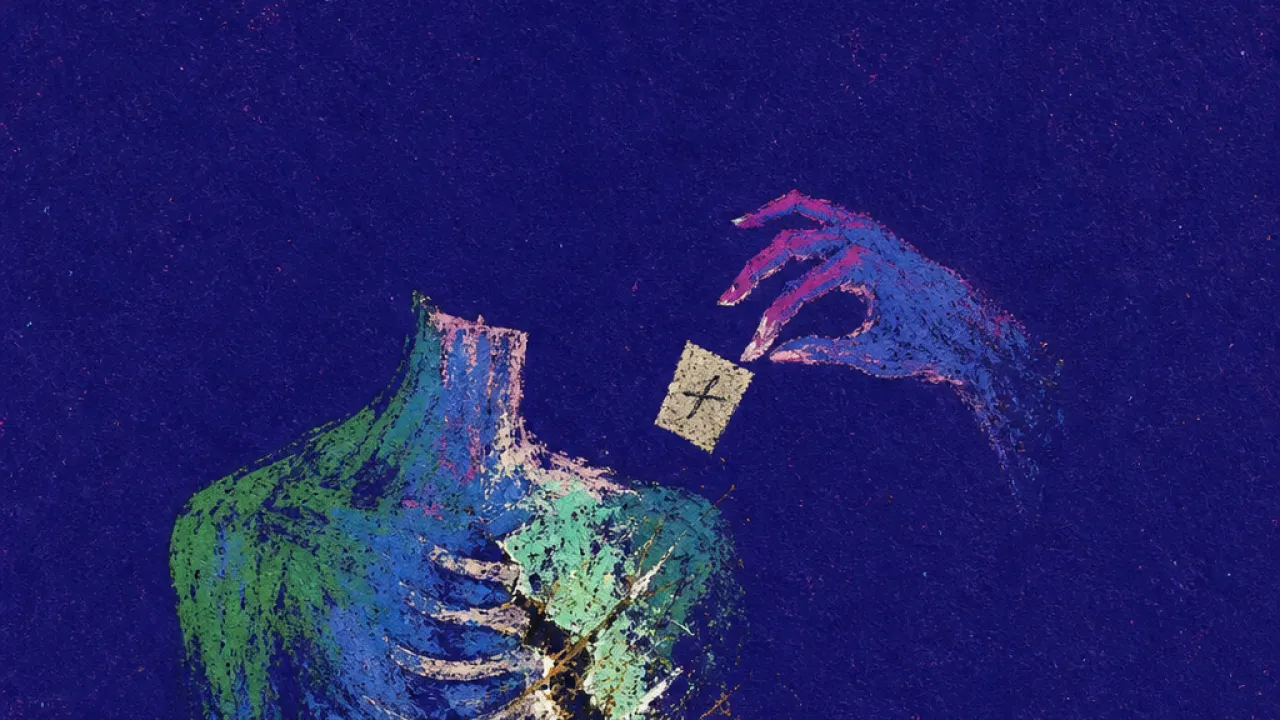
That reflex to steady someone else's mood before you can locate your own is the center of Co-dependency. You may recognize it in the shallow breath, the locked jaw, or the thumb hovering over a reply before your own schedule has entered the room. From a Jungian archetypal theory perspective, this pattern can be read through images of fusion, caregiving, and blurred psychic boundaries. The cards below reflect the unconscious dynamics behind that regulation loop: Tarot Cards that map where care turns into self-erasure.
The Empress ReversedThe heart-marked shield is set aside while the throne sits immersed in grain, forest, and flowing water, so the figure is protected by the environment more than by a clear edge. The whole scene is lush, but in reversal that lushness stops reading as support and starts reading as seepage. That is the inner logic of Co-dependency in family life. Other people's fear, guilt, or disappointment crosses into your system so quickly that it feels like your job to regulate it before you can even locate your own response. Love gets confused with constant emotional merging, and separation starts feeling cruel even when it is actually healthy.
The Hierophant ReversedThe crossed keys lie between the two followers, yet they still point back to the central figure who mediates access and meaning. No one in the image is relating laterally; connection is organized through one regulating center. In friendship, that same shape shows up when your emotional equilibrium starts depending on the other person's state, availability, or need for you. The enclosed temple strengthens the feeling of a closed system. There is order, but not much independent breathing room. Co-dependency often keeps closeness alive by fusing roles helper and helped, stabilizer and destabilized, until separation feels like betrayal rather than differentiation. The card exposes a bond that stays intense by making autonomy feel unsafe.
The Lovers UprightThe two figures stand apart on their own ground, yet the composition binds them inside one shared field of sun, angel, mountain, and mirrored trees. Their bodies remain open, and the gaze line moves through the other person rather than returning inward, so regulation appears relational before it appears personal. That is the logic of Co-dependency inside a family system. You learn to locate yourself by tracking everyone else's temperature, disappointment, or relief, because closeness has become the main instrument for safety. The card does not show simple togetherness; it shows how identity can be stabilized through constant mutual referencing.
ReversedThe figures stand naked and undefended while the space around them is already filled by the angel above, the serpent behind, and the mountain between. Instead of a simple two-person field, the scene shows a bond that is highly permeable, with outside meaning and instinct pressing directly into the connection.\n\nIn friendship, that permeability can turn into Co-dependency. Your time, mood, and self-definition start organizing themselves around what the other person needs, and separation begins to register as disloyal rather than clarifying. The card fits because its intimacy is real, but the container around that intimacy is fragile enough for self-other boundaries to blur.
Strength ReversedThe woman and the lion are not shown as strangers separated by clear distance. They are locked into close contact, joined by gaze, posture, and an almost fused field of attention, so that one figure's state organizes the other's position. The card makes relationship look like an energetic loop before it looks like a boundary between two separate selves. In a family reading, that is the psychology of Co-dependency. Your stability starts tracking someone else's mood so closely that their agitation becomes your assignment and their relief becomes your proof that things are okay. Strength reversed exposes the cost of that fusion: the more completely you regulate around them, the less clearly you can tell where their emotional life ends and your own begins.
Wheel of Fortune ReversedEvery corner, letter ring, creature, and side figure is locked to the same wheel, so the image offers almost no true outside from the mechanism it depicts. In family dynamics, that becomes the pattern where one person's guilt, crisis, or approval state quietly sets the motion for everyone else. When distance itself gets pulled back into the system, separation can feel like betrayal rather than differentiation. You may notice that your own priorities start rotating around other people's instability, which is how care turns into fusion and responsibility stops having a clear edge.
The Hanged Man ReversedThe rope around the ankle makes attachment literal: one point of connection determines the entire body’s position. The figure’s arms are hidden, and his movement is organized around the structure he is tied to. Co-dependency in friendship works through that same attachment logic. A friend’s mood, crisis, distance, or approval can begin to determine your emotional posture, while your own needs become secondary because staying connected feels more urgent than staying differentiated. The card does not frame attachment as weakness. It shows what happens when connection becomes the organizing structure for the whole self. The audit is whether the friendship allows mutual support, or whether one person’s emotional gravity keeps deciding how you hang.
Death ReversedThe foreground figures respond to the rider from fixed roles: one pleads, one kneels, one lies fallen, one watches with exposed innocence. The scene is not balanced exchange; it is a field where identity is organized around what must be endured, negotiated, or stabilized. That is the visual logic of Co-dependency in friendship. The bond may feel irreplaceable because your role inside it has become a source of identity: the steady one, the rescuer, the person who always understands, the one who can absorb the difficult parts. The card's transformation pressure exposes the hidden cost of that role. When a friendship changes, the fear is not only losing the friend; it is losing the version of yourself that became necessary inside the dynamic.
Temperance UprightThe water in Temperance is not contained in only one place. It flows between cups, touches the pool through the figure's foot, and holds a faint reflection that makes the emotional field part of the self-image. Everything is connected, but connection also means the boundaries require constant awareness. In a family system, that connectedness can become emotional over-attunement. You may sense shifts in tone, mood, silence, or disappointment before anyone says anything, then adjust yourself to restore equilibrium. The family feels stable when you are synced to it, which can make separation feel like danger rather than growth. Co-dependency emerges when emotional balance depends on staying fused with another person's state. Temperance shows the ideal of reciprocal flow, but the family pattern reveals the point where flow becomes dependency on mutual regulation.
The Devil UprightThe two figures are linked to the same ring on the Devil's altar, each wearing a collar that keeps them inside the same field of command. Their shared bondage matters: the image is not only about one person trapped, but about a relational system that keeps both bodies oriented toward the same authority. Co-dependency appears when attachment becomes organized around managing the bond instead of meeting the self honestly. In family life, this can look like feeling responsible for a parent's emotions, staying available for crises, or confusing love with continuous emotional labor. The looseness of the chains makes the pattern sharper. The card suggests a bind maintained by fear, habit, guilt, and identity, where leaving the role may feel like abandoning the family even when staying keeps the self psychologically captive.
Two of Cups ReversedThe Two of Cups is built around two separate cups, but the image also shows how close those cups can come to being treated as one shared container. When the central space collapses, the exchange no longer feels like two people meeting; it feels like one emotional system that both people must keep alive. That is the mechanism behind Co-dependency in a family context. The card's symbol of union becomes distorted when care is no longer chosen freely and instead becomes the condition for safety, belonging, or approval. You may start monitoring a parent's mood, absorbing a sibling's crisis, or shaping your decisions around how the family system will emotionally metabolize them. The caduceus between the figures makes the pattern sharper because it should represent balance and repair. Reversed, that same shared axis can become something both people orbit without separation. The audit is not whether you love your family; it is whether your nervous system believes their stability is your job.
Six of Cups ReversedThe boy's extended arms and the girl's receptive position create a beautiful but fixed giving-receiving script. Reversed, that script can harden into roles: one friend becomes the caretaker with the cup, while the other remains the one who must be soothed. Co-dependency is the pattern that keeps those roles emotionally useful even when they are draining. You may feel needed, loyal, or special inside the friendship, but the card asks whether care is still a free exchange or whether both people are protecting an old dependency from being questioned.
Eight of Cups ReversedThe cups remain in the foreground like a ready-made emotional structure, while the water around them reads stagnant rather than flowing. When the image is held through a reversed lens, the departure can feel less like clean movement and more like a bond that still owns the body's attention even after distance appears. That is where Co-dependency enters the friendship dynamic. The pattern turns being needed into being secure, so a friend's crisis, mood, or unspoken demand keeps defining your availability. You may call it loyalty because the cups once held real closeness. The audit shows a different layer: the emotional container has become sticky, and the self is trying to leave a role that keeps pulling value from usefulness.
Ten of Cups ReversedThe card gathers every image of emotional safety into one container: home, river, children, garden, embracing adults, and the ten cups overhead. In its reversed pressure, that container can become so complete that life outside it feels less real, less safe, or less emotionally valid. Co-dependency appears in friendship when support turns into mutual dependence on the bond for identity, regulation, and permission. You may feel responsible for a friend's state, threatened by their distance, or unable to make a boundary without first managing how everyone else will feel. The visual logic is subtle because the scene is genuinely warm. The trap begins when the warmth becomes the only permitted source of stability, and care starts functioning as a quiet contract of emotional obligation.
Page of Cups ReversedThe Page's role is to maintain the chalice, but the fish makes that duty feel alive, needy, and hard to release. His gaze is fixed on the small creature in the cup while the ocean behind him suggests a larger place where that creature could exist without being managed by him. Co-dependency grows from that confusion between care and ownership. In friendship, the pattern keeps You orbiting a friend's emotional state, reading every ripple as your responsibility and using caretaking to secure the bond.
Queen of Cups ReversedThe Queen holds the cup with both hands, as if the emotional vessel requires constant attention. Her gaze does not wander; the whole body organizes around maintaining contact with that contained feeling. In reversal, the same devotional focus can harden into Co-dependency. The emotional object becomes something you manage, protect, interpret, and stabilize, until your own center is built around another person's fluctuations. The card's tenderness turns into a contract the other person may never have consciously signed. In friendship, this pattern can make availability feel like proof of love. You may sense a friend's discomfort before they speak, rearrange yourself around their needs, and then feel guilty when your own limits appear; the hidden cost is that care stops being freely given and starts becoming identity maintenance.
Two of Pentacles ReversedThe two coins in the Two of Pentacles are distinct, but the loop binds them into one continuous circuit. The figure’s hands keep the circuit alive, as though the stability of one side depends on the movement of the other. That is the core mechanism of Co-dependency in friendship. The bond becomes organized around mutual regulation rather than mutual freedom: one person’s distress gives the other a role, and being needed starts to feel like proof that the connection matters. The rough sea behind the figure deepens the pattern. When the emotional weather is unstable, catching the next wave can feel safer than asking whether You should be responsible for every wave at all. The card does not shame the care; it shows where care has fused with identity maintenance.
Five of Pentacles UprightThe two figures in the snow are not alone, but their closeness does not move them into shelter. They form a small unit of warmth on the outside of the lit window, sharing the same exposed path while the protected interior remains separate and inaccessible. That is the family-system logic of Co-dependency: connection becomes organized around shared deprivation rather than free choice. You may feel loyal, needed, or emotionally fused with a parent, sibling, or relative because both of you have learned to survive the same cold field, yet the bond keeps circling the storm instead of locating a door. The card's visual contrast matters because the pair's togetherness is real but incomplete. It shows how a family bond can provide comfort while also making separation, self-definition, or outside support feel like betrayal. The pattern is not the presence of love; it is the way attachment becomes the substitute for a secure boundary.
Six of Pentacles ReversedThe two kneeling figures hold their hands open while the standing benefactor controls both timing and quantity. Their bodies are arranged around his decision, not around their own movement. The card makes dependence visible through posture: one side waits, the other side regulates access. Inside the psyche, that arrangement can become a closed circuit between the part that needs rescue and the part that needs to be needed. You may move between feeling helpless and feeling responsible for every helpless inner state, which keeps the system bonded through imbalance. The pattern can look like care, but its deeper structure is mutual dependence: one part cannot receive directly, and the other cannot feel valuable without managing the receiving. Co-dependency, in this introspective frame, is not only about another person. It can describe an internal relationship where self-worth and need keep each other locked in place. The Six of Pentacles exposes the mechanism by showing that the flow of resources is real, yet the posture of both sides prevents true integration.
Eight of Pentacles ReversedThe craftsman remains tethered to the bench while the town sits in the distance, close enough to matter but far enough to show separation. In the reversed texture, that separation blurs: the workbench becomes the whole relational world, and usefulness becomes the way connection is maintained. Co-dependency appears when a friendship trains You to stay attached through constant availability, emotional labor, or rescue. The bond may feel intimate, but the intimacy depends on You staying in role, responding to need, and proving value through what You can provide. The Eight of Pentacles anchors this pattern through repeated service. It shows how a real skill for care can turn into fusion when the friendship no longer allows You to exist beyond the work You perform inside it.
Ten of Pentacles ReversedThe elder's seated body anchors the whole scene: the dogs approach him, the family gathers within his domain, and the household symbols reinforce a system organized around belonging. In reversal, that stable center can turn into an emotional gravity well. Co-dependency emerges when support stops being freely exchanged and starts becoming the mechanism that keeps the bond intact. You manage the friend's mood, anticipate rupture, soften every boundary, and then read your exhaustion as proof that the friendship matters. The card's household imagery makes the trap visible. A friendship can feel like chosen family while quietly assigning You a maintenance role inside someone else's emotional system.
Queen of Pentacles ReversedThe Queen is surrounded by the world she sustains: vines, roses, fertile ground, carved figures, and the pentacle held close to the body. In reversal, that closeness can stop feeling like grounded care and start feeling like identity fusion, where the self and the support role are difficult to separate. Co-dependency emerges when care becomes the proof of connection and self-worth. In friendship, You may find yourself monitoring another person's mood, anticipating their needs, and treating their distress as an emergency that automatically overrides your own inner signals. The card gives this pattern a concrete shape: the garden is beautiful, but the Queen is also embedded inside it. The bond may look nurturing from the outside while privately training You to confuse being needed with being securely loved.
Three of Swords ReversedReversed, the Three of Swords can show the heart adapting around what hurts it. The blades and heart form one fixed structure, which makes pain look less like an interruption and more like the condition holding the whole image together. Co-dependency appears socially when being needed, included, or entangled feels safer than being separate, even when the group dynamic is draining. The wound becomes part of the bond: emotional labor, rescue roles, and tolerating imbalance start to feel like the price of belonging. This pattern fits the reversed card because the image shows attachment and injury fused into one object. The psychological audit is about seeing where connection has become organized around hurt, so separation feels threatening not because the group is healthy, but because the self has been structured around the role it plays there.
Nine of Swords UprightThe lower body is covered and still, while the upper body absorbs the pressure of the swords. Beneath the quilt, the exposed carving on the bedframe shows an unequal relational scene, making imbalance part of the furniture of the card rather than a passing event. Co-dependency in friendship grows where care and responsibility become fused. A friend’s crisis, mood, or instability can feel like something you must manage in order for the relationship to stay intact. The card’s private bedroom setting matters because the cost is not only social; it enters the body’s rest space. You may call it loyalty, but the pattern reveals a deeper fusion where being needed starts replacing mutuality.
Four of Wands ReversedThe four wands create one shared shelter, and the garland ties separate posts into a single festive frame. The scene is cohesive, but its emotional field is collective, with celebration, home, and belonging all appearing to move as one system. That cohesion mirrors Co-dependency when a family treats emotional separation as a threat to the whole structure. You may start monitoring everyone else's mood as if the shelter will collapse unless you keep it pleasant, available, and connected. The card makes the mechanism visible by showing how support becomes unstable when togetherness has no internal edges.
Five of Wands ReversedEach figure has a separate body, outfit, and stance, yet the crossed wands pull them into one shared nervous system. In the reversed texture, the group field starts regulating everyone, while individual boundaries become too unstable to hold separate emotional weather. Co-dependency in friendship often hides inside loyalty. Someone's mood, crisis, silence, or approval becomes the signal that tells you whether you are safe, needed, guilty, or allowed to rest. The card makes the mechanism visible through spatial invasion. You may call it being a good friend, but the pattern turns connection into emotional management, where staying close means constantly adjusting your body to someone else's raised wand.
Ten of Wands UprightThe road leads toward a house, but the card shows only one person carrying the entire bundle. There is a destination that implies relationship, home, or shared purpose, yet the labor itself is solitary and tightly concentrated in one body. That visual split captures a bond organized around being needed. The carrier's boundaries are not erased through chaos; they are absorbed through duty. In romantic relationships, Co-dependency can look like loyalty because You feel close when Your energy is required to keep the relationship functioning. The Ten of Wands makes the hidden bargain concrete. If the relationship feels secure only when You are carrying the partner's stress, mood, plans, or repair work, then need has replaced reciprocity as the main attachment signal. The pattern asks to be seen because love cannot become mutual while one person's boundaries are treated as the relationship's storage space.
ReversedThe leafy wands look alive, while the carrier is bent forward and partly swallowed by what he carries. The image makes the load seem more vivid than the person, as if vitality has moved out of the body and into the role of holding everything together. Co-dependency appears when being needed becomes the proof that the bond is secure. You may feel closest to a friend when you are rescuing, absorbing, calming, or carrying for them, because the role creates contact even as it drains your own center. The body-and-bundle shape is the key: separation would not only change the workload; it would change the identity of the relationship. The card reveals a friendship system where support has become attachment glue, and mutual presence has been replaced by one person needing to be indispensable.
No cards available for this filter.