Useful, but unseen?

Decode the rescuer role, the tarot cards that mirror it, and reading insights where this pattern shows up.

Rescuer Identity
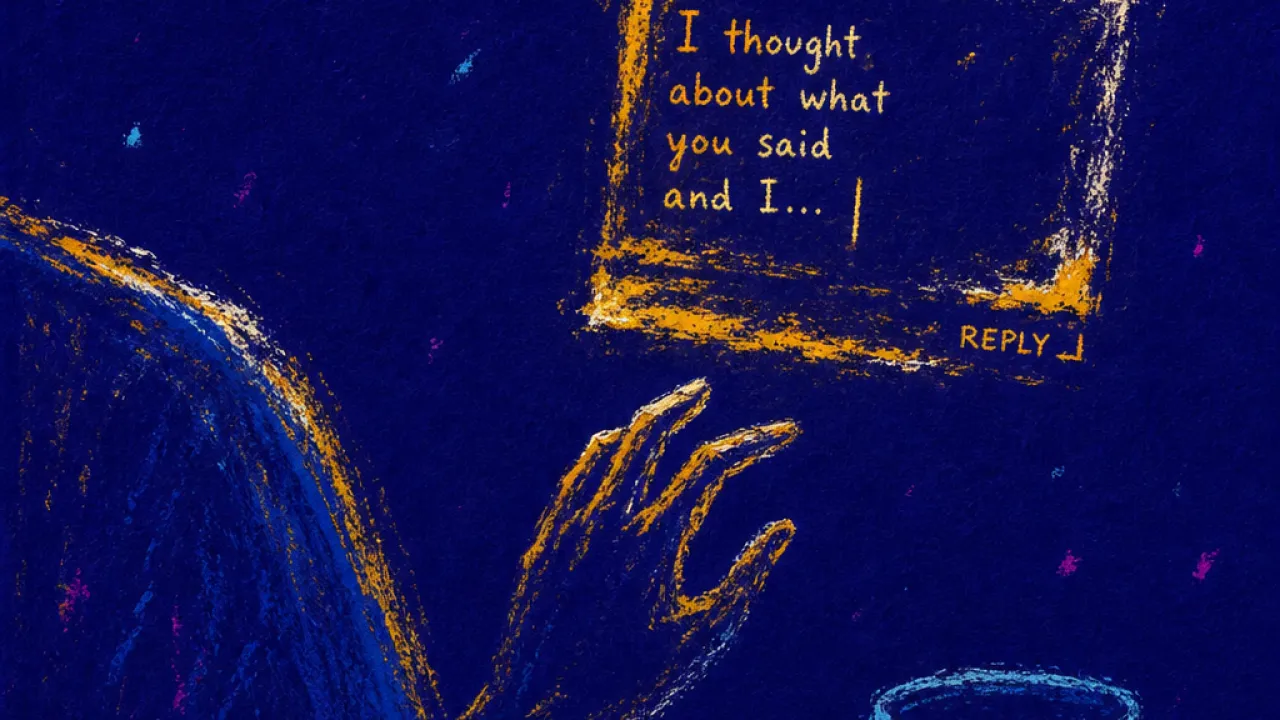
What is this really?

You step into the helper role before anyone officially asks: the mom friend, the translator in the group chat, the calm one on a tense call, the person already offering time, advice, or emotional steadiness while your own answer is still forming. Underneath, it makes sense; being useful gives closeness a clear script, lowers the uncertainty of being wanted without a function, and turns messy connection into something your body knows how to manage. But when care becomes identity fusion, your boundaries blur until people know your usefulness better than they know you, much like the seated figure in The Empress, surrounded by wheat and flowing water, becoming the source everyone turns toward while her own hunger stays outside the frame.

Why did it happen?

At some earlier point, being the steady helper may have made connection easier to read: if you could calm the room, translate tension, or keep things moving, you had a clear place to stand. Now the same subconscious loop can start before choice catches up; a sigh, a pause, or a messy message pulls your attention outward, and your own body gets treated like the last item on the list. Over time, that inner pattern can leave you with a tired chest, a busy mind, and the strange loneliness of being needed more often than you are met.

How does it feel?

  • When a friend drops a long voice note after midnight, you set your own cold mug aside, sit up, and start drafting the 'I've got you' reply before you've even noticed your tiredness. That moment can feel like a small lift in your shoulders and a shallow breath, as if your body has already stepped into the room for them. You can let the reply wait for one full breath; the pull to answer is allowed to be present.
  • In a meeting, when the conversation goes stiff, you lean toward the screen, nod twice, and rephrase everyone's tension into something smoother before anyone asks you to. Afterwards, your jaw may ache from holding that careful tone, and your attention may feel parked outside your own workload. It is okay for the room to stay a little unfinished while you notice what is yours.
  • When someone you're dating goes quiet, your thumb hovers over their name, then you send a warm check-in with a small joke tucked at the end. As soon as it leaves, your stomach may drop and your chest may tighten, like you've handed over your calm before knowing whether you wanted to. Uncertainty can sit there without being solved immediately.
  • During a family call or shared-flat argument, you tilt your head, smile quickly, and translate one person's sharp sentence into softer language for everyone else. In your body, it may feel like heat rising behind your eyes while your throat stays carefully still. That stillness can be noticed without making you responsible for every sound in the room.
  • Alone later, you open your notes app to make a practical list for someone else's problem, then pause with the cursor blinking because you cannot name what you need. Your hands may feel busy but strangely far away, and the quiet can land as a hollow space under the ribs. Not knowing your own next sentence yet is allowed.

Rescuer Identity in Tarot Cards

That reflex to become the steady helper before anyone officially asks is the center of Rescuer Identity. You can feel it in the small lift in your shoulders and a shallow breath, right before your attention leaves your own needs for someone else's room. In Jungian archetypal theory, this pattern can be understood as the nurturer, guide, or stabilizer role taking over the whole self rather than staying one part of it. The cards below mirror the unconscious dynamics of that role becoming the way closeness is earned: Tarot Cards for Rescuer Identity.

The Empress Upright
The throne is cushioned, the harvest is ripe, the forest keeps giving, and even the water behind her suggests a supply that does not run dry. The image makes one person look like a living source of provision, warmth, and continuity. That is why this card links so cleanly to Rescuer Identity in family systems. You become most legible when you are feeding, calming, funding, interpreting, or emotionally carrying others, and your self-worth starts attaching to that role. Care stops being something you offer and becomes the proof that you deserve your place in the family.
Reversed
The wheat is ripe, the forest keeps giving, and the water keeps moving; the whole card is built around sustained provision. The Empress does not merely have resources, she is pictured as the center that organizes and feeds a living field. You are looking at a psyche that feels safest when it can nurture, stabilize, and keep life growing around it. That is why this image can harden into Rescuer Identity. Care becomes more than a gift; it becomes the role that justifies presence and postpones direct contact with your own unmet material. You may stay busy tending everyone else's regulation, plans, or pain because their needs feel actionable, while your inner backlog keeps waiting for the same care you automatically give away.
The Hierophant Upright
The Hierophant does not meet the two figures at eye level; he teaches from above, hand raised, staff anchored, while the others receive. The image is built around one person holding meaning for the group. In friendship, that same structure can turn into a role where you feel safest as the adviser, interpreter, or emotional steady one. The crossed keys at his feet suggest that access flows through the person in the middle. That is why Rescuer Identity can feel both generous and exhausting: your usefulness becomes the doorway through which closeness is allowed. When you stop guiding, fixing, or containing, the bond can suddenly feel less secure because the friendship has been organized around your function rather than your full personhood.
The Chariot Upright
The Charioteer is not merely moving forward; he is visibly occupying the role of the one who must hold the whole arrangement together. The staff, the centered posture, and the placement between two opposing sphinxes make leadership look less like a choice and more like a stabilizing function the figure has absorbed into identity. In friendship, that becomes Rescuer Identity. You may feel most valuable when you are coordinating emotions, carrying the atmosphere, or preventing drift before anyone else names it. The card resonates because its power comes from being the organizer of opposing forces, and that same strength can make reciprocity feel less familiar than responsibility.
Strength Upright
The card frames the woman as the one who can stay near intensity without being visibly overwhelmed by it. She stands inside the lion's reach, keeps contact steady, and remains serene while the animal's force is still clearly present. The image quietly rewards the figure who can enter chaos and make it manageable. That is why Strength can map so cleanly onto Rescuer Identity in family life. Your sense of value starts organizing around being the person who can calm the difficult parent, absorb the outburst, or keep everybody functional. The pattern is less about kindness than about identity: if you are not fixing the family atmosphere, you may not know where your importance is supposed to come from.
The Hermit Upright
The lantern is held high above the frozen dark, and the figure occupies the elevated position of someone who can see farther than the people below. The staff adds authority and steadiness, turning guidance into a role the body knows how to perform. The whole composition suggests a person who makes contact through illumination, not through equal exposure. In friendship, Rescuer Identity appears when You become most valuable as the one who interprets, steadies, or emotionally carries the room. The card's logic is not simple kindness; it is the safety of staying on the ridge as the guide. When usefulness becomes the ticket to belonging, care flows outward easily while mutual dependence starts to feel far less natural.
Wheel of Fortune Upright
The four winged figures remain in position with their books open while the other beings keep the wheel in motion, creating a scene where everyone has a function and nobody fully leaves their post. The card does not show rest so much as ongoing maintenance, and that is the emotional posture beneath this pattern: usefulness becomes the way you secure belonging. In friendship, You become the stabilizer, translator, and first responder long before anyone asks whether the labor is mutual. You keep the group coherent, absorb tension, and make yourself essential so the bond will not break. The card points to Rescuer Identity because its movement depends on figures who stay attached to the system, showing how care can harden into a role you feel responsible for performing.
The Hanged Man Reversed
The suspended figure appears peaceful while his entire body is organized around endurance. The halo and stillness make the role look elevated, even though the posture leaves almost no room for ordinary movement. Rescuer Identity in friendship forms when being needed becomes the main way you know you matter. You may become the calm one, the wise one, the crisis-contact, the person who can hold everyone else’s emotional weight, while your own need to be held becomes harder to admit. The empty space around the figure matters because the role can become isolating. The card shows how being useful can replace being mutual. The audit is whether your friendships know you beyond the version of you that can keep hanging there for them.
Temperance Upright
The angel in Temperance does not simply stand in peace; both hands are actively occupied with keeping two vessels in relationship. The liquid has to move cleanly from one cup to the other, and the figure's serene expression makes the work look effortless, as if emotional regulation were a natural duty rather than a labor being performed. That visual arrangement maps closely onto the internal role of the family healer. You may have learned to notice emotional imbalance before anyone names it, to translate tension into softer language, and to make yourself useful whenever the family system starts to wobble. The defense is not chaos; it is competence turned into identity. Rescuer Identity forms when being the stabilizing presence becomes the safest way to belong. Temperance shows the beauty of integration, but in a family context it also reveals the hidden cost of always being the one who keeps the cups from spilling.
The Star Reversed
Both pitchers are tipped outward, and the figure's attention follows the water as it leaves her hands. The scene is beautiful, but the body is not shown receiving anything back from the streams it releases. Rescuer Identity forms when being useful starts to feel like the safest proof of belonging. In friendship, You may become the crisis listener, the emotional translator, or the person who can always make others feel better. The Star's reversed motion exposes the hidden bargain: if the bond depends on your constant pouring, then being needed has replaced being mutually known.
Ace of Cups Reversed
The only visible body is the hand holding the chalice steady while everything else pours, descends, and circulates around it. The hand is delicate, but the task is enormous: it must keep the sacred vessel upright without any visible ground of its own. That image becomes Rescuer Identity when friendship turns your sensitivity into a job. You become the stabilizing hand, the person who catches every spill, absorbs every crisis, and quietly believes the connection will collapse if you stop holding it. The Ace of Cups exposes the hidden bargain inside that role. The bond may look generous, but the structure asks whether the cup is being shared or whether your nervous system has become the stand that keeps it upright.
Two of Cups Reversed
The extended hand in the Two of Cups can look generous, but under pressure it can also look like a body reaching into the space between two people to make sure the bond holds. The central staff, associated with healing and negotiation in the RWS image, intensifies that repair impulse. Rescuer Identity forms when stabilizing the relationship becomes a role rather than a momentary act of care. In family systems, this can mean becoming the translator, fixer, emotional first responder, or bridge between people who will not regulate themselves. The person offering the cup begins to feel valuable only when they are useful to the system. The card's union is therefore not rejected; it is audited. Healthy repair happens between two accountable people, while the rescuer role quietly makes one person responsible for keeping the whole emotional structure upright. You are seeing where love has been fused with indispensability.
Knight of Cups Upright
The cup is not a side detail; it is the object that gives the knight's movement its purpose. He is armored, yet what he displays is not a weapon but an emotional offering. The whole scene organizes itself around carrying something healing, meaningful, or relationally valuable across a threshold. Rescuer Identity forms when that offering becomes the self. In a family system, You may become the calm translator, the emotionally intelligent child, the sibling who smooths everything over, or the one who carries hope for repair. The role can look generous, but it also trains identity around being useful to the family's emotional weather. The Knight of Cups does not condemn the offering; it audits the fusion between care and worth. When the cup becomes proof that You matter, stepping out of the rescuer role can feel like abandoning love itself. The card reveals the difference between bringing emotion into the family field and becoming responsible for redeeming it.
Queen of Cups Upright
The Queen holds the cup with both hands in a careful, almost devotional grip, while the throne is carved with cherubic figures and water-born imagery. The whole scene places care, receptivity, and emotional holding at the center of her authority. This can become a coping structure where being needed feels safer than being plainly loved. You may stabilize a partner's mood, interpret their pain, or become the emotional container for the relationship because that role gives closeness a purpose. Rescuer Identity forms when care becomes the way to secure attachment. The pattern is not a lack of love; it is love organized around repair, where your value starts to depend on how much emotional weight you can hold for someone else.
Reversed
The cup is cradled, not casually held. Around the Queen, the throne's cherubic carvings and protective shell imagery amplify the atmosphere of tenderness, nurture, and emotional guardianship. In reversal, that nurturing architecture can become Rescuer Identity. The role of being emotionally wise, patient, and available becomes so familiar that you may not notice when friendship has turned into a service position. The card shows care becoming a throne: stable, impressive, and difficult to step down from. In friendships, this pattern often feels noble from the inside and invisible from the outside. You become the person who understands everyone, translates every conflict, and absorbs every late-night crisis, while your own needs stay sealed inside the cup you are busy holding for others.
King of Cups Reversed
The king's hands stay locked around the cup and scepter, and the throne sits alone in the middle of the sea. What looks like mastery can also become a fixed identity: the one who holds the feelings, interprets the waves, and stays composed for everyone else. This is where Rescuer Identity takes shape in friendship. You may start by being supportive, but the role hardens when being needed becomes the main way you feel secure, valuable, or irreplaceable in the bond. The isolation of the throne is the cost. The more you become the calm emotional authority for your friends, the less room there may be for your own mess, need, anger, or uncertainty to exist inside the friendship.
Six of Pentacles Upright
The central figure is visually defined by his ability to distribute what others need. His rich clothing, upright posture, and controlled hand gesture make usefulness visible as status, while the kneeling figures confirm his role through their need. That is the psychological doorway into Rescuer Identity. The defense is subtle: being needed becomes a way to feel secure, valuable, and protected from the uncertainty of being loved without a function. In romance, this pattern can make caretaking feel like intimacy even when mutual vulnerability is missing. The card shows a bond organized around relief, and that image exposes the trap: when love is built around rescue, equality can start to feel like emotional unemployment.
Reversed
The standing figure controls both the scale and the falling coins while the lower figures organize themselves around his hands. His identity in the scene is not simply that he has resources; it is that the whole field turns toward him as the one who distributes them. Rescuer Identity forms when being useful becomes the safest way to stay above your own need. In personal growth, helping others can become a refined avoidance strategy, letting you remain the capable giver while your own unfinished work waits on the ground.
Eight of Pentacles Reversed
The coin under the craftsman's tools sits like a mirror of his effort: shaped, polished, and made worthy through visible work. In the reversed state, that mirror becomes too powerful, and the self starts looking for value only in what it can fix, produce, or improve for someone else. Rescuer Identity forms in friendship when being the dependable one becomes the main way You feel secure. You may become the therapist friend, the crisis manager, the person who always knows what to say, while your own needs stay off the bench because the role has no space for them. The Eight of Pentacles connects this pattern to identity built through usefulness. It reveals the quiet trap of being admired for emotional labor: the friendship may praise your reliability while never asking whether You are allowed to be held too.

Rescuer Identity in Tarot Card Reading Insights

For the person who becomes the steady helper before anyone officially asks, the shift from cards to readings brings this role into a more personal frame. Others have sat with the same pull to fix, soothe, and be needed, letting the cards hold the question without forcing a verdict. Below are Tarot Reading Insights that speak to this pattern.

Psychological patterns related to Rescuer Identity