Is Your Space Still Yours?

A grounded look at solo-living boundary pressure, related tarot cards, and reading insights from similar access-and-space questions.

Solo Living Boundary Trial
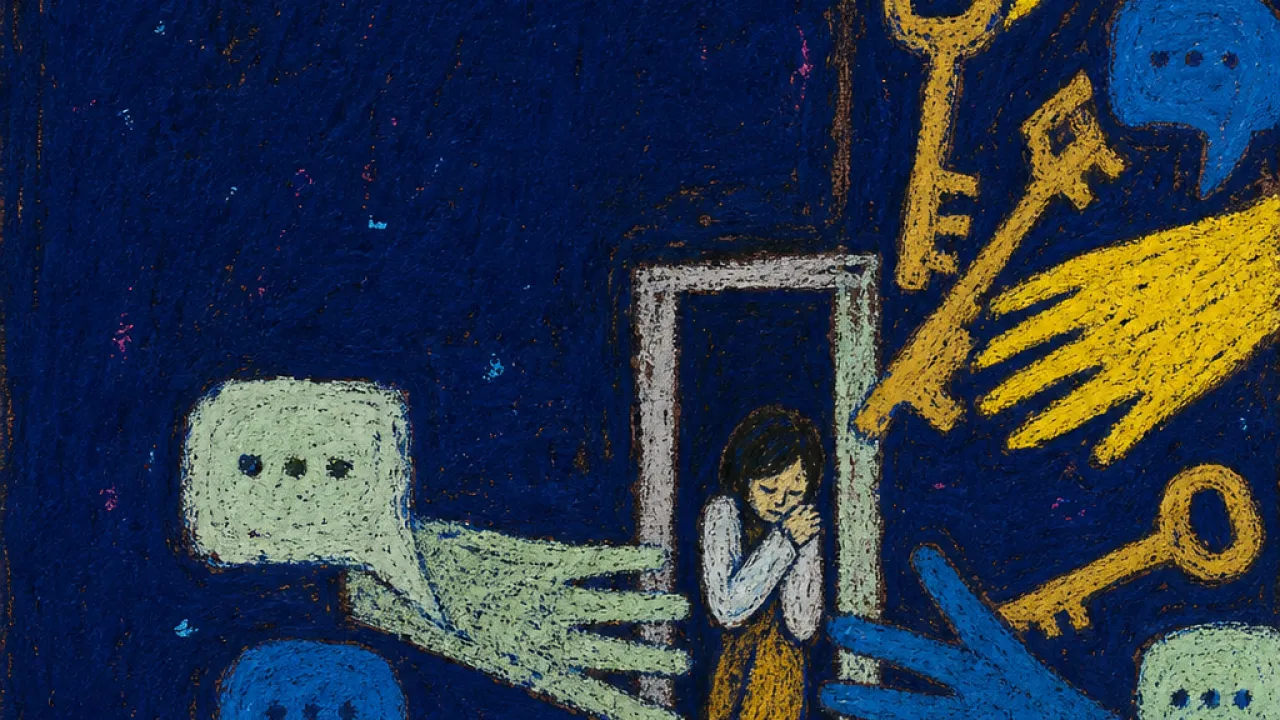
A solitary figure braced in a doorway as hands, keys, and message bubbles press inward through deep indigo space

What is this situation?

Solo Living Boundary Trial — you move into your own apartment, studio, dorm room, or flat expecting space to finally mean space, and almost immediately other people begin testing what that space allows. At first it sounds casual: a friend asks to crash “just for one night,” a parent wants daily check-ins because you live alone now, a situationship assumes they can come over late because no roommate is there, a coworker treats your evenings as open because you do not have anyone waiting at home. The requests rarely arrive as demands; they arrive as favors, jokes, concern, convenience, or “I thought you wouldn’t mind.” Your phone becomes the front door before anyone reaches the building: texts asking where you are, who is coming over, whether someone can store boxes at your place, whether you can host because your place is quiet, whether they can have a spare key “just in case.” You start measuring ordinary privacy against other people’s reactions, because saying no can turn the room cold, make the chat go quiet, or turn a simple boundary into a debate. The trial is not that you live alone; it is that everyone keeps treating your aloneness as available space, available time, or available emotional labor, until your own home starts feeling like a place you have to defend from the inside, much like the figure on the Seven of Wands, braced on uneven ground while raised staffs push up from every direction.

Why it's not you?

The issue is not that you are being difficult about your space; the issue is that other people keep treating your solo living situation as permission to ask for more access than you offered. Late-night drop-ins, spare-key pressure, constant check-ins, and “since it’s just you” favors are not neutral requests when they keep ignoring your limits. This situation has a shape: your private space is being treated as shared territory without your clear consent.

Solo Living Boundary Trial in Tarot Cards

Solo Living Boundary Trial names the moment when living alone stops feeling like simple privacy and starts becoming a negotiation over access to your space, time, and attention. The tightness in your chest when another “quick favor” lands is not random; it tracks an environmental, structural dynamic where other people keep treating your solo home as flexible ground. The cards below do not decide who should get access to you; they reflect the pressure lines around the boundary itself. Here are the Tarot Cards that often mirror this kind of situation.

The High Priestess
Upright
A veiled interior sits behind the High Priestess between two pillars, while part of the scroll in her lap remains deliberately covered. The image gives physical form to informational privacy: your family may know that you live alone without automatically receiving details about where you are, who visits, when you return, or what happens inside the apartment. The upright threshold remains controlled rather than sealed, so privacy is available without requiring total family disconnection. The covered text distinguishes undisclosed information from deception, exposing the pressure created when relatives treat complete visibility as the price of accepting your independent home.
The Hierophant
Reversed
Two crossed keys rest beneath an institutional authority while two followers face the rules embodied above them. Reversed, those keys stop functioning as automatic social permission: the inherited script that a person living alone owes family access, group hosting, or unrestricted availability no longer provides a valid claim on your home. The blocked pathway belongs to the convention, not to your capacity for connection. The image supports a cognitive shift from asking whether your reasons are socially impressive enough to recognizing that residence, care, friendship, and intimacy are separate systems with separate access terms.
Justice
Upright
Scales are held level in one hand while an upright sword occupies the other, with a veiled threshold framed by two pillars behind the seated figure. The composition turns relationship access into a question of explicit, symmetrical terms: your partner's desire for convenience does not carry the same weight as permission to enter, stay, monitor, or hold a key. The upright sword keeps the standard available and legible rather than leaving it buried inside hints or assumptions. The scales expose whether both people recognize the same rule, especially when your refusal is being treated as relational rejection while the original access request is presented as neutral.
Four of Pentacles
Upright
One pentacle is held against the figure's chest, another rests on his head, and two are pinned beneath his feet while the city remains behind him. The arrangement turns material control into a full-body task, matching the way you may have to hold onto floor space, keys, belongings, and uninterrupted time when other people treat a solo apartment as spare capacity. The upright grip keeps those resources under the resident's control rather than allowing them to circulate automatically. In this context, the image separates stewardship from selfishness: the fact that you possess usable space does not convert that space into communal storage, an open guest room, or a standing venue.
Two of Swords
Upright
A blindfolded figure crosses two swords over her chest while a broken shoreline and dark water sit behind her. The crossed blades function like a temporary gate, matching the decision pressure you face when one option protects your apartment and the other protects the immediate social atmosphere around a friend, relative, or partner. The upright pose holds the decision open rather than surrendering the threshold by default. It reveals that the stalemate is produced by competing consequences: access may be practically possible, but saying yes can establish a precedent, while saying no can trigger silence, debate, or accusations that you are overreacting.
Four of Swords
Reversed
A resting figure lies inside a stone sanctuary beneath three suspended swords, with a fourth sword fixed alongside the body. Reversed, the protected architecture remains visible but no longer performs its basic function: your apartment can be quiet and private on paper while messages, anticipated drop-ins, and access negotiations keep importing other people's demands into the room. The blocked resource here is restorative separation, not the physical ability to lie down. The image shows why living alone does not guarantee downtime when your phone operates as an unregulated front door and every period of silence can be interrupted by someone treating your evening as available.
Eight of Swords
Upright
A blindfolded, loosely bound figure stands inside an incomplete enclosure of swords with a distant stronghold behind her. The arrangement mirrors the mental bind created when you technically control your apartment but anticipate that any refusal will trigger a cold chat, an argument, accusations of selfishness, or withdrawal of support. The upright enclosure is restrictive without being fully sealed, which preserves the distinction between real social consequences and an absolute lack of options. The image audits the psychological cache produced by repeated boundary tests: every new request can reactivate earlier reactions and make automatic agreement feel safer than reopening the debate.
Queen of Swords
Upright
The Queen of Swords holds one blade vertically while extending her other hand in a measured gesture of contact. The visual structure places openness beside a non-negotiable line, reflecting the cognitive upgrade available when you stop treating care, closeness, and apartment access as interchangeable proof of the same relationship. The upright sword keeps categories clear enough to reduce the need for elaborate defenses. The image names a mature distinction: you can understand another person's request and still retain sole authority over entry, timing, storage, hosting, and the amount of personal information attached to your solo life.
Seven of Wands
Upright
A lone figure holds the upper position while six separate staffs rise toward the narrow ground he occupies. In a family system, those staffs resemble daily check-ins, location questions, surprise visits, spare-key pressure, and claims that concern should override your control of the apartment. The upright stance keeps adult residential authority available even while family reactions create unstable footing. The image reveals that you are not rejecting care by controlling entry and information; you are confronting a family pattern that treats living alone as a reason for increased oversight rather than increased autonomy.
Nine of Wands
Upright
A wounded guard looks sideways while gripping the final staff in front of a completed row of eight. The sideways attention captures how your internal focus can remain stationed at the threshold even during quiet periods, with each notification scanned for another request to visit, store something, obtain a key, or claim your evening. The upright figure is tired but still observant, and the boundary behind him remains intact. The image separates the effectiveness of your limits from the attention they consume, revealing a psychological cost that can persist even when nobody is currently inside the apartment.
Ten of Wands
Upright
A worker carries ten staffs toward town with the bundle obscuring his sightline and compressing his posture. The image matches the way extra shifts, late replies, and convenience tasks can accumulate when colleagues interpret your solo household as evidence that you have fewer legitimate claims on your time. The upright movement shows that you may be capable of completing the work, but capability is precisely what can conceal the scope expansion. The route to the buildings remains open while the load makes visible the career cost of allowing private evenings to function as an unpriced reserve for the team.

Solo Living Boundary Trial in Tarot Card Reading Insights

When Solo Living Boundary Trial becomes the background of your week, the same questions often show up in readings: who gets access, what counts as enough, and where the line has to be held. Others have brought this kind of apartment-door, group-chat, spare-key pressure into their readings too. Tarot Reading Insights from sessions where private space became the main question.

Mom Used the Spare Key: From Feeling Twelve to an Ask-First Rule

Mom Used the Spare Key: From Feeling Twelve to an Ask-First Rule

Topic:Family Tarot Reading

Struggle:Inherited Role Lock

Context:Family Privacy Negotiation

When Three Tabs and a Lease Deadline Became a Values-Led Choice

When Three Tabs and a Lease Deadline Became a Values-Led Choice

Topic:Family Tarot Reading

Struggle:Binary Choice Lock

Context:Pathless Transition

Moving the Toothbrush, Then Naming What Shared Space Means

Moving the Toothbrush, Then Naming What Shared Space Means

Topic:Choice Tarot Reading

Struggle:Boundary Ambiguity Lock

Context:Chemistry to Commitment Test

From Panic at 'I'm Outside' to a Clearer Yes, No, or Not Now

From Panic at 'I'm Outside' to a Clearer Yes, No, or Not Now

Topic:Friendship Tarot Reading

Struggle:Autonomy Guilt Bind

Context:Friendship Boundary Creep

From Quiet Apartment Anxiety to Safe Enough Silence at Home

From Quiet Apartment Anxiety to Safe Enough Silence at Home

Topic:Choice Tarot Reading

Struggle:Ease-Safety Split

Context:Solo Living Boundary Trial

When Parent Visits Turn Home Into a Test: Choosing Good-Enough Care

When Parent Visits Turn Home Into a Test: Choosing Good-Enough Care

Topic:Friendship Tarot Reading

Struggle:Inner Tribunal Lock

Context:Family Privacy Negotiation

When 'Miss You' Meant Relief, Not Reconnection: Breaking the Reply Ref

When 'Miss You' Meant Relief, Not Reconnection: Breaking the Reply Ref

Topic:Family Tarot Reading

Struggle:Comfort Entrapment

Context:Past Relationship Idealization

When Home Started Feeling Like a Hotel Room: Relearning Belonging

When Home Started Feeling Like a Hotel Room: Relearning Belonging

Topic:Personal Growth Tarot Reading

Struggle:Threshold Disorientation

Context:Routine Collapse

When Comfort Feels Like Settling: The IKEA Cart Experiment in Agency

When Comfort Feels Like Settling: The IKEA Cart Experiment in Agency

Topic:Choice Tarot Reading

Struggle:Comfort Entrapment

Context:Waiting Room Limbo

From Zillow-Text Pressure to Cautious Agency: Owning Your Next Move

From Zillow-Text Pressure to Cautious Agency: Owning Your Next Move

Topic:Family Tarot Reading

Struggle:Autonomy Guilt Bind

Context:Boomerang Kid Negotiation

From Nighttime Lock-Checking to Settling In with Clear Boundaries

From Nighttime Lock-Checking to Settling In with Clear Boundaries

Topic:Introspection Tarot Reading

Struggle:Threshold Disorientation

Context:Solo Living Overload

From Startle-Shutdown to Self-Led Response: The Buzzer Protocol Path

From Startle-Shutdown to Self-Led Response: The Buzzer Protocol Path

Topic:Personal Growth Tarot Reading

Struggle:Binary Choice Lock

Context:Solo Living Overload

Psychological Contexts Related to Solo Living Boundary Trial