The 6:07 Kitchen Where Home Missed Its Cue
If you’re a late-20s city renter with a hybrid job who can hold it together all day and then completely stall in your kitchen after 6 p.m., reopening one specific chat thread instead of starting dinner, this may be friendship grief disguised as “my apartment feels off.”
That was how Maya (name changed for privacy), a 27-year-old content designer in Toronto, arrived in my reading room. She told me, very quietly, “Nothing is technically wrong, but everything feels slightly out of place.” I could feel the whole shape of it before I even touched the cards: stable rent, decent routine on paper, a one-bedroom apartment that still looked like hers, and a best friend who had moved away and taken the default rhythm of daily life with her.
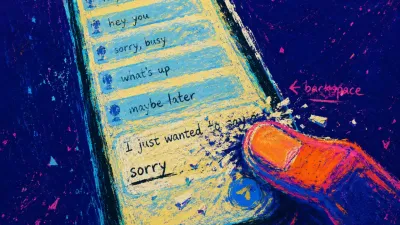
I could see the scene as she described it: 6:07 p.m., work laptop closed, coat still on, tote bag dropped by the door but not fully let go of. The fridge hummed. The overhead light hit the kitchen in that flat, too-white way. Her phone screen warmed in her palm as she opened the same text thread before her shoes were even off. Dinner stalled. Dishes waited. The whole evening hovered like a browser tab she couldn’t bring herself to click.
What hurt wasn’t only that she missed her friend. It was the deeper split underneath it: part of her wanted home and routine to still feel steady, while another part feared belonging had left town with the person who used to make the city feel personal. Her longing sounded to me like a note gone flat inside a familiar song—the melody was still recognizable, but her body no longer relaxed into it.
I leaned in and said what I knew she needed to hear first. You are not overreacting; an entire emotional floor plan changed. “Let’s not force this into a neat answer too fast,” I told her. “Let’s draw a map and find where home actually moved.”
Choosing the Compass: The Four-Layer Insight Ladder
I asked Maya to take one slow breath, let her hands rest on the table, and hold the question exactly as it lived in her body: Why does home not feel like home anymore when nothing else has dramatically changed? Then I shuffled slowly, the way I always do when I want the reading to function less like performance and more like focus.
For this kind of question, I use my Four-Layer Insight Ladder · Context Edition. I chose it because this is not really a simple relationship reading, and it is not just a before-and-after story either. When a best friend moves away and home starts feeling weird, the issue is layered and circular. The loss touches place, routine, identity, and nervous-system habit all at once. A classic timeline spread would flatten that. A relationship spread would over-center the friend. This ladder lets me read the symptom, the root attachment, the key reframe, and the grounded next step in a clean, practical way.
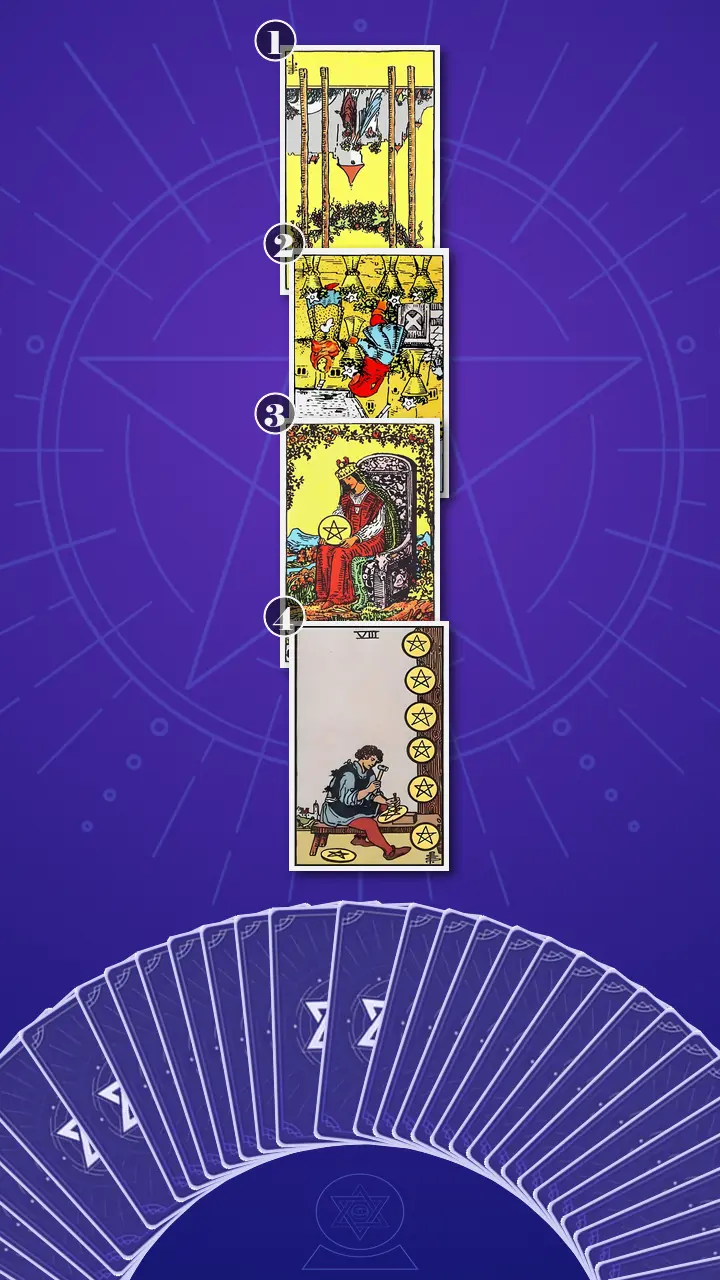
I told Maya what I tell my listeners on air whenever I explain how tarot works in real life: the spread is the structure that keeps the reading honest. The first card would show the visible disruption in her daily life. The second would reveal the unseen mechanic beneath it. The third—our turning point—would name the shift required for real clarity. The fourth would translate insight into one embodied next step she could actually try in an ordinary weeknight.
Reading the Quiet Rupture
The Doorway That Stopped Feeling Like Arrival
Now I turned the card representing the visible way the loss was disrupting home, routine, and felt belonging right now. Four of Wands, reversed.
I always pay attention to the threshold imagery in this card, and here it was almost painfully exact. The Four of Wands usually carries the energy of homecoming, shared ease, that tiny internal exhale that says, I’m here, I can land. Reversed, it showed blockage in that Fire. The structure still stood, but the welcome did not reach the body. I told Maya this looked exactly like unlocking her apartment at 6 p.m., dropping her bag, staying in her coat, and hovering in the doorway while the evening remained half-started. It was like walking onto a familiar set after a key character has left the show—the furniture is all there, but the atmosphere no longer holds.
“That’s so accurate it’s a little rude,” she said, and let out a short laugh with a bitter edge. Her fingers went to the edge of her sleeve, pinching and releasing the fabric. That reaction mattered. It told me the card had landed not as vague symbolism, but as lived reality.
I told her this first card was not accusing her of being bad at living alone. It was naming the presenting problem precisely: the threshold itself had become emotionally misaligned. Home still existed on paper, but her body no longer registered arrival.
When Memory Took Over Quality Control
Next I turned the card revealing the psychological mechanic beneath the symptom: the attachment to the old emotional map and the fear of losing belonging. Six of Cups, reversed.
This was the real blockage. The Six of Cups upright can be tender memory, familiar sweetness, emotional safety. Reversed, the Water starts flowing backward. I told Maya I could see the whole loop immediately: camera roll, old voice notes, inside-joke screenshots, Google Maps pins saved under “we should try this,” maybe even one café near Trinity Bellwoods that now felt loaded before she even sat down. Every coffee run, grocery trip, and half-formed plan got unconsciously graded against the old atmosphere. Her mind kept saying, I could go, I could do it, but it wouldn’t be the real version.
“Memory can be tender,” I told her. “It does not have to run quality control for the present.”
She went still, then nodded so fast it was almost a flinch. Her throat moved before she spoke. “I miss her,” she said, looking down at the card, “but I also miss who I was in that version of my life.” There it was—the deeper ache. Not just the friend, but the self who felt more settled, more witnessed, more automatically at home.
I asked her a question I often ask when nostalgia becomes a benchmark: “When you reopen the messages, are you looking for her—or are you looking for the version of you that felt more anchored there?” She pressed her lips together and stared past the table for a moment, like she was replaying a Saturday afternoon frame by frame. This is what Six of Cups reversed does in modern life. It lets the camera roll become the algorithm that decides what counts as a good life, and then nothing current gets a fair review.
When the Queen of Pentacles Retuned the Room
The Card That Moved Belonging Back Into Her Hands
When I reached for the third card, the room changed. Even the silence sharpened. Outside, somewhere beyond the window, a streetcar bell rang once and was gone. This was the card naming the key shift from person-anchored belonging to self-generated steadiness. Queen of Pentacles, upright.
You know that moment when you unlock your apartment, the room is quiet in the wrong way, and your thumb goes to one old chat thread before your bag even hits the floor? That was exactly where Maya had been living, mentally and physically. This was where the reading turned.
Your home is not broken because one doorway closed; like the Queen tending her garden, belonging grows where you keep nourishing your own ground.
I let that sit between us for a beat. Then I translated it the way I knew Maya would feel it: belonging did not leave town. One route into it did.
The Queen of Pentacles is grounded Earth in balance. She does not wait for life to feel meaningful before she tends it. She makes meals, pays attention to the body, notices the room, holds the ordinary world like it deserves care. I told Maya this looked less like finding the perfect replacement for her friend and more like plating her own dinner, switching on a warm lamp instead of the overhead light, putting groceries away with attention, and making one local plan without acting as though her own comfort somehow counted less when no one was there to witness it.
Because sound is part of how I read, I brought in one of my own working lenses here: Space Tuning. Years in radio taught me that rooms are never truly silent; they are simply ruled by whichever frequency wins. Grief had tuned her apartment to the hum of the fridge, the ping of notifications, the static buzz of the overhead light—the acoustics of suspension. The Queen asked for a retune. Not a mystical one. A practical one. The click of a lamp. The kettle beginning. Cutlery touching a real plate. A soft playlist that accompanied the room instead of masking it. In my mind, that was the whole card: her life shifting from fluorescent waiting to a steadier root note.
She froze first. Not nodded—froze. Her breath caught halfway in, her fingers stopped moving against the mug, and her gaze blurred the way it does when a sentence has already opened a file in memory. Then her jaw tightened. “But if that’s true,” she said, and there was a flash of anger under the sadness, “doesn’t that mean I made one person carry too much of my life?”
I shook my head. “No. It means the friendship was real. It mattered. It helped hold a version of your life together. But one doorway is not the whole house.” I watched her shoulders drop a fraction, then more. The skin around her eyes softened. Relief crossed her face so quietly it almost looked like confusion, the way it sometimes does when people set down a weight and feel slightly unsteady without it. “What if it doesn’t have to feel natural yet to still count?” I asked. “Now, with this new lens, think back to last week. Was there a moment when this would have changed how you felt?” She closed her eyes. “Tuesday,” she said. “I could have turned on the lamp before I opened the chat.”
That was the crossing. Not from grief to being over it, but from hollow disorientation and nostalgia-based comparison toward grounded warmth and ownership of daily life. From outsourced belonging to something she could begin to generate herself.
The Craft of Repeating What Counts
Finally I turned the card translating the target state into an embodied next step that would interrupt the loop directly. Eight of Pentacles, upright.
I smiled when I saw it, because this is one of the least glamorous and most useful cards in the deck. The Eight of Pentacles is Earth again, but now it is Earth in motion: repetition, craft, patient structure. I told Maya this card did not promise one huge emotional breakthrough. It promised something better—a trustworthy pattern. Wednesday laundry with a comfort podcast. Sunday grocery reset and soup. One low-pressure 45-minute coffee with someone nearby. The same post-dinner walk. The same lamp, the same kettle, the same seven phone-free minutes after walking in the door. Belonging, this card said, is rebuilt the way an algorithm learns: through repeated signals, not one dramatic declaration.
She gave me the first real smile of the session, small but unmistakable. “So the goal isn’t to get my whole life back,” she said, “it’s to make one pattern feel real again.” Exactly. That was the Eight of Pentacles in plain English. Not a grand reset. Just enough repetition for her nervous system to stop guessing wrong about whether her life still belonged to her.
From Suspended Evenings to a First Warm Light
When I looked at the spread as a whole, the story was beautifully clear. First, homecoming itself had misfired: the doorway stopped feeling like arrival. Then nostalgia stepped in and started judging the present against a past atmosphere it could never exactly recreate. After that, the Queen of Pentacles relocated belonging out of one friendship and back into Maya’s own hands, body, space, and schedule. Finally, the Eight of Pentacles showed how to make that shift believable through repetition. Home moved through the spread in a precise sequence: from place, to memory, to self, to practice.
I told Maya the real blind spot was not that she missed her friend too much. It was that she had started waiting for the right feeling before offering care to the life she already had. She was treating new rituals as fake unless they arrived with instant emotional certainty. But this spread had almost no Air in it, which mattered. This was not a problem she could solve with more analysis, a cleaner Notion reset, or one more late-night search for why her apartment felt weird after her best friend moved away. She needed embodiment before explanation. Care before certainty.
She looked at me and said, “But by the time I get home, I’m already in the chat thread. I don’t catch it early enough.” That was the practical obstacle, and it was a good one. So I adjusted the plan in real time. “Then the cue has to happen before the phone unlocks,” I said. “We let the first sound do the work.”
- Care-Before-Contact Cue When you walk in after work, put your shoes down, switch on one warm light, and do a three-minute version of my 21-Day Sound Bath before you open any messages or apps. One hand on your chest, one on the counter, phone face down, one low instrumental track or kettle sound in the background. This is your threshold claim practice. Keep it tiny. If three minutes feels annoying, do ninety seconds. The ritual still counts even if you miss her the entire time.
- One-Corner Home Claim Tonight, choose one surface—the bedside table, kitchen counter, or desk—and spend ten minutes clearing it, wiping it down, and placing one object that signals care: a lamp, mug, candle, flowers, or book. Do it before you text anyone. If your brain says this feels performative, that is the old loop trying to disqualify care. Do the two-minute version if you need to. Make one corner easier to return to.
- Anchor Stack Routine Put one recurring local anchor into the next two weeks: Wednesday laundry with CBC Front Burner, Sunday grocery reset and soup, or a clear 45-minute coffee with one nearby person. Same day, same cue, same container. Choose no more than two anchors. If a social plan gets canceled, the ritual still counts. The point is trust through repetition, not performance.
I reminded her of something I say often when people are rebuilding after a relational shift: you do not need a full life reset to feel more at home tonight. You need one lived signal that tells your body, gently and repeatedly, my own life still counts when no one is here to activate it for me.

A Week Later, the Apartment Answered Back
A week later, Maya sent me a photo. It was her kitchen counter. Cleared. Wiped down. A small lamp cast amber light across an actual plate of dumplings instead of the takeout container. Her phone was face down. Her text said, “Still miss her. Still weird sometimes. But tonight felt less like a hotel room and more like mine.” Then a second message came in: “Also texted Nora for coffee Saturday. Forty-five minutes. No dramatic meaning attached.” I loved that. It was light, specific, and a little bittersweet—the cleanest kind of proof.
That is the kind of finding clarity I trust most. Not the kind that erases grief, but the kind that gives it a steadier room to live in. This is exactly why I use the Four-Layer Insight Ladder tarot spread for belonging rupture, home disorientation, and routine repair after a friendship changes: it does not ask the ache to disappear before your life can feel inhabited again.
Sometimes the loneliest part is not just missing the person. It is standing in your own doorway with your keys in your hand and feeling your chest drop because the place that used to hold you now asks you to hold yourself.
If belonging could be practiced in one tiny way this week instead of proven all at once, what would you want that first small anchor to be—the lamp click, the kettle, the cleared corner, or the text that starts one new local rhythm?

Every reading at AceTarot is a journey to connect with inner wisdom and empower the path ahead. This reading shared here is a psychological mirror, not a private record—crafted to reflect universal emotional loops and help restore personal clarity. Please note that these insights do not replace professional psychological, medical, legal, or financial advice, and should not serve as the sole basis for major life decisions.
Learn more about our Journey to Clarity.
How did this insight land for you?
🫂 This Resonates Deeply
🌀 Living This Story
✨ Now I See Clearly
🌱 Seeing New Possibilities
🧰 Useful Framework
🔮 The Confirmation I Needed
💪 Feeling Empowered
🚀 Ready for My Next Step
Author Profile
AI Alison Melody
996 readings | 597 reviews
“Through ten years of sound energy research, I’ve found that when we struggle, it's usually just our internal rhythm falling out of sync under pressure. I know firsthand the frustrating helplessness of wanting to move forward but feeling paralyzed. Without overwhelming theories, I want to be the soothing background track that helps you recalibrate, turning your heavy burdens back into a light, effortless, and harmonious melody.”
In this Personal Growth Tarot Reading :
Core Expertise
Service Features
Also specializes in :
Explore Related Patterns:
Nostalgia LoopMaya's camera roll, old voice notes, inside-joke screenshots, and saved Google Maps pins were not just memories; they had started acting like quality control for the present. Every coffee run, grocery trip, or half-formed plan was being reviewed against the atmosphere of the old friendship, so the current version of home could barely get a fair test. Nostalgia Loop names the way memory can become a repetitive filter instead of a tender archive. You are not wrong for missing what was real, but when the past becomes the only standard for what counts as belonging, the present keeps failing before it has enough repeated signals to become familiar.
Peer Co-regulationThe best friend who moved away had been woven into Maya's ordinary homecoming system: saved places, casual plans, shared jokes, and the quiet sense that the city felt personal because someone else knew the same version of it. That does not make the friendship unhealthy. It shows how your nervous system can learn belonging through a specific relational rhythm, especially when daily life is built around small, repeated cues. When that rhythm disappeared, the apartment did not only lose a person nearby; it lost a co-regulating signal that helped the body register 'I am home.' Peer Co-regulation names that mechanism without pathologizing it. The audit point is that you may need to redistribute that regulation across your own rituals, your space, and a wider local network so one bond is not asked to carry the whole atmosphere of home.
Emotional ReasoningMaya treated the new rituals as fake unless they arrived with instant emotional certainty. Home still existed on paper, but because her body did not register arrival, the practical reality of the apartment was overwritten by the feeling that it did not count yet. Emotional Reasoning shows up when a feeling becomes the final proof of truth. You may wait to cook, turn on the lamp, or make a local plan until it feels natural, but the pattern keeps care locked behind a mood that has not had time to form. The useful shift is to let small care actions count before they feel fully convincing.
Self-AbandonmentDinner stalled, dishes waited, and the old chat thread got the first claim on Maya's evening before her shoes were even off. The painful detail is not that she missed her friend; it is that her own comfort began to count less when no one was there to witness or activate it. Self-Abandonment here is subtle, not dramatic. You may delay feeding yourself, softening the room, or claiming one clean corner because the old relational cue is missing, but the underlying mechanism is a withdrawal of care from your own daily life. The repair starts when care becomes something you offer before contact, not something you earn after the right feeling returns.
Self-SoothingThe lamp before the chat, the phone face down, the kettle sound, the cleared counter, and the actual plate of dumplings all show Maya moving care back into the room. These are not aesthetic upgrades; they are embodied cues that tell the body the evening has begun and the apartment is available again. Self-Soothing names the adaptive mechanism that makes belonging less dependent on one person being present. You are not trying to erase grief with a lamp or a routine. You are giving the nervous system repeated, concrete evidence that your own life can still hold you while you miss someone.
Action ParalysisMaya's coat stayed on, her tote landed by the door without being fully let go, and the evening hovered while dinner and dishes waited. The phone thread created movement, but not transition; it gave her something to do while avoiding the harder action of entering the changed apartment. Action Paralysis in this case is not laziness or poor discipline. It is a threshold freeze created by cognitive dissonance between 'nothing is technically wrong' and 'home no longer feels like home.' You can see the pattern when the body stalls at the exact point where a new routine would have to begin.
Explore Related Struggles:
Nostalgic Belonging LockMaya does not just miss her friend in the abstract; she keeps reaching for the old thread, old voice notes, inside jokes, saved cafés, and shared city map as if they can certify whether the present is still real. The remembered version of life becomes the standard every current coffee run, grocery trip, and quiet evening has to pass. Nostalgic Belonging Lock forms when memory stops being only tenderness and starts acting like quality control. You can still love what happened, but the past begins to decide what counts as warmth, ease, and home now. That leaves the present in a rigged comparison: it is asked to feel exactly like a previous season of life before it is allowed to matter. The sharpest line is Maya saying she misses who she was in that version of her life. The struggle reaches beyond friendship absence into self-location. You are not only grieving a person; you are trying to find the self who felt more witnessed there without forcing your current life to impersonate the old one.
Outsourced BelongingThe best friend had become more than someone Maya loved; she had become part of the operating system that made Toronto feel personal. After the move, the apartment is still there, but the default route into belonging is gone, so Maya reaches for the old chat before she reaches for dinner, light, shoes off, or the room itself. Outsourced Belonging captures that person-anchored structure. The struggle appears when a relationship has carried enough of your sense of place that its distance makes your own life feel temporarily unactivated. You are not empty without the person, but the pathway that used to switch the city from generic to yours is no longer available in the same way. The reading's key reframe is precise: belonging did not leave town; one route into it did. That matters because it returns agency without minimizing the friendship. The task is not to replace the friend or pretend the loss is small, but to stop one doorway from being mistaken for the entire house.
Threshold DisorientationMaya keeps arriving at the same doorway with all the normal signs of home still intact: keys, kitchen, rent paid, laptop closed, tote by the door. Yet her body does not complete the landing sequence. The coat stays on, the phone lights up, dinner waits, and the room becomes a place she is physically inside but not fully inhabiting. That is the core of Threshold Disorientation. The threshold is supposed to translate the outside world into rest, but here it fails to perform that function. You can see the struggle in the tiny delay between entering the apartment and claiming it as yours: the evening is available, but the internal cue that says you are home has gone quiet. The friend moving away did not remove the apartment; it removed a rhythm that helped the apartment register as emotionally real. The struggle is not that you cannot live alone. It is that a familiar place can become structurally misaligned when the person who helped activate belonging is no longer part of the daily field.
Routine FreefallMaya's routine does not collapse in a dramatic way; it loses its handoffs. Laptop closed should lead to shoes off, light on, dinner started, dishes handled, evening entered. Instead, the phone opens, the old thread takes the first slot, and the ordinary sequence begins to drift before it has a chance to become a night. Routine Freefall is not about being disorganized. It is the structural drop that happens when a familiar relational rhythm used to carry the transition from work mode into home mode, and that support is suddenly absent. You can still know what to do, but the cue chain no longer pulls the next action into place. The repair in the story is deliberately small because the break is practical as well as emotional: lamp before chat, kettle before scrolling, one clear counter, one recurring local anchor. The struggle eases when the body receives repeated signals that the evening can begin without needing the old friendship thread to authorize it first.
Care-Certainty SplitMaya has the insight before the new feeling arrives. She can understand that a lamp, dinner, a cleared counter, or a local coffee might help, but part of her still wants those actions to feel natural before they count. The result is a quiet standoff between caring for the life she has and waiting for that life to feel emotionally confirmed first. Care-Certainty Split names that friction. You need grounding, but the proof of belonging has not arrived yet; you need repetition, but repetition feels fake while the room still feels wrong. The split keeps care suspended at the exact point where care would begin teaching the body a new pattern. The story resolves this by making care smaller than certainty. A warm light before the chat thread, a real plate before the perfect mood, ninety seconds before a full ritual: these actions do not erase missing someone. They let you participate in your own life before your emotions have fully caught up.
Explore Related Emotions:
Belonging AmbivalencePart of you wants the apartment, dinner, and weekly routine to keep feeling steady, while another part fears that belonging left town with the person who made the city feel personal. That split is why the room can look unchanged and still feel subtly misaligned. Belonging Ambivalence names the push and pull between wanting to reclaim your life and not wanting to minimize what the friendship held. You are trying to let belonging become yours again without pretending the old route into it did not matter.
Friendship Drift GriefYou close the work laptop, keep your coat on, and open the same thread before your shoes are even off. The move did not only remove a person from your week; it removed the default rhythm that made errands, coffee plans, and ordinary evenings feel socially alive. Friendship Drift Grief fits because the ache is attached to a living pattern that used to hold your city in place. You miss your friend, and you also miss the version of yourself who felt automatically witnessed inside that friendship.
Grounded BelongingA week later, the counter is cleared, the lamp casts amber light, dumplings are on a real plate, and the phone is face down. The apartment has not suddenly become untouched by missing her, but it answers back as more yours. Grounded Belonging is the quiet sense that home can be rebuilt through repeatable care rather than dramatic certainty. You are letting belonging move into the counter, the meal, the local coffee plan, and the ordinary proof that your life still belongs to you.
Home Safety LongingThe apartment is still yours on paper: stable rent, familiar rooms, the same kitchen counter, the same door. Yet the doorway no longer lands in your body as arrival, and the flat overhead light makes the room feel more like a waiting area than a place that receives you. Home Safety Longing names the pull toward a room that can hold you again without needing the old chat thread to switch it on. You are not only asking where your friend went; you are asking how your own evening can feel safe, warm, and inhabited when no one else is there to activate it.
Liminal LonelinessYou stand in the kitchen with the coat still on, the tote bag half dropped, dishes waiting, and the evening suspended like an unopened tab. You are inside your apartment, but your body has not crossed fully into being home. Liminal Loneliness fits the threshold quality of this ache. You are not outside your life, and you are not fully settled inside it either; you are paused between the shared rhythm that used to orient you and the new rhythm that has not yet learned your name.
Nostalgia Loop AnxietyCamera roll, voice notes, inside jokes, saved map pins, and the same thread become the first places your hand goes after work. Every new coffee run or grocery trip gets compared with the old atmosphere before it has a chance to become real. Nostalgia Loop Anxiety shows up when memory starts reviewing the present like a strict editor. You are not simply remembering good times; you are watching current life lose points because it cannot recreate the exact version of belonging you had before.
Grounded AgencyTuesday becomes specific: you could turn on the lamp before opening the chat. That tiny reversal matters because it places one choice between the old pull and the rest of your evening. Grounded Agency names the felt return of leverage through small physical acts. You are not forcing yourself to be fine; you are giving your body repeated proof that your life can be tended by you, one lamp click, one plate, one phone-face-down minute at a time.
Explore Related Contexts:
Long-Distance FriendshipMaya's best friend has moved away, and the story shows the distance most clearly in ordinary moments: the 6:07 kitchen, the unopened dinner routine, the same text thread reopened before her shoes are off. The relationship has not disappeared, but its local function has changed. The friend is no longer part of the daily route through which the apartment, neighborhood, and evening used to become familiar. That is why the disruption lands in the body of the week instead of staying inside the friendship itself. When a close friend has been part of your default city rhythm, distance does not only reduce hangouts; it removes a living cue system. You still have the apartment, the job, and the routine on paper, but the person who helped those pieces feel connected is no longer physically woven through them. Long-Distance Friendship fits because the pain point is not simply missing someone. It is the external rearrangement of a friendship that used to occupy local space. You are being asked to keep the bond while rebuilding the daily infrastructure that the bond used to quietly support.
Pathless Social TransitionThe apartment, rent, and job remain intact, but the social route that made Toronto feel personal leaves with the friend. Maya is not starting from nothing, yet the old coordinates no longer tell her where to land after work. The city is still there, but the pattern that made it feel like hers has thinned out. Pathless Social Transition names the in-between stage the story keeps circling. There is no clear break from the friendship, no housing crisis, and no visible failure. The problem is that one route into belonging has closed before another local route has become trustworthy enough to replace its function. For you, this can feel like being strangely unplaced inside a life that still looks stable. The transition is social, spatial, and practical at the same time. You are not only missing a person; you are navigating a city, a home, and a weekly rhythm after one of their main reference points moved away.
Routine CollapseThe clearest rupture happens after work: Maya closes the laptop, keeps her coat on, drops the tote by the door, opens the same chat thread, and does not start dinner. The apartment has not changed, but the sequence that turns workday into evening breaks at the threshold. Dishes wait, the fridge hums, and the room stays half-entered. Routine Collapse is the right context because the story is not about lacking a schedule. Maya already has a stable rent situation and a decent routine on paper. The collapse appears when the routine needs to become lived: entering, cooking, settling, and letting the evening begin without the old social cue that used to make it feel natural. For you, this kind of collapse can feel confusing because nothing looks dramatic from the outside. The disruption sits in small failed handoffs between place and action. You know what would normally come next, but the ordinary cue chain no longer carries you there.