Who Keeps Track of Everything?

Name the unseen planning load, then see related tarot cards and reading insights from sessions where hidden labor comes up.

Invisible Workload

A solitary figure with lowered shoulders as translucent hands stack calendar pages, bills, and notes onto their back

What is this situation?

Invisible Workload — it starts when you walk into a shared kitchen, open a group chat, or check the team calendar and notice the things everyone else has somehow missed. The trash is full, the bill is due tomorrow, the fridge is empty, the meeting has no agenda, the birthday needs a card, the trip has no booking, and someone says, 'Can you just remind me?' as if remembering is not already labor. At home, a partner or roommate waits to be asked; at work, teammates assume you'll spot the loose ends; in friend groups, plans stay vague until you turn them into dates, links, budgets, and follow-ups. No one has to announce that you're in charge for the pattern to form: tasks drift toward you because the people around you treat noticing as ownership, treat last time as permanent, and praise you for being 'organized' while leaving the coordination on your shoulders. By lunchtime your shoulders are tight from a load no one has named, and your downtime gets sliced into tiny reminders for tasks that technically belong to everyone. The cost isn't just being busy; it's the way your day gets filled with work that disappears the moment it is done, much like the figure on the Ten of Wands, bent forward under a bundle that blocks the road ahead while everyone else only sees the destination.

Why it's not you?

The problem isn't that you're being too particular or that you 'should have asked for help' earlier. This setup turns noticing, remembering, and coordinating into unacknowledged background work, then acts as if the load belongs to whoever can see it. When reminders, follow-ups, plans, and loose ends keep defaulting to you, the load is being handed over even when no one says it out loud.

Invisible Workload in Tarot Cards

In Invisible Workload, that moment when your shoulders tighten before another reminder lands is part of the pattern, not a private overreaction. It is an environmental and structural dynamic: the setup lets other people treat planning, tracking, and follow-up as invisible until you do them. The cards below do not tell you what choice to make; they mirror the shape of the hidden load. Here are the Tarot Cards that tend to show up around this kind of situation.

The Emperor
Reversed
The stone throne, ram-marked structure, sceptre, and orb concentrate formal authority in a clearly defined seat. Reversed, that seat stops providing dependable ownership, so agendas, decisions, follow-ups, and operational discipline fall to you without the mandate to set priorities or redistribute work. This creates responsibility without authority rather than genuine leadership. You become accountable for preventing disorder while managers or designated owners retain status and decision rights, leaving you exposed to both overload and blame when the unsupported system finally misses something.
Justice
Reversed
The scales, sword, pillars, and seated authority depict a structure intended to define obligations and hold them in balance. Reversed, the family's fairness model counts visible chores while omitting the person who remembered, prompted, prepared, checked, and absorbed the consequences of delay. That omission allows an unequal system to describe itself as reasonable. You can hear that everyone helps while still functioning as the family's default manager, because the accounting begins only after you have made each need visible to them.
The Hanged Man
Reversed
The suspended figure hangs by one foot from a living frame, with hands held behind the body and a halo marking conscious awareness. Reversed, the pause no longer opens a useful perspective; your plans remain suspended because other people's practical needs repeatedly take priority without producing a genuine redistribution of responsibility. The loose, composed posture matters because the constraint can become normalised rather than openly forced. You may keep placing your own projects on hold to protect a household, team, or family from dropped tasks, while the surrounding system interprets that sacrifice as your natural role instead of a cost it is imposing.
Two of Pentacles
Reversed
The two pentacles travel through an endless figure-eight while rough water keeps the ships behind them in motion. Reversed, recurring deadlines stop behaving like a manageable cycle because you are simultaneously remembering due dates, prompting other people, and absorbing the consequences of delayed responses. The blocked path is a reliable shared cadence. The group sees each bill, booking, or deliverable when it becomes current, while you carry the unseen timing layer that connects one cycle to the next and prevents predictable obligations from turning into emergencies.
Three of Pentacles
Reversed
Three people stand beneath a shared structure with a plan available for collective review. Reversed, family members occupy the same system without a functioning agreement about who notices, plans, completes, and checks recurring responsibilities. The visible plan makes the missing layer concrete: helping after you assign a chore is not the same as co-managing the household. You remain responsible for converting family needs into tasks, which preserves everyone else's ability to wait for direction.
Six of Pentacles
Reversed
One figure holds the scales and distributes the material resources, making allocation itself visible as a form of power. Reversed, fair circulation is obstructed: you may be expected to organise appointments, gifts, visits, documents, care arrangements, and updates because the family counts your reliability as permanently available capacity. The family can describe these acts as help while overlooking the unequal freedom created by them. Relatives who do not monitor the shared workload preserve more discretionary time, while you absorb both the tasks and the responsibility for deciding when each task has become urgent.
Queen of Pentacles
Reversed
The Queen sits at the centre of a flourishing material environment, holding the resource that anchors its continuity. Reversed, the family care role becomes extractive: you may be the default person for meals, appointments, celebrations, documents, check-ins, and contingency planning because everyone assumes you already know what needs doing. The blocked resource is care flowing back toward the system's maintainer. Family stability can conceal the second shift required to produce it, especially when competence is praised instead of matched with redistributed ownership, reliable follow-through, and recognition of finite capacity.
Four of Swords
Reversed
A recumbent figure lies beneath three suspended swords while a fourth remains beside the body. Reversed, the physical container for rest is present but psychologically inaccessible: you may stop moving while reminders, household gaps, pending replies, and other people's deadlines continue occupying your attention. The unavailable resource is uninterrupted recovery rather than sleep or leisure in the abstract. Invisible workload fragments downtime because the shared system has no trusted holder outside your mind, so mentally releasing a task feels operationally risky even when you are no longer the person who should be doing it.
Nine of Swords
Upright
Nine swords line the dark wall above a figure sitting upright in bed with the face covered by both hands. The image captures how tomorrow's family task, overdue bill, unsent work reminder, or unfinished booking can remain active after the visible day has ended. The swords are arranged like a stored queue, which mirrors the mental indexing required when other people depend on you to remember. You experience private cognitive pressure from obligations that belong to a shared system, while the people benefiting from that vigilance may be asleep because they do not carry the same anticipatory role.
Six of Wands
Reversed
A wreath-crowned rider moves through a public procession while the surrounding group witnesses a visible success. Reversed, access to recognition is blocked for the person whose background coordination made the result possible: you may organise meetings, maintain shared documents, chase decisions, and repair gaps while praise attaches to the team, manager, or final deliverable. The procession exposes the difference between public output and backstage labour. Because invisible workload is most successful when nothing goes wrong, your contribution can be praised only as general helpfulness or organisation, leaving its strategic value outside promotion narratives, workload models, and formal credit.
Nine of Wands
Upright
The wounded guard watches a line of standing wands, prepared for another demand even after previous effort has left visible marks. You may monitor project dependencies, meeting gaps, stakeholder reactions, and colleagues' unfinished actions because experience has shown that failures will reach you whether or not the work sits inside your formal role. The upright card retains a boundary line and practical situational awareness, so the capacity to detect risk remains accessible. The career cost appears when vigilance is normalised as personal reliability instead of recognised as operational labour, turning you into an unofficial control system whose exhaustion remains less visible than the failures you prevent.
Ten of Wands
Upright
The carrier's hands close around the entire bundle, visually joining awareness, capability, and possession into one grip. You may have internalised a rule that seeing a shared problem makes it yours, especially after repeated situations in which waiting for others created more disruption than handling it yourself. The upright road shows that competence remains a usable resource, not a trait that must be rejected. The developmental gap lies between being able to carry and being structurally assigned to carry; separating those categories makes the invisible contract available for examination rather than allowing every noticed task to become automatic ownership.

Invisible Workload in Tarot Card Reading Insights

Other people carrying Invisible Workload have brought the same pattern into readings: calendars, reminders, shared tasks, and follow-ups that keep circling back to one person. The articles below move from card lists into how this hidden labor appears inside sessions. Tarot Reading Insights connected to Invisible Workload.

Full-Time Scope in 32 Hours: Hidden Overtime to One Trade-Off

Full-Time Scope in 32 Hours: Hidden Overtime to One Trade-Off

Topic:Career Tarot Reading

Struggle:Responsibility-Authority Split

Context:Work Life Boundary Creep
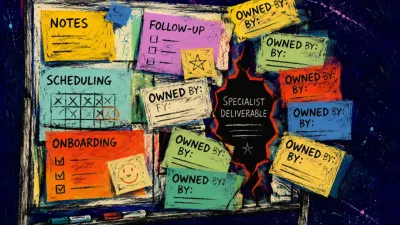
Office Housework Crowded Out Design Time: Naming the Trade-Off

Office Housework Crowded Out Design Time: Naming the Trade-Off

Topic:Career Tarot Reading

Struggle:Unseen Cost Bind

Context:Office Housework Trap

Workplace Overfunctioning: From Slack Rescue to Shared Ownership

Workplace Overfunctioning: From Slack Rescue to Shared Ownership

Topic:Career Tarot Reading

Struggle:Systemic Depletion

Context:Undefined Role Scope

Three Planning Tabs Open: From Overcommitment to a Fair Exchange

Three Planning Tabs Open: From Overcommitment to a Fair Exchange

Topic:Choice Tarot Reading

Struggle:Capacity Misalignment

Context:Resource Mismatch Cycle

Taking on Office Housework for a Promotion: From Anxiety to Evidence

Taking on Office Housework for a Promotion: From Anxiety to Evidence

Topic:Career Tarot Reading

Struggle:Responsibility-Authority Split

Context:Direct Communication Trial

Life Admin Burnout by Friday—and How One Closed Loop Changes the Week

Life Admin Burnout by Friday—and How One Closed Loop Changes the Week

Topic:Personal Growth Tarot Reading

Struggle:Mental Bandwidth Depletion

Context:Life Admin Backlog

At 6:47 p.m., the Laptop Reopened; by Friday, Ownership Was Named

At 6:47 p.m., the Laptop Reopened; by Friday, Ownership Was Named

Topic:Career Tarot Reading

Struggle:Responsibility-Authority Split

Context:Always On Availability

The Timesheets-Due-by-EOD Ping—and the Case File I Quit Writing

The Timesheets-Due-by-EOD Ping—and the Case File I Quit Writing

Topic:Career Tarot Reading

Struggle:Inner Tribunal Lock

Context:Work Life Integration Trial

From Slack-Ping Pressure to Calm Focus: Naming Two Managers’ Conflict

From Slack-Ping Pressure to Calm Focus: Naming Two Managers’ Conflict

Topic:Career Tarot Reading

Struggle:Capacity Misalignment

Context:Always On Availability

Parentified Adult Child Burnout—and the Shift to Boundary-First Care

Parentified Adult Child Burnout—and the Shift to Boundary-First Care

Topic:Family Tarot Reading

Struggle:Inherited Role Lock

Context:Parentified Adult Child Role

From Slack Auto-Yes to Contract-First Ownership: Jordan's Shift

From Slack Auto-Yes to Contract-First Ownership: Jordan's Shift

Topic:Career Tarot Reading

Struggle:Responsibility-Authority Split

Context:Undefined Role Scope

Stuck in the 3pm Crash Loop—And How to Treat Recovery as Performance

Stuck in the 3pm Crash Loop—And How to Treat Recovery as Performance

Topic:Career Tarot Reading

Struggle:Social Energy Drain

Context:Social Performance Loop

Psychological Contexts Related to Invisible Workload