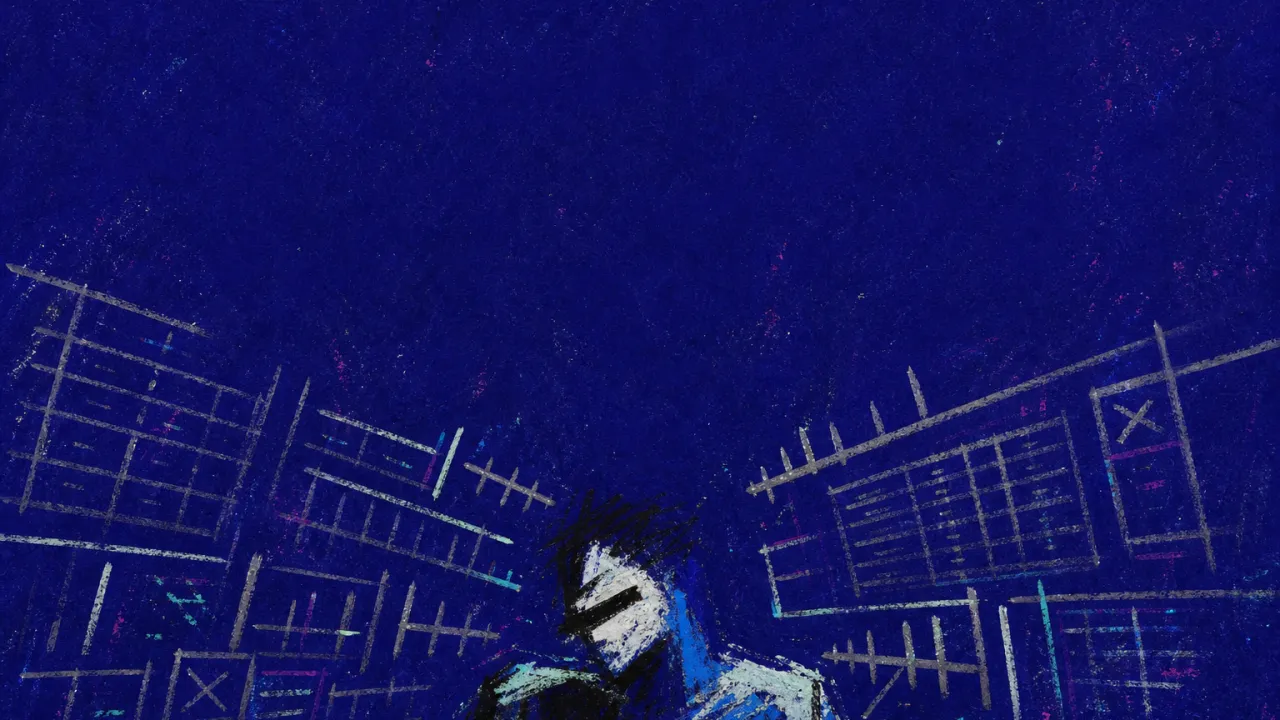
That tight jaw after another late-night comparison tab is part of the Decision Criteria Black Box, where every option is measured by a standard that changes as soon as someone else enters the room. This is an environmental, structural dynamic: the pressure comes from a system of rankings, opinions, deadlines, and approval signals that never shows its full rubric. The cards below do not tell you which option to pick; they mirror the shape of a choice being held inside unclear rules. Here are the Tarot Cards that tend to show up around this kind of decision field.
Ace of Swords ReversedThe blade pierces the crown with exactness, but the surrounding scene does not show who defined the crown, why it matters, or how its standard connects to the ground below. Judgment is visually powerful, yet the criteria behind that judgment remain suspended in the air. That is the external pressure of a decision criteria black box. You are asked to choose a life direction, but the measuring system keeps shifting between status, money, freedom, family approval, personal meaning, and future security. The card's structure makes the hidden scoring system visible. Before the path can be chosen, the authority of each criterion has to be audited, because a decision made inside an opaque standard can look clear while still pointing toward the wrong horizon.
Two of Swords UprightThe crossed swords over the woman's chest create a perfect-looking structure with no visible deciding mechanism. Both blades are held at equal force, the blindfold blocks ordinary feedback, and the shoreline behind her offers several directions without turning any of them into a road. That visual field maps directly onto a personal growth environment where every framework can sound rational but none of them clarifies what should matter most. You can be surrounded by methods, prompts, and upgrade language while the real selection criteria remain sealed behind the posture itself. This card anchors Decision Criteria Black Box because the blockage is not laziness or lack of ambition. The system has not made its rules visible, so your agency begins with naming the hidden standard that is currently choosing on your behalf.
ReversedThe blindfold blocks direct verification while the crescent moon and tide keep changing the conditions behind her. The swords are balanced, but the basis for judging them is hidden, partial, and dependent on timing. This is the physical architecture of a Decision Criteria Black Box. You may be comparing options with standards that keep shifting: security one day, meaning the next, social approval after that. The image makes the hidden scoring system visible so the blockage can be named.
Three of Swords ReversedGrey rain and mist cover the background while the blades provide the only visible lines. The image creates a field where there is impact, symmetry, and pressure, but no horizon that explains how the situation should be evaluated. That is the texture of a decision criteria black box. You are being asked to choose while the rules, weights, and real consequences remain hidden, so the card functions as a pressure map: it shows where the cost lands before it claims to show which answer is correct.
Four of Swords UprightThree swords sit inside a square wall field, while the fourth sword lies in a separate hidden plane beneath the resting body. The visual order looks clean from the outside, but the actual structure splits the decision into visible categories and an unspoken criterion. When a choice feels impossible to weigh, the problem may not be lack of intelligence or effort. The card points to an evaluation system where the stated pros and cons are not the whole mechanism, so You need to identify what is actually deciding the outcome before treating the visible list as complete.
Six of Swords ReversedThe passengers' faces are hidden, and the active mechanics of the crossing sit behind them in the ferryman's hands. The boat is moving, but the basis of that movement is not fully visible from the passengers' position. That makes the decision criteria feel external and opaque. You may be trying to make a clean choice without knowing which standard, timing pressure, or unstated rule is actually steering the situation.
Eight of Swords UprightThe blindfold blocks the woman's view while the swords remain visibly ordered around her. The scene contains structure, rules, and boundaries, but from her position the logic of that structure cannot be read. That is the pressure of a direction choice governed by unclear standards. You may be trying to choose the right life path, career route, move, or commitment while the criteria for "right" come from distant systems: status markers, family expectations, economic pressure, or social proof that never fully explains itself. The Eight of Swords anchors this context in the gap between capacity and readable information. The body can stand, the field has openings, but movement stays suspended until the hidden criteria shaping the choice are named and separated from your own long-term orientation.
ReversedThe swords stand like fixed rules around the woman, while the grey castle sits at a distance as the larger system that defines the terrain. Her hands are tied and her eyes are covered, so she cannot test the rules or read the standards that govern movement. In choice work, that image maps to a situation where the criteria for a good decision are opaque or constantly moving. You are being asked to commit without reliable access to the scoring system, which makes hesitation a rational response to structural uncertainty rather than a personal flaw.
Nine of Swords ReversedThe quilt beneath the figure is packed with repeated, incomplete symbols, while the swords above are perfectly aligned. One layer looks over-coded and disorderly; the other looks rigid and severe. That split is the visual logic of a criteria system that has stopped explaining itself. You may be weighing money, timing, reputation, desire, obligation, and risk at once without knowing which one has permission to lead, so the card points to the hidden ranking system underneath the choice rather than the surface list of options.
Page of Swords UprightThe Page holds the sword like a formal instrument of judgment, yet his body is twisted between the blade's direction and the place his eyes are checking. The visual field contains a rule, a standard, and a demand for precision, but the terrain around that standard is windy, exposed, and hard to stabilize. That is the structure of a decision where the criteria exist but do not feel fully legible. You can sense that the choice will be judged by something outside your personal preference, such as timing, approval, credibility, risk tolerance, or hidden expectations, but the actual scoring system remains partly obscured. In a decision spread, this card names the pressure of choosing inside an unclear evaluation system. It does not remove the need to decide; it makes the invisible rubric visible enough to audit, so the choice can be made from real criteria instead of guessed rules.
ReversedThe Page's face turns one way while the sword points another, and the sky behind him is packed with moving cloud. The picture holds two competing lines of attention in the same body, making the problem less about intelligence and more about unreadable standards. In personal growth, this becomes the stage where progress, readiness, and enoughness keep changing shape. You can keep scanning for the right move, but the deeper issue is that the criteria for a valid next step have not been made visible enough to act on with confidence.
Queen of Swords ReversedThe sword is clear, but the surrounding clouds and carved authority make the decision chamber feel sealed. The queen holds the standard, yet the scene does not show an open exchange of evidence, only a narrow gate through which information must pass. That structure fits a decision where the criteria are hidden or unstable. You may be asked to choose, commit, apply, leave, stay, or negotiate while the real rules are held by someone else or keep changing as soon as you approach them. The card exposes the black box around the choice. It does not pretend the answer is already obvious; it shows that the first task is to identify who controls the standard, what information is missing, and whether the decision is fair enough to deserve your commitment.
King of Swords UprightThe sword is held upright in the King’s right hand, turning the card into a scene of criteria, judgment, and separation. His plain blue clothing and stern frontal gaze reduce the visual field to one question: what standard is actually being used to decide? In lifestyle terms, that question becomes urgent when every routine, purchase, boundary, and time block is being evaluated against invisible or conflicting rules. You may be trying to design a better day while the decision system underneath it remains undefined. The card’s clarity is not casual preference; it is structured discernment. It points to the external mess created when wellness trends, work demands, social expectations, and personal standards all compete without a visible hierarchy, leaving daily choices stuck inside a criteria black box.
ReversedThe sword is sharp and upright, but the barren mound gives no road for how a verdict becomes movement. The King has standards; the landscape does not show a process for reaching them. In personal growth, that mismatch becomes a decision criteria black box. You keep encountering rules about discipline, mindset, and potential, but the hidden scoring system leaves every upgrade feeling like a test whose terms keep moving.
Ace of Wands ReversedThe hand comes out of cloud, holding the wand before the source of the offer is fully visible. Below it, the landscape has a castle, river, and hills, but the connection between the offered force and the ground-level path is not fully explained. This is the shape of a decision where the option looks important but the evaluation rules are not transparent. You may be comparing choices without knowing which cost, promise, authority, or long-term consequence is actually setting the terms. Decision Criteria Black Box belongs here because the reversed image concentrates power in a gesture whose context is partly hidden. The task is not to force a yes or no; it is to identify which criteria are missing, outsourced, or quietly controlling the choice.
Two of Wands ReversedThe man has an elevated view, a globe, two wands, and a domain laid out below him, yet the actual rule by which he will choose remains hidden. The scene contains order and authority, but not transparency about the criteria behind direction. In introspective work, this becomes the moment when the mind keeps trying to decide while the real scoring system is buried underneath old approval rules, status fear, shame scripts, or borrowed ambitions. You can appear rational from the outside and still be using a decision logic you have never fully audited. The reversed Two of Wands makes the black box visible by holding the figure in stillness despite all available information. It points to a structural problem inside the choice architecture: the options are visible, but the inner rules assigning value to them need to be brought into view.
Five of Wands ReversedIntersecting wands create motion without an agreed sequence. The scene has force, effort, and visible participation, but no scoring system, referee, queue, or stable center that tells anyone which move should count first. Decision Criteria Black Box appears when the options are visible but the evaluation system is not. You can keep comparing forever because the real problem is not the list of choices; it is the hidden rule layer deciding what counts as a better choice.
Nine of Wands ReversedThe eight wands seem orderly at first, but their uneven heights and the gap near the center disturb the pattern. The gray sky and flat ground give the scene a stripped-down quality, as if the figure has to defend a line whose rules are not fully readable. For a choice spread, that visual instability becomes an opaque scoring system. You can see options standing in a row, but the criteria that make one stronger, safer, or more costly are uneven, forcing the decision to be made under unclear standards.
Ten of Wands ReversedThe destination can be seen in the distance, but the rods block the figure's immediate sightline. The load is also uneven, so it is difficult to tell which wand creates which pressure while the body is already moving. That is how a decision criteria black box operates. You may know the visible goal, but the actual weighting system behind the choice remains unclear, so convenience, guilt, status, fear of waste, and real desire can all masquerade as the main reason. The Ten of Wands turns the hidden weighting into something inspectable. Before the decision is made, the structure asks which criteria are carrying legitimate weight and which ones are simply pressing hardest because they are closest to the face.
Page of Wands ReversedThe Page appears as a court messenger, holding the wand like a visible credential while the source of the decree remains outside the frame. The message is clear enough to be carried, but the system behind it is not visible. When the image is reversed, that becomes a Decision Criteria Black Box. You may be asked to choose under rules that keep shifting, approval standards that are implied rather than stated, or an opportunity whose real conditions are harder to read than its surface signal. The card brings attention back to the structure around the choice. It does not frame the delay as personal failure; it shows that unclear criteria can make any option feel unstable until the hidden evaluators, incentives, and thresholds are named.
Queen of Wands ReversedThe black cat sits low at the throne's base while the sunflower, lions, and crown dominate the bright upper field. The scene contains a public story of confidence and a quieter signal placed near the ground. That split fits a decision criteria black box: the offer, path, or option may look polished, but the actual rules of selection, support, or cost are not fully visible. You are being asked to evaluate something before all the governing variables have been brought into the open. The Queen's occupied hands make the pressure sharper because every visible symbol suggests readiness. The card slows the decision down enough to name what is missing: not more confidence, but clearer criteria, disclosed terms, and a map of who controls the gate.
King of Wands ReversedThe throne is full of symbols, but the symbols do not explain the operating rules. In reverse, the emblems, wand, and elevated seat create a judgment surface where authority is visible while the criteria remain hidden. That structure matches a decision environment where you are asked to commit without knowing what will count as success, approval, loyalty, or risk. You are not lacking intelligence; the external rule system is withholding the frame that would make the choice auditable.
No cards available for this filter.