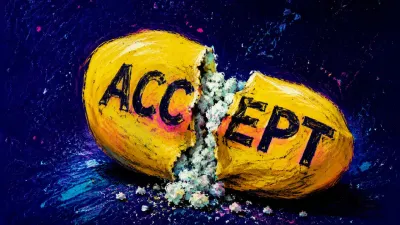
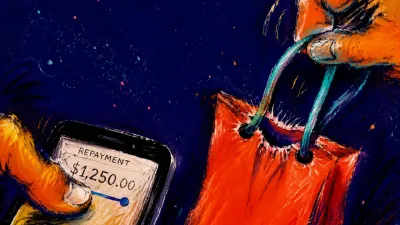
In a Strings Attached Offer, the pressure sits in the space between the visible help and the conditions that start appearing after you accept. That tightness in your chest when the offer sounds generous but the terms stay blurry is not random; it is your body registering the connector behind the perk. This is an environmental, structural dynamic where access, money, approval, or opportunity moves through someone else's control point. The Tarot Cards below reflect the shape of that bargain before the chain becomes harder to name.
The Devil UprightThe metal ring on the black cube is the crucial object: it makes the connection look formal, centralized, and enforceable. The figures are not simply standing near an authority; they are linked to the same attachment point through a visible mechanism. Inside a career situation, that mechanism resembles the offer that arrives with conditions no one names cleanly at first. A promotion may require loyalty beyond the role, a referral may create an obligation, or a high-visibility project may carry political debt that outlasts the actual opportunity. The card does not flatten the offer into a warning sign. It reveals the hidden architecture of the bargain so You can see whether the opportunity expands your career range or binds your next moves to someone else's leverage.
The Moon ReversedThe moon's light is borrowed rather than self-generated, and its drops fall over a road guarded by towers and animals. The scene supplies an invitation to move forward, but the terms of that movement are not fully lit. That is the pressure inside a strings attached offer. You may be looking at an option that appears generous, stabilizing, or exciting, while its real conditions sit in the dim part of the agreement: loyalty expectations, hidden workload, social debt, reduced freedom, or an exit cost. The card keeps the focus on terms, not temptation. It shows that agency returns when the offer is audited as a system of obligations, not consumed as a single bright opportunity.
Ace of Cups ReversedThe hand presents a jeweled cup while the dove places a marked disc into it, creating an exchange that looks generous, meaningful, and already scripted. The offer arrives with symbols attached before anyone in the scene can negotiate the terms. In friendship, that becomes the moment when help, access, money, introductions, emotional support, or inclusion carries an unnamed price. You may receive something that looks like care, only to discover later that it created debt, loyalty pressure, or an expectation to comply. Ace of Cups reversed makes the hidden contract visible. The issue is not generosity itself; it is the social coding around the offer, where warmth becomes leverage because the conditions were never spoken plainly.
Two of Cups ReversedThe cups are offered, but the exchange has not actually closed. The caduceus between the figures carries the language of negotiation, and in a reversed context that central symbol can hold conditions, obligations, or expectations that are not spoken out loud. This is the decision-stage pressure of an option that looks generous from the outside. You can see the offer, the charm, and the apparent mutuality, but the card draws attention to what the yes may quietly require from you later.
Three of Cups ReversedThe cups are raised toward one another, and the harvest sits openly at their feet. In reversal, shared abundance can carry invisible terms: acceptance, loyalty, repayment, silence, or continued participation in the circle. This context fits a choice that looks generous on the surface. You may be offered help, access, money-adjacent support, social backing, or a role that seems like a gift, while the real question is what the offer will ask from you later. The card links the visible reward to the hidden contract around it. Clarity comes from naming the conditions before the toast becomes a commitment.
Four of Cups UprightThe fourth cup is not sitting with the others; it is held out by a hand whose full body, motive, and social position remain unseen. The offer enters the scene from outside the figure's protected space, close enough to matter but not transparent enough to be fully trusted. In a decision context, this turns the cup into an option that may carry hidden expectations. It may look generous, timely, or emotionally compelling, while the actual terms remain partly outside the frame. You are being shown the difference between receiving an opportunity and consenting to the structure behind it. The closed posture does not need to be treated as resistance to growth; it can mark the boundary required to inspect what the offer will ask for after the first yes.
ReversedA hand emerges from the cloud holding a cup, yet the source of the hand is not socially visible. The offer is real, but its terms are not fully grounded in the scene. In friendship, that ambiguity becomes a Strings Attached Offer when help, inclusion, or emotional warmth arrives with unclear expectations underneath. You may be offered a cup, but the card shows why the body hesitates before accepting a resource whose later cost has not been named. The folded posture is not simple refusal; it is a boundary response to an exchange that has not become transparent. Four of Cups links this context to the moment when support needs to be separated from obligation before it can be safely received.
Six of Cups ReversedThe offered cup is beautiful, but it is also a visible transfer. When the image is blocked, the gift can stop being simple care and become a social instrument that quietly records who owes whom. In a friend group, this can appear as favors, invitations, emotional support, or access that arrives with an invisible expectation attached. The flowers keep the gesture looking harmless, which makes the pressure harder to name. You may be trying to understand why a kind offer leaves you feeling less free afterward. The card shows the structure: generosity is present, but the handoff needs to be audited for hidden conditions, repayment pressure, and social leverage.
Seven of Cups ReversedJewels, a castle, and a wreath appear inside shining cups, but the snake, dragon, mask, covered figure, and skull make the offer field unstable. The attractive symbols are real enough to pull attention, yet their terms are not displayed on the same surface. In career life, this resembles a promotion, referral, startup role, prestige project, or raise that arrives wrapped in opportunity language while hiding workload, politics, availability expectations, or reputational cost. You are being shown the reward before the operating conditions are made clear. The card's value is in separating the offer from its packaging. It asks what is being exchanged, who benefits from the ambiguity, and which invisible obligations must be named before the cup can be treated as a real opportunity.
Knight of Cups ReversedThe cup is offered from an armored body, and the horse has not yet crossed the river. The image holds generosity and control in the same frame, with the beautiful object extended while the route forward remains regulated. That is the family structure behind a strings attached offer. Help, affection, money, housing, forgiveness, or approval may appear available, but the exchange carries hidden terms about gratitude, disclosure, loyalty, or the version of You the family wants to keep recognizable. The reversed current does not make the cup worthless. It reveals why accepting it may feel complicated, because the emotional object is tied to passage, and passage can quietly become permission granted by someone else.
King of Cups ReversedThe golden cup looks valuable, and the scepter gives the holder authority, but both objects stay in the King’s hands. Around them, the sea moves freely while the offer itself remains controlled by the figure at the center. For a decision, that points to an option that appears supportive while quietly preserving someone else’s leverage. The card asks the offer to be read as a structure: what is being handed over, what remains controlled, and which obligations would enter your life with the gift.
Ace of Pentacles ReversedThe coin is presented by a hand that appears from outside the ordinary ground of the scene. Below it, the garden is beautiful, but access is organized through a gate and a path, so the offer carries a threshold rather than unconditional arrival. In an introspective context, this matches help that comes with subtle terms: a place to stay, money, advice, mentorship, emotional support, or a calm-looking opportunity that expects gratitude, performance, silence, or compliance in return. The card connects this context to the mechanics of access. The resource may be real, but the structure asks you to see what must be traded to hold it, and whether the offer supports inner clarity or quietly purchases your self-erasure.
Six of Pentacles ReversedCoins fall downward from a figure who also holds the scales, making the offer inseparable from control over the terms. The receivers have open hands, but they do not hold the measuring instrument, so the exchange is shaped by someone else's conditions. In personal growth, this is the reality of a strings attached offer. You may receive help, feedback, sponsorship, or access, but the card reveals the hidden cost when support quietly demands loyalty, public gratitude, compliance, or a version of growth that belongs more to the giver than to You.
Ten of Pentacles UprightThe elder, crest, dogs, and estate gather support around a clear household order. Help is present, but it enters through symbols of rank, belonging, and long-standing rules. For you, the offer may solve one practical problem while creating a quieter decision cost. The card's social architecture asks what has to be accepted, performed, or owed in exchange for access to the resource.
King of Pentacles ReversedThe pentacle is held inside a throne room of authority, walls, trophies, and ownership. The resource is real, but it appears within a controlled domain rather than in an open exchange. This points to an offer that may solve one problem while quietly creating obligations, loyalty expectations, or dependence on someone else’s terms. You are not asked to reject the resource; the structure asks you to map who controls access, what is expected in return, and how much agency remains after acceptance.
No cards available for this filter.