Why Does Pressure Make Me Start?

A clear look at why pressure starts your work, plus the tarot cards and tarot card reading insights that reflect this pattern.

Crisis-activated Productivity
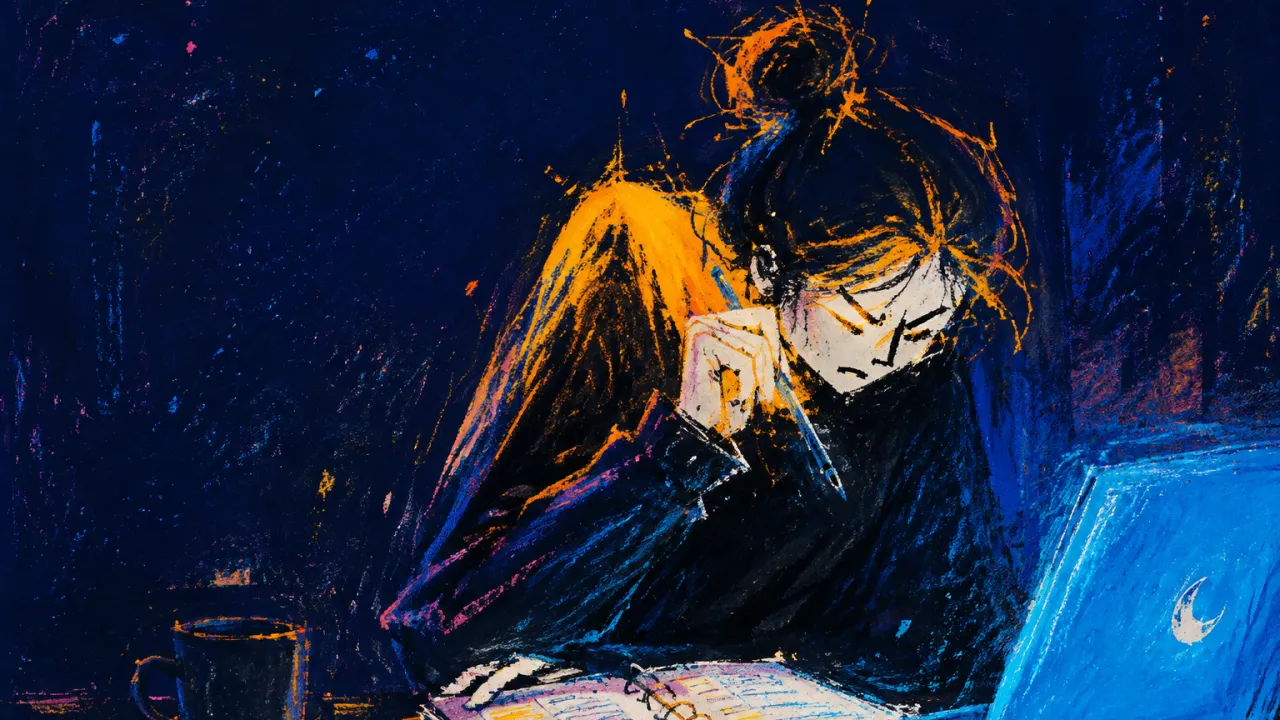
A figure with raised shoulders holds a pen above an open planner beside a laptop, amber and blue light across a desk.

What is this really?

You fall into a learned reinforcement loop: emails, assignments, and practical decisions stay open until the deadline is close enough to make your body sit upright; then you clear the backlog in a concentrated sprint. The pressure narrows the field, quiets competing thoughts, and gives you a concrete next move when beginning in calm feels too diffuse. Yet the relief after finishing reinforces the idea that urgency is the switch, so ordinary time starts to feel unusable and each calm day becomes another runway for a last-minute rush, much like the Eight of Wands, with all eight wands already airborne at once.

Why did it happen?

When an earlier environment rewarded fast delivery more than steady preparation, working under pressure may have helped you cut through distractions, find one clear next step, and feel the relief of getting it done. Your inner pattern now waits for that alarm before it lets you begin, and the relief after a last-minute sprint can quietly keep the subconscious loop running, leaving calm time feeling strangely hard to use.

How does it feel?

  • At your desk, you open the inbox, click between three tabs, and start answering messages in quick bursts only after a deadline reminder appears. A moment later, your shoulders are high and your breath has turned shallow; allow that sensation to be noticed without forcing it to change.
  • You leave an assignment document untouched, roll a pen between your fingers, and make tiny edits to the title while an open planner sits beside the laptop; then you fill the page in one late-night push before submission. When you stop, your eyes feel gritty, your jaw is set, and your hands remain near the keyboard; you can let the pause after finishing be there.
  • You open a routine application, switch to another tab, and close it before entering the final details; when the reminder marks the last day, you return and move through every field without looking away. Your chest feels warm and your fingers move faster than usual; it is okay to notice the pace without judging it.
  • In a shared project, you read a teammate's check-in, hover over the reply box, and leave the progress update blank until the meeting is close; then you send a polished message in one burst. After pressing send, your face feels hot and your hands go still; you can let the quiet afterward be there for a moment.
  • At home, you line up the tools for a small repair, glance at the unfinished spot, and set everything aside; when someone is due to visit, you move from one task to the next without stopping. Your breathing quickens and your palms feel warm as the room comes together; you may pause and notice those sensations without adding a verdict.

Crisis-activated Productivity in Tarot Cards

Crisis-Activated Productivity shows up in the wait for a deadline, followed by a sudden, concentrated sprint. You may recognize the moment when your shoulders are high and your breath has turned shallow. Jungian archetypal theory offers a way to understand this pattern through recurring symbolic images. The Tarot Cards below mirror the unconscious movement of Crisis-Activated Productivity; here are the Tarot Cards connected with it.

The Chariot
Upright
The charioteer faces forward between two differently colored sphinxes, with the vehicle and canopy creating a contained channel for movement. That arrangement gives visual form to a professional system that gathers force only when a deadline makes every competing task subordinate to one deliverable. You may perform with impressive focus during the final push and receive external confirmation that the result is strong. The reward can fuse competence with emergency control, making ordinary planning feel less trustworthy than the high-arousal state that produced the visible outcome.
Temperance
Reversed
The angel joins water and land through a patient exchange between two cups, making integration and gradual adjustment visible in the body of the image. Its reversed tension mirrors a growth system that waits for a setback or deadline to create enough pressure for change, then mistakes the resulting burst for a stable transformation. You may understand the pattern intellectually while postponing the small repetitions that would alter it. The relief of proving that you can still act under pressure protects the old system from being replaced by quieter, more durable practice.
The Devil
Upright
The two figures are fastened by visible chains while standing beside a dark pedestal, making repetition and attachment more prominent than choice. The image maps onto an internal reinforcement loop in which diffuse calm is avoided and an approaching consequence is recruited to narrow attention. You may describe the late sprint as a personal quirk, yet the structure is more specific than that judgment. Urgency reduces cognitive noise, completion brings relief, and the relief strengthens the belief that pressure is required before you can access your own capacity.
Judgement
Upright
The trumpet sounds above the figures as they rise together from enclosed boxes, turning a dormant scene into a collective moment of response. That visual awakening mirrors an assignment that remains untouched until a submission reminder transforms vague intention into one immediate academic demand. You may complete the work with remarkable concentration once the signal arrives and feel relief when the page is finally sent. The pattern then stores the successful awakening as evidence that steady study was unnecessary, preserving the next period of academic dormancy.
Seven of Cups
Upright
A cloaked figure faces seven separate cups filled with competing images, while a cloud holds the display outside any clear sequence of action. The scene gives visual form to decision paralysis when every option remains open and only a deadline can collapse the field into one concrete move. You may experience that narrowing as relief because it removes the cognitive cost of comparing possibilities. The crisis then appears to have improved your decision-making, even though it mainly removed alternatives by force and reinforced postponement.
Two of Pentacles
Reversed
The figure balances two pentacles in a continuous loop while ships pitch behind him, combining repeated motion with an unstable environment. Its reversed tension mirrors academic backlog management when readings, drafts, and problem sets remain open until the approaching submission forces one compressed order of operations. You may finish by moving faster than expected and take that speed as evidence that the delay was harmless. The relief after submission then reinforces the cycle, making a quiet study block feel less activating than a crowded deadline window.
Three of Pentacles
Reversed
Three figures gather around a blueprint inside an unfinished structure, with the work visibly dependent on coordination, shared information, and a sequence of contributions. In its reversed tension, the incomplete collaboration mirrors a project update that remains open until a meeting is close enough to force one polished burst of communication. You may send a strong progress message at the last moment and receive enough relief to feel that the delay was manageable. The pattern hides the coordination cost by rewarding visible completion after pressure, which makes earlier, smaller updates feel less necessary.
Seven of Pentacles
Reversed
The gardener pauses with both hands on the hoe and studies the pentacles growing from the plant, making slow investment and delayed return central to the scene. In its reversed tension, that waiting becomes difficult to sustain, mirroring study habits that remain dormant until an exam or submission makes the payoff immediate. You may learn intensely in the final window and feel a sharp release when the work is submitted. That relief reinforces the preference for high-pressure concentration over the quieter repetition through which knowledge is normally absorbed.
Eight of Pentacles
Reversed
The craftsperson sits at a bench with one pentacle in hand and finished pentacles displayed along the wall, making repeated practice and visible output central to the scene. In its reversed tension, the steady sequence is disrupted, mirroring a study system that postpones repetition until an exam makes immediate performance more important than gradual learning. You may still produce a recognizable result in a compressed session, which makes the missing practice easy to discount. The relief of getting through the test reinforces output under pressure while leaving the underlying skill-building rhythm inconsistent.
Two of Swords
Upright
The seated figure holds two swords in a rigid cross while a blindfold blocks visual information and the water behind remains still. The physical pause mirrors a choice held outside awareness until a closing deadline makes continued suspension more uncomfortable than committing. You may experience the forced decision as a sudden increase in clarity, although the pressure has mainly removed the option to keep waiting. Relief after choosing can reinforce the belief that calm reflection is ineffective and that an external crisis must make the decision for you.
Four of Swords
Reversed
The carved figure lies motionless inside a quiet stone space while three swords hang above and one rests beside the body, creating a strong image of suspended activity and stored tension. In its reversed tension, the stillness becomes restless rather than restorative, mirroring an inner system that waits for an alarm before it can convert thought into action. You may find that quiet reflection leaves you hovering near the task without entering it, while a deadline suddenly makes the next step obvious. The resulting sprint quiets the mental noise for a moment, but the relief can teach you to distrust calm as a productive state.
Knight of Swords
Upright
The knight's body is pitched forward, the sword points into the wind, and the horse moves at full speed beneath a turbulent sky. That scene mirrors a late academic sprint in which urgency removes hesitation and lets you move through writing, revision, or problem-solving without looking away. You may experience the speed as satisfying because it quiets competing thoughts and produces a concrete finish line. The relief after submission then reinforces the belief that pressure unlocks concentration, while the quieter preparation phase continues to feel strangely inaccessible.
Eight of Wands
Upright
The eight wands are already airborne, moving in parallel without showing the gradual setup that preceded their launch. That concentrated motion mirrors the late study sprint in which an approaching submission or exam suppresses competing thoughts and supplies a single concrete next step. You may finish an assignment quickly enough to feel capable and relieved, but the relief also rewards the delay that made the pressure necessary. The pattern therefore trains attention to wait for an academic alarm before allowing sustained effort to begin.
Ten of Wands
Upright
The figure carries a bundle of ten wands so large that it hides the face and occupies both arms, leaving little room to see the path ahead. That blocked view mirrors a household backlog that remains too diffuse to begin until its accumulated weight creates enough pressure to force direct movement. You may complete everything in one exhausting push and feel the immediate relief of putting the bundle down. Because relief arrives after the overload rather than before it, the pattern can teach you to trust a crisis more than a modest, distributed start.

Crisis-activated Productivity in Tarot Card Reading Insights

For anyone who waits for a deadline before starting, others have brought Crisis-Activated Productivity into readings too. Below are Tarot Reading Insights connected to this pattern.
Psychological Patterns Related to Crisis-activated Productivity