From Study Streak Frustration to Grounded Learning: One Question
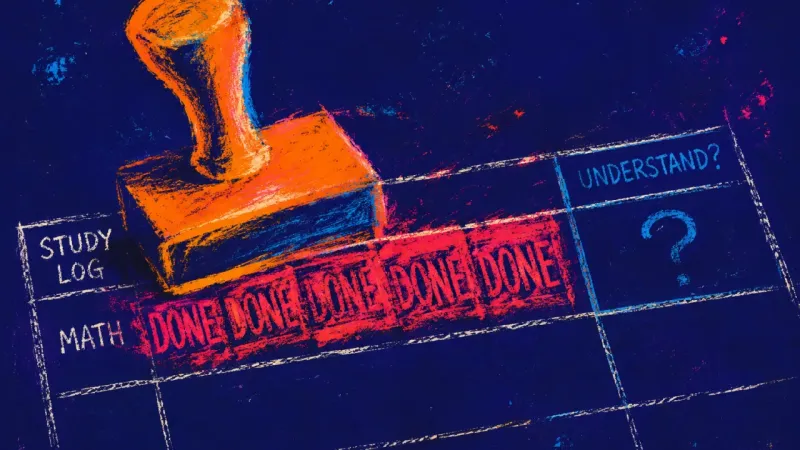
When Chasing a Study Streak Replaced Meaningful Learning
If you are a university student fitting coursework around a part-time city job, you may know the exact Study Streak Anxiety of saving a five-minute app chain after a late shift while the assignment you care about stays unopened.
I am Hilary Cromwell, and after a lifetime at Cambridge and years spent on archaeological digs, I have learned to pay attention to the layers beneath a visible ruin. When I met Jordan, I saw the same kind of surface evidence: a green completion tile, a rising counter, and something important buried underneath.
At 8:43 p.m. on a Tuesday in a small apartment near Toronto's Annex, Jordan had opened the course chapter needed for Friday's seminar. The radiator clicked, the laptop fan hummed, and blue light caught the rim of a cold mug. When the streak warning appeared, Jordan switched to a familiar five-minute quiz. Their shoulders rose as the green checkmark arrived. The number was safe, but the seminar chapter was still untouched.
“I can say I studied, but I cannot say I learned anything I care about,” Jordan told me. Then they asked the question that had brought them to my table: “Why do I chase study streaks instead of learning what matters?”
I could see the frustration in the restless movement of their thumb and the way their jaw stayed set after the quiz ended. It seemed to sit in their body like a browser spinner that never finished loading, circling between guilt, relief, and the longing to feel genuinely absorbed in something again. I did not treat the pattern as laziness or as a fixed flaw. I told Jordan that we could examine the system gently, layer by layer, and let this Journey to Clarity begin with a map rather than a verdict.
Choosing the Compass: The Transformation Path Grid
I invited Jordan to close the learning app for a moment, take one slow breath, and name the difference between recording contact with a subject and understanding it. I shuffled the cards steadily, using the pause as a practical transition from reacting to the counter to observing the choice behind it.
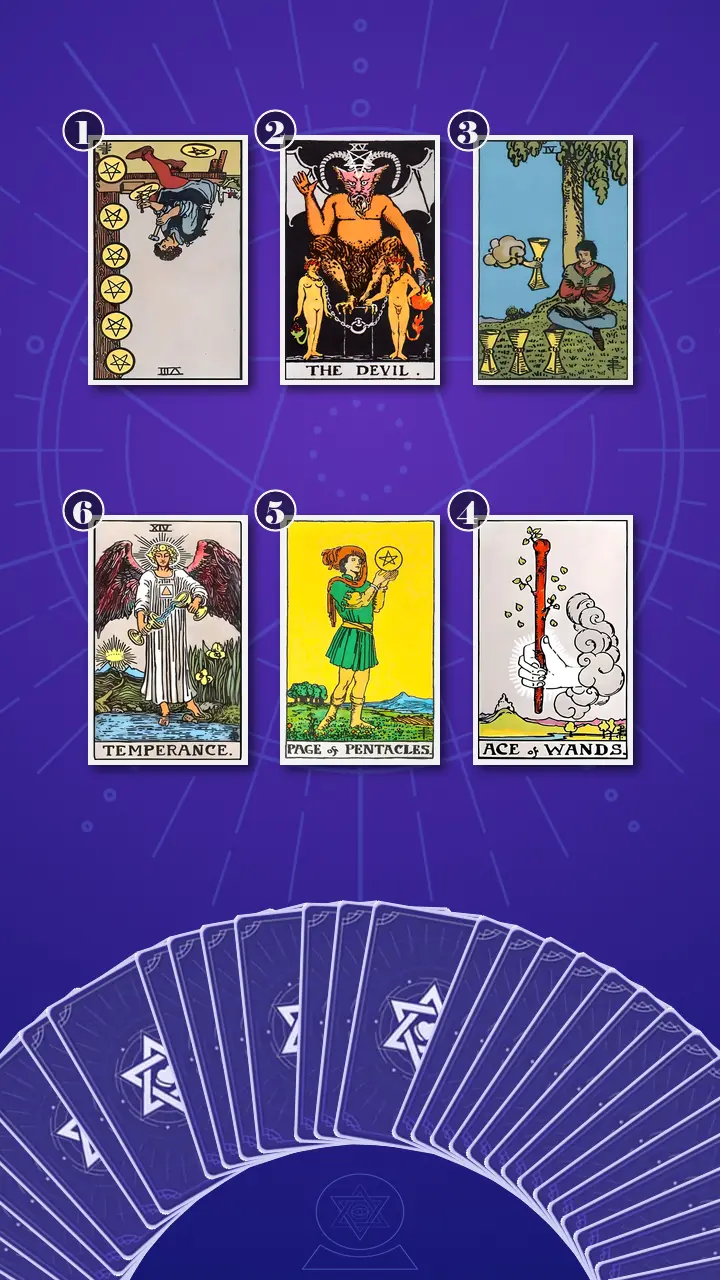
For anyone wondering how tarot works in this kind of consultation, I used the six-card Transformation Path Grid (Context Edition), read through Rider-Waite-Smith symbolism. I was using the cards as an objective reflection tool: a structured way to separate behaviour, reward, emotional root, catalyst, action, and integration. The cards were not predicting an academic outcome, and they were not deciding Jordan's future.
This spread suited the question because the difficulty was systemic. A reward was shaping a behaviour, the behaviour was avoiding uncertainty, and the avoidance was leaving Jordan active without feeling meaningfully engaged. A broad Celtic Cross or a Past-Present-Future spread could have offered useful material, but this six-card structure made the loop visible in context. It allowed me to explore card meanings in context rather than treating a symbol as a sentence handed down from somewhere else.
The first three cards formed the diagnostic band: the visible study behaviour, the immediate reward sustaining it, and the emotional root beneath the routine. The lower row carried the path forward: the meaningful spark, the small practical experiment, and the balanced rhythm that could follow. In this grid, the fourth card was the hinge. It would show whether curiosity could become a more trustworthy guide than streak preservation.
Reading the Map: The Green Tiles and the Unopened Tab
The Reversed Workbench: Eight of Pentacles
Now I turned over the card representing the visible study behaviour currently creating Fulfillment Stasis: selecting a countable task to preserve the streak while postponing the learning connected to Jordan's real goal.
Eight of Pentacles, in reversed position.
The craftsman on the Rider-Waite-Smith card is bent over one pentacle while completed pentacles line the wall behind him. In Jordan's modern translation, at 8:43 p.m. they complete the same familiar review set, watch another tile turn green, and close the session without touching the seminar reading. Repetition is producing a record, but the next task is being chosen for countability rather than for the skill it could deepen.
The reversed energy is not a deficiency of discipline. It is a blockage in the direction of effort. Repetition can build mastery when it serves a real skill; here, repetition has become mechanical evidence of activity. The narrow workbench has turned into a narrow definition of progress. I said, “The streak records contact; it cannot certify understanding.”
I asked Jordan to listen for the sentence beneath the green tile: “I did the task, so why does it still feel like I avoided studying?” Jordan gave a small, bitter laugh instead of nodding. “That is almost rude,” they said. I did not rush to soften it. I explained that the problem was not using a quiz or enjoying repetition. The useful question was whether the repetition was attached to a skill Jordan actually wanted to develop.
Jordan's hand moved from the trackpad to the cold mug, and their fingers circled the rim once. The defensive smile stayed for another second, then faded into recognition. I could see the first layer of the substituted behaviour becoming visible without turning into a judgment.
The Loose Chain: The Devil
Now I turned over the card representing the immediate reward that sustains Procrastination: the relief, score, or sense of completion gained from a gamified task.
The Devil, upright.
The card's loose chains translated cleanly into a streak that was technically optional but had become the emotional condition for feeling productive. A notification says that Jordan's streak is at risk, and the phone suddenly feels more urgent than the project brief already open on the laptop. Completing the quiz releases the pressure for a moment, teaching the routine that visible completion is the fastest escape from uncertainty.
The upright energy is an attachment strengthened by repetition. It is not a supernatural threat, and I did not call it an addiction or tell Jordan that the learning app was inherently harmful. The important image was the looseness of the chain. The routine had power, but awareness could reveal that power was being participated in, not imposed by an absolute authority.
“No one is forcing me to do this,” Jordan said quietly, “so why does skipping it feel like failure?” I mapped the moment to a phone notification and the sudden pressure in the chest. A voluntary counter can still become an emotional deadline. The immediate relief is real, but it is brief; the longer dissatisfaction returns when the meaningful task remains untouched.
Jordan's thumb pressed into the opposite palm. Their breathing tightened, then eased when I said, “We do not need to destroy the tool. We need to stop asking it to define the value of the session.” The relief on their face was tentative, as if choice had returned but had not yet become comfortable.
The Unnoticed Fourth Cup: Four of Cups
Now I turned over the card representing the underlying emotional root of the Gamified Learning Trap, including the fear that meaningful learning without a clean result could expose a lack of worth.
Four of Cups, upright.
The seated figure's crossed arms and fixed attention on three cups reminded me of familiar scored activities already open on a screen. The offered fourth cup became the difficult article, project, or question waiting in another tab. In Jordan's scene, several easy study options were available at Robarts Library, yet the article connected to their real interest felt too uncertain to open. Jordan kept reorganising what they already knew how to complete.
This card showed a deficiency of emotional contact, not a shortage of resources. Jordan had courses, saved videos, Notion pages, an Anki deck, and more study advice than one evening could hold. What was missing was permission to engage with a subject that might not offer an immediate badge. The three familiar cups filled the frame, while the fourth cup remained outside the safe arrangement.
I placed the image beside the question: “I have more resources than ever, but none of this feels like the thing I came here to learn.” Jordan went quiet. Their gaze moved past the cards toward the laptop, and they finally named the subject beneath the routine: the model from class that had failed in an example they still wanted to understand.
I asked what a partial answer might seem to prove about them. Jordan's shoulders rose again. “That I am not as capable as I thought,” they said. I heard the root fear clearly: an unfinished or messy attempt had been mistaken for evidence about personal worth. The metric offered a cleaner story because a green tile could not contradict Jordan or expose a gap.
When the Ace of Wands Reopened the Tab
The Hand Offering a Question: Ace of Wands
Now I turned over the card representing the meaningful spark that could interrupt the loop: the subject, question, or intrinsic motive that reconnects study with fulfillment rather than with streak preservation.
Ace of Wands, in upright position.
The Ace was the key card and the bridge of the reading. Its invoked energy was intrinsic curiosity, initiative, creative vitality, and the willingness to begin before certainty or external proof was available. The hand emerging from the cloud offered a wand with living leaves, not a finished product. It offered a beginning.
The modern scene was precise. Jordan could write, “Why does this model fail in the example from class?” at the top of a blank document and give that question the first ten minutes of the session. The choice met the fear of failing to finish because success was no longer a polished answer. Success became the willingness to make an imperfect attempt at something relevant.
At archaeological digs, I learned not to confuse a large quantity of fragments with a complete understanding of the site. I use the same lens in my Academic Stratigraphy practice: I separate the layers of visible activity, actual evidence, and the deeper question that gives the work its shape. I also use Research Bottleneck Analysis, which treats a creative or intellectual block as a signal requiring deeper excavation rather than as proof of personal failure. Jordan's uncertainty was not the enemy of learning. It was the layer that could tell us where to dig.
For the setup, I brought Jordan back to 8:43 p.m. on Tuesday: the laptop fan humming, the easy quiz complete, the streak calendar refreshed, and the meaningful chapter still waiting. The checkmark had landed, but their shoulders had not dropped; a clean result had not made the question less frightening.
Do not use a maintained streak as proof that learning matters; choose one meaningful question first and follow the Ace of Wands' visible spark into a small experiment.
A longer streak cannot answer whether the learning matters. One imperfect attempt at a question you care about can.
Jordan's face went still. First, their breath stopped halfway in, and their fingers hovered above the blank document as if touching the keyboard might make the choice real. Then their eyes lost focus, as though the green checkmark, the untouched chapter, and the vanished relief were replaying behind them. Their hand closed and opened once. “But does that mean I was wrong before?” they asked. I told them it meant the old method had been protecting them from a risky feeling, and that we could change its job without shaming the part of them that had needed relief. Their jaw worked once. A long breath moved through their chest, the closed hand loosened, and their shoulders lowered. Their eyes shone, and a small smile appeared with a trace of vertigo. Without the metric in charge, the next choice belonged to them. They sat forward and reached for the pen.
I asked, “Now, use this new perspective to recall whether there was a moment last week when this insight could have made you feel different.”
Jordan remembered the night before a seminar, when they had completed two easy drills and called the session productive while the relevant reading stayed closed. The Ace of Wands did not promise that the reading would become easy. It marked the first step from streak-driven frustration, guilt, and avoidance toward curiosity-led, grounded learning with metrics in a supporting role.
The Deliberate Beginner: Page of Pentacles
Now I turned over the card representing the practical next step: one small, observable study experiment that prioritizes relevance and understanding over the easiest measurable win.
Page of Pentacles, in upright position.
The Page's steady gaze toward one pentacle became a learner holding attention on one concept. The freshly tilled field suggested practical work that could be tested and revised. I translated it directly: Jordan closes the model answer, explains one concept in three rough sentences, and marks the exact point where the explanation breaks down.
The upright Earth energy grounded the Ace's Fire. Curiosity did not need to become a grand plan, a new course, or an impressive productivity system. It needed a bounded experiment. I asked Jordan to notice the inner sentence, “I do not have to master the whole chapter; I can find out what I understand about this one idea.” The gap in the explanation would be useful information, not a verdict.
Jordan's posture changed in a practical way. They pulled the blank document closer, uncapped the pen, and wrote a short version of the question. The movement was modest, but it had direction. The Page did not ask them to look competent. It asked them to gather honest evidence.
Two Cups in Proportion: Temperance
Now I turned over the card representing integration: the balanced learning relationship Jordan could cultivate after the experiment, with metrics supporting practice without replacing meaning.
Temperance, in upright position.
The angel pouring water between two cups gave me the clearest image for the ending. One cup could hold completed activity; the other could hold changed understanding. One foot on land and one in water could hold structure beside curiosity, measurable practice beside the less quantifiable feeling of relevance.
I told Jordan, “Let the dashboard report the journey, not choose the destination.” The upright energy was moderation, not another rule. Jordan did not have to delete every tracker or remain ruled by one. A streak could remain a background record, provided it no longer got first choice of task or final authority over whether the session counted.
Jordan exhaled slowly. Their gaze moved between the cards and the laptop, and their shoulders settled into the chair. I asked them to finish each selected session with two questions: what did I complete, and what became clearer? The dashboard could answer the first. Only Jordan's attention could begin answering the second.
The Thesis Stratigraphy of a Better Study Session
When I placed all six cards in the grid, the story became coherent. The reversed Eight of Pentacles showed effort narrowed into mechanical output. The Devil named the immediate relief that kept the output in place. Four of Cups revealed the quieter cost: abundant resources, but attention protected from the possibility of disappointment. Ace of Wands restored a live question. Page of Pentacles turned that question into a rough attempt, and Temperance gave the attempt a sustainable place beside measurement.
I described the old pattern as a treadmill whose display kept rising while its direction stayed unclear. The cognitive blind spot was treating evidence of contact as evidence of understanding, then treating an unfinished attempt as evidence about worth. The transformation direction was therefore not to abandon structure or force a stricter routine. It was to replace streak preservation as the main success test with one values-based learning task chosen for relevance and reviewed for understanding.
I adapted my Thesis Stratigraphy Framework for Jordan. Instead of building another elaborate tracker, I drew three layers on one page: the live question at the top, the evidence Jordan could currently explain in the middle, and the unresolved layer underneath. That bottom layer was not a failure pile. It was an excavation map. My actionable advice was designed to stay small enough for a library session after work, a TTC commute, or a late evening when energy was limited.
The Question-First Study Shift
- Write the question before the tracker.Before one study session this week, in Notes or on paper at home or in the library, write one sentence beginning with The question I want this session to move is... Keep the streak app closed for the first ten minutes, then open the most relevant source and make one partial attempt.Use the seven-minute version if ten feels too large. You keep full choice about whether to return to the app afterward, and nothing needs to be submitted or shared.
- Make one imperfect learning receipt.During the next course or library block, choose one concept and explain it from memory in three rough sentences, or attempt one relevant problem for five minutes before checking the model answer. Mark the exact point where the reasoning becomes uncertain.Treat the gap as grounded evidence of what to investigate next. A rough attempt is allowed to look unfinished and still count as learning.
- Let two measures share the closing minute.At the end of one session this week, add two lines beneath an existing study log: What did I complete? and What became clearer? Compare the streak task with the meaningful task by asking which one changed what Jordan could explain, apply, or question.Keep the review under two minutes. No colour coding, score, new dashboard, or daily obligation is required. The minimum version is answering either prompt once.
I reminded Jordan that these next steps were experiments, not tests of discipline. If the ten-minute Question-First Test became unhelpful or overwhelming, it could stop. The purpose was to create a different kind of evidence, not to replace one emotional deadline with a more sophisticated one.
For a reader looking for a tarot spread for study streak anxiety, this six-card Transformation Path Grid offers a reflective method for separating activity from understanding. Its lesson is practical: meaningful learning can begin with one question, one rough attempt, and one honest note about what changed. The cards can show the pattern, but the learner remains the person who chooses what to excavate and where to place the next step.
A Week Later, the Counter Took Its Proper Place
A week later, Jordan texted me after a Wednesday library session: “I wrote the question first and found the gap.” They slept well that night, though breakfast brought the thought, “What if I am wrong?” They smiled and opened the document anyway.
That was the quiet proof I trusted. The streak had not disappeared, and Jordan had not solved every difficult subject. The difference was that the counter no longer chose the destination. Jordan had begun measuring progress through curiosity, application, and demonstrated understanding, with uncertainty allowed to remain part of the work.
The cards had not made the decision for Jordan. They had helped me hold up a clear mirror, and Jordan had recognised the next layer. That is how finding clarity often begins: not with certainty, but with enough honest attention to make the next meaningful action visible.
When the dashboard says done but the tab you care about is still untouched, I know how quickly the relief can drain out of your chest; a clean checkmark can feel safer than risking a messy attempt that might seem to say something about your worth.
If one imperfect attempt could count before any streak, score, or finished result appeared, which question would you feel curious enough to touch first?