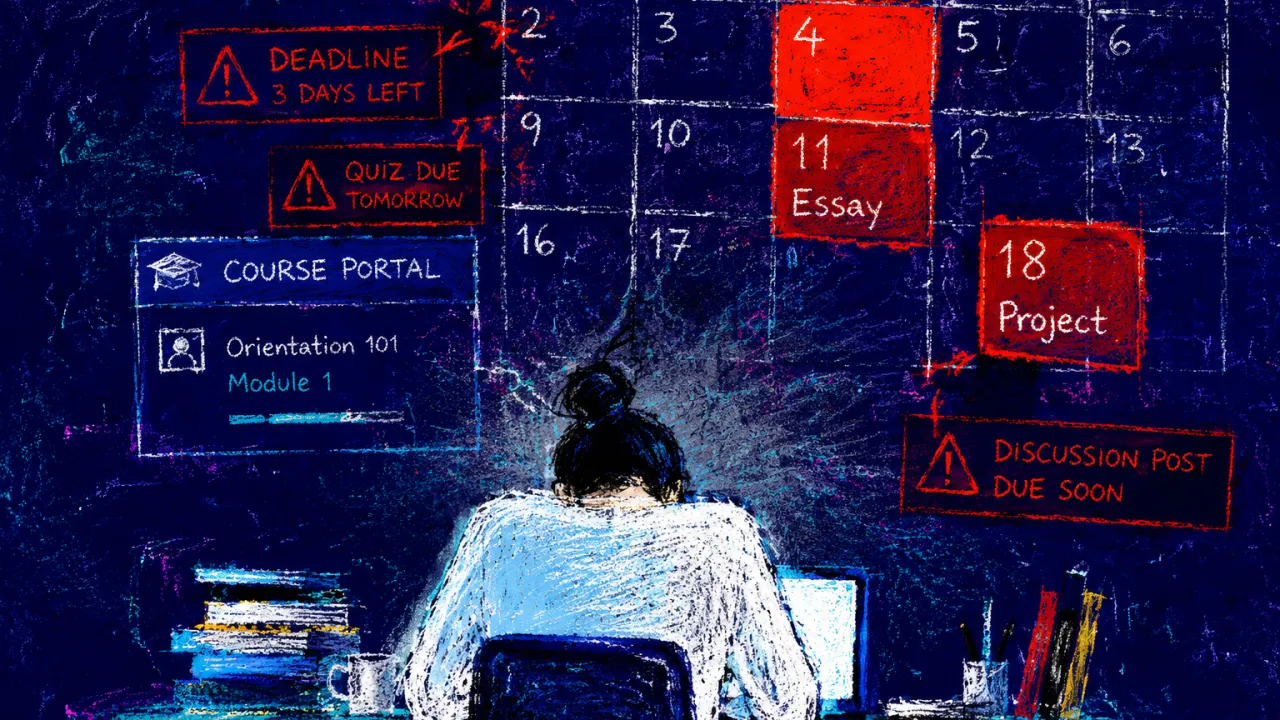
Academic Fresh Start Transition is the kind of situation where the new term looks open, but the old record, new deadlines, and unfamiliar expectations are already in the room. The tight chest before opening the course portal or replying to an advisor is part of how the transition shows up in the body. This is an environmental, structural dynamic: the study system has changed, but the routines that would make it stable have not caught up yet. The Tarot Cards below reflect the shape of that threshold.
The Fool UprightThe lifted face, open chest, white rose, light bundle, and first step at the cliff edge make The Fool a picture of academic entry before the path has hardened into routine. The scene has momentum, but the ground under that momentum is still a threshold rather than a settled road. In study life, this maps to the fragile beginning of a new term, transfer, retake, program, or learning identity. You may have enough openness to restart, but the card keeps the restart honest by showing that confidence still needs structure, feedback, and repeatable study habits before it can carry weight. The bright sun and small pack do not promise an effortless semester. They show a low-load beginning where the old mess has been stripped back, leaving a student with fewer excuses, fewer tools, and a real chance to build from first principles.
The Magician UprightThe raised wand, lowered hand, and clean worktable create a visual line between intention and the material workspace. The cup, pentacle, wand, and sword are already laid out, so the scene is not empty; it is staged for first contact with a new operating system. In an academic setting, that becomes the first weeks of a course, thesis stage, lab placement, or reskilling track where the materials are visible but the routine is not yet proven. You are not looking at a lack of potential; you are looking at the fragile moment before tools become habits and habits become output.
The Empress UprightThe wheat at The Empress's feet is not yet bread; it is growth at the point where care, timing, and environment matter. In study, that maps to a new semester, a changed major, a reset thesis direction, or a re-entry into learning that has promise but is not yet stable. You are on a stage where the system can grow if it is tended consistently. The card anchors the transition in visible fertility, not instant mastery, so the pressure point is how the new academic path is cultivated before results appear.
Wheel of Fortune UprightThe central wheel sits in a sky filled with open books, fixed corner figures, and a clear set of spokes. Nothing in the scene is casual; the mechanism marks a new academic cycle with roles, reference points, and timing already arranged around it. In an academic fresh start, You are not simply trying to become a better student overnight. You are entering a changed study environment where schedules, expectations, and support systems need to be re-indexed, and the first task is to locate the new rhythm before old habits start steering the term.
Death UprightThe skeletal rider moving under a black banner with a white rose does not pause to preserve the old scene. Bodies, crowns, and gestures are already rearranged on the ground, while the river, towers, and horizon keep the image pointed toward a threshold that still exists beyond the disruption. In an academic setting, this maps onto a reset that is not cosmetic. A module may need to be retaken, a thesis angle may need to be cut down, a study routine may need to be rebuilt, or a degree plan may need to be reorganized around what is still structurally workable. The card holds the hard edge of a fresh start: the old academic identity cannot simply be patched, but the landscape is not empty. You regain agency by naming what has ended as infrastructure, not as personal failure, and by treating the next version of the study path as a new system rather than a repair job.
The Tower UprightThe figures leave the tower through rupture, not through a planned doorway. That visual does not soften the disruption, but it does show movement out of a structure that could no longer hold them. In academic life, this maps to a reset that arrives after a study method, degree plan, or performance identity has stopped working. You may still be in the debris field of the old system, but the card makes one thing clear: the next structure has to be built from ground-level evidence, not from the image of being unshakable. The fresh start here is not decorative optimism. It is a transition with cost, friction, and new design requirements: different study rhythms, different feedback loops, a more honest course load, or a path that fits the learner you are now rather than the tower you were trying to maintain.
The Star UprightThe kneeling figure, one knee on land and one foot at the water's edge, shows a body re-entering the world through controlled contact rather than force. The two vessels do not flood the scene; they portion water into places that can receive it, turning recovery into a measured transfer of attention, trust, and usable effort. In an academic fresh start, You are not simply returning to the same workload with a better attitude. The image points to a study system that has to be replenished in separate zones: confidence, routine, feedback, and actual output cannot all refill at once. The clear sky gives orientation without rushing the body on the ground. That is why this context fits moments after a failed semester, dropped plan, exam setback, or long avoidance cycle: the path is visible again, but the first task is rebuilding the channel that lets study become sustainable.
The Sun UprightThe child and white horse have just crossed the garden wall, landing in a bright open field with no reins, saddle, or visible steering device. The scene is not a finished victory lap; it is the first exposed moment after leaving an old container, when movement is available but the new rhythm has not yet become reliable. In academic life, that image maps onto a fresh semester, new course load, changed major, or return to study after a pause. You may have more light than before, but the structure shows that clarity at the threshold still needs a repeatable study rhythm before it becomes real academic stability.
Judgement UprightThe open coffins are not sealed containers; they have become thresholds. The figures rise while still standing inside the old structure, which makes the scene less about instant escape and more about the first visible movement out of a previous state. In school, this fits a retake semester, a major change, a return after academic disruption, or the decision to rebuild after a bad term. The old record remains present, but it no longer has to be the only container for the next academic identity. You regain agency by treating the fresh start as a transition with evidence, not as a clean wipe. The question becomes which parts of the old structure still support learning, and which parts need to be left as scaffolding rather than identity.
Ace of Cups UprightThe golden chalice held at the center of the scene looks less like a storage cup than a new receiving vessel. Water rises, breaks into streams, and begins to circulate toward the pool below, giving the image the structure of a fresh academic container that has just been opened. In study, that visual logic maps onto the start of a course, semester, thesis direction, or new learning system. You are not looking at a finished achievement; you are looking at the first usable channel through which input can become practice, memory, and written output. The pressure inside this context comes from the blankness of the container. The card frames the fresh start as real, but still unstable: a beginning needs boundaries, rhythm, and a way to hold what arrives before it spills into vague intention.
Page of Cups UprightThe young Page stands at the water's edge with a single chalice held at shoulder height, not buried in the crowd of a finished institution. The scene gives a beginner a real object to handle, a visible threshold to stand on, and a wide emotional field behind him that has not yet been mastered. In an academic setting, this maps cleanly onto the first stage of a new learning cycle. You have enough structure to begin, but not enough repetition to feel fluent, so the external pressure comes from being newly visible while still forming the habits, language, and confidence of the role. The card does not frame this as failure. It shows a provisional academic position: the start of a course, degree, module, or research direction where your task is to hold the new material steadily long enough for it to become workable.
Knight of Cups UprightThe clear sky, calm horse, and visible hills create a study landscape where movement is possible without being frantic. The rider is not sprinting into the next stage; he is carrying something delicate across a threshold, which gives the scene the texture of a beginning that needs protection. In academic life, this mirrors a fresh semester, new program, resubmission phase, transfer point, or return to study after a disrupted period. You may have enough clarity to restart, but the new structure is not yet stable enough to run on autopilot. The cup matters because the restart is not only logistical. It holds the reason the work still matters, while the reins show the need to pace that meaning through schedules, assessment deadlines, and learning systems that can actually sustain it.
Ace of Pentacles UprightThe road passing through the flower arch into the enclosed garden gives the Ace a threshold shape: outside ground, entry point, cultivated space, and a distant mountain beyond it. The pentacle above that route marks a concrete opening rather than a vague wish. In academic life, this is the first stretch of a new semester, course, major, or recovery attempt, when the path is visible but still unwalked. You can use the opening, but the card keeps the emphasis on early structure: the fresh start only becomes real when it is grounded in ordinary study rhythms.
Page of Pentacles UprightA young student stands on green ground and lifts a single pentacle to eye level while distant mountains wait beyond the field. The image compresses a long academic route into one concrete object that can be held, inspected, and understood before the larger path is fully mapped. For study, this creates the exact texture of a fresh academic start: a course, module, major, or qualification has become real enough to handle, but the full system of expectations is still ahead. You are not reading a completed outcome here; you are seeing the first workable learning object at the beginning of a longer climb.
Ace of Swords UprightThe cloud-borne hand grips a fitted sword and raises it into open air, giving the scene the shape of an idea becoming usable. In an academic setting, that image maps to a new module, major choice, research angle, or study system that finally has a clean edge instead of a mess of competing inputs. The crown above the blade keeps the transition tied to standards and recognition, not vague self-improvement. You are not simply starting over; the structure shows a moment where a sharper academic direction can be claimed, but only if the new line of focus is protected from old feedback loops, scattered course demands, and borrowed definitions of success.
Six of Swords UprightThe boat angles away from the old bank while every figure faces the direction of travel. Nothing in the scene suggests a clean blank slate: the swords remain upright in the vessel, the child and adult remain covered, and the far shore is visible only as a pale outline. An academic fresh start works the same way when you enter a new semester, change modules, transfer programs, or rebuild a study plan after a rough stretch. You move into a different structure, but your transcript, habits, fear of repeating the same mistakes, and unfinished learning history still travel with you. The card makes the transition concrete by showing a protected passage where the past is carried in organized form rather than allowed to steer the whole boat.
Ten of Swords UprightThe yellow light at the horizon appears after the ten swords have already completed their work. The image is severe, but it also marks an ending with a visible edge, where the old pressure cycle has no more room to continue in the same form. Academic fresh starts often arrive this way: after a failed module, abandoned major, rejected thesis direction, poor exam cycle, or study method that cannot carry the next stage. The card does not romanticize the reset; it shows that the new beginning is built on an honest account of what has ended. The far shore and blue mountains remain in the composition, which matters for agency. You are not being asked to pretend the previous route worked. You are being asked to identify the next viable academic structure from the evidence left behind by the one that did not.
Ace of Wands UprightA cloud-borne hand clamps a living wand, and the land below is not empty. Green banks, moving water, trees, and a distant fortress make the first burst of energy feel tied to a real academic landscape rather than a private mood. For a new semester, module, major, or study system, the pressure sits in the gap between spark and container. You can see the beginning clearly, but the scene also shows that momentum needs a path, resources, and a usable horizon before it becomes durable progress.
Page of Wands UprightThe Page stands in a bare desert holding one upright wand, with clear sky above and distant pyramids marking a horizon that has not been reached. In an academic context, that image fits the moment when a new course, major, semester, or study system has enough energy to begin but not enough structure to run on its own. You are not looking at a finished path; you are looking at the first credible signal of one. The card links this context to the gap between an authentic learning spark and the routines, deadlines, reading systems, and feedback loops that still have to be built around it.
No cards available for this filter.