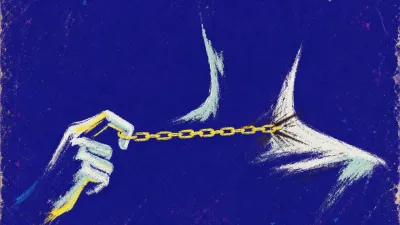
Close, then gone?

A clear definition of this distancing pattern, the tarot cards that mirror it, and reading insights where it appears.

Avoidant Attachment
What is this really?

You pull back when closeness becomes available: replies slow down, tender conversations get redirected into logic, and you may suddenly need space right after someone reaches for you. Underneath, part of you is trying to protect your autonomy, your private rhythm, and the boundary that helps you feel steady when another person gets close enough to matter. You may want love and still feel your body bracing when love becomes available enough to answer, yet the more carefully you protect your inner space, the more connection can start to look like something offered from outside a shaded boundary while you fold inward, much like the seated figure in the Four of Cups turning away from the cup being handed in.

Why did it happen?

At some point, keeping your inner world private may have helped you stay steady when other people's needs felt too close, too sudden, or too hard to answer. Over time, that inner pattern can start running before you choose it, so ordinary closeness registers as pressure and leaves you feeling tense, drained, or mentally far away even with someone you care about.

How does it feel?

  • You see a warm message come in and let your thumb hover over the keyboard, then lock the screen and place the phone face down. A few seconds later, your breath may feel shallow and your chest held slightly back from the room, as if answering would pull you into something too immediate. It is okay to let that pause exist before deciding what contact feels possible.
  • During a serious conversation, you straighten your back, smooth your voice, and turn the subject toward schedules, facts, or what can be practically fixed. In that moment, your jaw may feel set and your attention may narrow, while the softer part of the exchange seems to move farther away. Staying with even one breath of uncertainty can be enough for now.
  • After a good date or a close night together, you wake up and start scanning for small reasons the connection might not fit, tapping the side of your mug while your eyes drift elsewhere. Your stomach may feel tight in a quiet, private way, and the warmth from the night before can feel strangely hard to reach. You do not have to force a verdict while your body is still catching up.
  • When someone asks for reassurance, you give a brief nod, offer a calm sentence, and then check the time or shift your weight toward the door. Inside, your shoulders may lift before you notice them, and your mind may feel clean and blank, like it is trying to keep the moment from getting bigger. A smaller answer is still an answer, and not knowing the perfect amount is allowed.
  • Alone at night, you replay the conversation with one elbow on the table, rereading your own short replies and telling yourself the distance was reasonable. Under that certainty, there may be a dull heaviness behind the ribs or a flat emptiness after the relief passes. You can notice both the relief and the ache without turning either one into a final conclusion.

Avoidant Attachment in Tarot Cards

The reflex to create distance right when closeness becomes available is the center of this Avoidant Attachment pattern. You can feel it in the shallow breath, the delayed reply, or the shoulders that lift before a conversation asks for reassurance. From a Jungian perspective, archetypal theory gives this push-pull a symbolic language without flattening it into a label. The Tarot Cards below reflect the unconscious dynamics of wanting connection while keeping emotional access under tight control.

Four of Cups Reversed
The cup approaches from outside the tree's shaded boundary, but the seated figure folds inward instead of orienting toward it. The more direct the offer becomes, the more the body looks self-contained and unreachable. That is the relational choreography of avoidant attachment. Closeness arrives as a demand on autonomy, so the system creates distance, devalues the bid, or retreats into private certainty before vulnerability has to be felt. You may want love and still feel your body bracing when love becomes available enough to answer.
Eight of Cups Reversed
The figure has created a full-body exit from the emotional arrangement in the foreground. The cups do not chase him, and he does not pause to negotiate with them; the composition stretches contact into distance. The mountain path becomes a single line of movement away from the relational field. Reversed, that clean line can describe Avoidant Attachment as a coping mechanism. The psyche interprets closeness as pressure and converts emotional complexity into a need for space, silence, or disappearance. What looks like independence from the outside may actually be a defense against being emotionally reached. In love, this pattern can make intimacy feel safest when it is far enough away to manage. You may want connection, but the moment the relationship asks for sustained presence, the inner system starts searching for a path out of the cups rather than a way to stay in contact with them.
Nine of Cups Reversed
The figure sits alone with his arms crossed while the cups stay behind him, elevated and protected. The image contains emotional plenty, but it also contains distance: no one else enters the space, and no cup is being handed forward. Reversed, that distance becomes a defensive attachment strategy. You may want love and still tense when the relationship asks for consistency, dependence, or deeper emotional availability, because closeness starts to feel like a demand on your private center. In romantic dynamics, Avoidant Attachment is not the absence of feeling; it is the protection of space when feeling becomes too exposing. The Nine of Cups carries this pattern because fulfillment is present, but the body and layout keep shared intimacy outside the protected field.
King of Cups Reversed
The King is surrounded by water but remains seated on a separate structure, close enough to register feeling and distant enough to avoid full immersion. His attention stays on the cup rather than on another person, making the emotional exchange inward and contained. That is the reversed mechanism of Avoidant Attachment in a romantic field. The psyche wants depth, but it keeps the body positioned at the edge of contact, where feeling can be observed without becoming relationally demanding. The pattern often feels like calm self-sufficiency from the inside and distance from the outside. You may not be avoiding love itself; you may be avoiding the loss of control that arrives when another person can actually affect you.
Eight of Pentacles Reversed
The bench forms a compact island of control, with the worker absorbed in the object directly under his tools while the town remains distant. The path toward connection exists, but the body stays folded over the task that can be measured and mastered. In love, that spatial arrangement can become a readiness trap. You may keep working on yourself, your career, your emotional language, or your future stability because the project of becoming ready feels safer than letting someone encounter you before the work is complete.
Nine of Pentacles Reversed
The woman is surrounded by abundance, but no equal partner shares the foreground with her. The whole composition is organized around a complete private world, where energy circulates smoothly inside the estate without needing another person to enter the center. In reversed love readings, this visual self-containment supports Avoidant Attachment. You may want connection, but closeness can start to feel like an intrusion into a system that has been carefully arranged to remain emotionally manageable. The pattern is not a lack of feeling; it is a nervous system that experiences distance as regulation. The card shows how a beautiful private garden can become a relational enclosure when the safest form of love is one that never asks you to reorganize your inner space around another person's needs.
Knight of Pentacles Reversed
The knight's armor protects the whole body, and the horse stands still even though the landscape is open. The image holds contact at a distance: present, watchful, reliable, but not emotionally porous. In its reversed psychological texture, that protection can harden into Avoidant Attachment. The system offers steadiness because steadiness is safer than need, and practical devotion becomes easier than direct emotional dependency. You may stay close enough to be responsible while remaining far enough away to avoid being changed by intimacy. The card links this pattern to the cost of overprotected love. A boundary that once kept the self intact can become a wall that makes the partner feel unseen, especially when consistency is used to replace vulnerability rather than support it.
Two of Swords Reversed
The woman sits alone with her back to the sea, guarding the chest while facing forward behind crossed steel. Emotion is not absent; it is behind her, close enough to matter but kept outside the direction of contact. Avoidant Attachment turns distance into a regulation strategy when closeness starts to demand vulnerability. In a relationship, You may pull back just as intimacy becomes real, not because feeling is missing, but because the body has learned to associate emotional exposure with loss of control. The card's isolated stillness shows the defense clearly: protection is achieved by reducing contact until the bond itself starts to feel unreachable.
Four of Swords Reversed
The knight lies perfectly still beneath three suspended swords, armored but inactive, with the body arranged more like a sealed chamber than a living conversation. The posture does not show a clean break from the relationship field; it shows contact being reduced to a level the system can tolerate. That visual stillness mirrors a defense that manages closeness by lowering emotional exposure. In love, the pattern can make space feel like safety and direct repair feel like pressure, so withdrawal becomes the nervous system's way of preventing overwhelm. You may still care deeply, but the card shows how care can become hard to read when it is buried under silence. Avoidant Attachment is not a lack of feeling here; it is feeling routed through distance, delay, and controlled access because intimacy has started to register as too much contact at once.
Five of Swords Reversed
The shore is bleak and exposed, with water behind the retreating figures and no stable shelter around the group. The figure who remains appears armed, but the wider scene does not offer a secure emotional container. Avoidant Attachment can form in that kind of field when closeness starts to feel like loss of control. In friendship, You may reduce the importance of the bond, pull away before the repair conversation, or tell yourself the connection was never that deep. The reversed Five of Swords shows the defense after the fight has drained the room of trust. The nervous system keeps holding the sword because being reachable feels risky, but the same defense that prevents dependence can also prevent the reciprocal support the friendship was meant to hold.
Six of Swords Reversed
The figures share the same boat, but their faces are hidden and their bodies angle away from direct encounter. The ferryman keeps the vessel moving while the seated passengers remain closed, giving the scene a strange intimacy without visible emotional contact. That is why the reversed pattern condenses into Avoidant Attachment. The bond is not absent; everyone is still in the same vessel. But closeness is managed through forward motion, silence, and lowered visibility, so the relationship can continue without requiring full emotional exposure. In love, this can feel like being present but unreachable, committed but hard to access, or calm only when the conversation stays safely indirect. The defense protects You from engulfment, but it can make the other person experience the relationship as a journey they are technically on with You while emotionally being left behind.
Seven of Swords Upright
The figure's feet move away from the camp while his eyes remain fixed behind him. The body creates distance, but the backward glance proves the connection has not disappeared; it has been converted into monitoring from a safer range. This is the visual architecture of Avoidant Attachment in a romantic field. The defense seeks connection without surrendering escape, so direct vulnerability can feel less like intimacy and more like exposure inside someone else's territory. You may care deeply while still organizing the relationship around exits, delays, private reasoning, or emotional space. The card does not reduce that to coldness; it shows a nervous system trying to stay close enough to matter while far enough away to feel protected.
Queen of Swords Reversed
The Queen's hand reaches outward, but her torso remains held back inside the throne's hard edges. She is visible and available for exchange, yet the stone seat and elevated position keep the emotional field at a controlled distance. That visual split matches a family attachment strategy built around guarded contact. You may respond, visit, text back, or perform the expected role, but the deeper self stays lifted above the clouds because closeness has been paired with guilt, intrusion, or loss of autonomy. Avoidant Attachment appears when family intimacy is treated as a potential boundary breach before it can become support. The card shows the mechanism with precision: the desire for contact is still there, but the body has learned to survive by keeping the center of feeling out of reach.
King of Swords Reversed
The King occupies an elevated seat, contained by stone and separated from the smaller world below. His attention is organized through the sword, not through an open gesture toward closeness. In love, this becomes a protective distance that can look like maturity, independence, or standards. You may remain composed and self-contained while the relationship asks for something less controlled: reassurance, dependence, apology, or repair. Avoidant Attachment appears in the card as distance maintained through intelligence and self-command. The defense is not emptiness; it is a learned preference for staying sovereign when emotional reliance feels like exposure.
Two of Wands Reversed
The man is high on the battlement, separated from the land, houses, and sea he can clearly see. The wall gives him a stable vantage point, but it also keeps every living distance below him. That elevated distance mirrors a protective attachment strategy built around control and space. You may want closeness in theory, yet when love asks for mutual exposure, the psyche retreats to the safer height where desire can be observed without being entered.
Nine of Wands Reversed
The figure holds the wand close to the chest, not as an invitation but as a vertical guard. His body remains present, yet the energy of the image is withheld, watchful, and oriented toward what might come from outside the frame. This is how emotional distance can operate as protection. The person stays in the relationship, keeps the structure intact, and may even appear steady, but closeness has to pass through a narrow internal checkpoint before it is allowed to land. In love, Avoidant Attachment often looks like needing space exactly when vulnerability starts to ask for contact. The reversal is not freedom from the fence; it is being trapped inside the ritual of guarding. You may want intimacy, but the body has learned to treat too much emotional access as exposure, so connection becomes something managed rather than fully received.

Avoidant Attachment in Tarot Card Reading Insights

For anyone who wants connection but feels their system search for space, silence, or an exit when the bond asks for presence, others have brought this pattern into readings too. Here is how those cards appeared when people sat with the same distance-and-contact rhythm: Tarot Reading Insights that speak to this pattern.

Psychological patterns related to Avoidant Attachment