Reach close, pull away?

A clear look at the reach-then-retreat loop, the tarot cards that mirror it, and reading insights connected to this pattern.

Fearful-avoidant Attachment
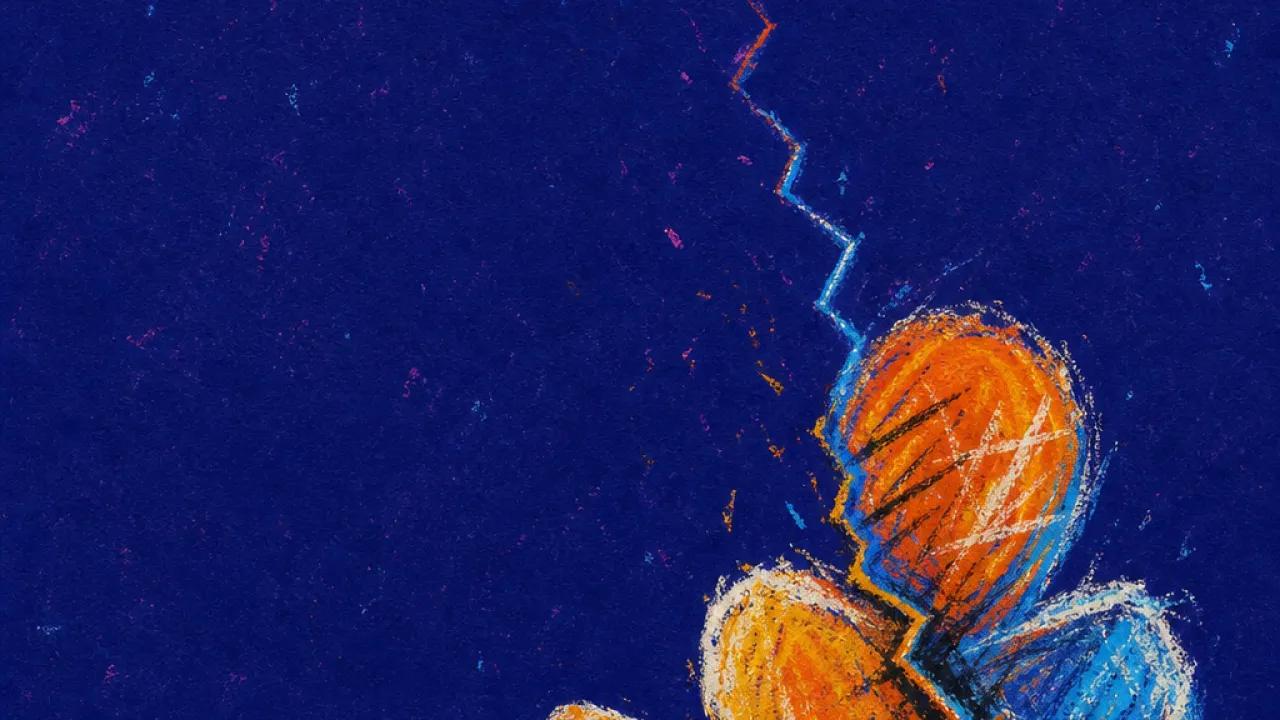
A side-turned figure locks a phone as a thumb hovers over a glowing message thread, amber lines breaking into cold blue.

What is this really?

You move toward people when connection feels possible, then pull back the moment it starts to matter: delayed replies, sudden jokes, changing the subject, or needing space right after asking for closeness. Under that push-pull cycle, your boundary alarm is trying to protect two needs at once: the need to be met and the need to keep an exit within reach. Yet the exit can become the room you get stuck in; the part of you that wants to be held and the part that bolts cannot share the same breath, much like the figure in the Two of Swords, blindfolded at the shoreline, holding two crossed blades between herself and the tide.

Why did it happen?

At some point, closeness may have taught your body to stay alert: warmth could feel welcome, then suddenly too much, so keeping one foot near the door helped you breathe. Now the same inner pattern can switch on even with people who are steady, turning a simple text, pause, or invitation into a small alarm. The result is a subconscious loop where you reach for connection, feel your chest tighten when it arrives, and then create distance just to get your breathing back.

How does it feel?

  • After a warm night out, you get home, reread their 'I had a good time' text, let your thumb hover over the keyboard, then lock the screen and answer much later with a joke. That pause may land as a tight chest, a small drop in your stomach, and a rush of heat in your face; you can let the delay be there without turning it into a verdict.
  • When someone asks, 'Where is this going?', you take a sip, look at the edge of the table, give a quick laugh, and move the conversation toward something safer. In that second, your throat can feel dry, your shoulders may lift, and your breathing gets shallow; not knowing the sentence yet is allowed.
  • At work, when a teammate offers to help, you say 'I'm good' quickly, keep your eyes on the task list, and make your cursor circle the same file twice. Afterward, there may be a tight band across your upper back and a buzzing under your ribs; you can notice the shoulder lift before forcing a response.
  • In a group hangout, when the conversation turns personal, you pull your sleeves over your palms, check the time, and volunteer to get drinks before anyone asks. The room can start to sound slightly far away, with cold fingers and a restless pulse; stepping aside can be held lightly for now.
  • On a quiet Sunday, you open the chat, type 'hey', delete it, set the phone face down, then pick it up again before the screen goes dark. You might feel an ache behind your eyes and restless energy in your legs; both the reach and the pause can exist for a minute.

Fearful-avoidant Attachment in Tarot Cards

The push-pull of reaching for connection and then creating distance has a physical signature: your thumb hovers over the keyboard before you lock the screen. Grounded in Jungian archetypal theory, this pattern can be read as an image of inner opposites trying to share the same room. The Tarot Cards below reflect the unconscious dynamics behind that reach-then-retreat loop.

The Lovers
Reversed
The figures stand exposed beneath a larger witnessing presence, while their attention follows different lines and the mountain marks a demanding route between them. Reversed, the scene reflects an internal relationship in which vulnerability and self-protection have not yet been brought into shared alignment. You may abandon your need for connection while distancing, then abandon your need for boundaries while pursuing reassurance. Seeing both moves as forms of self-disconnection shifts growth away from choosing one side and toward recognising the conditions under which each need can remain represented.
The Chariot
Reversed
The armoured driver stands above two contrasting sphinxes, relying on composure and command without visible reins connecting him to their movement. Reversed, mastery becomes brittle because the opposing forces have been controlled but not integrated. You may understand the fearful-avoidant cycle intellectually and still be pulled off course when real closeness activates it. Growth becomes more measurable when you track the moment of reversal, the threat prediction underneath it, and whether your next movement reflects values or emergency control.
Temperance
Reversed
The angel bridges water and land while passing liquid between two cups, and a path behind the figure leads toward a distant crown. Reversed, the bridge cannot stabilise the exchange, so the two environments become alternating refuges rather than parts of one route. You may frame growth as becoming completely independent or completely open, reproducing the same polarisation in a more aspirational form. The image redirects the audit toward integration: whether autonomy and connection can remain present without either being used to erase the other.
The Moon
Upright
The moon lights a path without turning night into day, while the dog, wolf, and emerging water creature register the atmosphere before any visible event occurs. The scene mirrors an attachment alarm that appears first as sensation, image, or prediction rather than explicit reasoning. You may reread a message, feel your chest tighten, and produce a story of rejection or capture before identifying what triggered the shift. The Moon supports reality testing by keeping both layers visible: the alarm is real as an experience, while its explanation remains open to examination.
Ace of Cups
Reversed
The offered cup overflows through several streams, with a dove descending toward its opening and water collecting below. Reversed, the image still contains emotional abundance, but the route between feeling, reception, and expression is disrupted. You may initiate contact and then swallow the response it evokes, converting tenderness into numbness, analysis, or delay. Noticing where the flow changes form helps you locate the defence before concluding that the original feeling was false.
Four of Cups
Upright
The seated figure folds his arms and looks away from the cup being offered, even though three other cups remain close to him. The closed posture makes refusal visible at the exact moment connection becomes available. You may miss a friend, hope they check in, and then leave their message unanswered because responding would expose how much the friendship matters. The offered cup helps distinguish true lack of interest from protective deactivation at the point of receiving care.
Eight of Cups
Upright
The cloaked figure puts physical distance between himself and the cups while the moon remains partially obscured overhead. The image gives withdrawal a bodily direction before emotional meaning is fully illuminated. Inside, you may feel calmer as soon as you imagine leaving, deleting the message, or becoming unavailable, even while longing remains active underneath. That relief can dominate reflection because nervous-system settling feels like certainty. The internal audit becomes more accurate when relief from reduced exposure is distinguished from loss of care, incompatibility, or a completed decision. The cups remain visible as evidence that the attachment has not vanished simply because distance changed the intensity.
Two of Pentacles
Upright
The figure keeps two pentacles moving inside an infinity loop while ships rise and fall on the rough sea behind him. His balance depends on continuous motion, making stability itself the condition he cannot permit. In love, you may maintain contact by alternating warmth and distance before either state becomes settled. The pattern can look flexible from moment to moment, yet the endless adjustment prevents the relationship from developing a dependable emotional baseline.
Two of Swords
Upright
The figure maintains two equally weighted swords across her body, with her eyes covered and the moving tide excluded behind her. The symmetry shows a defence that can remain stable indefinitely as long as no new experience is allowed to disturb it. You may understand the push-pull pattern, name its origins, and still remain behaviourally frozen because insight has not changed the protective prediction. Growth becomes concrete when the stalemate itself is tracked as an active strategy rather than treated as a lack of knowledge or will.
Seven of Swords
Upright
The figure leaves the communal tents with his body angled away and his face turned back. He is neither fully inside the camp nor psychologically free of it. In a family system, you may protect yourself through selective disclosure, abrupt departures, humour, or practical busyness while remaining highly alert to whether relatives feel hurt, angry, or rejecting. This half-exit can be an intelligent response to old boundary violations, but automatic use carries a relational cost. It prevents the current interaction from showing whether a boundary could be stated directly and respected. The audit distinguishes necessary privacy from an inherited expectation that openness must always be followed by escape.
Eight of Swords
Upright
The blindfolded figure stands inside swords that form a convincing but incomplete boundary, while the bindings restrict movement more than the surrounding terrain does. The enclosure visualises a safety strategy that has become difficult to distinguish from the danger it predicts. You may equate relational freedom with always being able to disappear, decline help, or remain unreadable. The image makes a deeper growth question available: whether freedom is being measured by the availability of escape or by the capacity to stay connected while exercising real choice.
Page of Swords
Upright
The Page stands alert in a landscape full of motion, his sword elevated before any visible confrontation has begun. His readiness reflects anticipation more than response to a current event. In family interactions, you may track every sigh, tone shift, or change of subject because earlier closeness taught you that warmth could become criticism, intrusion, or withdrawal without warning. This monitoring may once have helped you detect important changes, yet automatic use makes the present family field resemble the past before enough evidence appears. You remain physically present but emotionally prepared to disengage. The distinction between a current signal and a familiar forecast is therefore central to the audit.
Nine of Wands
Upright
The figure's raised shoulders, bandaged head, firm grip, and sideways glance make vigilance visible as a full-body state. The row of wands behind him resembles a psychological archive of moments that justify staying ready. You may experience this archive as a tight chest after closeness, restless message checking, or an urge to become emotionally flat before anything has actually gone wrong. The body response can arrive faster than a conscious interpretation, making the subsequent withdrawal feel self-evident. Once the alarm is named, it becomes possible to distinguish activation from information without dismissing either. The internal pattern is not the presence of caution but the automatic conversion of remembered danger into a present relational verdict.

Fearful-avoidant Attachment in Tarot Card Reading Insights

For anyone who reaches for connection, feels their chest tighten when it arrives, and then creates distance, others have brought this same push-pull into readings. Below are Tarot Reading Insights where these cards circle the same reach-then-retreat pattern.
A Deleted Family Boundary, the Hopeful Child, and a Reply on New Terms

A Deleted Family Boundary, the Hopeful Child, and a Reply on New Terms

Topic:Family Tarot Reading

Struggle:Inherited Role Lock

Context:Family Estrangement Threshold

Calling the Group Story Fake; One Honest Message Tested a Bond

Calling the Group Story Fake; One Honest Message Tested a Bond

Topic:Social Tarot Reading

Struggle:Belonging-Authenticity Split

Context:Direct Communication Trial
When One Lease Feels Like Your Whole Future: Self-Trust in Stages

When One Lease Feels Like Your Whole Future: Self-Trust in Stages

Topic:Direction Tarot Reading

Struggle:Intuition-Reality Split

Context:Commitment Cliff Edge

When 'You Okay?' Meets 'lol I'm fine': Letting One True Sentence Stay

When 'You Okay?' Meets 'lol I'm fine': Letting One True Sentence Stay

Topic:Friendship Tarot Reading

Struggle:Support Access Split

Context:Emotional Suppression Culture
Moving the Toothbrush, Then Naming What Shared Space Means

Moving the Toothbrush, Then Naming What Shared Space Means

Topic:Choice Tarot Reading

Struggle:Boundary Ambiguity Lock

Context:Chemistry to Commitment Test
Going Official While Waiting for the Drop, Then Learning to Stay

Going Official While Waiting for the Drop, Then Learning to Stay

Topic:Love Tarot Reading

Struggle:Vulnerability Containment Strain

Context:Commitment Cliff Edge
When 'Best Friend' Feels Like Pressure: From Freeze to Honest Reply

When 'Best Friend' Feels Like Pressure: From Freeze to Honest Reply

Topic:Friendship Tarot Reading

Struggle:Performative Intimacy

Context:Friendship Spotlight Test
From Relieved and Rejected to Steadier Self-Trust After a Rain Check

From Relieved and Rejected to Steadier Self-Trust After a Rain Check

Topic:Introspection Tarot Reading

Struggle:Performative Intimacy

Context:Friendship Whiplash
After a Good Date, the Breakup Draft: Learning to Stay One Beat Longer

After a Good Date, the Breakup Draft: Learning to Stay One Beat Longer

Topic:Choice Tarot Reading

Struggle:Control Lock

Context:Commitment Cliff Edge

Nitpicking Was My Safety Move: How I Practiced Warmth Before Verdict

Nitpicking Was My Safety Move: How I Practiced Warmth Before Verdict

Topic:Love Tarot Reading

Struggle:Vulnerability Containment Strain

Context:Direct Communication Trial

Psychological Patterns Related to Fearful-avoidant Attachment