When Control Stops Movement

A clear look at Control Lock, related tarot cards, and reading insights for moments when command starts narrowing movement.

Control Lock

What does this feel like?

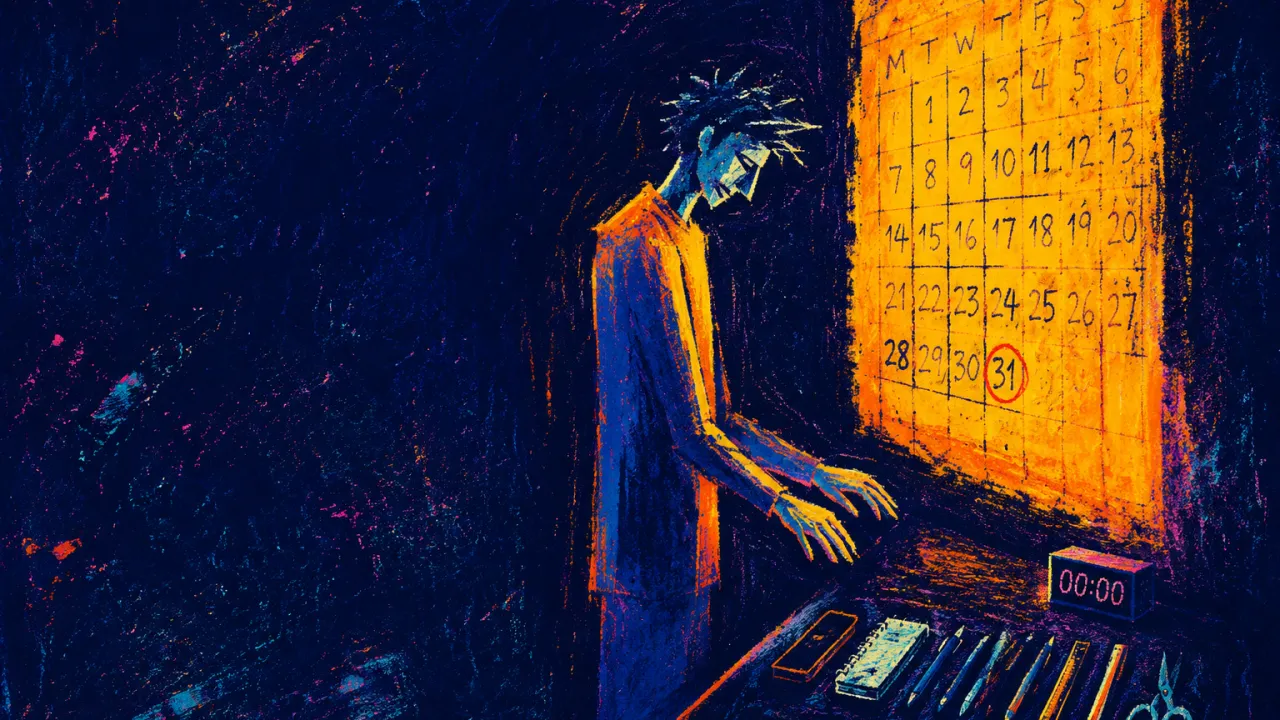
Control Lock is the moment you realize you are not just trying to stay organized — you are trying to keep the entire room, conversation, plan, mood, and future from moving before you are ready. You might be sitting at your desk with seven tabs open, one hand around a cold coffee you forgot to drink, rewriting the same message for the fourth time because the wrong wording could shift everything. Your body is still, but not relaxed; your jaw is tight, your shoulders are lifted, and your breath has that thin, held quality that makes even a normal Tuesday feel like a system under supervision. You tell yourself you are being careful, prepared, responsible, realistic, and some of that is probably true. The harder part is the private bargain underneath it: if you can predict enough, plan enough, check enough, phrase it right enough, time it right enough, maybe nothing will get away from you. So you keep tightening the frame. You read the group chat like weather data. You turn a deadline into a command center. You try to make desire sound casual, make uncertainty look competent, make your own feelings pass through a filter before they are allowed to exist. From the outside, it can look impressive — composed, capable, on top of things — but inside, your life starts to narrow around the need to hold the steering wheel with both hands even when the road is asking for response, not force. The cost is not just stress; it is the slow loss of contact with anything that needs room to unfold, including you. You can become so busy keeping every tool in place that the day never gets to breathe, much like The Magician when the raised wand, lowered hand, and arranged tools stop feeling like a living channel and become one locked axis everything must obey.

What's pulling at you?

You are caught between the need to feel safe by keeping every variable within reach and the part of you that knows life only starts moving when not everything can be managed. Control becomes the place you stand, but also the thing that keeps you from stepping into the moment while it is still alive. That is why letting go does not feel simple; it can feel like losing the whole structure that has been helping you stay oriented.

How It Shows Up?

  • You wake up and check your calendar before your feet hit the floor, already scanning for gaps, risks, loose ends, anything that could tilt the day. Your shoulders creep toward your ears, your mouth feels dry, and your thumb keeps tapping through apps as if one more pass will make the whole morning safe to enter, a Four of Pentacles kind of stillness where every point of contact has a job. You can let the first few minutes be unfinished without having to assign them a purpose yet.
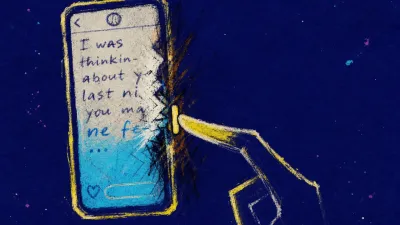
  • Someone you care about sends a message that is short, unclear, or slower than usual, and your body reacts before your mind has a sentence for it. Your stomach tightens, your chest gets narrow, and you start drafting three possible replies, each one designed to sound calm, casual, and perfectly timed, as if closeness can only happen after every tone has been measured. It is allowed to wait a moment before turning uncertainty into a project.
  • At work or school, you open the task and immediately build the system around it: the outline, the notes, the order of operations, the contingency plan, the version you will show and the version you will hide. Your jaw locks while your eyes keep moving across the screen, and the more organized the setup becomes, the harder it is to actually start, like The Chariot standing ready without reins in hand. Starting messy can still count as movement.
  • In a group chat, meeting, party, or crowded coffee shop, you keep half your attention on the room and half on yourself: how you are coming across, whether you spoke too much, whether your face looked interested, whether the mood shifted after you said that one thing. Your breathing stays shallow, your smile arrives a little early or a little late, and connection starts to feel like a control panel you have to keep lit. You can be in the room without managing the whole room.
  • You notice the same body signal returning: the hard line between your brows, the tight band across your upper back, the clenched hand around your phone, the breath that stops halfway down. Nothing dramatic is happening, but your body is braced like The Emperor on a stone throne, upright, armored, and ready to enforce order before anything has even gone wrong. You can treat that signal as information, not an instruction to tighten further.

Control Lock in Tarot Cards

Control Lock shows up when safety starts depending on keeping every outcome, reaction, and next move within reach. You can feel it in the clenched jaw, shallow breathing, and the body bracing before anything has even gone wrong. From an existential perspective, the structural framework of this struggle is about what happens when command becomes the price of feeling oriented. The Tarot Cards below make that locked shape visible without explaining it away.

The Magician Upright
The Magician’s body is organized around a precise vertical line: wand lifted, opposite hand lowered, gaze steady, tools displayed within reach. The composition is not chaotic; it is almost too controlled, with every object placed where it can be directed, named, and used. In a relationship, that visual order can mirror the pressure to turn emotional uncertainty into a managed outcome. You may find yourself trying to choose the exact message, timing, tone, or reveal that will keep the bond from slipping out of reach, as if intimacy can only happen once the whole field has been mastered. The card does not frame control as a flaw in character. It shows control as a structure that forms when desire feels powerful but the other person’s response remains unknowable, leaving you caught between wanting contact and trying to pre-script the conditions under which contact will feel safe.
Reversed
The wand points upward, the opposite hand points down, and the body becomes a closed command line between two poles. In a reversed reading, that impressive channel hardens into a posture that has to keep directing energy even when the inner field needs response, softness, or interruption. For introspection, this is the moment self-awareness becomes surveillance. You may track every trigger, manage every reaction, and hold every emotion inside a mental framework, but the system stops listening to what the emotion is trying to change. The card’s reversed structure names the lock inside the need to stay in command. Control promises inner order, yet it can seal the very passage through which hidden material would move, release, and reorganize.
The Emperor Upright
The Emperor sits locked into a gray stone throne, holding signs of life and worldly command while red cloth and hidden armor wrap the body underneath. The picture does not show movement across the territory; it shows command concentrated into a single fixed seat, with ambition kept upright through pressure, rank, and constant readiness. For personal growth, that geometry mirrors the moment when self-improvement becomes self-governance rather than evolution. You are not simply trying to be disciplined; you are trying to make every part of your potential submit to a system before it is allowed to move, and that turns growth into a controlled territory instead of a living process.
Reversed
The same throne that supports The Emperor becomes a control room when the card is reversed: armor stays under the robe, the feet remain ready to stamp or rise, and the square stone back fixes the body into command. The flowing water and uneven mountains are still there, but the throne's geometry dictates how everything must be approached. You may be trying to calm relational uncertainty by tightening the system around it. This card shows the cost of that strategy: love becomes something to manage, monitor, or correct, while the living bond underneath has less room to respond freely.
The Chariot Upright
The armored charioteer stands in a vehicle built for speed, but the visible mechanics of movement are restrained: the wheels are barely emphasized, the body is squared into a cube, and no reins connect his hands to the sphinxes. Control appears as posture, armor, and command rather than as flexible contact with the road. That is the precise shape of Control Lock in personal growth. You can become so invested in mastering every drive, mood, plan, and risk signal before acting that discipline turns into a sealed command chamber; the card mirrors the moment when self-control stops conducting movement and starts holding potential in place.
Reversed
The armored figure appears contained by the chariot as much as supported by it. The cube, canopy, sphinxes, and rigid posture make control look stable from the outside while the available movement space narrows around the body. In academic work, this reversed Chariot structure shows what happens when control stops being a steering function and becomes a lock. You may keep checking, refining, planning, comparing, and bracing until the study process has no room left for discovery, risk, or imperfect output. Control Lock here is an internalized command system. It does not announce itself as chaos; it often looks disciplined, high-achieving, and serious, but the card reveals the cost when academic control consumes the very motion it was meant to guide.
Wheel of Fortune Reversed
The sphinx holds its place with a sword while the wheel beneath it remains a moving support. The posture reads as command, but the body must keep bracing against a mechanism that cannot be made still. Control Lock appears in career life when every variable becomes something to monitor: stakeholder mood, performance optics, promotion timing, manager interpretation, and the backup plan beneath the backup plan. The more the workplace turns, the more control starts to feel like the only available form of safety. The card marks the cost of that locked posture. You still have agency, but the wheel shows how agency can harden into constant bracing when a career system demands certainty from a structure built around change.
Death Reversed
The skeletal rider's armor creates a sealed vertical posture, and in reverse that rigidity reads as a system trying to survive transition by hardening around it. The horse still moves, but the figure does not soften, negotiate, or adapt; the whole body of the card becomes forward motion held inside a locked shell. The fallen crown and scepter intensify the problem because they remain visible after their authority has stopped working. They mark an old internal command structure that can still be recognized, but no longer has enough force to organize what is happening. In introspection, Control Lock forms when you keep using discipline, analysis, or self-management to hold together an inner order that transformation has already outgrown. The card does not frame this as failure; it shows the exact place where control has become a brace around change instead of a bridge through it.
The Tower Reversed
The stone shaft remains hard and vertical while its windows burn and its crown has lost command. In a reversed current, the structure can keep the appearance of order even after the conditions that made order useful have failed. For personal growth, this is control that has outlived its function. You may keep tightening plans, routines, and standards around an inner system asking for reconstruction, so discipline becomes a cage around the very change it was meant to support.
Four of Pentacles Upright
The seated figure clamps one pentacle to his chest, pins two under his feet, and balances another on his crown. The whole body becomes a control apparatus: hands cannot reach, feet cannot walk, and the head cannot shift without endangering the held structure. In personal growth, this is the shape of a self-system that wants change only if nothing has to be released. You are not simply stuck in indecision; the card shows a structure where movement is coded as loss, so evolution is delayed until the need for total control can be seen clearly.
King of Pentacles Reversed
The king's gaze falls back onto the pentacle while the scepter stays upright and the fortified estate remains fixed behind him. The image creates a closed circuit between attention, proof, control, and safety, with little unused space for anything unverified to enter. In inner work, this is the moment when the mind keeps trying to secure itself by checking the same symbols again and again. You may call it clarity, standards, discipline, or self-protection, but the deeper structure is a lock: every feeling must pass through control before it is allowed to be real. The card does not frame control as a flaw. It shows where control has become the gatekeeper of inner experience, turning reflection into surveillance and emotional processing into a system that only permits what can be contained.
Five of Swords Upright
The central figure grips the swords as if control of the scene has been secured, yet his head is turned back toward the people leaving. The blades divide the shoreline into winners, losers, and abandoned ground, so the apparent victory is held inside a narrow field of separation. In a lifestyle reading, this points to the cost of building a daily system around control as the main proof of stability. You can win the calendar, win the checklist, win the tidy surface, and still feel the day becoming smaller because every part of life has to submit to the same rigid command structure. The card gives Control Lock a precise shape: control keeps the system standing, but it also traps attention in the aftermath of what had to be suppressed, cut off, or overmanaged to make the day look handled.
Knight of Swords Reversed
The knight's posture is committed past the point of easy adjustment. His raised sword, forward lean, armored torso, and charging horse form one rigid system, so changing course would require more than a small correction. In love, that becomes the inner lock of trying to control uncertainty by increasing pressure. More questions, more proof, more confrontation, more speed: each move is meant to regain stability, yet each one narrows the relationship's ability to breathe. This card makes the control structure visible without reducing it to a flaw. It shows a person trying to stay oriented in emotional wind, using force as a substitute for the security the bond has not yet provided.
King of Swords Reversed
The reversed King of Swords turns the upright blade and rigid throne into a closed command system. The same posture that once organized thought now suggests a body maintaining control by tightening the axis, staying elevated, and treating distance from the ground as normal. This is the structure of trying to solve a direction crisis by increasing control over the future. More criteria, more rules, more prediction, and more self-command may create the feeling of order, but the card shows a system that has stopped receiving enough feedback from the living world to recalibrate. For long-range choices, Control Lock can feel productive because it looks disciplined from the outside. The deeper struggle is that the hand keeps gripping the symbol of certainty while the horizon needs adaptation, leaving your direction governed by command when it is asking for contact.
Seven of Wands Reversed
The same wand that gives the figure leverage can also lock the body into a single defensive shape. When both hands remain fixed and the stance cannot soften, the tool stops being only a response to pressure and becomes the structure that decides what movement is allowed. In a direction reading, that reversal names a future organized around control before clarity. You may keep protecting a route because releasing it would make the whole map feel unstable, even when the deeper problem is that the route can no longer be questioned without triggering alarm. The card’s tension is not about needing less discipline. It shows control becoming a substitute compass: the grip feels like certainty, the defended patch of ground feels like purpose, and recalibration starts to look like collapse even when it is the next honest movement.
King of Wands Reversed
The same throne, wand, and forward lean become rigid in the reversed state: the staff reads less like creative force and more like a brace holding the whole posture in place. The fist, the crown, and the fixed seat turn the body's fire into a closed circuit. In love, that structure names the moment control stops being a tool and becomes the condition for feeling safe. You may keep steering the conversation, the timing, or the emotional temperature, but the card shows how the bond locks when every movement has to pass through the grip first.

Control Lock in Tarot Card Reading Insights

Control Lock is the strain of trying to keep life, love, work, or direction safe by managing every moving part before it can surprise you. Other people have brought that same braced, monitoring state into readings when the cards became a way to look at what control was holding in place. Tarot Reading Insights from sessions on this pattern are collected below.

Psychological struggles related to Control Lock