After the Sleepover, Toothbrush Panic Became a Pace Conversation

The 8:12 a.m. Sink Spiral: Finding Clarity When Dating Starts to Feel Domestic
If you are a late-20s city professional who lives alone, actually likes the person you are dating, and still gets hit with commitment anxiety the second their toothbrush appears next to your skincare, this is your exact situation.
That was the line I opened with when Taylor sat across from me in my reading space, still wearing her workday face even though the strain was already visible in her shoulders. She gave me a dry little laugh and said, "Yeah. Unfortunately, that is disgustingly accurate." Then she told me about 8:12 on a Monday morning in her downtown Toronto condo bathroom: the cool light in the mirror, the mint-and-steam smell still hanging in the air, Slack and Figma already waiting, and her hand pausing over one extra toothbrush on the sink.
"I like them," she said, looking at the table instead of at me. "Which is exactly why this freaks me out."
I could see the whole pattern in the way she described it. Warm the night before. Tight chest the next morning. Shoulders up near her ears. The sudden urge to wipe, straighten, reclaim. Then the quieter shift no one else sees right away: slower replies, a more practical tone, a calendar that mysteriously fills itself with solo plans. The toothbrush is not the problem. The speed it seems to imply is.
Her apprehension had the texture of a condo smoke alarm going off from toast: loud, physical, and wildly out of proportion to the actual flame. Under that, I could hear the guilt. Nothing objectively bad had happened, yet her body was already trying to get her space back as if the room itself had crossed a line.
I told her what I tell people when a tiny domestic sign suddenly feels heavier than it should: "You do not have to prove anything to me here. We are not deciding whether you are difficult, avoidant, or bad at intimacy. We are just going to look closely at the moment your nervous system starts future-tripping, and we are going to make that moment more readable. Let me help you draw a map through the fog."

Choosing the Compass: A Four-Card Spread for Relationship Pace
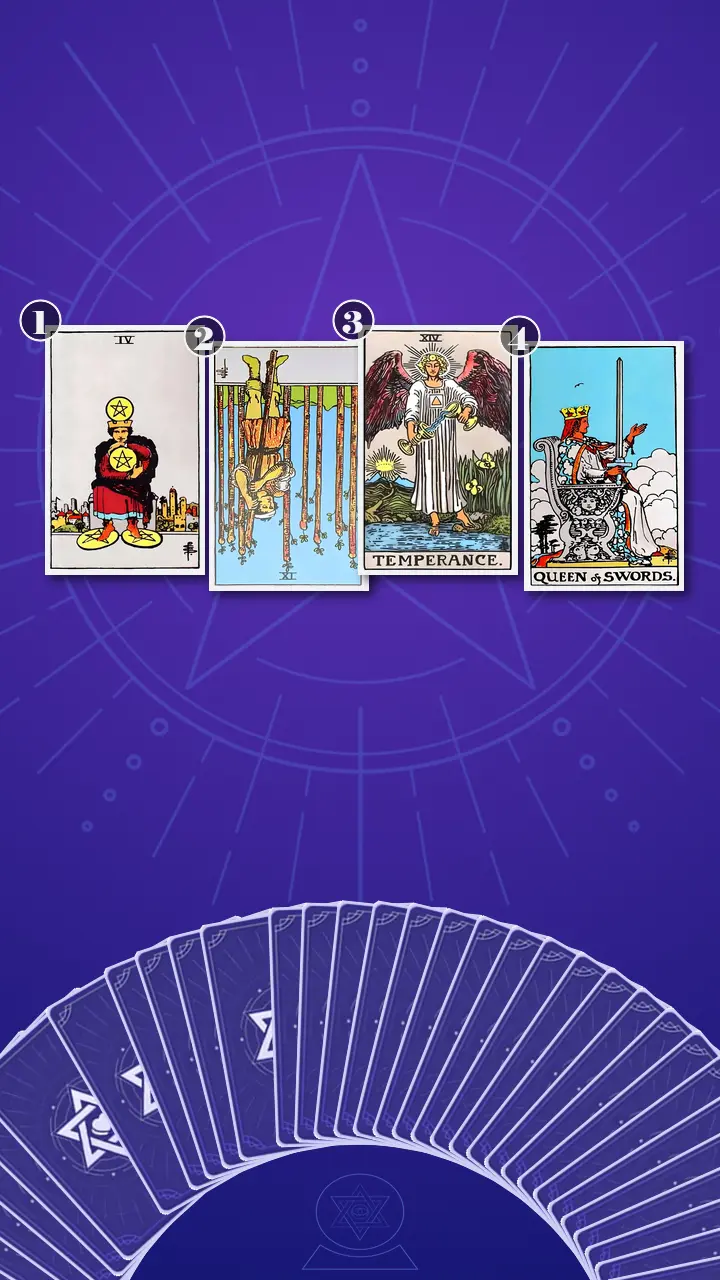
I asked Taylor to take one slow breath and hold the actual question in mind, not the whole future of the relationship, just the sink, the toothbrush, and the pull-away that followed. Then I shuffled slowly and laid four cards from left to right. I always like this part because it turns panic into sequence, and sequence is something a mind can work with.
For this reading, I used a Situation-Obstacle-Advice-Outcome spread. It is a compact classic spread, and it works especially well when one concrete trigger carries a surprising amount of psychological charge. In other words, when someone is asking, "Why do I pull away after a good sleepover even when I like them?" this spread keeps the reading grounded. It shows the visible symptom, the hidden resistance under it, the inner shift that helps, and the relational stance that becomes possible next.
I explained the structure as I set the cards down. The first card would show the immediate intimacy trigger in the home and the pull-away response it activates. The second would reveal the deeper fear or protective pattern that makes a small domestic sign feel so loaded. The third, sitting in the hinge position, would name the inner shift that could loosen the pattern without forcing premature closeness. The fourth would show what kind of grounded, breathable intimacy becomes possible once that shift is practiced.
That is how tarot works best for me: not as a verdict, but as a clean psychological layout. Taylor is a UX designer, so I told her, "Think of this as the relationship version of a flow map. We are not inventing meaning. We are making the hidden logic visible."
Reading the Defensive Wall
Position 1: Four of Pentacles, Upright
I turned the first card and said, "This position shows the immediate intimacy trigger in the home and the specific pull-away response it activates. The card here is the Four of Pentacles, upright."
The image was almost painfully exact. Monday morning before work, Taylor sees the extra toothbrush next to her own and suddenly feels like the apartment is no longer fully hers. She starts wiping, straightening, and reclaiming surfaces before she has even admitted that the real trigger is not clutter but a fear that shared space is arriving faster than she chose. In the card, the figure presses one pentacle to the chest and pins two more under the feet. That is not greed to me here. It is bodily self-protection. It is the instinct to keep emotional and physical territory from shifting under you.
I described the scene back to her in detail: condo bathroom light too bright, damp hand towel, Aesop soap, toothbrush nudged two inches to the side, and the inner monologue running in short clipped lines. It is fine. It is nothing. Why does it suddenly feel like too much? The warmth of the sleepover is still in the room, but ownership has entered the picture, and the body reads that change before the mind has language for it.
"That is exactly it," she said, then let out a breathy laugh with a bitter edge. "Wow. Accurate and kind of rude." Her fingers went to the rim of her mug and stayed there.
I nodded. "This card is balanced toward excess control. Not because you are controlling in some global sense, but because your body is trying to restore safety through order. It thinks if it can manage the surface, it can manage the pace."
Position 2: Nine of Wands, Reversed
I turned the second card. "This position reveals the deeper fear or protective pattern that makes a small domestic sign feel loaded. Here we have the Nine of Wands, reversed."
This card told me the toothbrush was only the entry point. In under ten seconds, Taylor's mind jumps to drawer space, default sleepovers, partner routines, lost solo time, and the fear of becoming a girlfriend by momentum instead of choice. Before anyone even said keys. Before anyone even said next weekend. Before anyone even said moving in. Her shoulders go up, her chest tightens, and her brain is already editing a trailer for a future no one actually pitched.
The reversed Nine of Wands is defensive fatigue. The inner guard is already on duty, already tired, already expecting too much from the threshold. In Jungian terms, I always watch for the moment an object stops being an object and becomes a symbol the psyche overfills. This was that moment. The toothbrush was real; the lease-agreement energy was projected.
I told her, "I use something I call Attachment Loop Diagnosis for a pattern like this, not to slap a label on you, but to decode the sequence. Your loop is clear: visible cue, future-tripping, distance, relief, guilt, then less security between you. That short-term relief is why the pattern feels convincing. It works for ten minutes, and then it costs you connection."
Taylor's jaw tightened first. Then her eyes unfocused for a second, as if she were watching her own montage play back on fast-forward. "I do this exact fast-forward thing," she said quietly. "It goes toothbrush, drawer space, keys, accidental couplehood. And then I act busier before anyone has even asked me for anything."
"Exactly," I said. "You can want closeness and still need the pace to be named. Those are not opposites. The card is showing me a vigilance system that cannot tell a normal notification from an emergency alert."
When Temperance Spoke Over the Bathroom Sink
Position 3: Temperance, Upright
When I turned the third card, the room changed. This was the hinge of the whole reading, and I felt it immediately. Outside, a streetcar bell rang somewhere below the window, sharp and brief, and then the room went still again.
I said, "This position names the key inner shift that can loosen the pattern without forcing premature closeness. The card is Temperance, upright."
When you are standing at the sink on a Monday morning, mint toothpaste in the air, already mentally drafting Slack replies while your chest tightens over one extra toothbrush, the panic is rarely about the plastic object.
A toothbrush is not a takeover notice; let Temperance's flowing cups teach you to blend closeness slowly and consciously instead of slamming the door to protect your space.
I let that sit for a second. Then I made the reframe even plainer. "What happened is: someone you like slept over and left a toothbrush behind. What your body predicted is: default weekends, blurred space, implied commitment, and a loss of control you never agreed to. A visible sign of closeness is not the same thing as a decision. Freedom usually gets protected best when your pace is spoken early, not when your warmth disappears later."
This is where I brought in my Shadow Projection Analysis, because Temperance is not just about calming down. It is about separating fact from projection with enough gentleness that the nervous system does not feel punished for reacting. I told her, "I want to know which part belongs to the person in front of you, and which part belongs to an older fear of getting absorbed, adapting too fast, and only noticing resentment later. The card is not asking you to open the door wider. It is asking you to stop treating every sign of closeness as if it arrived with a hidden contract attached."
For a second, Taylor went completely still. First the freeze: her breath paused halfway in, and her thumb stopped moving along the mug handle. Then the cognitive drop: her gaze slipped past the cards, unfocused, as if she were replaying a Monday morning in that bathroom with the cabinet door half open. Then the feeling broke through. Her face softened and tightened at the same time, which is a look I have come to trust. "But doesn't that mean," she said, and I heard the flash of resistance under it, "that I have been reacting to something that was not even happening yet?"
"Yes," I said, very gently. "And that does not make you irrational. It means your body has been trying to protect your pace in the only way it knew. We are just giving it a better tool."
Her eyes watered, not dramatically, just enough to make the shift visible. Her shoulders lowered by what looked like an inch. Then came that odd little dizziness that sometimes follows clarity, when the burden drops and responsibility arrives in the same breath. She laughed once, softer this time. "That actually feels more breathable," she said.
I asked her, "Using this lens, can you think of one moment last week when one honest sentence would have protected you better than disappearing?"
She nodded slowly. "The cabinet," she said. "I could have just told them I liked having them over and that shared-space stuff makes me move slower. Instead I hid the toothbrush and replied like a coworker."
That was the real crossing. Not from insecure to secure in one leap, and certainly not from complexity to perfection. From startled contraction and post-sleepover withdrawal to the first real possibility of breathable closeness with explicit boundaries.
Position 4: Queen of Swords, Upright
I turned the last card. "This position shows the grounded relational stance that becomes possible when the guidance is practiced. The card here is the Queen of Swords, upright."
This is one of my favorite cards for relationship pace because she never confuses silence with strength. Taylor does not manage the vibe by going cold and hoping the other person gets the hint. She names the boundary with warmth: "I like where this is going, and I need my home to stay really mine unless we talk about what shared space means." The upright sword and open hand say the same thing at once: clarity and receptivity can coexist.
I told her, "Boundaries land softer when they arrive as language instead of a vibe shift. This card is balanced air. Not cutting, not defensive, just precise. You are allowed to be available without being vague, and you are allowed to be clear without becoming cold."
She gave me the smallest nod, but it had weight in it. I could almost see her trying on the sentence in real time, like good UX microcopy: concise, human, and impossible to misread.
From Vibe Shift to Boundary-First Intimacy
When I pulled the whole reading together for her, the story was clean. First, the Four of Pentacles showed the body-level grab for control the second closeness became visible in material form. Then the reversed Nine of Wands showed the exhausted inner gatekeeper that fast-forwards one toothbrush into a whole unwanted future. Temperance became the regulating hinge: not choose closeness or freedom, but pace closeness in a way freedom can actually trust. And the Queen of Swords showed the mature result, where shared space is shaped through conversation instead of managed through distance.
The blind spot was not that Taylor needed space. She absolutely did. The blind spot was that her nervous system kept treating a domestic symbol as if it had already made a decision for her. That is the cognitive jump that keeps so many people feeling stuck when dating starts to look domestic. Distance is not always dishonesty, but silence makes other people guess. The transformation direction was clear: name the pace before the body has to do it through retreat.
When I offered the next steps, Taylor gave me one more real-life objection. "I do not always have five spare minutes before stand-up," she said. I appreciated that, because actionable advice has to survive Monday morning, not just sound wise in a reading. "Then we make it ninety seconds," I told her. "Small enough to use is better than perfect and imaginary."
- The Sink-Side PauseThe next time a toothbrush, charger, hoodie, or grocery item triggers you, pause before moving it. Put one hand on the counter or towel rail and say three things out loud in the bathroom or kitchen: what the object is, what story your body jumped to, and what pace would actually feel okay. Keep it to about 90 seconds, right there in the moment.If that feels too activating, stop after naming the object and the fear-story. The point is to interrupt the spiral, not to force immediate calm.
- The Projection Detachment ExerciseWithin 10 minutes, open your Notes app and do my structured prompt: "The object is:" "The story my body jumped to is:" "What pace would actually feel okay is:" Use it after a sleepover, before texting back cooler than you feel, or anytime shared space suddenly feels like too much.Treat this as story-versus-fact regulation, not a long journal session. Three lines is enough to separate your partner's actual behavior from your triggered internal narrative.
- The Pace-Setting SentenceDraft one sentence this week and save it in your phone before the next sleepover: "I really like this, and I move slower around shared-space stuff." Or: "You matter to me, and I stay more present when pace is explicit instead of implied." Use it in a calm text or say it aloud before overnight items become the whole conversation.Keep it present-focused and plain. A boundary usually lands better as one clean sentence than as a long explanation delivered in panic.

A Week Later, the Cabinet Stayed Open
A week later, I got a message from Taylor. It was short, which usually means it is real. She wrote: "Left the toothbrush where it was for one breath. Did the Notes thing. Sent the sentence before Thursday instead of after freaking out. It went... weirdly well."
That was the proof I wanted for her. Not a total personality rewrite. Not certainty about the whole relationship. Just one clean moment where she did not let panic become the only interpreter. Shared space had started to become something she could shape, not something that happened to her.
She told me she slept through the night after sending it, but woke with the old thought anyway: What if that was too much? This time, she smiled, made coffee, and did not hide behind Slack.
I thought about the arc of the reading for a moment after I put my phone down. This is the work I care about most. Not proving tarot is magical, but watching it help someone turn one overread symbol into a usable truth. In this compact Situation-Obstacle-Advice-Outcome reading, Taylor did not learn whether the relationship would last. She learned that closeness feels safer when pace is explicit, not implied, and that she is allowed to protect her freedom with language instead of disappearance.
If tonight you also know that chest-tightening second at the sink, when one ordinary object suddenly makes your home feel one step away from no longer being fully yours, remember this: noticing the tug-of-war between closeness and independence already means you are no longer trapped inside it without a map.
If you did not have to solve the whole relationship today, what one sentence might give your pace a little more air the next time closeness becomes visible?