Purpose or pressure?

A clear audit of meaning-led motivation, the tarot cards that mirror it, and readings where this pattern appears.

Purpose Anchoring
What is this really?

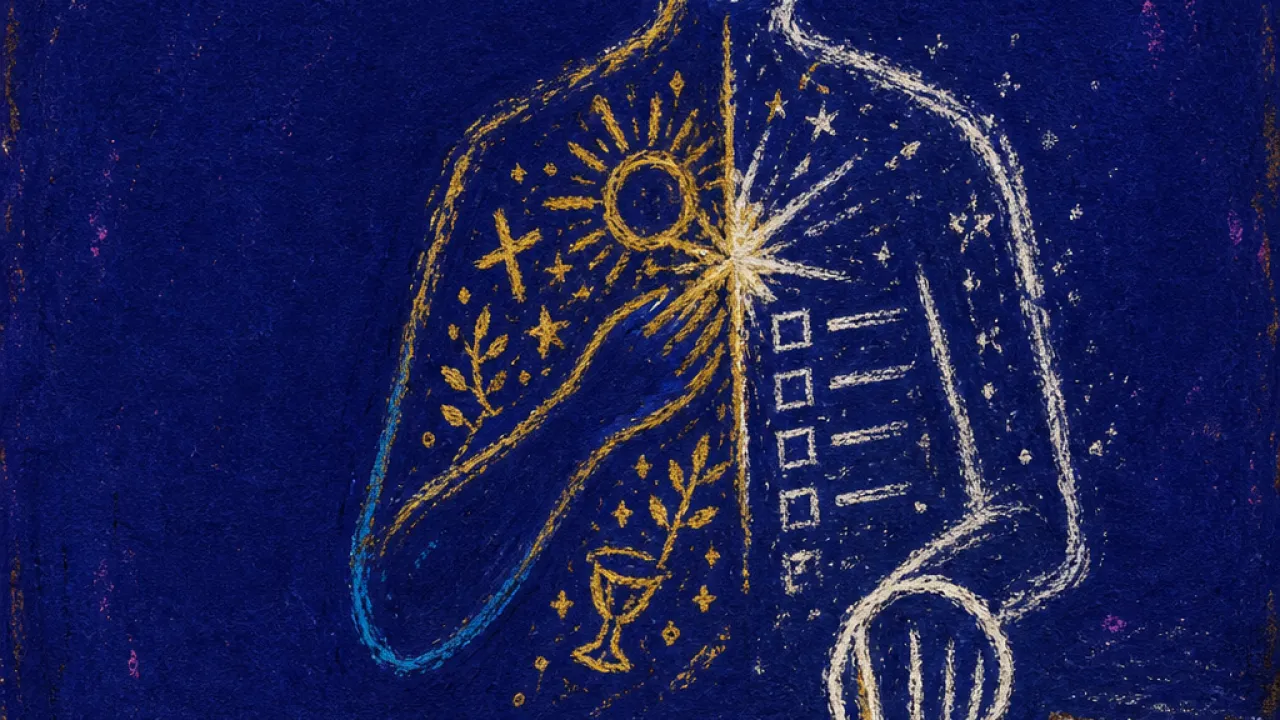
You organize choices by asking what a role, project, relationship, or routine is really serving; when the answer feels thin, your body hesitates even if the option looks impressive on paper. This makes sense: anchoring to purpose reduces the cognitive dissonance of chasing status, urgency, or approval that does not feel like yours, and it gives your boundaries a clear internal reference point. Yet when purpose becomes the only signal you trust, the anchor can turn into a sunk-cost trap where ordinary work feels pointless unless it proves your life direction, and the road narrows around the cup you are carrying, much like the Knight of Cups, moving in armor while the chalice held before him becomes the point that guides the horse.

Why did it happen?

At some point, choosing by what felt meaningful may have helped you stay oriented when grades, job titles, other people's timelines, or constant notifications got too loud. Your body learned to look for a center before it moved: a reason, a value, a thread that made effort feel worth spending. Now that inner pattern can become a subconscious loop where any task without a clear 'why' starts to feel hollow, leaving you mentally tired from auditing every step before you let yourself begin.

How does it feel?

  • In a planning meeting, you rest your pen cap under your thumb and ask, 'What are we trying to make this serve?' before you volunteer for the next task. The moment the room gives a clear answer, your shoulders drop and your breath reaches lower; when the answer stays vague, your jaw tightens as if your body is holding the brakes. You can let that pause exist as information without turning it into a demand for certainty.
  • Scrolling through job posts, you stop on the impressive titles, then quietly drag the cursor to the mission statement or the day-to-day bullet list before you apply. A small pressure can sit under your sternum when the role looks good but feels hollow, like your body is waiting for a reason it can lean into. You can notice the pressure without treating it as a verdict.
  • On Sunday night, you open a notebook, write one value word at the top, draw an arrow to three tasks, and leave the rest of the page blank. When one priority starts to hold the list, your forehead may unclench and your pulse may slow; when the page turns into a grid of disconnected fixes, your eyes can blur before you realize you have stopped reading. Let the blank space stay there for now.
  • When a friend suggests a plan, you tilt the phone in your hand, type 'what's the point of us doing this?', then soften it to 'what are you hoping for?' before sending. As you wait for the reply, your neck may feel tight and your breath may stay high in your chest, especially when the plan has no clear shape yet. It is okay for the reason to be small; it does not have to justify your whole calendar.
  • Before answering emails, revising slides, or opening another study tab, you reread the first line of the brief to remind yourself what the work is for. If the link is there, your hand moves cleanly; if it is not, your fingers hover over the trackpad and a flat heaviness can settle behind your eyes. You are allowed to start with the next visible step, even while the bigger meaning is still forming.

Purpose Anchoring in Tarot Cards

That reflex to ask what the work is serving before you volunteer is the core signal of Purpose Anchoring. You may recognize it in the pen cap under your thumb, or in the way your jaw tightens as if your body is holding the brakes. Jungian archetypal theory gives this pattern a symbolic frame without turning it into a productivity rule. The Tarot Cards below reflect the unconscious dynamics behind that need for a felt center:

Knight of Cups Upright
The knight carries the cup in front of his armored body while the horse moves at a measured pace toward the river. The object is not decoration; it becomes the point around which attention, posture, and movement organize. Purpose Anchoring forms when growth needs a felt center, not just a productivity script. In your personal evolution, the cup represents the value that keeps discipline from becoming empty performance, while the reins show the need to translate that value into controlled forward motion.
Queen of Cups Upright
The Queen sits at the edge of the water with the cup held steadily at the center of her body, while one foot remains close to land. The image is not still because nothing is happening; it is still because the inner signal is being given enough space to become readable. The throne, crown, and calm sea create a structured container for feeling. You are being shown a direction system that becomes reliable when emotion is not treated as noise, but also is not allowed to spill everywhere. Purpose Anchoring forms when the long-term path is filtered through felt meaning rather than through every external marker of progress. The route becomes clearer when the future feels internally inhabited, not merely impressive from the outside.
King of Cups Upright
The King's gaze rests on the cup while the sea spreads behind him in layered blue and green waves. The image does not scatter his attention across every movement in the water; it gives the emotional field a center, a vessel, and a point of return. That centered gaze is the psychological structure behind purpose anchoring. In academic life, the mind can get pulled into grades, comparison, deadlines, and the fear of disappointing someone, but the cup functions like a chosen internal reference point. It asks what the work is ultimately serving, not just what pressure is currently loudest. When this pattern is healthy, You are not forcing motivation through panic. You are repeatedly returning the study system to a meaningful aim, so attention has somewhere stable to land when the emotional ocean becomes too wide.
Ace of Pentacles Upright
The road on the Ace of Pentacles does not flood the scene with endless directions. It narrows through a flowered arch, crosses a protected garden, and points toward a distant mountain that cannot be reached in one leap. The hand above holds one pentacle, not a handful of competing symbols, and the whole image turns broad possibility into a single grounded entry point. That is the mechanism behind Purpose Anchoring. When the future feels too wide, the psyche often tries to solve direction by thinking bigger, scanning harder, or collecting more options. This card shows a different structure: attention becomes usable when it is anchored to one embodied threshold, one real investment, and one path that can be walked rather than endlessly imagined. For a direction question, the card does not promise that the whole mountain is already solved. It shows the psychological value of choosing a stable point of contact so your energy stops leaking into abstract futures. The pattern is about turning possibility into orientation without collapsing your entire identity into the outcome.
Three of Pentacles Upright
The open blueprint sits beside a stone structure that is already taking form, while the pentacles are embedded into the architecture rather than floating as separate prizes. The small hand movement belongs to a larger design, and the design gives the labor a place to go. That is the inner logic of Purpose Anchoring. In personal growth, the pattern connects micro-actions to a durable self-development structure, so discipline is not dependent on mood, inspiration, or the newest identity fantasy. You can tell the difference between a meaningful next brick and another vague wish to become better. Three of Pentacles grounds growth in architecture. The card does not romanticize potential; it shows potential becoming stable through repeated, directed craft inside a larger container.
Eight of Pentacles Upright
The craftsman's body is organized around a single task: torso bent forward, hands fixed on tool and material, attention gathered into the coin directly in front of him. Behind that narrow focus, the town remains visible, so the work is not isolated from life; it is a private practice station connected to a wider future. That structure is the visual logic of Purpose Anchoring. The card shows energy becoming coherent because it has somewhere specific to go, not because the entire future has been solved. The line of finished pentacles turns effort into visible continuity, giving the psyche something concrete to hold while the long-range direction is still forming. For you, this pattern matters when the future feels too broad and every possible route competes for attention. The card suggests that direction is not found by thinking about every life option at once; it is stabilized by choosing one meaningful point of contact and letting repeated engagement reveal whether it can carry your deeper energy.
Ten of Pentacles Upright
The ten pentacles hover in a deliberate structure above the household rather than lying loose in anyone's hand, while the stone arch, estate, elder, child, and dogs show a life built across time. The visual field is not about a quick answer; it is about a stable system that can hold memory, resources, and future consequence at once. Purpose Anchoring grows from that architecture. When you face a wide future, the psyche is trying to organize choice around a load-bearing reason instead of reacting to every possible road. The card links this pattern to the moment when direction becomes clearer only after you ask what kind of life can actually support the next decade of you, not just the next win.
Page of Pentacles Upright
The pentacle is raised directly into the Page's line of sight, higher than the surrounding grass, trees, and far mountains. The whole scene organizes itself around one tangible object, as if attention needs a physical center before the future can be approached. That visual axis translates into a mind that works best when aspiration is grounded in a concrete target. You recover clarity by letting one chosen commitment hold the scattered energy of self-improvement long enough for it to become a path instead of a mood.
Knight of Pentacles Upright
The Knight sits armored on a motionless black horse, holding the pentacle in front of him while his gaze reaches past it toward the horizon. The body is not scattered across the open field; it is organized around one concrete object and one forward line of attention. That visual containment turns the pentacle into a psychological anchor. Instead of letting the vast future split attention into endless possible lives, the mind chooses a single reference point and tests direction against it. The armor adds boundary: not everything outside the self gets to define where energy should go. Purpose Anchoring is the pattern that forms when You use a stable inner marker to keep the long path from becoming noise. In a direction reading, this card does not flatten the future into a rigid plan; it shows the psyche building enough structure to hear which route still carries meaning.
Queen of Pentacles Upright
The pentacle rests at the center of the Queen's attention like a private focal point, while the garden, water, hills, and carved throne continue to hold the wider field. The object is not chased or displayed; it is contemplated as something that must match the life around it. Psychologically, the image points to a goal system that needs a value anchor before it can become stable. For you, personal growth becomes less about collecting impressive aims and more about testing whether a goal actually carries meaning when it touches your body, your energy, and your lived reality.
Ace of Swords Upright
The sword rises through the exact center of the crown, and the branches hang around it like a balanced frame. The image does not scatter its force across multiple goals; it gathers the whole composition into one upward line. Purpose Anchoring is the psychological pattern that keeps growth from becoming random self-improvement noise. The crown gives the sword a destination, while the open sky gives enough room for that destination to breathe instead of hardening into a rigid script. You can use this pattern to see whether your habits are connected to an actual inner aim or just to the pressure to keep upgrading. The card's structure reveals disciplined direction: not motion for its own sake, but effort aligned with a chosen axis.
Queen of Swords Upright
The Queen occupies her throne without leaning toward the viewer, and the sword rises from her hand like a fixed inner axis. The crown, stone seat, and clear sky above the clouds create a contained center from which judgment can be made. Purpose Anchoring is the psychological use of that center. It does not chase every available future or collapse into every outside expectation; it stabilizes around the question of which path can carry your actual values over time. In direction work, this matters when old milestones stop producing meaning. The card shows that a future becomes navigable when it is anchored in inner sovereignty rather than achievement momentum, borrowed approval, or the fear of wasting time.
Ace of Wands Upright
The wand stands upright between the clouded hand and the fertile land, while the river, hills, trees, and distant castle give the spark a wider field to move toward. The image does not show scattered fire; it shows force organized around an axis. That axis becomes the psychological anchor. You may need a clear purpose not because you lack discipline, but because your energy organizes best when it can feel the connection between present effort and a future structure worth building. The castle matters because it gives the spark a horizon beyond the initial high. Purpose Anchoring turns raw activation into a container, allowing growth to become a coherent strategy rather than a sequence of disconnected attempts.
Two of Wands Upright
The man on the battlement holds the globe close while his other hand steadies the wand against the castle wall. The image does not show motion; it shows orientation, containment, and a deliberate pause before movement. His height above the coastline gives him perspective, but the castle keeps that perspective connected to an existing base rather than floating in fantasy. That physical arrangement mirrors a psyche trying to turn ambition into an inner compass. The globe is potential, but the wall, wand, and measured stance insist that potential must be organized around something stable enough to guide action. This is where Purpose Anchoring becomes visible: not as certainty, but as the act of locating the values and long-range direction that can hold your energy when the future feels too wide. For direction questions, the card points to the difference between chasing every horizon and choosing the horizon that actually belongs to you. The pattern helps You audit whether a path is being chosen from inner alignment or from the pressure to keep expanding, proving, or performing direction.
Three of Wands Upright
The figure's hand rests on one wand while his attention follows a single outward line across the sea. The scene contains a vast field of possibility, but the body does not dissolve into it; the wand gives the gaze an anchor. Purpose Anchoring comes from that relationship between open space and selected direction. The psyche can hold many possible futures, but growth becomes usable only when one aim begins carrying the weight of attention. For personal development, this pattern names the stabilizing function of a chosen direction. You may still explore, but the inner system stops treating every new idea as equal and begins asking which horizon actually organizes your energy.
Four of Wands Upright
The four wands stand upright without being held, making the celebration feel supported by a frame rather than by constant muscular effort. The garlands do not float randomly; they are tied to pillars, giving joy a structure it can hang from. That visual order maps cleanly onto a growth system that can hold motivation without letting it scatter. You are not being asked to chase intensity forever; the image shows progress becoming sustainable when desire is attached to a stable inner architecture. Purpose Anchoring appears here as the ability to let a milestone remind you why the work matters. The distant castle keeps the larger arc visible, while the foreground canopy says the psyche needs repeatable rituals of recognition if it is going to keep moving without collapsing into pressure or distraction.
Seven of Wands Upright
The raised wand cuts a single diagonal line through the clutter of six separate wands. Visually, the figure has many incoming pressures, but only one instrument in his hands; the scene asks the eye to follow the line he chooses rather than the noise coming at him. That structure reflects a cognitive anchor under stress. A purpose does not remove opposition, but it organizes attention so the mind does not fragment into every possible fear, task, opinion, and optimization loop. The high ground gives just enough perspective to keep the central line visible. Purpose Anchoring appears when You return to the reason behind your growth instead of chasing every signal that promises improvement. The card shows how discipline begins as attention management: one wand, one line, one chosen axis strong enough to meet many competing demands.
Eight of Wands Upright
The wand cluster holds a disciplined alignment across open air, and the small house on the hill gives the movement a visible destination rather than a vague rush. The fertile ground below is not random scenery; it is the place where direction can become form. Purpose Anchoring appears when energy stops scattering across every possible upgrade and starts organizing around one meaningful aim. In personal growth, You feel the difference between collecting potential and giving it a target, because the psyche can tolerate effort when the endpoint has symbolic weight.
Page of Wands Upright
The wand forms one clean vertical axis in front of the Page, while the distant pyramids give the open desert a larger horizon. The scene is sparse enough that one direction can organize the whole field. Purpose Anchoring works the same way inside the psyche. For you, growth becomes less scattered when one meaningful aim is allowed to hold the center, turning enthusiasm from a passing spark into a structure that can guide repeated choices.
Knight of Wands Upright
The wand is held upright beside the knight's body, not swung in combat, and the salamander-marked tunic makes his chosen element visible before the journey unfolds. The armor, horse, and desert do not erase uncertainty; they give the uncertainty a frame that can be entered. Purpose Anchoring emerges when desire needs a stable object to organize itself around. The card's fire is not only heat; it is heat given a direction, a symbol, and a role strong enough to carry the rider across empty terrain. In personal growth, this pattern appears when your next stage cannot be built from hacks alone. A purpose anchor gives repeated effort emotional weight, so discipline is not experienced as punishment but as a way of staying loyal to the self you are consciously constructing.
Queen of Wands Upright
The Queen's gaze, wand, sunflower, throne and distant pyramids all create a vertical line between present vitality and a larger horizon. The desert is wide, but her objects give the scene direction rather than drift. This links the pattern to growth that is anchored by a chosen center. You are not chasing every possible version of yourself; the psyche is organizing energy around a stable inner sun so discipline can feel connected to meaning instead of self-punishment.
King of Wands Upright
The King sits forward instead of sinking into the throne, with one hand holding the long wand until it meets the ground. His gaze is fixed beyond the edge of the card, while the stripped-down desert leaves almost nothing to distract him from the line of command. That arrangement turns fire into an anchor. Desire is not allowed to stay as mood, fantasy, or aesthetic identity; it has to touch the ground and organize itself into a stable center. You meet Purpose Anchoring when a larger aim becomes strong enough to hold your micro-habits, priorities, and discomfort without needing constant emotional hype.

Purpose Anchoring in Tarot Card Reading Insights

For anyone who checks what the work is serving before they move, others have brought the same tension into readings too. Here is what came up when they sat with purpose, pressure, and direction. Below are Tarot Reading Insights that speak to this pattern.
Psychological patterns related to Purpose Anchoring