Why Must You Stay the Same?

Explore a fixed friendship role, its related tarot cards, and reading insights from others who brought this dynamic to a reading.

Friendship Role Lock-in
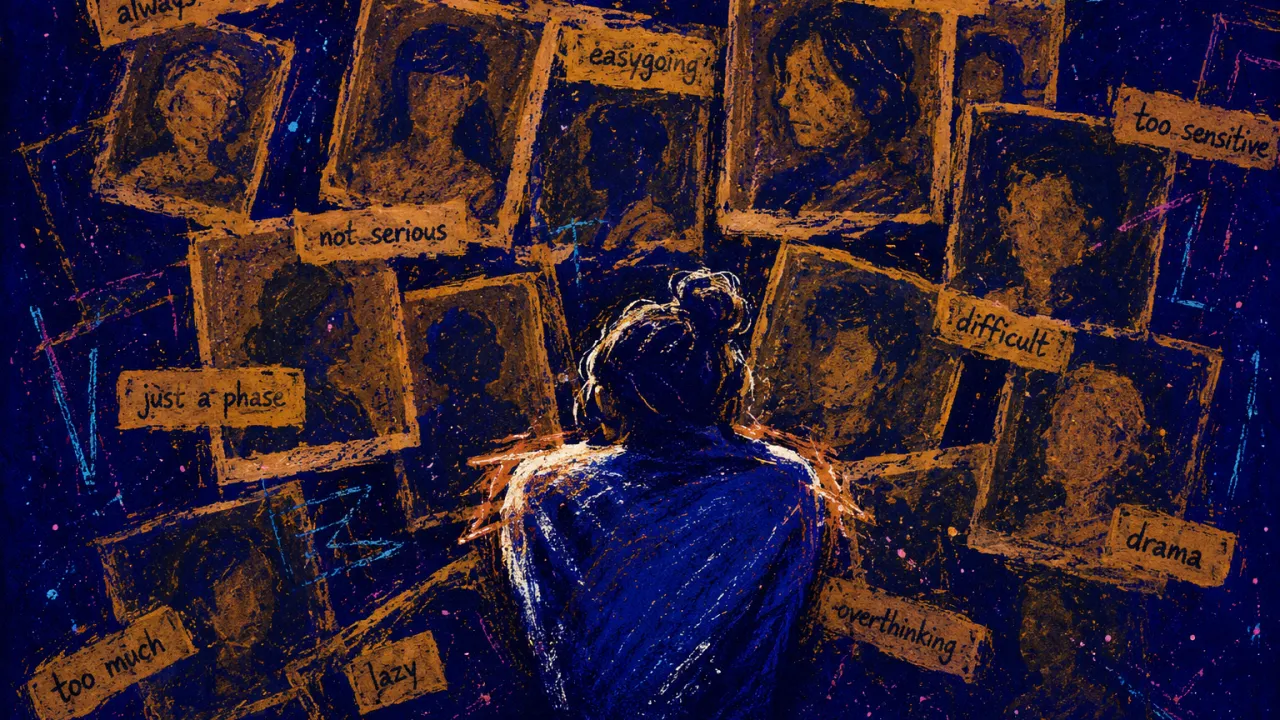
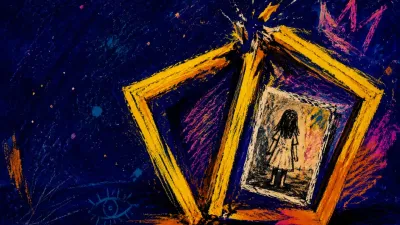
A solitary figure inside an old-photo outline, with repeated labels and silhouettes closing around the shoulders and arms.

What is this situation?

Friendship Role Lock-In is what happens when a friend group keeps assigning you the same part, even after your needs, limits, or life have changed. You see it the moment you join the group chat or arrive at the usual bar: someone asks you to smooth over an argument because you are “the sensible one,” hands you the planning because you “always do it best,” or turns your latest update into another version of the anecdote everyone has told for years. The exact role can be caretaker, comic relief, backup plan, organizer, or dependable listener, but the rule is the same: the group makes room for the function and little room for the person beyond it. When you offer a different opinion, decline a favor, ask to be listened to, or stop laughing at an old joke, the response is often “since when?”, “that’s not like you,” or a quick redirect back to what they expect. Your own news may receive a brief reaction, while a request that fits your assigned part brings immediate messages, calls, and assumptions about your availability. No one has to formally set the rule; it is renewed through old nicknames, repeated anecdotes, plans made on your behalf, and surprise whenever you act outside the script. By the time another “can you handle this?” notification appears, your shoulders brace before you have even opened it, and each meetup requires you to negotiate for space beyond what the group has already assigned. The friendship can still contain history, affection, and familiar routines while keeping your range unusually narrow, much like the figure in Eight of Swords, standing inside a fixed arrangement of swords with little visible room to choose a direction.

Why it's not you?

The issue is not that you have changed too much or stopped being a good friend. A group that answers every boundary, opinion, or need by returning you to an old role is preserving its own familiar arrangement. That lock-in is produced by what the group repeatedly asks, jokes about, and overlooks, not by a personal failure.

Friendship Role Lock-in in Tarot Cards

In Friendship Role Lock-In, the group meets each change with the same old assignment: caretaker, punchline, planner, or dependable listener. Your shoulders brace when another “can you handle this?” message arrives. This is an environmental and structural dynamic, maintained through the group’s repeated jokes, requests, and redirects rather than by any failure on your part. The Tarot Cards below mirror the visible contours of being kept inside one assigned place.

The Hierophant
Upright
A formal teacher sits between stone pillars while two followers occupy matching positions below him, and crossed keys anchor the established order. In a friendship context, the ceremony resembles the old nicknames, repeated anecdotes, and routine task assignments through which a group continually confirms who each person is supposed to be. No friend has to announce the rule for the structure to remain active. You can see how collective repetition gives the old role legitimacy, and how responses such as “since when?” or “that's not like you” function as appeals to friendship tradition when your current self conflicts with the script.
Wheel of Fortune
Reversed
The large wheel dominates the scene while figures rise, descend, and remain stationed around its repeating mechanism. Reversed, that mechanism resembles a friend group whose recurring gatherings, group-chat habits, jokes, and requests keep returning everyone to familiar positions even after one member's life has changed. The repetition is maintained socially rather than by inevitability. You can locate the moments when the cycle renews itself, such as the automatic planning request or the recycled anecdote, and separate the group's delayed update from any obligation to become your former role again.
The Devil
Upright
Two figures stand chained beneath a horned figure on a dark pedestal, with the collars visibly resting around their necks rather than merging with their bodies. The scene reflects a friendship arrangement held together by attachment, familiarity, and repeated participation, where the group's need for your function can feel inseparable from access to belonging. The loose chains do not minimize the social cost of changing the arrangement. They show that the assigned role is a maintained contract rather than an essential identity, allowing you to examine which habits, favors, jokes, and access expectations keep renewing it and where the contract may be interrupted.
Three of Cups
Reversed
Three friends raise their cups together in a coordinated circle, with the shared gesture making each participant part of one recognizable social scene. Reversed, that coordination becomes a closed friendship script in which your presence is welcomed but your permitted contribution remains fixed as comic relief, organizer, listener, or peacekeeper. The circle can still contain pleasure and genuine care while failing to make room for difference. You can identify the gap between being included in gatherings and being relationally received when your news, limits, or opinions require friends to encounter you outside the established choreography.
Six of Cups
Reversed
One child offers a cup to a smaller figure while other flower-filled cups occupy a sheltered courtyard. Reversed, the tender memory scene becomes a friendship hierarchy preserved past its relevance, especially when longtime friends keep treating you as the shy one, the irresponsible one, the baby of the group, or the person who always absorbs everyone else's needs. The shared past remains real, but it cannot serve as complete evidence about the present. You can separate mutual nostalgia from the repeated use of old stories and nicknames to overrule current boundaries, preferences, and competence.
Eight of Cups
Upright
Eight cups remain standing in a careful arrangement with a visible gap as a cloaked figure turns toward rough, unfamiliar terrain. The cups preserve the reality of affection and shared history, while the gap reflects what the arrangement does not provide: room for a current identity that exceeds the function your friends expect. The walking figure makes distance a visible option without declaring that every friendship must end. You are looking at a choice architecture that can include continuing under the old script, attempting a renegotiation, reducing access, or leaving the arrangement when recognition remains conditional on performing the same role.
Six of Pentacles
Reversed
A standing figure controls the scales and distributes coins while two people remain in lower, receiving positions. Reversed, the exchange hardens into a role allocation: one friend is repeatedly expected to supply attention, organization, emotional regulation, transport, money, or crisis support while the group treats that supply as normal availability. The scales are present, but the criteria and distribution are not jointly held. You can see that the central issue is not generosity itself; it is a friendship system that recognizes your value most quickly when resources flow in the expected direction and struggles to respond when you need the direction reversed.
Eight of Swords
Upright
The blindfold, loose bindings, and surrounding swords show how an externally repeated arrangement can become an internal map of what is safe to say or refuse. After enough “that's not like you” reactions, the group's script may arrive in your mind before the next message is even opened, producing rehearsed explanations and anticipatory self-editing. The open spaces between the swords prevent that internal map from becoming a verdict about your capacity. You can name the bracing response as learned information about previous group reactions while still distinguishing it from the full range of responses available in the present.
Seven of Wands
Upright
A lone figure stands on raised, uneven ground while six wands press upward into his space. The asymmetry mirrors what happens when one changed boundary or opinion meets several friends defending the group's familiar arrangement through questions, jokes, objections, and reminders of how you normally behave. The figure still has a stance and a wand of his own, so the scene preserves agency without pretending that resistance is cost-free. You can recognize boundary pushback as information about the group's dependence on your assigned role, rather than treating every challenge as proof that the boundary is unreasonable.
Ten of Wands
Upright
A figure carries all ten wands in one bundle, with no other person visible sharing the weight and the load obscuring the path ahead. The image directly reflects a friend group that has consolidated planning, caretaking, crisis response, or conflict management around the person known to handle it best. The town remains visible beyond the burden, making the allocation available for examination. You can separate being a capable and caring friend from serving as the group's single point of failure, and assess whether closeness survives when responsibility is redistributed rather than automatically returned to you.

Friendship Role Lock-in in Tarot Card Reading Insights

Others have brought the experience of being kept in an old friendship role into readings, including the repeated jokes, requests, and redirects that hold the role in place. The articles below present Tarot Reading Insights from those sessions.
Psychological contexts related to Friendship Role Lock-in