Missing Context Triggered Withdrawal; A Draft PR Kept Work Visible

The 9:14 a.m. Pull Request and the Missing Decision
"You're the software engineer who can untangle a difficult code path, but one review saying 'follow the existing pattern' without naming the constraint can turn an ordinary PR into code ownership anxiety," I said to Jordan (name changed for privacy), a 29-year-old software engineer in Toronto. They gave me a tired half-smile. "That's the exact sentence. My actual question is: why do I keep giving up when teammates withhold context for my code?"
From Jordan's description, I pictured Tuesday at 9:14 a.m. in their small condo workspace: GitHub open beside Slack, the laptop fan whirring, yesterday's coffee giving off a stale, bitter smell. Their shoulders had risen toward their ears while their jaw tightened. They had reread the review, opened three old threads, then let the cursor drift toward Close Branch.
"I want to keep owning the difficult work," Jordan told me, rubbing the edge of a technical notebook filled with copied links and unfinished questions. "But if I can't explain every constraint, every change feels like a guess someone else can blame me for. Then I pick a tiny ticket no one can block, just so I can still be useful." Their discouragement felt less like ordinary tiredness and more like wet concrete setting through their forearms while their hands hovered over the keyboard.
"The context gap is real," I said. "I'm not going to turn a structural collaboration problem into a lecture about trying harder. What we can examine is the second part of the loop: the moment a missing decision begins to mean that no useful action remains. Let's make a map of that moment and look for the agency that is still yours."
Choosing a Map for the Context-Blocked Pull Request
I asked Jordan to place both feet on the floor, take one unforced breath, and hold a single question in mind: "What happens between receiving an incomplete answer and abandoning the branch?" I shuffled slowly. I treat this pause as a way to narrow attention, not as a mystical test or a demand to believe anything.
For this reading, I chose the Transformation Path Grid · Context Edition, a six-card Transformation Path Grid tarot spread for blocked code ownership and missing technical context. I use tarot through a Jungian psychological lens: the images help externalize a pattern so that card meanings can be examined in context. They do not predict what a teammate will do, prove anyone's motives, or make a career decision on Jordan's behalf.
I chose this spread because Jordan was not deciding between two equally desired paths. They were describing a system: missing context triggered withdrawal; withdrawal reduced visible ownership; that loss of momentum then seemed to prove that action was impossible without complete context. A broad ten-card spread would have scattered that compact loop across too many themes. This grid could trace it directly.
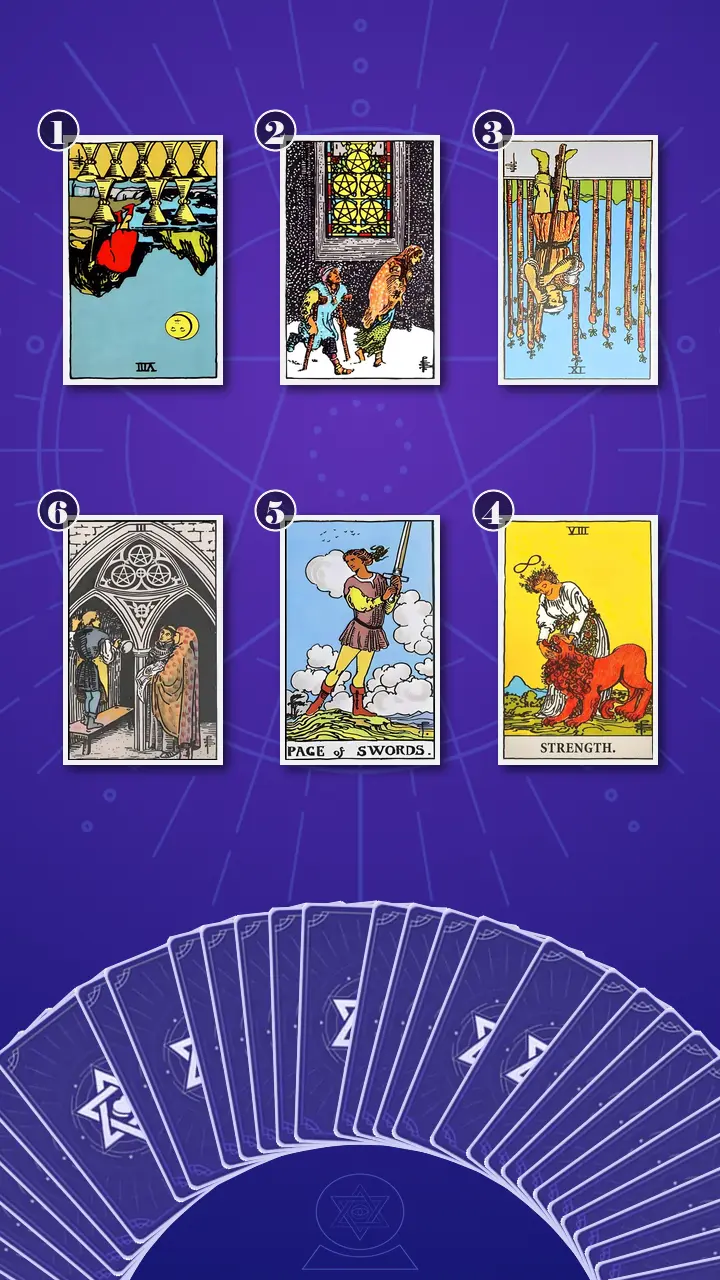
I arranged the cards like a workboard. Across the top row, positions one through three would show the visible withdrawal, the external information barrier, and the learned expectation beneath it. The path would then turn downward into position four, the smallest available catalyst, before moving left through position five, a practical communication step, and position six, an integrated model of shared code ownership.
"We're not asking whether you should tolerate poor documentation forever," I clarified. "We're asking where a real dependency ends and where an old conclusion begins. Pausing, escalating, or reprioritizing may still be valid. The aim is to make those choices consciously instead of letting discouragement choose in silence."
The Loop Across the Top Row
Position One: The Exit That Looks Like Relief
I turned over the card representing the current surface expression: the observable act of closing, shelving, or deprioritizing code after context is withheld. It was the Eight of Cups, reversed.
In the Rider-Waite-Smith image, a traveler leaves eight carefully stacked cups beneath a moonlit sky. Reversed, the energy is blocked and stagnant. The figure has not completed a deliberate departure; they are caught in repeated leaving and returning. I told Jordan that this distinction mattered. A conscious boundary says, "I have documented the dependency, reached my stopping point, and chosen to pause." Repeated withdrawal says, "I still care about this code, but disappearing feels safer than being exposed."
I connected the card to the scene Jordan had described at 4:47 p.m. A partial answer appeared on the PR. They closed the editor and pulled a copy-change ticket from Jira. The easier task produced immediate relief, but the abandoned branch stayed active in their mind. On the train, they reopened the same thread, reread it, and left again without adding a test, an assumption, or a visible boundary. The stacked cups were not meaningless work. They were unfinished work that still mattered.
"Withdrawal can feel like control while quietly shrinking ownership," I said. "That doesn't make every pause a failure. The question is whether you chose the pause after naming the limit, or whether relief chose it before you could see another option."
Jordan gave one short laugh, but there was no amusement in it. Their fingers tightened around the notebook and then loosened. "That's so accurate it feels a little brutal."
"Then let's slow down," I replied. "Recognition is not an accusation. This strategy gave you immediate protection from uncertainty and possible criticism. We're only checking whether its long-term cost has become higher than the protection it provides."
Position Two: Repository Access Without Decision Access
I turned over the card representing the immediate blockage: the missing technical resource that obstructed progress without requiring me to guess why another person had not supplied it. It was the Five of Pentacles, upright.
The card showed two figures moving through snow outside a lit stained-glass window. I read its energy as a real deficiency of access and support, not a deficiency in Jordan's ability. In modern engineering terms, Jordan had repository access but not decision access. They could see the code, the standard, and the assigned ticket, while the constraint behind the pattern remained inside a meeting they had not attended, a private call, or a forty-message thread with no summary.
I repeated the situation back to them: a teammate had linked a long Slack thread without identifying the deciding sentence. Jordan could inspect what existed but not what had made it necessary. Sitting beside an open codebase, they began to feel as if implementation would be trespassing. The image carried a faint Severance quality: execution was expected on one side of a boundary while essential knowledge remained inaccessible on the other.
"You have repository access, but not decision access," I said. "That is a collaboration dependency. It is not evidence that you're not capable of understanding the code."
Jordan's gaze stayed on the glowing window in the card. I saw their chest lift, hold, and release. "The code is visible," they said quietly, "but the decision isn't."
"Exactly. A missing decision is a collaboration dependency, not a competence verdict. We can name the access problem without inventing a malicious motive, and we can refuse to convert unavailable information into a judgment about your skill."
Position Three: The Stale Failure Cache
I turned over the card representing the underlying mechanism: the conditioned pattern that reused earlier context failures as proof that present effort could not matter. It was the Nine of Wands, reversed.
The upright card can show persistence after difficulty. Reversed, its fire was depleted and defensive. The bandaged figure still held one wand, but the line of wands behind him had become a wall built from previous battles. I mapped that wall to old review threads, half-answers, delayed replies, and meetings Jordan had not been invited to. Their body was still at the keyboard, but the work stopped before the current exchange had been tested on its own terms.
"The sequence sounds like this," I said. "Last time I asked, I got half an answer. This time will be the same. Therefore starting is pointless." It behaved like a CI system reusing a stale failure cache and reporting the last broken build as the result of a test that had not run yet.
Jordan told me about seeing an unanswered message at 9:26 a.m. before stand-up. Their shoulders had risen before they opened the repository. They spent forty minutes drafting explanations for six possible architectures, mentally preparing for every objection, though only one compatibility constraint was unknown. The energy deficiency here was not a lack of intelligence or care. It was a lack of available confidence after too much vigilance.
I asked, "What belongs to the current evidence, and what arrived from an older review?"
Jordan's breathing paused. Their eyes moved away from the card as if an internal replay had started, then their jaw softened by a fraction. "The unanswered message is current," they said. "The certainty that I'll be blamed is older."
That answer exposed the cognitive mechanism without pretending the external problem was imaginary. Context-gated collaboration had taught Jordan to expect defeat. The expectation then encouraged withdrawal into safer tickets, and the visible loss of ownership appeared to validate the expectation. The top row had drawn a closed loop: withdrawal, exclusion, and depleted defense.
When Strength Met the Hand Reaching for Close Branch
Position Four: Calm Agency Inside a Real Constraint
When I prepared to turn the fourth card, the room became unusually quiet. Rain ticked against the window, then thinned to an occasional tap. This position represented the key transformation: the smallest form of agency capable of challenging the idea that incomplete context removed all control.
I turned over Strength, upright.
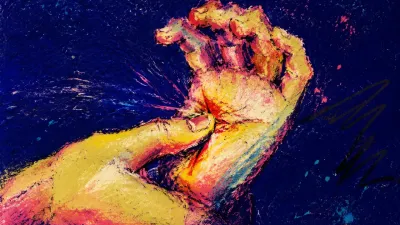
I directed Jordan's attention to the woman's gentle hand on the lion's jaw. She was not suppressing the lion, overpowering it, or pretending its force did not exist. Strength here was balanced energy: steady self-command in the presence of a real impulse. For Jordan, the lion was the surge that followed an incomplete reply, the urge either to close the branch immediately or to over-defend by reconstructing every historical decision alone.
I translated the image into a concrete scene. Jordan notices the urge to abandon the work, pauses, and separates two statements: "The compatibility constraint is unconfirmed" and "I am incapable of owning this code." They post the first statement in the issue, define what they will not merge without confirmation, and add one reversible characterization test. The missing context remains missing. What changes is that it no longer erases every available action.
This was where I used one of my central diagnostic tools, Imposter Syndrome Auditing. I asked Jordan to imagine two columns. In the first, I placed objective professional evidence: they had traced the affected code path, identified the unknown constraint, proposed a characterization test, and recognized a production-sensitive stopping point. In the second, I placed the subconscious fear of exposure: "If my assumption is wrong, everyone will discover that I never had control."
The audit did not deny the information gap or paste confidence over it. It prevented a missing artifact in the team's workflow from being merged into Jordan's identity. I could see the distinction land. Their competence included recognizing what they did not know, limiting risk, and making the dependency reviewable. Complete historical knowledge was not the admission ticket.
I asked Jordan to picture 5:07 p.m.: the unanswered Slack thread beside the branch they were about to close, their jaw tight, their hands heavy, and a low-risk ticket offering the clean relief of being finishable. The old question was, "How do I regain total control?" Strength offered a smaller one: "What remains mine?"
You are not required to abandon your code when context is withheld; like Strength holding the lion without force, you can name the missing dependency, set a boundary around what you can verify, and advance one reversible slice.
Jordan's breath stopped first. Their fingers remained suspended over the notebook, and their eyes widened slightly as if the sentence had interrupted a familiar internal script. Then their focus drifted past me. I watched them replay some recent moment in silence: their brow tightened, their mouth opened and closed, and their hand slowly flattened against the page. When the meaning reached the body, their shoulders dropped. They exhaled from low in the chest, but the relief carried a tremor. The path was clearer, and that clarity returned a responsibility that shutdown had temporarily removed.
"But doesn't that mean I've been doing this wrong the whole time?" Jordan asked. Irritation sharpened their voice before it gave way to something more fragile.
"It means withdrawal was a protective strategy, not a character flaw," I said. "It made sense under repeated uncertainty. Now you're allowed to notice where it protects a valid boundary and where it takes over before you've chosen."
I invited them back into the recent past. "From this new perspective, was there a moment last week when this insight might have made you feel different?"
Jordan described a branch they had shelved after receiving another thread link instead of an answer. "I still couldn't have merged the behavior safely," they said, "but I could have written the assumption and added the test. I could have made the blocker visible instead of making myself invisible." Their voice was quiet, yet steadier.
"That is the breakthrough," I said. "Not certainty, and not a promise that someone will answer. It is the beginning of a movement from discouraged withdrawal and learned helplessness to calm, bounded code ownership through visible assumptions and reviewable participation. You do not need the whole history to name the next unknown."
The Sword, the Shared Plan, and the Next Fact
Position Five: One Question That Can Actually Be Answered
I turned over the card representing the actionable next step: the communication and coding practice that could carry Strength into the workflow. It was the Page of Swords, upright.
The Page held the sword upright while clouds moved around him. I read this as balanced Air: alert curiosity with a defined target. It was not interrogation, and it was not another request for the full backstory. A precise context question works like a minimal reproducible example. It removes everything except the decision that must be tested.
I showed Jordan the difference. Instead of writing, "Can someone give me more context here?" they could link the exact line and ask, "Which constraint made us choose this pattern: backward compatibility, performance, data integrity, or something else?" They could add, "Until confirmed, I am treating backward compatibility as the constraint and limiting this draft to a characterization test." The disputed behavior would remain outside scope.
"The question is about the decision, not about whether the teammate has been helpful enough," I said. "It can be answered asynchronously. If no answer arrives by the relevant deadline, you can record that fact and use the team's normal escalation or reprioritization route. Repeated private chasing is not the price of ownership."
Jordan uncapped their pen and wrote the question almost verbatim. I saw a small change in their posture: not the expansion of someone who had solved the team, but the alignment of someone who could finally identify the next fact.
Position Six: Ownership as an Inspectable Structure
I turned over the card representing the integration target: code ownership through visible contribution, shared context, and constructive review rather than private certainty. It was the Three of Pentacles, upright.
The card showed three figures gathered around an architectural plan. Its Earth energy was balanced, practical, and collaborative. Skill was embedded in a structure other people could inspect. I connected that image to a draft pull request with three short sections: Known, Assumed, and Needs Decision. The tested contribution could be visible, the context gap explicit, and the request for review focused on one disputed constraint.
I thought of workshops I had entered while traveling, places where people did not always share a first language but could point to the same marked-up plan. Shared understanding did not require one person to carry every conversation privately. It required an artifact clear enough to question, correct, and continue building.
"A draft PR can work like a shared Figma file," I told Jordan. "The work becomes concrete enough for focused feedback without pretending to be final. Version control also preserves correction. An assumption can be attributable without becoming an invitation to blame."
Jordan looked from the architectural plan to the Page's raised sword. "So the question doesn't have to prove I deserve an answer," they said. "It just has to expose the decision the code depends on."
"Yes. And the draft doesn't have to prove you possess the whole backstory. Ownership is not solitary certainty; it is visible, reviewable participation."
The Eight-Minute Route Back to Agency
I gathered the six cards into one causal story. The Eight of Cups reversed showed the observable retreat that brought quick relief. The Five of Pentacles confirmed that the original deprivation was real: technical rationale was unavailable. The Nine of Wands reversed showed how earlier failures had become a forecast, turning each new gap into the conclusion that effort would not matter. Strength interrupted that conversion. The Page of Swords isolated the next fact, and the Three of Pentacles gave the work a shared, inspectable form.
The core blind spot was not Jordan's wish for context. That wish was reasonable. It was the belief that complete context had to arrive before any contribution could be legitimate, and that an unavailable decision therefore proved a lack of competence. In the story's central image, Jordan had been standing outside a lit workshop where the plans were kept inside. The shift was not to break in, pretend to have the plans, or work unsafely. It was to label the missing plan, identify the piece they could verify, and leave a visible route for review.
I also made the boundary explicit: bounded agency is not compulsory persistence. Jordan did not need to code through unresolved security, privacy, accessibility, production, or data-integrity risks. They could stop after documenting the dependency. They could escalate through the team's established process. A deliberate pause remained a valid act of ownership because it preserved both judgment and visibility.
I translated the reading into three small practices:
- Run the eight-minute Competence Anchoring Exercise.Open one blocked issue and make three evidence-based notes: "Verified in code: ___. Missing decision: ___. Reversible next step: ___." Add one line naming the fear separately, such as "Exposure story: if this assumption changes, I will look incompetent." Then anchor professional self-worth to what can be verified: the test you designed, the risk you identified, the boundary you set, or a comparable change you have shipped before.Set an eight-minute timer and stop when it rings. If coding feels unsafe or too activating, documenting the dependency is a complete version of the exercise.
- Send one decision-sized context question.In the shared issue or PR, link the exact file, line, or behavior and ask: "Which constraint made us choose this pattern: backward compatibility, performance, data integrity, or something else?" Follow it with your current assumption and the part of the draft that assumption affects.Ask for one decision, not an entire historical download. If no answer arrives by the relevant deadline, record the silence and use the team's normal escalation or reprioritization channel.
- Open a Known-Assumed-Open draft PR.Choose one reversible code slice, such as a characterization test, typed interface, local spike, draft migration plan, or feature-flagged scaffold. Add no more than two bullets under "Known," "Assumed," and "Needs Decision," then write a stopping boundary: "I can verify ___; I will pause before ___ until the constraint is confirmed."Keep the blast radius visible and invite review on the smallest disputed point. Rework is acceptable within a reversible slice; merging through an unresolved high-risk constraint is not.
"These are experiments, not obligations," I told Jordan. "Success is not measured by making a teammate answer. It is measured by whether the dependency, your evidence, your assumption, and your boundary become visible enough for you to choose the next step deliberately."
A Week Later: One Draft and One Open Question
A week later, I received a message from Jordan with a screenshot of a draft PR. It contained one characterization test and three compact headings: Known, Assumed, Needs Decision. Their review request asked only whether backward compatibility applied to the path. Below it, they had written a stopping boundary that left the production-sensitive behavior untouched.
"No one has answered yet," Jordan wrote. "I still hate that. But I didn't close the branch, and I didn't spend the evening reverse-engineering forty Slack messages. The work is visible, the decision gap is visible, and I know exactly where I stop."
That night, Jordan slept without reopening the thread. Their first morning thought was still, "What if my assumption is wrong?" They told me they smiled, checked the stopping boundary, and left the disputed behavior untouched. The change was clear but still tender.
I did not consider the reading successful because Strength had magically fixed a team dynamic. The cards had provided a map, and Jordan had used their own technical judgment to take one bounded step. That was the quiet proof: code ownership had started to feel less like possession of every hidden conversation and more like visible, reviewable participation.
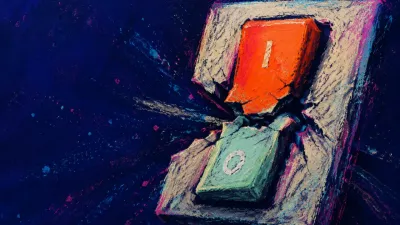
If the Slack thread stays silent and your hands go heavy over the keyboard, it can feel as though the only way to avoid being blamed for a guess is to surrender the code you still want to own. Simply noticing the moment your hand reaches for Close Branch creates a pause in which the lion no longer has to choose for you.
If you treated the blank decision field as a visible collaboration dependency rather than a verdict on your competence, what small, reversible slice could you keep in motion before your hand reaches Close Branch?