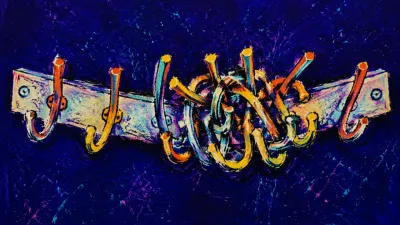
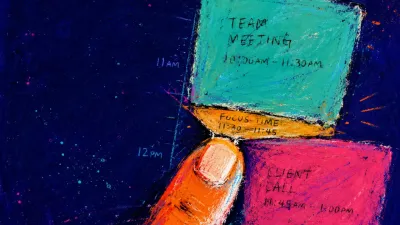
A Green PR at 11:47 p.m.: From Founder Rewrites to Shared Ownership

The 11:47 p.m. Rewrite: When Passing Code Still Feels Wrong
At 11:47 p.m., I was on a video call with Alex (name changed for privacy), a Toronto technical co-founder whose GitHub pull request had already gone green. Behind them, their apartment window held a cold black reflection of the screen; beside the laptop, a phone warmed one hand while its fan gave off the thin, overworked hum of a machine that should have been asleep.
I watched Alex hover over a half-finished Slack message: Quick question about your approach... The assigned engineer's function passed its tests. The feature met the ticket. But an unfamiliar service boundary sat in the diff, and Alex had already opened a local editor. One line became three, then a replacement commit began to take shape before the original author had a chance to reply.
"I want them to own the code," Alex told me, pressing their lips together as the cursor blinked. "But the tests pass and it still feels wrong. Explaining every change takes longer than fixing it. I delegated the feature, not the standard."
I could see the contradiction in the lift of their shoulders and the hard set of their jaw: Alex wanted to hand the steering wheel to a capable team, but kept both hands wrapped around it whenever the route looked unfamiliar. Their vigilance had the physical texture of trying to read a production dashboard through a snowstorm of browser tabs, every alert-shaped thought demanding to be checked before sleep.
I said, "You can care deeply about quality and still be using code to regulate the discomfort of not being in control. I am not here to tell you that every unfamiliar implementation is fine, or that you should ignore a real production risk. I am here to help us draw a clearer map: one that protects quality without making you the only person allowed to carry it."

Choosing a Map for the Founder Control Loop
I asked Alex to put the phone face down, take one unhurried breath, and hold the question in mind: Why do I keep rewriting my team's code after handing it over? I shuffled slowly, not as a performance of mystery, but as a useful pause between the urge to act and the chance to notice what was driving it.
I chose my six-card Transformation Path Grid · Context Edition. When people ask me how tarot works for a career or leadership problem, I describe the cards as a structured way to bring a hidden pattern into view. This was not one bad code review. I could hear a recursive operational loop: hand work over, inspect for difference, rewrite it, weaken the engineer's ownership, trust their judgment less, then repeat.
I explained why this spread fit. Its upper row would trace the loop through Alex's current behavior, the operational blockage, and the fear underneath it. Its lower row would move from the pivotal intervention to a concrete delegation practice and a sustainable form of shared craftsmanship. I did not need to predict the company's future; I needed a map that could distinguish an actual defect from the private pressure to make every line feel familiar.
I laid the cards in two rows of three. I told Alex that the first position would show where leadership direction ended and private rewriting began. The middle position would identify what turned care for code quality into repetitive founder labor. The card below the first would offer the key principle for finding clarity: a review threshold visible enough for an engineer to use without needing to read Alex's mind.

Reading the Loop Before Rewriting It
Position 1: The Throne Beside the Pull Request
I turned the first card and said, "Now I am opening the card that represents the observable founder-mode behavior behind your question: handing work over, then reclaiming implementation control through personal rewrites." It was The Emperor, reversed.
I read the stone throne and the armor beneath the red robes as authority braced for threat. In a balanced form, the Emperor creates boundaries sturdy enough for other people to work inside. Reversed, that leadership energy becomes overextended and rigid. It protects the structure by trying to occupy every structural decision personally.
I connected it to the actual handoff Alex had described: an engineer was named feature owner in Linear, the PR passed CI, and an unfamiliar service boundary prompted Alex to reopen the branch and replace the pattern. The private standard became the throne. The tightened jaw became the armor. In that moment, a review turned into a takeover called quality control.
"Delegating the feature while retaining every consequential decision is ownership in name only," I said. "The question is not whether you have expertise. You clearly do. The question is where your leadership direction ends and your private rewrite begins."
Alex gave a short laugh that carried more sting than amusement. "That is so accurate it is kind of brutal," they said. I watched their fingers close around the edge of the desk, then loosen again. The reaction mattered: recognition had arrived, but it had not yet made the behavior easy to change.
As I looked at the card, I had a brief professional flashback to teams I had encountered across different cities and working cultures. The tools, titles, and time zones had changed, but control always used a similar grammar: one person quietly became the interpreter of every important decision because the shared rules had never been made visible enough to trust.
Position 2: The Familiarity Loop
I moved to the second card. "Now I am opening the card that identifies the operational blockage that turns care for code quality into repetitive founder labor and prevents engineers from completing their own learning and revision cycle." It was the Eight of Pentacles, reversed.
I saw the solitary craftsperson at the workbench and the row of repeated pentacles. Upright, this card honors practice and skill. Reversed, its Earth energy becomes misallocated: careful effort repeats without improving the larger system. The blockage was not Alex's standards. It was founder-level time being poured into work that could have built team-level capability instead.
I brought us back to 11:47 p.m. I could almost hear the laptop fan through the card: Alex renaming variables, rearranging abstractions, polishing a working GitHub PR line by line while the original engineer lost the chance to defend a trade-off, revise it, and grow their own judgment. The inner bargain was painfully efficient: It is faster if I just fix it. The jaw tightened. The code became familiar. The jaw relaxed for a few minutes.
"That brief relief is part of the loop," I said gently. "It changes your internal state before it changes the product. A passed test is evidence of function, not proof that the code must look familiar. When you rewrite acceptable details, you get a cleaner-looking diff tonight, but the team gets less practice for tomorrow."
I asked Alex to imagine one upcoming review and sort each concern into three categories: defect, material risk, or preference. Their gaze shifted from the cards to the green PR on their second monitor. Their thumb rubbed slowly against the side of their phone, as if they could feel the replacement commit waiting there.
Position 3: What the Grip Is Protecting
I opened the third card. "Now I am turning the card that exposes the control-based fear beneath the micromanagement: the fear that releasing code ownership could weaken the product, reduce your authority, or make you feel less essential." It was the Four of Pentacles, upright.
I read the figure clutching one pentacle to their chest, another fixed above the crown, and two pinned beneath their feet. This was guarded Earth energy: a reasonable wish for security held so tightly that movement, exchange, and shared ownership became difficult. The codebase had started to feel like a packed carry-on at an airport. Every handoff made Alex want to keep one hand on the zipper.
I named the Slack moment underneath the behavior. An engineer asks for the architectural context behind a rejected approach. Alex starts to type an explanation, feels the hollow drop in the chest, deletes the message, and checks out the branch instead. The first thought is, If I leave this different, quality may slip. The quieter question underneath it is, If I let them own it, what does my role protect?
"I do not hear a bad founder in that question," I told Alex. "I hear a protective part that has learned to equate personal control with safety. But code ownership is also becoming evidence of your competence, and that makes a valid difference feel much larger than a design choice."
Alex's eyes stayed on the pentacle held to the figure's chest. Their breathing paused, their focus drifted toward the unsent Slack draft, and then they exhaled through their nose. "I keep saying I want independent judgment," they said quietly. "Then I make every ordinary decision feel like it needs my approval."
When Justice Put the Keyboard Down
Position 4: The Visible Standard Check
The room seemed to change when I reached for the fourth card. Outside Alex's window, a passing streetcar briefly brushed a pale band of light across the glass. The laptop fan had eased into silence, but the cursor on the unsent Slack message kept blinking like a small upright sword.
I said, "Now I am opening the pivotal card: the intervention that can interrupt the ownership-eroding loop by translating your private quality standard into explicit, consistently applied review criteria." It was Justice, upright.
At 11:47 p.m., the PR was green, Slack was still unsent, and the function worked. Alex's mind was caught in the demand to make the one correct decision before sleep. Yet the only immediate problem was that the implementation did not resemble the one Alex would have written. I could see how easily unfamiliarity had been promoted into danger.
I used my Imposter Syndrome Auditing lens here, not to label Alex or make a diagnosis, but to separate two things that had been fused together. On one side of Justice's scales, I placed objective professional competence: passing behavior, documented architectural boundaries, test coverage, production signals, and a stated risk. On the other, I placed the older fear of exposure: If I do not personally fix this, people may discover I cannot control what I built. An audit does not shame either side. It stops fear from quietly signing off as technical evidence.
Quality does not require you to hold every line of code; put the standard on Justice's scales, then let the team's owner carry the fix.
Alex went very still. First, their breath stopped halfway in and their fingers froze above the desk. Then their pupils widened slightly as their attention left the card and settled on a memory I could not see, perhaps a recent replacement commit or a teammate waiting in Slack. Their mouth tightened, and for a moment anger rose before relief had room to arrive. "But does that mean I was wrong every time I changed something?" they asked, their voice sharper than before. "Was I just getting in everyone's way?"
I kept my voice steady. "No. It means we are making a cleaner distinction. Some changes are defects. Some are material reliability, security, or production risks. Those deserve a fast response. A preference is still allowed to be a preference; you do not have to like it. You are simply choosing not to turn it into an emergency or a takeover."
Alex's gaze returned to the card. Their shoulders dropped by a fraction, then more noticeably; their hand opened flat on the desk; their next breath came out unevenly, almost a laugh. The release left a brief blankness behind it, the light dizziness that can follow when a familiar burden is set down and a person realizes they will now have to choose a different action. I asked, "Now, with this new lens, can you look back at last week and find a moment when this insight might have let you feel differently?"
"Tuesday," Alex said after a pause. "The engineer's approach was different, but I had no production evidence. I could have written the boundary down. I could have asked why they chose it."
I nodded. "That is the crossing point. This is not merely about one pull request. It is a move from defensive vigilance and control-seeking rework toward evidence-based discernment. Justice does not ask you to lower the bar. It asks you to make the bar visible enough that it can be applied fairly to your code and everyone else's."
Position 5: Let the Owner Carry the Fix
I opened the fifth card. "Now I am turning the card that defines the next practical delegation behavior: transfer decision rights, provide context, and return revisions to the assigned owner rather than taking the keyboard back." It was the Six of Pentacles, upright.
I read the scales in the standing figure's hand as an echo of Justice. The energy here was balanced distribution, not passive withdrawal. Alex could still give architectural context, review criteria, time, and coaching. The difference was that these resources would no longer be delivered alongside a replacement commit that removed the engineer's chance to act.
I translated the image into a direct practice: when a change is needed, Alex can explain the constraint and desired outcome in GitHub, ask the feature owner to propose the revision, and offer a short conversation if the trade-off remains unclear. The engineer keeps the revision rights. Alex keeps a bounded escalation path for immediate production, security, or reliability risk.
"Let the owner carry the fix; keep the standard visible," I said. "That is not blind trust. It is supported autonomy. You are creating a relay: you pass the context, the owner carries the revision, and everyone can see where responsibility changes hands."
Alex nodded, slower this time. I noticed their shoulders rise again when I mentioned waiting, then settle as I named a concrete boundary: one full working day before they made a code change themselves, unless an agreed escalation condition appeared. The discomfort was still present, but it had a container now.
Position 6: A Plan That Survives Your Absence
I turned the final card. "Now I am opening the card that depicts the integrated state to cultivate: shared craftsmanship, where architectural boundaries, code quality, and individual contribution coexist without founder takeover." It was the Three of Pentacles, upright.
I read the craftsperson on the bench and the two collaborators holding a visible plan. The card did not erase expertise. It made expertise legible and collaborative. Its Earth energy was no longer trapped in solitary polishing or defensive possession; it became a durable structure built by several people who could see the same constraints.
I described a future review scene in practical terms: Alex, the feature owner, and a reviewer look at the same Linear ticket, the same architectural boundary, and the same evidence. The original author explains the trade-off first. The team improves the approach without flattening every layer into Alex's preferred version. A Friday retro captures one recurring disagreement as a team rule, a soft example, or a deliberate area of flexibility.
"I notice that this spread is rich in Pentacles," I said. "It cares about real craft, real systems, and real delivery. What it lacks are Cups and Wands: relational trust and room for other people to bring initiative. Those are not weaknesses in you. They are capacities you can make space for through a better process."
I let the final image rest between us. In it, Alex was no longer the founder who had to catch every problem alone. They were the steward who created rules that remained useful when they were absent. Their face softened, though I could still see the seriousness of someone learning that shared ownership would ask for patience as well as courage.
From a Private Standard to a Shared System
I gathered the six cards into one story. The Emperor reversed showed leadership hardening into control after a handoff. The Eight of Pentacles reversed showed that control becoming late-night, repetitive founder labor. The Four of Pentacles revealed why the loop felt so hard to interrupt: the codebase had become both a company asset and proof that Alex was still necessary. Justice introduced a visible threshold. Six of Pentacles returned the revision to its owner with real support. Three of Pentacles showed the system that could emerge when the team practiced that exchange repeatedly.
I named Alex's cognitive blind spot plainly: unfamiliar code had been treated as evidence of danger before the evidence was examined. The transformation direction was equally plain: replace post-handoff rewrites with visible acceptance criteria, one bounded review round, and owner-led revisions unless there was an immediate production risk. The goal was not to care less about quality. It was to move quality from a private instinct enforced through takeover into a shared process that could scale.
I told Alex, "I want to make this small enough to try this week. These are experiments, not personality tests. You remain accountable for real risk, and you also get to learn what happens when your standards become visible rather than carried alone."
- The Visible Standard CheckBefore the next delegated feature begins, I want you to spend 20 minutes in its Linear ticket writing three sections: required behavior, non-negotiable architectural boundaries, and material production risks. Share the ticket in the engineering channel before the PR opens. Then use my Competence Anchoring Exercise: write two verifiable reasons the team can work safely inside those boundaries, rather than using a familiar implementation as proof that you are competent.If runway pressure is loud, use a 10-minute version with three bullets. The standard only needs to be visible enough to start.
- The Defect-Risk-Preference ReviewFor one GitHub PR this week, I want you to place every concern in a temporary note under exactly one label: defect, material risk, or preference. Block approval only for defects and material risks. Leave issue-level comments, then wait one full working day for the assigned owner to respond before changing any code yourself.During the waiting boundary, edit only for an immediate production, security, reliability, or agreed escalation condition. A preference can remain visible without becoming a founder emergency.
- The Owner-Carried FixBefore the next review, send one assigned engineer a short Slack message: "You own the implementation and revision. I will review against the ticket, architecture boundaries, and production risk." When a change is needed, give the context and desired outcome in the review, ask them to propose the revision, and book a 15-minute owner-led discussion only if the trade-off remains unclear.Start with one function or a non-critical ticket. Bounded support is not abandonment, and a real risk can still pause the experiment.

A Week Later, the Quiet Proof
Four days later, I received a Slack message from Alex: "I left a preference with its owner." They slept through the night, woke with "What if it is wrong?", and wrote the concern under evidence instead of reopening the branch.
I did not treat that message as a finished transformation, because it was not one. The old impulse still appeared. The difference was that Alex could recognize it before it took over the keyboard. In our Transformation Path Grid, that was the first lived proof of the journey: not certainty, but a small opening between a private fear and an automatic rewrite.
I keep returning to the moment when a passing PR can still make someone's jaw tighten. Leaving a different but valid solution alone can feel like losing control of the product and losing proof that you are needed. I have learned to honor the weight of that feeling without letting it make the decision.
I invite you to hold Justice's scales beside your next green pull request: if one valid difference could stay with its owner this week, what small piece of your private quality standard might you feel curious to make visible, without deciding anything else yet?