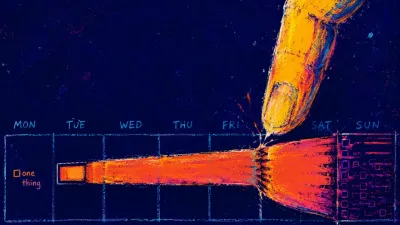
From Overworking for a Permanent Offer to Sustainable Scope
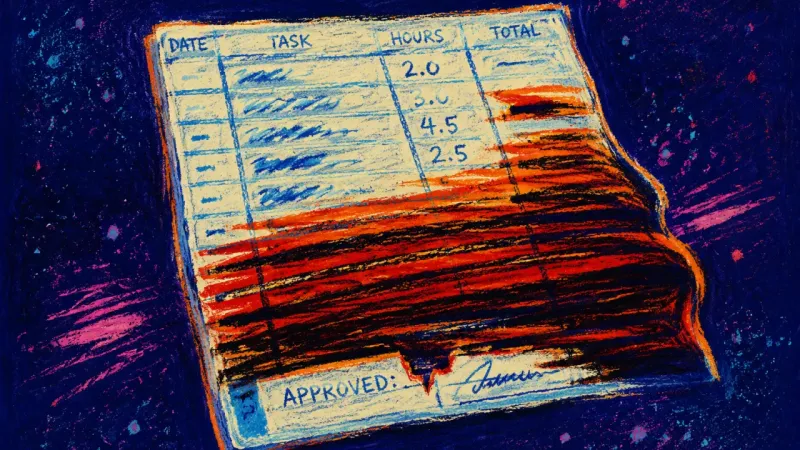
The Approved Figma File and the Contract-to-Hire Audition
"You are a London contract product designer who stays online after the agreed day, calling it commitment while quietly hoping the extra work will make a permanent offer impossible to refuse. That is contract-to-hire anxiety, not just a busy week," I said when Jordan sat down across from me.
At 8:45 p.m. in her rented Hackney flat, the approved Figma file was open again on the kitchen table. The radiator clicked in the damp London evening, the laptop fan hummed against the quiet, and her phone felt warm in her hand as she polished one already-accepted screen. Her shoulders stayed lifted as if someone had placed a narrow board across them; her jaw was braced even though the laptop was technically closed for the day.
"I am not overdoing it," Jordan said. "I am making the decision easier for them. Once the offer is permanent, I will finally let myself breathe."
I could hear the contradiction beneath the words: she wanted the security of a permanent offer, but easing off felt dangerous because what if the one thing she did less was the thing they remembered? Her apprehension moved through her like a phone vibrating against a table that was already crowded with notifications. Hope lit up whenever a stakeholder praised her work; exhaustion settled back into her neck when the conversation about permanence stayed vague; resentment arrived quietly when another extra task became invisible. Even after she closed the laptop, her fatigue remained switched on.
"It makes sense that stability matters," I told her. "Rent, city costs, and an uncertain employment review are practical pressures. We do not have to pretend they are solved by positive thinking, and we do not have to turn your exhaustion into proof of your loyalty. Today, we can use the cards as a map for the pattern: what is happening, what keeps it running, and what choice belongs to you. Our Journey to Clarity is not about predicting what an employer will do. It is about finding the part of the situation you can see clearly enough to act on."

Choosing the Transformation Path Grid at a Career Crossroads
I asked Jordan to place her phone face down, take three ordinary breaths, and name the question without trying to improve it. Then I shuffled slowly. The small ritual was a way to move from checking and reacting into observing; nothing in it required her to surrender judgment or hand her decision to the cards.
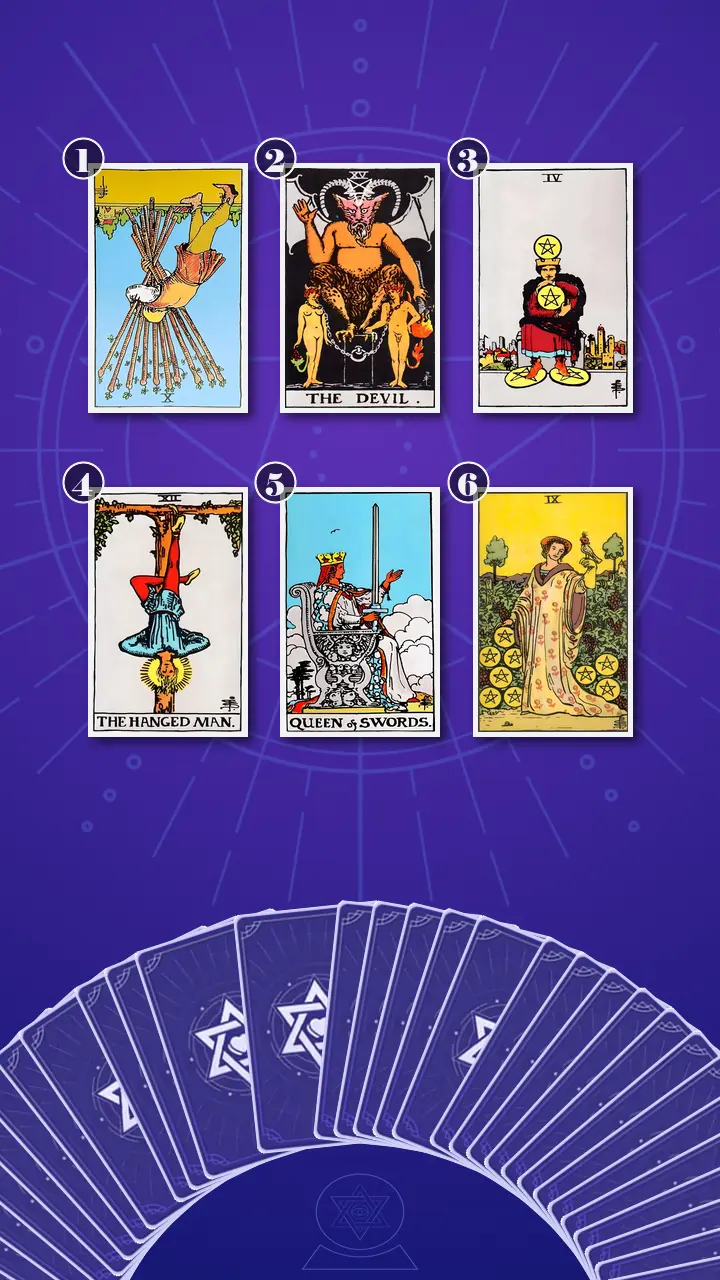
"For this reading, I am using the Transformation Path Grid (6), Context Edition," I explained. "It is a six-card grid designed to show a loop in sequence. It lets us trace how a visible work pattern becomes a blockage, where the deeper need sits, what can interrupt the cycle, which practical action is available, and what sustainable state you can cultivate while the employment question remains open."
That structure matters for anyone wondering how tarot can help with career uncertainty without predicting an employer's decision. A Decision Cross would compare job options, but Jordan's immediate problem was not simply which path to choose. She kept repeating a self-reinforcing loop: uncertainty triggered extra labor, extra labor briefly created control, and the continued lack of clear terms became evidence that she still had not done enough. The Transformation Path Grid was a better tool for deconstructing that system.
I pointed across the upper row. "The first card shows the observable present pattern. The second exposes the active blockage and the bargain underneath it. The third reaches the root need for security and control. Then we turn downward. The fourth card is the pivot, the deliberate pause that can interrupt the audition. The fifth gives a practical next action, and the sixth shows the kind of self-respect that can hold while the permanent role is still undecided."
I reminded Jordan that the cards could organize facts, assumptions, fears, and choices, but they could not make a headcount decision, read a manager's mind, or guarantee a permanent offer. That limit was part of the method's usefulness. It kept the reading grounded in reflection, sustainable scope, and actionable advice.
Position 1: The Bundle That Blocks the Road
Now turning over is the card representing the observable present pattern: how Jordan is overperforming, extending availability, and carrying extra work while waiting for a permanent offer.
The card is the Ten of Wands, in reversed position.
In the Rider-Waite-Smith image, a bent figure carries ten wands across the body, the bundle obscuring the face and blocking the view of the town ahead. At 8:45 p.m., Jordan reopens an already-approved product flow and carries every open request from Slack, Figma, and the task board into another round of polishing. The reversed Ten of Wands translates that bent back into extended hours, instant replies, and constant availability. Visible effort has become a burden rather than a sustainable contribution, and the bundle is now blocking the very thing she needs to assess: whether the role itself has clear terms and a real review process.
The reversed energy is excessive Fire: action keeps moving after its useful purpose has ended. I was not reading it as a warning that she would lose the role if she stopped. I was reading it as an observable pattern and a question: which commitment can genuinely be completed within the contracted scope this week, and what feeling appears when she does not immediately add another one?
"Do not turn every unanswered question into another deliverable," I said. "An unfinished question about the offer is not automatically an unfinished task for you to carry."
Jordan did not nod. First, her fingers froze around the phone and her breath caught high in her chest. Then her eyes went briefly unfocused, as if the 8:45 p.m. Figma screen had appeared between us. Finally, she gave a small, bitter laugh and said, "That is too accurate. Almost cruel." I let the laugh stand without using it as proof of anything.
"It can feel cruel when a card names a coping strategy that once helped you feel competent," I replied. "We are not trying to make you care less or become unreliable. We are checking whether carrying more is actually moving you toward clarity, or only making the waiting more expensive." Her hand slid from the phone to the edge of the table, but she still held her shoulders high.
Position 2: The Invisible Contract Behind the Extra Hours
Now turning over is the card representing the active blockage and self-reinforcing bargain inside the forced-blooming trap: the belief that more output must be offered before security can be received.
The card is The Devil, in upright position.
After a manager says, "We will revisit permanence," Jordan treats late replies, extra research, and instant Slack responses as the price of staying wanted. The chained pair in the image becomes a workplace analogy: a vague promise about revisiting the role turns into an invisible contract paid for with unlimited availability. The chains are loose, which is important. They show an attachment that can be examined, not a fate that has locked her in.
The Devil's energy is a blockage built from attachment. It binds effort to status and makes stopping feel like a threat to belonging. The bargain sounds like this: if I give more, then I get to feel secure; if I stop giving more, I may no longer deserve to be chosen. The actual terms, however, remain undefined. No amount of refreshing Slack, email, LinkedIn, or a hiring portal can turn "we will revisit it" into a review date.
I thought of the work-self in Severance, still running after the rest of life has logged off, except Jordan's separation was not imposed by a fictional corporation. Her own internal system kept the work version of her awake. I asked her to listen for the sentence beneath the behavior: "I know this is costing me, but what if stopping costs me more?"
Her chest tightened. She glanced at the three cards already on the table, then pressed her thumb into the warm phone case. "If I give more, then I get to feel secure," she said quietly. The sentence seemed to surprise her once it was outside her head.
"That is the conditional performance-for-security bargain," I said. "It is not evidence that you are foolish, and it is not a prediction about your employer. It is the rule your nervous system has been trying to follow in a situation where the organization has not supplied clear criteria. Extra effort can make you visible; it cannot make an unclear promise clear."
Position 3: The Coin Held Against the Chest
Now turning over is the card representing the root need and underlying fear beneath the delayed gratification: the attempt to control uncertainty by holding tightly to work, proof, and self-worth.
The card is the Four of Pentacles, in upright position.
The figure in the card presses one coin to the chest, secures two beneath the feet, and balances one on the head. I translated those coins into Jordan's private evidence file: completed tickets, stakeholder praise, screenshots, extra hours, and every polished status update saved as proof that she should be chosen. On rent-payment day, she opens her banking app, watches the direct debit leave the account, and later postpones a friend's plan because the contract question feels too unresolved to spend money or energy on anything else.
The upright Earth energy is overconcentrated. Her need for material security is real; I did not ask her to act as if rent were an abstract mindset problem. But protection has become so tight that it restricts movement, rest, and perspective. Every achievement becomes something to clutch, every hour something to reserve for an imagined emergency, and every compliment something that must be added to the case file before it can be trusted.
"What happens when a peer announces a permanent role on LinkedIn?" I asked. "What do you start holding onto as proof that you should be chosen, and what part of your life stops receiving energy?"
Jordan looked down at the Four of Pentacles. "I stop spending," she said. "Not only money. I stop spending time. I tell friends I will make plans when things are settled. I save every nice comment, but the praise never seems to buy any actual clarity." Her words were steady, but her fingers had curled into the fabric of her sleeve. The card had reached the practical fear without making that fear shameful.
When The Hanged Man Turned Waiting into a Deliberate Pause
Position 4: The Foot That Did Not Have to Run
The room grew quieter when I moved to the lower-left card, the pivot in the grid. Outside, rain traced thin lines down the window, and the radiator clicked once before going still. I turned the card toward Jordan.
Now turning over is the card representing the perspective shift that can interrupt the cycle: using a deliberate pause to question whether extra labor is creating clarity or simply extending the audition.
The card is The Hanged Man, in upright position.
The calm figure hangs by one foot from a living tree, a bright halo around the head. This is not helpless suspension. It is a chosen pause that makes another angle possible. In Jordan's working life, it looks like waiting one full workday before volunteering for a non-urgent task, checking the written brief, and noticing that a new request is adjacent to the contract rather than hers to absorb immediately. Stillness becomes active observation; it does not become passivity.
This was the moment for my signature diagnostic lens, Macro-Cycle Phase Identification. After a decade of guiding people through long cycles, I have learned to ask where resistance sits in the larger system before treating it as a personal failure. Jordan was in a temporary employment review period, a low tide shaped partly by headcount, budget, and decision timing. More effort could improve a design, but it could not accelerate an organizational cycle simply because her shoulders were tense.
I added my second lens, Systemic Friction Auditing. "I want to separate two kinds of friction," I told her. "One is the real friction of unclear scope, an approval chain, and an unknown review point. The other is the friction you are trying to sand down with extra labor. Hustle cannot override a structural pause. If we confuse those two, you pay for the company's uncertainty with your evenings."
I asked Jordan to picture this exactly: 8:45 p.m. in her London flat, the deliverable already approved, the radiator clicking, her phone warm in her hand, and Figma open because one more improvement feels safer than closing the laptop. That is the audition loop, not a neutral work habit.
She was still caught inside the old calculation: if she was not producing evidence, she might be overlooked; if she paused before the permanent offer, she might look less committed; if she rested, she might have to feel how little of the situation she could control. Her hand moved toward the phone before she noticed it, ready to refresh.
More proving will not force a permanent offer open; suspend the bargain, look at the situation from a new angle, and let one deliberate pause reveal what work is truly yours.
A pause cannot decide whether they will offer permanence; it can show you what you have been carrying to make uncertainty feel earned.
For one full beat, Jordan's breath stopped. Her fingers hovered above the phone; her pupils widened, and her face held the startled blankness of someone seeing a familiar room from a new doorway. Then her gaze went past the card as the 5:38 p.m. Slack message replayed: "Quick one before tomorrow," the already-approved screen, the automatic reply, the evening disappearing. A flash of anger crossed her mouth. "But does that mean I have been wrong this whole time?" she asked. The question came out low and sharp. Then her jaw loosened, her closed fist opened one finger at a time, and her shoulders sank with a long breath that seemed to travel all the way through her ribs. The relief had a small dizziness in it, the vulnerability of seeing a clear path and realizing she would have to choose it herself. "Oh," she breathed. "I can observe before I react."
"Now, use this new perspective to remember last week," I said. "Was there a moment when you could have paused long enough to notice what was actually happening, rather than immediately adding work to make the uncertainty feel safer?"
She named the 5:38 p.m. request. I asked her to imagine changing only one action: the thumb does not type a reply. The agreed workday keeps its shape. The one tied foot in The Hanged Man becomes a question: "Is this a constraint I chose, or a bargain I am repeating?" Jordan exhaled again, this time with curiosity beside the fear.
This was the first visible turn in her emotional transformation: from hypervigilant overperformance and fear-driven proving toward grounded self-trust. It was not a promise that the contract would convert. It was a small change in method, from trying to control the employer's decision to observing her own scope, assumptions, and choices.
Position 5: The Sword Instead of Another Deliverable
Now turning over is the card representing the practical guidance available now: clarify scope, document contributions, and request a review point without deciding the employer's response in advance.
The card is the Queen of Swords, in upright position.
The upright sword, raised hand, and open sky translate directly into a clear contract-to-hire conversation. The Queen does not perform commitment through another late-night prototype. She separates facts from assumptions and asks the role to speak in precise terms. I offered Jordan a message she could adapt: "Here is what I have delivered, here is what is currently in scope, and could we agree on when and how the contract-to-hire question will be reviewed?"
This is Air becoming available after the suspended pause. It is not an ultimatum and not a plea for approval. It is a request for information: what has been agreed, what remains uncertain, what criteria are known, and when the next review point can be discussed. A clear question cannot control the answer, but it can stop silent overdelivery from pretending to be a conversation.
Jordan began typing a shorter version in her Notes app. I watched the muscle at the side of her jaw unclench slightly. Before, she had tried to communicate value through one more visible deliverable. Now she was using one direct sentence to gather facts and protect a sustainable scope.
"I can ask for a twenty-minute check-in without asking them to decide on the spot," she said. "I can show contribution without attaching every extra hour to my right to belong."
Position 6: The Vineyard Beyond the Verdict
Now turning over is the card representing the integrated state to cultivate while the contract question remains open: sustainable contribution, self-respect, and a sense of value that is not dependent on constant overperformance.
The card is the Nine of Pentacles, in upright position.
A composed figure moves through a tended vineyard with a falcon resting on her gloved hand and a small snail traveling near the ground. The image gives competence a different pace. Jordan can finish a workday at the agreed time, record the contribution she made during contracted hours, and still give attention to relationships, rest, and personal plans before any permanent status is confirmed. The vineyard is cultivated, not forced. The falcon is trained, not constantly displayed. The snail is slow without being lost.
The upright Earth energy is balance after guarded holding. The Nine of Pentacles does not forecast a permanent offer; it shows an internal measure that can coexist with uncertainty. Her work can remain thoughtful, her standards can remain high, and her value can be real without being re-proved by every late-night reply. "A sustainable workday is evidence too," I told her.
There were no Cups in this six-card grid, and I did not treat that absence as a bad omen. I saw it as useful information: emotional permission, rest, and connection had been pushed behind performance and security. The final card gave those neglected needs somewhere to land. Self-respect was not a mood she had to summon; it was a practice she could build into the shape of an ordinary day.
From Insight to Action: A Sustainable Scope
I gathered the six cards into a single story. Jordan had begun by carrying every open request into the evening, like a plant being pulled upward by its leaves in an attempt to make it bloom faster. The extra labor gave her a brief sensation of control, but it did not deepen the roots or clarify the contract. The Devil named the bargain beneath the bundle, and the Four of Pentacles showed why it felt so difficult to loosen: rent, belonging, and self-worth had become tied to being chosen.
The Hanged Man interrupted that chain with a deliberate pause. The Queen of Swords gave the pause a voice, and the Nine of Pentacles showed what could grow when contribution was separated from self-erasure. The spread's answer to "Why do I keep overperforming while waiting for a permanent offer?" was not that Jordan lacked discipline or value. She had been using extra labor to manage a decision that belonged partly to a larger system and had never been clearly defined.
The cognitive blind spot was assuming that the employer's uncertainty was a personal assignment: if the review point was missing, she had to create one by producing more evidence; if the criteria were unclear, she had to become more impressive; if the offer did not arrive, she would treat it as a final score. The key shift was from using extra labor to prove eligibility to documenting genuine contributions, agreeing on a sustainable contract scope, and requesting a clear review point without making the answer a verdict on self-worth.
My Systemic Friction Auditing made the distinction practical. I asked Jordan to sort what was inside her control from what was not. Her scope, documentation, communication, end-of-day boundary, and next question belonged to her. Headcount, budget, approval timing, and another person's decision did not. The cards were not magic deciding which category was which; they were an objective visual structure that helped her stop blending them together.
Then I introduced my communication tool, The Orbital Sync Protocol. It is a 72-hour exercise for intentionally pausing forced actions and aligning psychological expectations with the actual cycle of the situation. It does not mean abandoning contracted responsibilities or refusing genuinely urgent work. It means giving the automatic performance loop enough space to show what it has been doing.
- Pause the audition for 72 hoursFor the next three workdays, complete agreed and genuinely urgent contract work, but choose one non-urgent extra task you would normally accept after hours and wait until the next agreed work period before volunteering. Before replying, label the request agreed, adjacent, or unclear, then note what changed during the pause.The first resistance may say, "They will think I am less committed." Check the written brief before deciding. If the request is truly urgent or within scope, choose it consciously rather than automatically; the pause is not a promise to refuse future work.
- Build Evidence, Not ExhaustionCreate a private document called Contribution Log with four headings: deliverable, decision, result, and evidence. At the end of two workdays, spend ten minutes recording what Jordan completed during contracted hours, including one line for work that was outside the agreed scope.Keep the record factual and short. It is not surveillance of yourself and it does not need to justify every hour. Ten minutes is enough, and you can decide later what, if anything, to share.
- Send the Clarity Check-InDraft a neutral message to the manager or recruiter asking for a twenty-minute conversation about current scope, three concise contributions, and the timeline or criteria for discussing a permanent role. Ask for the next known review date or decision point without asking the other person to guarantee the outcome.Attach three contribution points rather than a catalogue of late nights. A clear question can gather information without becoming a plea for approval. Record the response as information, not as a verdict on your worth.
Jordan read the list twice. "I can do the five-minute version if the full thing feels too exposed," she said.
"Exactly," I replied. "Small steps are still data. We are testing whether a boundary creates more clarity, not trying to win certainty in one dramatic move. Your next steps can be careful and still count."

A Week Later, the Quiet Proof
Six days later, I received a message from Jordan. She had used the contribution log twice, waited until morning before accepting one non-urgent Slack request, and sent the review-point message with three bullets instead of a long defence of every extra hour. The manager had not yet confirmed a permanent offer, but had agreed to a twenty-minute conversation and named what information was still unavailable.
Jordan wrote that the uncertainty had not vanished. What changed was the way it occupied her evening. She closed the laptop at the agreed time and went to meet a friend, leaving one adjacent task for the next work period without turning the choice into a secret test of loyalty.
After sending the message, she slept a full night, then woke with the old thought: "What if I am wrong?" The answer was still unknown, but she smiled, made tea, and kept her morning plan. It was clear but fragile, a first proof rather than a solved life.
I held onto that detail because it was the honest shape of change. Grounded self-trust does not always arrive as confidence. Sometimes it is the moment a person notices the familiar alarm, checks the facts, and chooses not to let the alarm write the next Slack reply.
Our Journey to Clarity had not delivered a prediction. It had returned ownership to Jordan. The cards helped her move from hypervigilant overperformance and fear-driven proving toward sustainable scope, clear evaluation of the employment situation, and the right to let an employer's decision remain an employer's decision.
When every Slack ping lands in your braced shoulders and you add one more deliverable so a temporary contract cannot become a verdict on your value, waiting starts to feel like an audition with no closing time. Noticing that pattern is already a change in position.
If one pause could be a way of seeing rather than another test to pass, what small boundary or clear question might you be curious to try before the next "quick one"?