When the Goalposts Keep Moving

Track shifting standards, relevant Tarot Cards, and Tarot Reading Insights for the moment your completed work is judged by a new rule.

Performance Criteria Reset
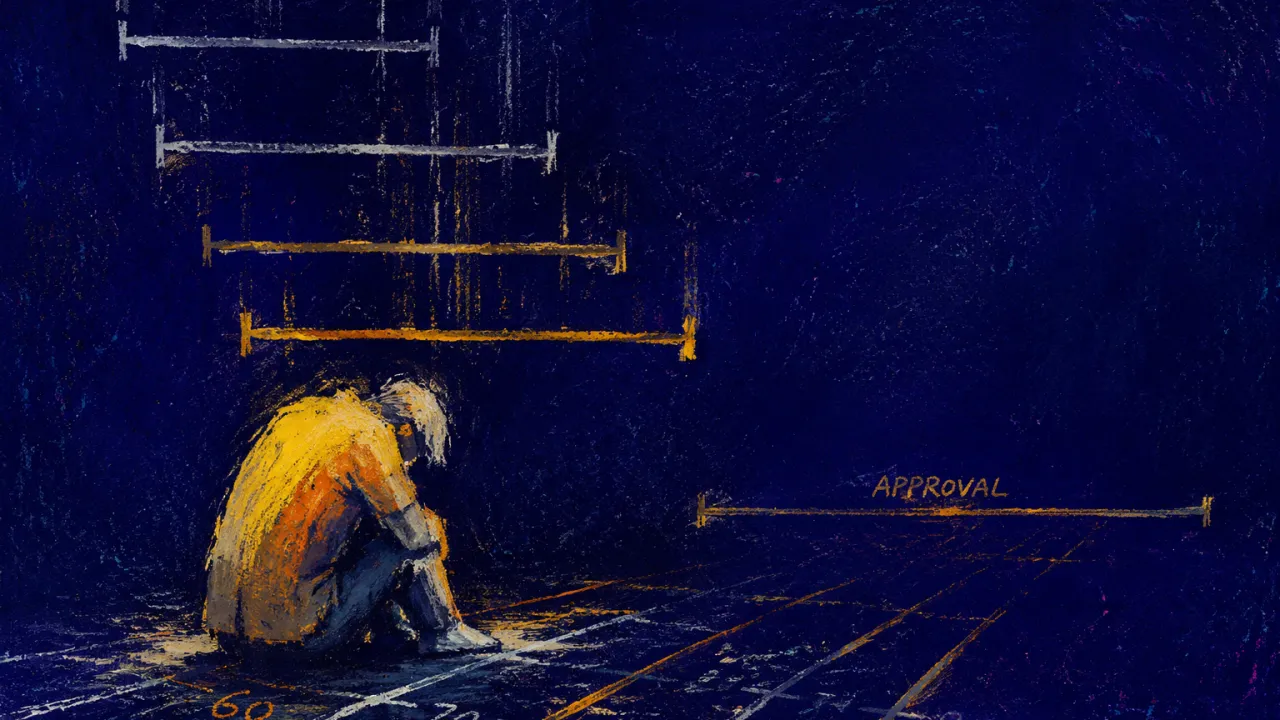
A solitary figure with lowered shoulders as measuring lines settle from above and approval gates shift across a marked floor.

What is this situation?

Performance Criteria Reset - you enter the week believing the finish line is clear because a manager, professor, client, or platform has given you a rubric, target, or list of deliverables. You submit the work on time, hit the numbers, answer the requested notes, and see an approval message arrive; then, in the next meeting or feedback thread, the standard has quietly changed. The target is higher, the tone should have been more strategic, the portfolio needs one more proof point, or the deadline still stands while the definition of done expands. When you point back to the original brief, the people setting the criteria frame the revision as an obvious expectation, while the work you completed is treated as a baseline rather than a result. You keep reopening files, rewriting applications, reworking decks, or adjusting your output to match a rule that only becomes visible after you have acted on it. Check-ins become negotiations over what counted, praise expires quickly, and each new benchmark gives the person with approval power another reason to delay a clear yes. By Friday, your calendar is full of revisions and your shoulders stay raised for the next correction; much like the figure on the Seven of Wands, standing above wands rising toward them while holding one across the body against the next demand.

Why it's not you?

The problem is not that your work suddenly became inadequate; the criteria are being revised after you have already met them. A moving benchmark, unclear approval power, and retroactive feedback are features of this reset itself, not evidence that you failed to understand the original terms.

Performance Criteria Reset in Tarot Cards

Performance Criteria Reset is the situation where yesterday's completed work is judged by a standard that appears afterward, and your shoulders stay raised for the next correction. It is an environmental, structural dynamic: the benchmark, feedback, and approval point keep moving through the people and systems that set the terms. The cards below mirror that shifting outline without deciding what you should do; here are the Tarot Cards for Performance Criteria Reset.

The Emperor
Reversed
Turned upside down, the Emperor's stone throne, rigid armour, and raised sceptre place academic authority inside a structure that no longer guarantees consistent rules. A professor or review panel can control both the rubric and its interpretation, allowing submitted work to become merely the starting point for another undisclosed requirement. Your original assignment sheet, marked draft, and approval message preserve what was actually requested, yet the reversed hierarchy prevents those records from automatically settling the grade. You are encountering concentrated assessment power, where the institution keeps the deadline stable but moves the standard after your study time has already been spent.
The Chariot
Reversed
Turned upside down, the motionless chariot, absent reins, and opposed black-and-white sphinxes show a route whose controlling signals no longer align. You may complete the named milestone, yet the authority ahead redefines what forward movement requires, leaving your long-term path unable to register the progress already made. The armour and city behind the driver confirm that preparation and prior distance are real; what is blocked is the conversion of effort into direction. You can separate a governance failure in the route from a lack of momentum in yourself, especially when every completed checkpoint produces another undisclosed checkpoint.
Justice
Reversed
Inverted scales and a downward-pointing sword preserve the appearance of formal assessment while destabilising the comparison beneath it. You submit against the published rubric, but the evaluator later introduces a higher or differently framed standard and treats it as though it had always applied. The assignment sheet, submission timestamp, and first round of feedback provide visible counterweights to the revised account. The path to a settled grade remains blocked when the same academic authority can amend the criterion, interpret the amendment, and issue the final decision without acknowledging the reset.
Judgement
Reversed
Inverted above the rising figures, the angel's trumpet sends a verdict that cannot settle into a reliable call. Repeated work reviews can therefore overwrite your internal record of progress, making each newly announced standard feel more authoritative than the evidence of what you already completed. The coffins, lifted arms, and collective response show that evaluation has real social force, but the reversal prevents that force from becoming a coherent account of growth. You can recognise the gap between learning from valid feedback and rebuilding your self-definition around a gatekeeper whose benchmark changes after every result.
The World
Reversed
Turned upside down, the wreath surrounding the central figure cannot hold the assignment inside a finished boundary. You answer the rubric, submit the final version, and receive an initial approval, but another criterion appears before the grade or academic milestone can settle. The completed circle preserves the reality of the work already integrated, while the reversed orientation shows the institution refusing to convert that work into closure. The blockage sits between submission and recognition, not between your effort and the original academic requirement.
Three of Pentacles
Reversed
Turned upside down, the craftsperson, visible plan, and two observing figures lose their shared basis for evaluating the structure. You produce the assignment against the published instructions, but a professor, supervisor, or panel later applies a different expectation that was not coordinated into the original brief. The detailed work and held plan establish that there was enough structure to guide a legitimate submission. The reversal places the failure in academic coordination: reviewers resolve their own ambiguity through your resubmission time, while retaining control over the grade and the revised definition of quality.
Seven of Pentacles
Reversed
Turned upside down, a worker leans over seven pentacles produced through sustained cultivation, yet the harvest cannot settle into a usable return. You complete the coursework and wait for the expected grade or approval, but another requirement appears and sends the same work back into production. The visible pentacles preserve evidence of accumulated study and completed output. The reversed harvest locates the blockage in the assessment exchange: academic effort is repeatedly collected, while the evaluator postpones the point at which that effort is allowed to satisfy the course standard.
Five of Swords
Upright
In the foreground, one figure collects swords while two others leave the field under a turbulent sky. An academic disagreement over the rubric becomes structurally unwinnable when the professor or panel can introduce a new criterion and then use institutional authority to settle the dispute. The swords left on the ground show that participation itself has costs, including lost study time and reduced trust in feedback. You can see why another resubmission may not resolve the conflict when the evaluator retains the power to change both the academic question and the standard for a successful answer.
Six of Wands
Reversed
Turned upside down, the crowned rider, raised staff, and watching crowd make academic success visible but unable to remain secure. You meet the rubric and receive encouraging feedback, only for a professor or panel to reinterpret the work against a new standard before the grade or recommendation is finalised. The wreath records that recognition did occur; the reversal shows why it cannot accumulate into academic confidence or standing. The problem lies in an assessment channel where praise is inexpensive and retractable, while every later criterion carries material consequences for you.
Seven of Wands
Upright
Standing above six rising staffs with one wand braced across the body, the figure turns repeated academic challenge into a visible contest over position. You answered the published rubric, but later feedback makes you defend that submission against expectations that were unavailable when you produced it. The elevated ground gives the original instructions, timestamped work, and first approval a stable place in the assessment story. The upright posture shows access to a defensible account of the work, even while the professor or panel continues pressing another version of what should have counted.
Eight of Wands
Reversed
Turned upside down, eight parallel staffs that normally cross open air lose a clean line of travel toward the distant ground. Your on-time submission enters a feedback sequence in which each apparent arrival triggers another correction, so the deadline passes without producing a settled approval point. The staffs remain aligned enough to show that activity is continuing; what is missing is reliable arrival. The reversed flight exposes a timing system where revision speed cannot solve the delay because the destination is being altered by the reviewer while the work is already in motion.
Nine of Wands
Upright
Bandaged and watchful before a fence of eight staffs, the figure keeps one final wand within reach. After repeated corrections, your internal attention begins scanning every approval for the next exception, and even a quiet feedback window can leave your shoulders prepared for another demand. The standing wand and established fence preserve access to memory, boundaries, and pattern recognition rather than presenting vigilance as personal weakness. You can see how the external reset occupies psychological bandwidth: the work may be submitted, but part of your attention remains assigned to defending it.
Ten of Wands
Upright
Bent under ten tightly gathered staffs, the figure moves toward a visible town while the load blocks his view of the remaining distance. Your submitted assignment returns with extra criteria layered over the original work, forcing revision time to compete with new modules, exams, and other deadlines. The countable bundle confirms that the workload has expanded through specific additions rather than through an unexplained loss of discipline. You can keep the original rubric visible as one layer of the task, even when the course treats every later requirement as though it had always belonged in the same assignment.

Performance Criteria Reset in Tarot Card Reading Insights

When Performance Criteria Reset turns completed work into a new round of revisions, others have brought this shifting-standard environment into readings too. Here are the Tarot Reading Insights from readings shaped around this kind of reset.

Psychological contexts related to Performance Criteria Reset