Sidelined at Work: From Late-Night Figma Edits to Firm Boundaries
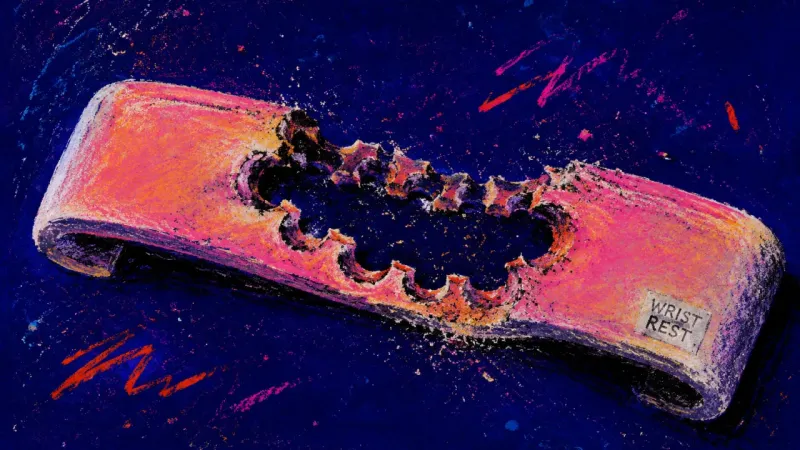
Feeling Erased at Work: The Sunday Night Refresh Loop
If you are a mid-level content designer in London and a recurring meeting quietly vanishes from your calendar, you may start volunteering for extra work that nobody asked for, calling it professionalism while searching for quiet firing anxiety at midnight. I know how quickly a missing invitation can become a question about whether you still exist in the room.
I met Taylor at 7:12 p.m. on a Sunday in their small London flat. Their laptop sat open beside a cooling mug of tea; blue light washed the walls while the fan hummed and their phone grew warm in their hand. I watched them refresh the project channel, find no mention of their name, and reopen a Figma file that already met the brief.
Taylor told me, "I can rest after they remember what I can do. If I become indispensable enough, the sidelining will have to make sense." Then they asked the question beneath all the extra edits: "What am I still trying to prove after being quietly sidelined?"
I could see the contradiction working through their body. The urge to prove their value through relentless work was tangled with the fear that stepping back would confirm they were replaceable. Shame moved through them like a smoke alarm wired to a treadmill: every silent Slack channel triggered motion, and every hour of motion made it harder to tell whether they were contributing or erasing themselves.
I did not treat that pattern as a character flaw, and I did not promise that one reading would force a manager to restore a project. I told Taylor that a quiet calendar could hurt without being a complete verdict on their worth. We would use the cards as an external thinking tool, separate workplace facts from fear, and draw a map through the fog together. That was our Journey to Clarity.
Choosing a Map Instead of a Verdict
I asked Taylor to place their phone face down, take three unhurried breaths, and name the question without trying to make it sound reasonable. I shuffled slowly. The purpose was not to summon a fixed future; it was to create a clean psychological transition from reacting to observing.
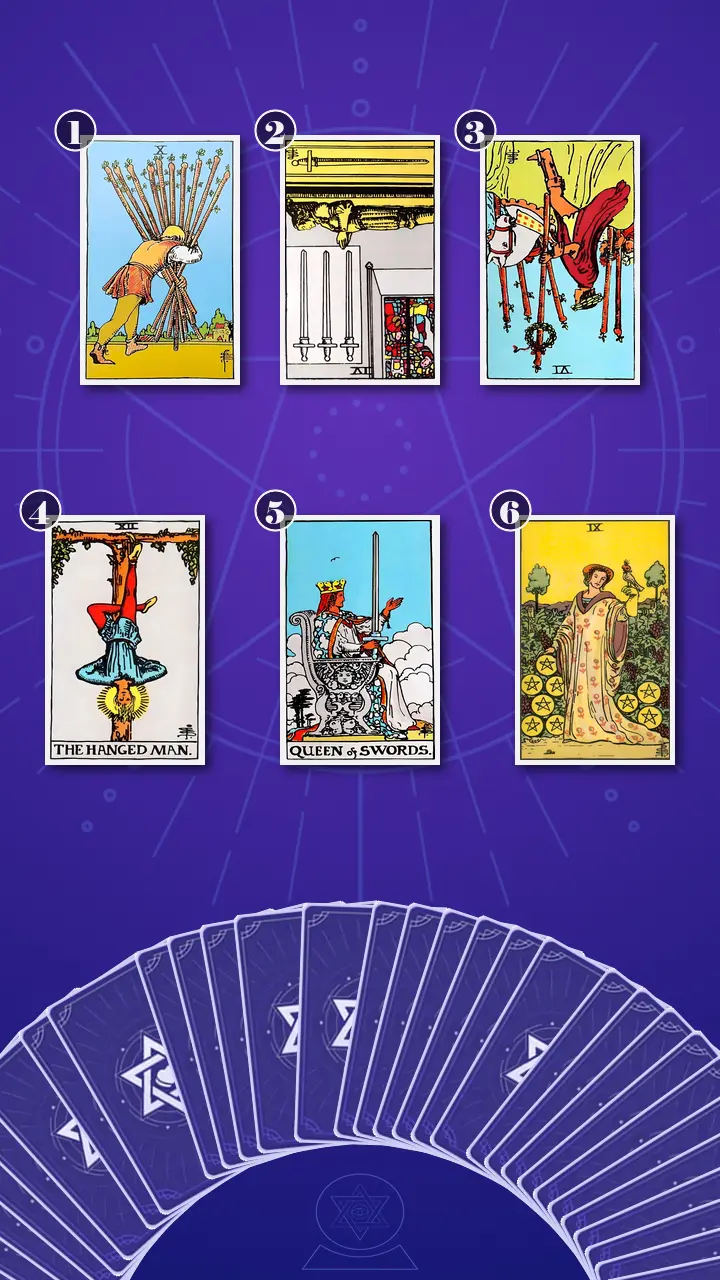
I chose the Transformation Path Grid (6) - Context Edition, a six-card tarot spread designed for deconstructing a workplace proving cycle after reduced visibility. I explained how tarot works in this session: each image gives the mind a concrete object to examine, while the position gives the observation a structure. The cards could not decide whether Taylor should stay, leave, confront anyone, or make a rushed career decision. They could help us notice what the nervous system had been turning into automatic behaviour.
This spread suited the question because Taylor was not really asking which job or person to choose. They were asking what remained after exclusion, why recovery felt unsafe, and how to move from overwork toward sustainable self-respect. The top row would show the visible burden, the blocked recovery, and the recognition wound beneath it. The lower row would reveal the turning point, the practical boundary, and the form of value Taylor could eventually inhabit without constant applause.
I invited Taylor to follow the grid as a workbench rather than a verdict: first the loop that was already visible, then the hinge where the loop could be interrupted. The difference mattered. A map does not order a traveller where to go. It shows where the ground changes.
The Crowded Top Row
The Bundle That Blocked the Road
Now I turned over the card representing the observable response to being quietly sidelined, including the burden of extra work and the contracted energy described in the diagnosis. It was the Ten of Wands, upright.
In the Rider-Waite-Smith image, a bent figure carries ten wands across their body so completely that the road ahead is almost hidden. Upright Fire is in excess here: responsibility has stopped being a chosen expression of care and has become proof carried everywhere. The town is visible, but the figure cannot properly see the route toward it.
After a recurring meeting disappeared from the calendar, Taylor had started carrying every loose request into the evening: a Figma revision, a vague Slack task, and an overlong project update. The work created a brief sense of control, but the bundle of effort blocked the more useful question of whether the role itself had changed. I asked, "Which responsibility is genuinely yours, and which one are you carrying so somebody has to notice your value?"
Taylor gave a short, bitter laugh. "That is too accurate. Almost cruel." I let the laugh stand. Their shoulders lifted as though preparing to defend the workload, then fell by a fraction when I did not turn the card into a warning. I said, "The card is naming the load, not blaming the person carrying it. Effort has been helping you survive uncertainty. It just cannot be the only language your worth is allowed to speak."
The Ten of Wands showed the visible symptom clearly: more replies, more revisions, more availability, and less room to see whether any of it was changing Taylor's professional position. The first question was not how to work less forever. It was what the extra work had been asked to prove.
The Sofa That Never Became Rest
Now I turned over the card representing how Recovery Avoidance operates in daily behaviour and how refusing to pause keeps the Workaholic Tendency active. It was the Four of Swords, reversed.
The Four of Swords normally gives the mind a quiet room in which to recover. Reversed, Air is blocked: rest exists in theory but cannot become restorative because work thoughts keep entering through every open tab. The recumbent figure, the three swords above them, and the quiet church setting became a very modern scene in Taylor's flat.
On a day Taylor had planned to take off, they lay on the sofa with Slack open on their phone, refreshing the project channel whenever the room became too quiet. The phone glow moved across their knuckles. Their body was horizontal, but their hands remained ready to type. The sofa had become a second desk, and annual leave had become another shift.
I asked Taylor to finish the sentence that usually appeared before the next refresh: "I am only checking because..." They stared at the dark edge of the phone and said, "Because if I stop monitoring, I might miss the proof that I still matter." The quiet room suddenly contained an entire workday's noise.
Taylor's thumb stopped above the screen. Their breath held for two counts, then came out unevenly. I saw the contradiction land: they wanted rest, yet interpreted rest as surrendering their place. I told them a closed laptop was not a confession of replaceability, and that a measured pause was different from ignoring every message or abandoning communication. Their finger moved to close Slack, hovered, and finally did it.
This was the main blockage in the spread. The Ten of Wands kept adding weight, while the reversed Four of Swords made recovery feel like evidence against continued relevance. The card asked for a small experiment, not a dramatic retreat: what would the mind predict if Slack stayed closed for thirty minutes, and what would the body actually learn?
The Applause on the Other Side of the Screen
Now I turned over the card representing the underlying belief that reduced recognition proves replaceability or a lack of self-worth after quiet firing. It was the Six of Wands, reversed.
Upright, the Six of Wands carries a laurel wreath, a raised wand, and the energy of public recognition. Reversed, recognition becomes unstable and confidence begins to depend on being visibly confirmed. The Fire that once warmed achievement has become a public audition. Taylor was not merely completing work; they were trying to recreate the feeling of being seen.
When a colleague posted on LinkedIn about leading a high-profile launch, Taylor drafted an unsolicited internal status update detailing their own work and accepted another ambiguous task before asking what success meant. I could picture them at the kitchen table, the polished announcement on one screen and a private defence brief forming on the other. The colleague's applause was public. Taylor's competence had become something they felt compelled to submit for inspection.
Taylor said, "If they can see that I have also been working, then maybe the room will remember me." I asked what evidence of competence would still count if nobody at work applauded it that week. Their eyes moved toward the empty calendar on the wall. A flush rose across their face, followed by a long exhale that sounded more like grief than relief.
The reversed Six of Wands exposed the root belief: a reduction in visibility had been translated into a verdict about personal worth. That belief did not prove Taylor was incapable, and it did not prove the workplace had a fair explanation. It explained why every vague reply, missing meeting, or peer promotion created such immediate urgency. The next task offered a few minutes of relief from the silence, but no stable answer.
When The Hanged Man Changed the Camera Angle
The room grew very still as I moved to the lower-left card. Outside, a bus sighed at the kerb and pulled away, leaving a clean pocket of quiet behind it. The crowded top row had described the system that kept Taylor moving. This card would show what could interrupt it.
The Pause That Refused the Supporting Role
Now I turned over the card representing the perspective shift that interrupts the proving cycle and makes recovery an active source of clarity. It was The Hanged Man, upright.
The suspended figure is not shown as defeated. One foot is tied to a living tree, the face is calm, the legs form a stable triangle, and a halo suggests insight arriving through a deliberate change of perspective. The energy is a balanced Major Arcana pause: surrendering compulsive control long enough to see what speed has kept out of frame.
Here I used my Workplace Typecasting Analysis. I asked Taylor to look at the office ecosystem as a casting system, not as a supernatural force. Which role had the workplace repeatedly handed them? Reliable fixer. Polisher of other people's rough edges. Person who absorbs ambiguity, replies quickly, and makes the work look easy while someone else receives the visible authorship. Taylor had been pushed toward a marginalized supporting role, and then had started auditioning harder for it, hoping excellence would force a different script.
The Hanged Man did not say Taylor had to detach from work, quit, confront the manager, or pretend the sidelining did not hurt. It asked them to stop feeding the role automatically. A deliberate pause could show which facts needed clarification, which boundaries had been missing, and which effort belonged to Taylor rather than to the fear of disappearing.
The Frame Goes Still
At 7:12 p.m. on Sunday in a small London flat, Taylor checked the project channel and found no mention of them. They spent two more hours polishing a minor deliverable. The laptop fan hummed, their jaw tightened, and they called it responsibility while hoping extra effort would make disappearing impossible.
Stop using constant output as proof that you matter; choose The Hanged Man's deliberate pause to see which boundary and standard can restore your agency.
For one beat, Taylor's breathing stopped and their fingers hovered above the edge of the card. Then their eyes went unfocused, as if the missing meeting, the vague manager reply, and the late-night Figma edits were replaying on a loop. A flush rose along their cheeks. Their mouth tightened before they said, "But does that mean I got it wrong before?" The question carried anger, shame, and the exhaustion of having trusted the only strategy that seemed available.
I answered carefully. "No. It means overwork helped you create a little control when the workplace stopped giving you clear information. We are learning that it cannot also be responsible for proving your worth." Taylor's clenched hands opened one finger at a time. Their shoulders lowered, but the release brought a brief, almost dizzying emptiness, the strange space that appears when a familiar burden is set down before a new structure has been built.
In a quieter voice, Taylor tried the sentence, "When I do not immediately act, I can finally see what is mine and what I have been carrying for an audience." I let the unfinished fear remain unfinished. Then I asked, "Now, use this new view to remember: was there a moment last week when this insight could have made you feel different?"
That was the first movement from shame-driven overwork toward grounded self-respect. Not certainty. Not a guarantee of recognition. Just a change in camera angle: Taylor could acknowledge that being sidelined hurt without using exhaustion to argue against it.
From Suspension to a Sentence
The Sword with No Apology
Now I turned over the card representing the practical guidance that translates the transformation into one clear boundary, question, or standard without requiring overwork to communicate value. It was the Queen of Swords, upright.
The Queen brings clarified Air. Her upright sword, direct gaze, and open hand suggest communication that is precise without being hostile and boundaried without becoming theatrical. She asks Taylor to separate observable workplace facts from the story that they must become indispensable, then to request information in one clean sentence.
I invited Taylor to open a notes app and write two headings: "What changed" and "What I am assuming it means." Under the first, they recorded the date the recurring meeting disappeared, the project access that changed, and the high-visibility assignment that moved elsewhere. Under the second, they wrote, "I am replaceable," and, "The silence is feedback that I am refusing to hear." Facts could ask for clarity. Fear did not have to write the whole message.
Using my Leadership Narrative Construction lens, I helped Taylor revise the professional identity beneath those notes. The old script said, "I am the person who proves reliability by absorbing loose work." The more accurate script was, "I am a content designer who names outcomes, authors decisions, and protects the capacity required to do strong work." The second script did not deny the first one's history. It stopped allowing that history to command every scene.
I then offered my Protagonist Reframe Directive for Taylor's next cross-departmental meeting. In the first five minutes, they would say, "My recommendation is [the clearest next move]. The decision needed is [the decision]. The owner is [the person or team], and the next step is [the date or action]." No nine-hundred-word apology. No hidden test of whether someone noticed the effort. It was a micro-behaviour designed to disrupt the established subordinate persona and give Taylor's professional narrative a visible first line.
Taylor typed the role-clarity question, deleted a paragraph explaining why they deserved an answer, then typed it again: "Which outcomes and responsibilities should I prioritise over the next month?" Their hand shook slightly as they saved the draft. The Queen of Swords did not promise a pleasing reply. She gave Taylor a way to ask for reality without turning the request into a plea.
A Garden with a Clear Edge
The Competence That Could Stay Put
Now I turned over the card representing the integrated definition of worth in which sustainable effort and recovery can coexist without constant external recognition. It was the Nine of Pentacles, upright.
The Nine of Pentacles grounds the reading in Earth. The cultivated vineyard, the falcon resting on the gloved hand, and the orderly pentacles show competence that has been developed, contained, and made inhabitable. This is not success as a public announcement. It is the ability to finish a piece of work, enjoy its quality, and let the evening belong to the person who did it.
The modern translation was simple: Taylor would define a piece of work as done before beginning another round of edits, close the laptop, and eat dinner without sending one more update. The contribution would remain real after the notification stopped. Recovery would become part of sustainable competence, not a reward that had to be earned by becoming impossible to replace.
I asked, "What would a completed piece of work and a protected evening look like this week if neither had to become evidence for someone else's approval?" Taylor looked at the two rows of cards and said, "It would probably feel wrong before it felt normal." I agreed. The Nine of Pentacles is not a promise of instant ease. It is a cultivated boundary that can be practised while the workplace story is still incomplete.
From Proof to Standards
When I read the grid as one story, I saw why the loop had formed. The Ten of Wands showed Taylor carrying visible effort after a role had become less visible. The reversed Four of Swords showed the cost of never letting the body leave the office. The reversed Six of Wands revealed the private belief that a quiet calendar was a public verdict. The Hanged Man interrupted the loop, the Queen of Swords supplied language, and the Nine of Pentacles offered a place to stand.
My artist's mind framed it as a film currently in production. Taylor had stayed in a painful scene long enough to mistake repetition for plot. Overwork had become a refresh loop: every extra task briefly reloaded the feeling of relevance, while the underlying page never became clearer. The problem was not effort itself. The problem was making exhaustion carry the entire argument for value.
The cognitive blind spot was treating workplace visibility as the same thing as worth. Reduced access, vague feedback, and reassigned projects were observable data. They might deserve a direct role conversation, a change in strategy, or eventually a career decision, but they were not complete evidence that Taylor was replaceable. The key shift was from proving worth through constant availability to defining value through clear standards, visible evidence, firm boundaries, and the willingness to recover before choosing the next action.
I told Taylor that this was a proof-to-standards shift, not an instruction to work less because ambition was bad. A standard says what good work requires. A boundary says where the work ends. Recovery makes both possible to evaluate. Together, they would let Taylor decide from self-respect rather than from the urgent need to make the next message explain their existence.
Small Experiments for the Next Forty-Eight Hours
I gave Taylor three low-pressure experiments. None required resigning, confronting the manager without preparation, or disclosing more than felt safe. Each one created a little distance between a workplace signal and the automatic response.
- The Ten-Minute Hanged Man PauseAfter work today, Taylor will choose one ten-minute period that is not an urgent deadline, write down the next concrete work step, and close Slack and email on both phone and laptop. When the timer ends, they will record what the urge to check predicted and decide whether to reopen the apps.Start with the smallest workable window. The experiment is testing what the pause reveals, not promising permanent disconnection.
- The Boundary-First Visibility AuditWithin fifteen minutes in a notes app, Taylor will add three observable facts under "What changed" and three interpretations under "What I am assuming it means." They will draft one concise question for the next planned one-to-one: "Which outcomes and responsibilities should I prioritise over the next month?" They can send it then or keep it as preparation.Remove every proof-of-effort paragraph. Facts can ask for clarity, and a private draft is still a useful boundary when the workplace context is unclear.
- The Self-Respect Workload TestFor one deliverable this week, Taylor will write a short definition of done before editing and stop when those criteria are met. They will protect one meal or thirty minutes with work notifications off, then keep a private one-week log of three completed contributions and one boundary respected.A contribution can have a clear ending without becoming less real. A device setting can protect the meal when willpower is already tired.
I asked Taylor to notice which experiment produced the strongest resistance. That reaction would be information, not failure. A ten-minute pause might reveal the fear of missing proof. A concise question might reveal where role clarity was absent. A definition of done might reveal how often extra editing had been buying relief rather than improving the work.
The cards had not told Taylor what the company would do next. They had helped Taylor stop asking the company to settle the question of personal worth. That was the beginning of agency: not becoming indispensable, but becoming able to choose what effort, communication, and recovery were actually theirs.
The First Proof Was Not More Work
Five days later, Taylor texted me on WhatsApp: "I used the ten-minute pause and asked the role question." They had slept a full night, but woke thinking, "What if I am wrong?" This time, they smiled, made tea, and ate before opening Slack.
I did not read the message as proof that the workplace would restore the lost project. I read it as the first small evidence of grounded self-respect: Taylor had allowed uncertainty to remain present without immediately feeding it another task. They had begun writing the next scene instead of endlessly polishing the last one.
That is what the Journey to Clarity gave us. Not a prediction, a promotion, or a reason to ignore real workplace signals. It gave Taylor a deliberate pause, a factual question, and the right to let contribution include recovery. I handed Taylor the pen because the person asking the question remains the author of what happens next.
When the calendar goes quiet, our chests can tighten and our hands can reach for Slack, trying to turn exhaustion into proof that we are not replaceable. If a quieter evening could give you a little room to notice what is yours, what might you notice before deciding whether the next message is yours to send?