Who decides you're enough?

Unpack External Validation, the tarot cards that reflect it, and reading insights where the approval loop appears.

External Validation
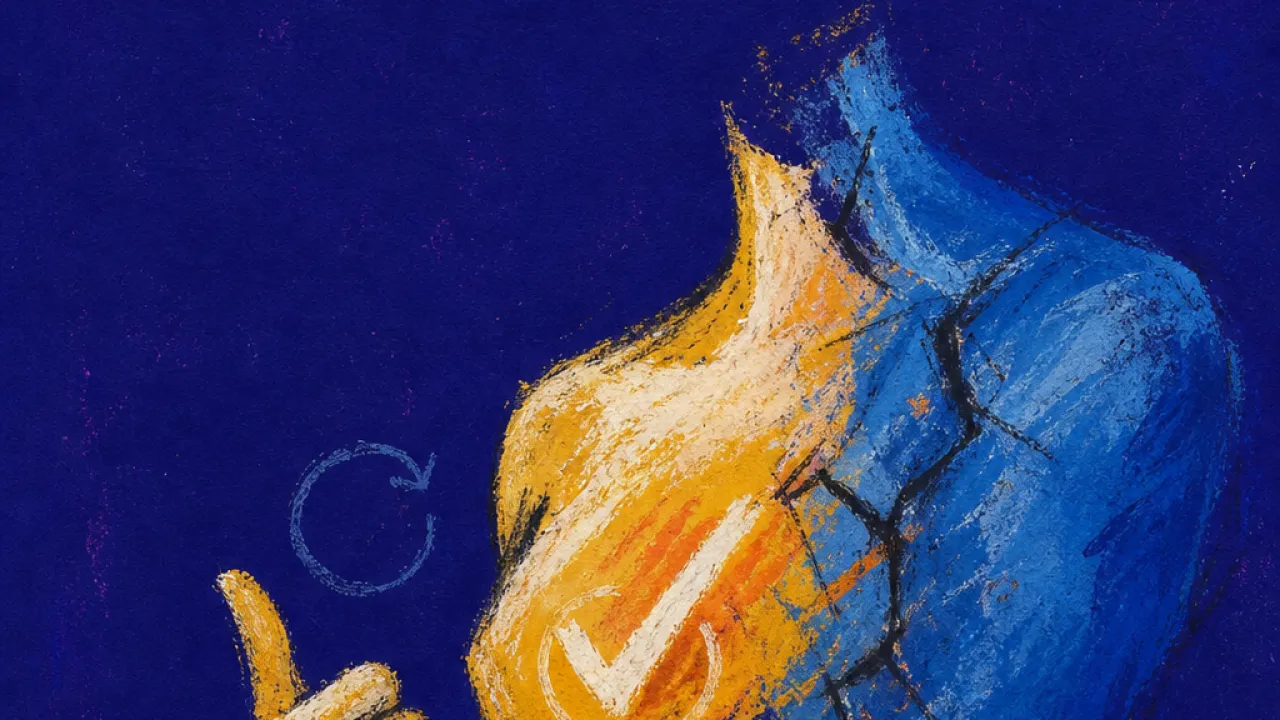
What is this really?

You check replies, grades, praise, titles, invitations, likes, or someone's tone before you let yourself believe you did well, looked wanted, or made the right call. What you're reaching for is not shallow attention; it's a self-worth regulation system, a quick external gauge when your own signal feels too quiet or too exposed to trust. Yet every piece of approval settles you only for a moment, then hands the steering wheel back to the room, leaving your inner voice half-muted while you sit like the rider in the Six of Wands, held upright by a crowd of raised wands and laurel before you know whether the victory feels like yours.

Why did it happen?

At some point, being noticed may have made life feel more predictable: the warm comment, the top mark, the invite, or the proud look across the room told you it was safe to unclench. Over time, your body learned to wait for those signals before settling, and that inner pattern can become a subconscious loop where silence, neutral feedback, or delayed replies make the floor feel slightly soft. What once helped you read the room now leaves you tired from checking every reflection before you trust your own signal.

How does it feel?

  • You post something, then reopen the app before the screen has gone dark, your thumb hovering over the refresh spot while the rest of your hand stays still. In that small pause, your chest may lift and hold, as if the next notification has to land before your body can settle. Let the hold be there for a moment; it can be noticed without being treated as a verdict.
  • You send a deck, essay, or project update, then immediately reread the last line and watch the thread for a warm reply, your cursor resting over the inbox tab. After you do it, your shoulders may creep toward your ears and your breathing can sit high in your chest. You can let the waiting be there without asking it to define the work.
  • In a group chat, you type a direct opinion, delete the last few words, and add a quick 'lol' before sending, then glance at the typing bubbles. Right after, you may feel heat under your cheeks and a small drop in your stomach when the room stays quiet. That uncertain feeling can stay in the room without becoming the whole room.
  • Before a date, meeting, or night out, you adjust one small detail after checking how it might photograph, then hold the mirror angle a little longer than you meant to. That moment can bring a tight line across your jaw and a restless feeling in your hands. It's okay to pause with the uncertainty before you turn it into another edit.
  • Someone praises you and you smile, say 'thanks,' and keep your posture composed, but once the call ends, your fingers tap the table as you replay their tone. The space behind your ribs can feel oddly hollow, as if the warmth has already moved out of reach. That hollow space can be noticed gently; it does not need to be filled immediately.

External Validation in Tarot Cards

That reflex to check the room before you trust your own signal is the External Validation pattern in motion. You can feel it in the moment your chest may lift and hold, as if the next notification has to land before your body can settle. Grounded in Jungian archetypal theory, the cards below give this approval loop a visible shape. They reflect the unconscious dynamics beneath being seen, chosen, praised, or measured: Tarot Cards that mirror External Validation.

Nine of Cups Upright
The nine cups are not hidden in a cupboard; they are raised behind the figure like visible proof. His body is still, centered, and composed, while the display does the social work of saying he has arrived. Satisfaction becomes something that can be seen and verified. External Validation appears when inner worth needs an audience to become believable. In family systems, that audience often has a long memory: who achieved first, who disappointed whom, who became the responsible one, who finally made the family look good. The card's polished abundance mirrors the pressure to turn adulthood into evidence that relatives can recognize. You may not be chasing attention in a shallow way. The deeper pattern is that family approval has become a mirror you keep checking for proof that your choices are valid. The cups show success, but the crossed body asks whether the success is being lived or mainly displayed.
Reversed
The feathered hat, bright red accents, and elevated cups make the seated man look like he is sitting in front of his own proof of success. The cups shine behind him like a backdrop, turning private fulfillment into something that can be witnessed. That stage-like arrangement links to External Validation in friendship. You may look to friends to mirror back that you are thriving, desirable, impressive, or chosen, and the bond starts to feel unsafe when the applause gets quiet. The card reveals the defense beneath the display: self-worth is being outsourced to the room that is supposed to simply know you.
Ten of Cups Reversed
The rainbow of cups is suspended above the family as the most visible sign that fulfillment has arrived. In the reversed field, that bright external symbol can become more compelling than the internal reality it is supposed to reflect, pulling attention toward affirmation, recognition, and visible proof. External Validation in study appears when grades, praise, supervisor warmth, class ranking, acceptance emails, or cohort approval become the main evidence that learning is real. The academic task stops being measured from the inside through comprehension, retention, curiosity, or skill, and starts depending on whether the outside world mirrors success back quickly enough. The card's visual logic makes the mechanism clear: the cups are overhead, public, and radiant. When that image rules the system, delayed feedback can feel like emotional withdrawal and ordinary uncertainty can feel like failure. The audit is not against recognition; it asks whether external signs are supporting your learning or replacing your internal gauge entirely.
Three of Pentacles Reversed
The craftsman is the one touching the stone, yet the blueprint and the observing figures hold the standard by which the work will be read. His body is elevated, but the scene still places his competence inside another person's framework of approval, assessment, and institutional legitimacy. This is where External Validation emerges from the card's reversed pressure. The work may be real, but the nervous system starts treating recognition from the bishop, manager, client, or senior stakeholder as the only proof that the work has value. The task stops being a site of mastery and becomes a stage where every detail is used to secure permission to feel competent. In a career context, this pattern can keep you over-polishing, over-explaining, and waiting for signs that you are allowed to claim authority. The card exposes the trap: when your value is fully outsourced to evaluators, even strong performance can feel unstable because the internal anchor never gets built.
Six of Pentacles Reversed
The coins hang in the air as visible tokens, and the kneeling figures organize their entire posture around receiving them. The scene turns value into something external, countable, and handed down, which can make the receiver's body feel suspended until the signal arrives. External Validation appears in study when grades, praise, ranking, or supervisor attention become the proof that you are intelligent enough to continue. The card's exchange reveals how academic measurement can slide from evaluating the work into defining the self that produced it.
Nine of Pentacles Reversed
The card places the woman's beauty, clothing, garden, grapes, and pentacles in one polished field of visibility. Everything around her signals cultivated value, and the gaze is invited to read her life through signs of refinement, control, and achievement. In reversed love dynamics, that visual field can become External Validation. You may start measuring emotional security through how desirable, impressive, chosen, or unbothered you appear, rather than through whether the relationship can hold your less curated truth. The pattern is subtle because it often looks like confidence from the outside. The card reveals the hidden cost: when worth is displayed as a finished estate, intimacy becomes difficult because being seen imperfectly feels like losing the very proof that made you lovable.
Ten of Pentacles Reversed
The pentacles in the Ten of Pentacles are arranged above the scene rather than lived inside it. The family, dogs, crest, arch, and property markers create a world where belonging is visible from the outside, almost as if the household must be legible before it can be felt. In its reversed psychological texture, that visual order can harden into dependence on social proof. The posture remains composed, the symbols remain impressive, but the inner signal gets outsourced to what can be recognized, displayed, invited, tagged, or validated by the group. External Validation names the moment when a social circle only feels real if it is witnessed. You may know you want connection, but the nervous system starts asking for receipts: who included you, who saw you, who confirmed your place. The card exposes the cost of that loop by showing a rich social field where the outer signs can become louder than the felt experience of belonging.
Page of Pentacles Reversed
The Page's eyes are fixed on the pentacle as though the object can answer a question about value. In the open field, that single symbol becomes the place where worth, readiness, and future belonging are concentrated. When this focus tightens, the pentacle stops being a tool and becomes a social proof-object. The nervous system starts asking whether the visible offering is impressive enough to earn entry, attention, or continued inclusion. You may be reading group response as a verdict on your value. This pattern reveals how belonging gets outsourced to visible approval, making every reaction feel like evidence for whether you deserve a place in the circle.
Ace of Swords Reversed
The crown at the sword's tip makes recognition visible, elevated, and almost inseparable from the blade that holds it. Reversed, the image can turn status into a mirror, where being noticed starts to feel like evidence of being real, worthy, or socially safe. External Validation forms when the social field becomes the place where the self checks its own value. Replies, invitations, likes, introductions, and professional attention become symbolic crowns that have to be captured again and again. In your wider network, You may mistake visibility for belonging because both arrive through other people's responses. The Ace of Swords exposes the mechanism: the mind is trying to secure worth through a clear external sign, but the sign can never fully replace a stable internal measure of connection.
Five of Swords Upright
The foreground figure looks back at the people leaving the scene, and his smile depends on their visible retreat. The emotional landscape around him is gray and unsettled, so the satisfaction does not seem internally grounded; it is reflected back through someone else's defeat. External Validation operates in that same reflective structure. In academic life, the mind starts scanning for proof that You are impressive enough: praise, rankings, visible wins, being chosen, being seen as sharp. The self-image is stabilized through outside confirmation, which makes quiet periods or neutral feedback feel strangely threatening. The Five of Swords makes the cost visible because the figure gets recognition without connection. The win gives him a temporary mirror, but it also leaves him standing alone on a bleak shore. In study settings, the pattern can produce strong performance while quietly making Your confidence dependent on applause, comparison, or someone else losing the room.
Reversed
The foreground figure looks back at the others as if their lowered bodies confirm his position. His smile is relationally dependent: it needs an audience, a comparison, and visible evidence that someone else has lost ground. External Validation in friendship can look like needing the group to agree that You were right, mature, mistreated, or above the conflict. Instead of finding inner clarity, the self looks outward for a verdict that will stabilize its image. The Five of Swords shows the fragility of that arrangement. Validation gained through social defeat does not build secure connection; it creates a temporary mirror that can disappear as soon as the audience leaves.
Ace of Wands Reversed
The hand appears from a cloud, so the source of the wand is visually mysterious before it becomes personal. When the card is read through strain, that ambiguity can make vitality feel like something granted from outside rather than something you can locate inside your own body. That is the mechanism of external validation in a social field. The visible wand becomes a stand-in for approval, inclusion, replies, invitations, and being publicly recognized as someone with a place. The grip tightens because the symbol starts carrying too much psychological weight. You are not only holding a social signal; the pattern begins treating the signal as evidence that you are real, wanted, or allowed to take up space.
Three of Wands Reversed
The ships are far enough away to become symbols before they become facts. The figure watches them from a structured place, as if something outside the body might eventually confirm what direction is real. That visual distance can become a validation loop. The psyche places authority on the approaching signal, outcome, reading, or response because direct inner knowing feels too exposed to trust without corroboration. In introspective work, External Validation appears when the horizon is treated as the judge of the inner world. The pattern keeps you scanning for proof of what you already sense, which delays the quieter work of recognizing your own signal as evidence.
Four of Wands Reversed
The garlands, raised arms, and gathered figures create a scene where achievement is meant to be witnessed. In a reversed pattern, that shared mirror can become too powerful: the visible response from others starts to determine whether the milestone feels real at all. That is the mechanism of External Validation. The Four of Wands reversed shows recognition slipping from celebration into dependency, where the academic self waits for grades, praise, comments, or peer approval before it can trust its own progress. In study contexts, You may know the work is moving, but it does not feel legitimate until someone else reflects it back. The card exposes the cost of letting the crowd become the measuring instrument. The garland can still mark completion, but when the reflection matters more than the learning signal, academic confidence becomes externally leased instead of internally consolidated.
Six of Wands Upright
The rider's laurel-crowned wand rises in the center while the crowd lifts five more wands around him, turning the whole scene into a living mirror. His achievement is not only held in his own hand; it is echoed back by other bodies, other eyes, and a public ritual of approval. That visual field maps directly onto External Validation because the self is being regulated through reflected recognition. You can know you have arrived because the crowd says so, but the same mechanism can make private worth feel unreadable when no one is clapping. In an introspective reading, the issue is not wanting praise; it is outsourcing the inner gauge. The parade shows how recognition can stabilize identity for a moment while quietly training the psyche to wait for an external signal before it trusts its own state.
Reversed
The rider's victory is surrounded by raised wands and cheering figures whose individual faces and hands are not clearly defined. Recognition comes as a collective field of approval, and the laurel symbols reflect achievement back at him from both body and object. External Validation appears when that outside field becomes the regulator for inner certainty. You may know that progress happened, but the nervous system waits for applause, metrics, comments, or visible confirmation before it can believe the change is real. In personal growth, this turns self-evolution into a performance loop where recognition is mistaken for integration.
Page of Wands Reversed
The Page's bright clothing and raised wand are designed to be seen, and his lifted head makes the gesture feel like a public signal. In the reversed texture, the symbol of inner fire starts depending on an imagined audience to confirm that it is real. External Validation shows up with friends when their replies, hype, invitations, or silence become the mirror for Your own aliveness. The card makes the mechanism visible by placing the spark outside the body as a displayed wand, so recognition can start to feel like the fuel instead of a response to fuel already present.
Queen of Wands Reversed
The sunflowers, crown, orange robe, and frontal throne pull the viewer's eye toward one radiant center. When that same brightness hardens, the image starts to feel less like shared warmth and more like a system that needs reflection to confirm it exists. That is the inner mechanism of external validation in friendship. You may read delayed replies, quiet rooms, missed invitations, or a friend's attention elsewhere as evidence that your value has dropped, because the bond is being used as a mirror for self-worth. The Queen's symbols show why the pattern is seductive rather than simply shallow. Warmth, charisma, and generosity are real, but the loop becomes costly when every friendship interaction has to return proof that you are still wanted, admired, and central.

External Validation in Tarot Card Reading Insights

That reflex to check replies, grades, praise, titles, or someone's tone before you trust yourself shows up in readings around these cards. Others have sat with the same approval loop and watched what surfaced when the cards were laid out. Below are Tarot Reading Insights that speak to External Validation.

Psychological patterns related to External Validation