One Blank SQL Query Shifted Progress From Streaks to Evidence

The 11:38 p.m. Streak That Could Not Prove Mastery
If you are a junior analyst studying after a full workday, you may know the specific panic of seeing a streak warning at 11:38 p.m. and choosing the easiest lesson instead of the blank project tab: streak anxiety dressed up as consistency.
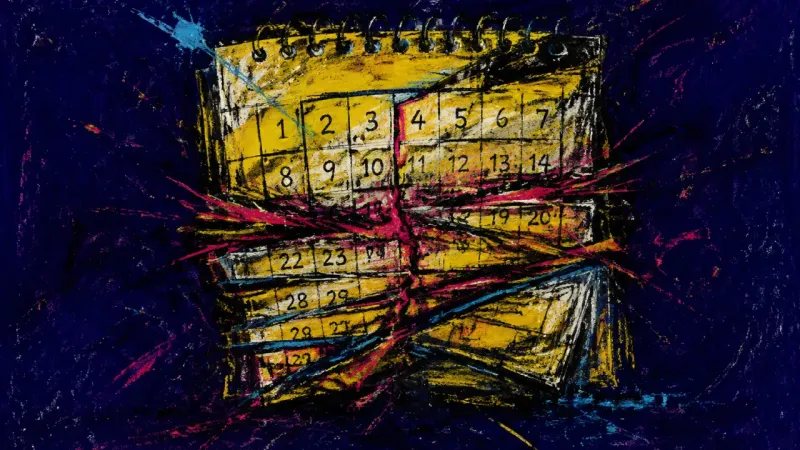
Alex, a 26-year-old product analyst in Toronto, brought that exact moment into our reading. At their kitchen table, the laptop fan hummed beneath a familiar pandas review while a half-finished Jupyter notebook waited in the next tab. Their phone felt warm in one hand, and the app's orange celebration animation washed the dark apartment in colour when the counter reached 148.
"My shoulders drop as soon as the number updates," Alex told me. "Then I look at the project tab and think, I protected the streak again, but I still don't know whether I can do this alone."
I heard the contradiction clearly: Alex wanted evidence that they were learning, so they kept choosing the activity least likely to test it. Their apprehension was not an abstract cloud. I saw it in restless fingertips reaching for the familiar app, in the tightening beneath their ribs when a blank editor appeared, and in the brief physical release delivered by a progress animation.
It was as if a cursor kept blinking inside their stomach, waiting for an answer they were afraid to type.
"Nothing about this tells me you're lazy or incapable," I said. "The streak is doing a protective job. Today, we aren't going to shame that protection or ask the cards to predict your ability. We're going to map what it protects, what it costs, and where you can reclaim choice. Let's give this fog a shape."
Choosing the Ladder Above the Dashboard
I invited Alex to take one slower breath and hold a single question in mind: "Why do I keep chasing streaks instead of testing what I know?" I shuffled while they focused, using the small ritual as a transition from reacting to the problem toward observing it.
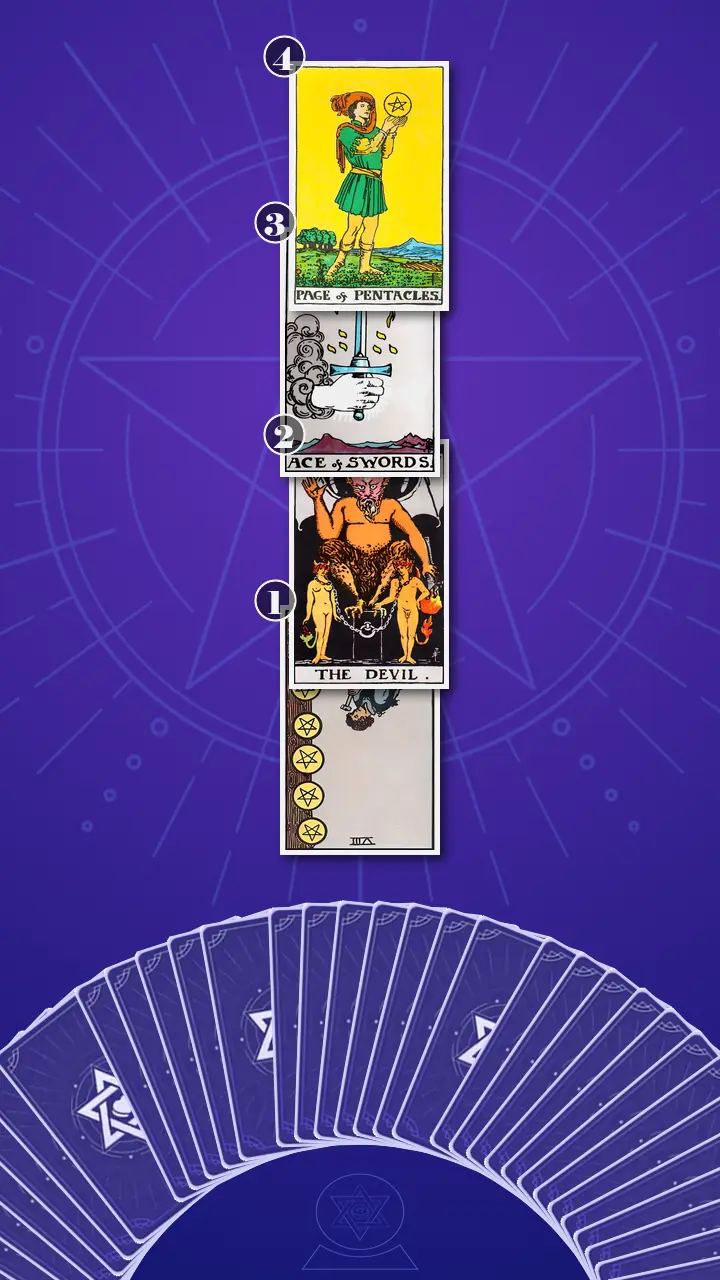
I chose the Four-Layer Insight Ladder, a four-card tarot spread arranged vertically like ascending rungs. This is how tarot works best for a learning block like Alex's: not as fortune-telling, but as a structured way to examine a feedback loop. Card meanings in context help us separate the visible habit from the fear beneath it, identify the point of leverage, and translate insight into actionable next steps.
I explained to Alex, and to anyone following this journey, why four cards were enough. The first position would reveal the observable pattern of repeating guided lessons. The second would expose the hidden reward contract that made the streak feel safer than a direct test. The third would provide the truth-testing intervention. The fourth would show how to embody that shift through a small, sustainable practice.
I placed the first two cards close together, then left a little more space before the third. That visual pause mattered. Below it sat the diagnostic loop. Above it waited the possibility of a different relationship with learning.
The Crowded Dashboard and the Untouched Tab
Position 1: The Practice That Stopped Producing Evidence
"Now I'm turning over the card representing the observable surface pattern: the repetition, metrics, and visible consistency that postpone independent retrieval or application."
The card was the Eight of Pentacles, reversed.
I pointed to the row of nearly identical pentacles. Upright, this card can describe apprenticeship, repetition, and craft refined through patient effort. Reversed, its Earth energy had become blocked. The work was real, but the feedback had grown weak. Quantity was still accumulating while refinement had stalled.
"This looks like your split screen at 11:38," I said. "On one side, a crowded course dashboard shows completed lesson tiles. On the other, the Jupyter notebook waits for you to produce something without prompts. The familiar review gives you another standardised signal, but it doesn't tell you whether the skill can travel beyond the app."
I gave voice to the rationalisation Alex had described: "Repeating this will strengthen the basics." Then I added the quieter correction beneath it: "Also, I know exactly how this lesson ends, and I don't know how the blank project will end."
This was the familiar structure of tutorial hell: guided activity continued, recognition grew smoother, and independent production remained postponed. I did not dismiss Alex's consistency. I asked a narrower question: "Which part of yesterday's study produced information about what you could do without hints?"
Alex let out a short laugh, but there was no amusement in it. Their fingers tightened around the mug before slowly releasing. "That's painfully accurate. Almost cruelly accurate," they said. "I keep calling it practice because admitting it's avoidance makes the last five months feel embarrassing."
"The time wasn't fake," I replied. "It built familiarity, vocabulary, and a habit of returning. We're only noticing that the tool has reached the edge of what it can measure. Consistency helps when it carries evidence, not when it protects you from it."
Position 2: When the Notification Became the Project Manager
"Now I'm turning over the card representing the hidden reward contract and underlying fear that make the streak feel safer than an honest test of competence."
The card was The Devil, upright.
I kept my interpretation calm. The Devil did not mean doom, corruption, or powerlessness. Here, it showed an excess of attachment energy: a metric had become emotionally loaded because it delivered immediate relief and protected an identity Alex feared losing.
I returned to the modern-life scene embedded in the card. A blank SQL editor was open. A late-night streak warning appeared. Before Alex consciously chose what mattered, the notification created urgency and quietly decided what studying would mean. The familiar lesson produced relief; the question "Can I do this without prompts?" remained unanswered.
"Look at the chains," I said. "They're loose. The app influences your choice, but it doesn't own it. The grip comes from the bargain attached to the number: If I preserve the streak, I get to keep believing the past months prove I'm capable. If I test myself and struggle, I may have to question what all that effort produced."
In my work, I call this Gravity Well Identification. I look for the habit, environment, or reward system exerting a downward pull on a person's evolution. A gravity well is not a moral failure. It is a force that becomes easier to navigate once I can name where it is strongest and what keeps supplying its mass.
Here, the learning platform had become like an engagement algorithm that knew reassurance would keep Alex returning. The counter accurately measured app attendance, then exceeded its authority by being asked to certify mastery. The push notification had quietly become a project manager, prioritising the action most likely to preserve engagement instead of the action most likely to reveal skill.
Seeing the loose chain, I thought of the orbital cycles I have watched in charts for years. A body can circle the same point with enormous speed and still go nowhere new. Alex was not short on motion. Their motion had been captured by the wrong centre of gravity.
"If the streak broke tonight," I asked, "what would you be afraid that break said about you?"
Alex's breathing paused. Their gaze moved away from the card and settled on the dark window as if several months of late-night sessions were replaying in the glass. Then their shoulders sank with a long exhale. "That I wasn't disciplined. Or worse, that I used discipline to make myself look capable without becoming capable."
"That's the fear talking in verdicts," I said. "The evidence is more limited. You used a metric that rewarded returning, and now you need a second metric for retrieval. Do not ask the dashboard to answer a question only practice can answer."
When the Ace of Swords Divided Reassurance from Evidence
Position 3: One Clean Test in a Room Without Applause
The room grew quieter before I touched the third card. Even the radiator seemed to pause between clicks. Then a streetcar bell sounded through the window, clear and brief, as I turned over the card representing the leverage point that could replace reassuring ambiguity with bounded evidence.
It was the Ace of Swords, upright.
The Ace brought concentrated Air into the spread: intellectual honesty, precise discernment, and the ability to separate two questions that had been blurred together. "Did I show up?" was one question. "Can I retrieve or apply this?" was another. The streak could answer the first. Only an unassisted attempt could answer the second.
I described a ten-minute closed-book task with no score, leaderboard, audience, or portfolio pressure. Alex would hide the notes and try one narrowly worded claim: "I can write a query that groups customer records by month." If the attempt failed at date extraction, that result would not evaluate their entire future in data. It would identify one component requiring attention.
At 11:38 p.m., the familiar lesson had been completed, the streak animation had flashed, and the blank project had remained in another tab. Alex's body received a moment of relief, but the question they were trying to settle was still open. They were asking one small task to deliver a verdict on their whole identity.
This was where I used Cognitive Spiral Mapping. Feeling stuck can be the point in an orbit where old momentum is being redirected, much like a slingshot phase before a new trajectory. The discomfort of a clean test was not evidence that Alex had stopped learning. It was the pressure point where vague self-doubt could finally change direction and become specific information.
Your streak measures return behaviour, not retrieval. Test one precise claim without prompts, and let the gap, not the dashboard, choose what you practise next.
I let the sentence settle before giving the Ace's invitation in its sharpest form.
You do not need a longer streak to feel ready; choose one clean test of recall, and let the Ace of Swords separate evidence from reassurance.
Alex's breath stopped first. Their fingers hovered above the mug without touching it, and their eyes widened as if the sentence had interrupted a familiar piece of internal code. Then their focus drifted past me. I watched recognition move across their face while they replayed a recent evening: another tutorial opened, another blank query abandoned, another promise to begin once they felt prepared. Their jaw tightened.
"But doesn't that mean I've been measuring the wrong thing this whole time?" they asked, with a sudden edge of anger. "Doesn't it mean I was wrong?"
I waited until their eyes returned to mine. "It means one measure did one job and couldn't do another. You weren't wrong to value consistency. You're responsible now for deciding what consistency serves."
Their grip loosened. Their shoulders dropped, but the release brought a brief, almost dizzy stillness rather than instant confidence. Their eyes shone, and their next breath came out with a small tremor. I could see both relief and the new vulnerability of having nowhere to hide from a clear next step.
"Now, using this new perspective, can you think back to last week? Was there a moment when this insight might have made you feel different?"
"Tuesday," Alex said. "I couldn't remember the syntax for extracting a month, so I closed the notebook and reviewed grouping again. If I'd treated the error as data, I would have known grouping wasn't the problem."
"Exactly. A knowledge gap is a coordinate, not a character reference."
I named the transformation taking place. This was not a leap from uncertainty to total confidence. It was the first movement from metric-dependent reassurance and blank-screen apprehension toward evidence-based curiosity and grounded self-trust. Alex was no longer asking, "Am I secretly bad at this?" They were beginning to ask, "Which part needs work next?"
One Pentacle on the Apprentice's Workbench
Position 4: Progress Small Enough to Hold
"Now I'm turning over the card representing integration: the attitude and practical experiment through which this distinction can become a sustainable learning practice."
The final card was the Page of Pentacles, upright.
I placed it where the vertical ladder ended. The Page held one pentacle at eye level. That single object mattered because it answered the reversed Eight's crowded row. At the beginning of the spread, Alex had many visible units and little contact with independent evidence. At the top, the Page offered balanced Earth energy: one concrete skill, handled patiently, tested honestly, and revised without performance.
I asked Alex to imagine a Saturday morning at the Toronto Reference Library. Instead of opening the course dashboard, they would choose one small question from a public dataset and attempt one imperfect chart without step-by-step prompts. When the first error appeared, they would write four lines: task attempted, what worked, first gap, and next practice target.
"The Page isn't asking you to perform expertise," I said. "The Page is willing to be an apprentice. That means you can build one chart, discover that missing-value handling is unclear, and let that gap choose the next lesson. Guided content becomes support for practice instead of a substitute for it."
I watched Alex's shoulders settle again, this time without the dramatic release of the Ace. Their thumb traced the edge of the Page as they considered something manageable.
"One chart sounds almost too small," they said.
"Small is part of the design. An oversized weekend project would turn truth-testing into punishment. One honest ten-minute attempt can teach you more than another hour of familiar review, and you retain permission to stop when the timer ends."
Finding Clarity Beyond the Bright Scoreboard
I drew the four cards together into one story. The reversed Eight showed genuine effort trapped in mechanical repetition. The Devil revealed why the loop persisted: the streak delivered relief, protected past investment, and kept a feared verdict at a distance. The Ace of Swords separated attendance from retrieval. The Page of Pentacles grounded that distinction in one small encounter with real material.
The treadmill beneath the bright scoreboard had never proved that Alex lacked discipline. It showed that discipline had been organised around a vanity metric. The cognitive blind spot was believing that protecting momentum and protecting the streak were the same action. In reality, the streak was preserving continuity while also preserving uncertainty.
I told Alex that the transformation was not "stop using apps" or "be fearless." It was to keep consistency while changing what consistency carried: one piece of retrieval, one bounded application, or one specific gap that could direct the next practice session.
The Orbit Expansion Strategy
I sketched three points for what I call The Orbit Expansion Strategy. The current orbit was the familiar review and immediate relief. The exit point was one clean test completed before the app opened. The expanded orbit was a workbench where the first discovered gap determined the next lesson. Alex did not need a dramatic escape. They needed one precise change in trajectory, repeated gently enough to become stable.
- Run the One-Claim Reality Check. On one weekday this week, sit at the kitchen table before opening the learning app, place your phone face down, and set a ten-minute timer. Test one narrow claim from memory, such as "I can explain INNER JOIN versus LEFT JOIN" or "I can group these records by month." When time ends, compare the attempt with one trusted reference and identify only the first meaningful gap. Treat the attempt as a diagnostic sample, not a performance. The minimum version is one closed-book sentence and one comparison. You may stop at any point or make the claim smaller.
- Open the Apprentice Workbench. Schedule one twenty-minute Saturday session for a saved Toronto Open Data project. Define a single visible output before starting, such as importing one CSV, cleaning one column, or producing one labelled chart. Record four lines beside it: task attempted, what worked, first gap, and next practice target. Protect the experiment from comparison with polished portfolios. If twenty minutes feels heavy, open the dataset, write one question it might answer, and stop there.
- Reset the Dashboard's Authority for One Day. Mute the late-evening streak reminder for one chosen day and write your own definition of completion: "I attempted one retrieval or application task and identified the next gap." If you still want to preserve the streak, complete the direct test first and limit the familiar lesson to five minutes afterward. This is a reversible boundary experiment, not a demand to abandon the platform. The minimum version is delaying the notification by two minutes while you write one thing you want to retrieve without help.

A Week Later, One Imperfect Chart
Six days later, I received a message from Alex. At 10:14 on Saturday morning, they had opened a public-transit dataset at the Toronto Reference Library. Cold daylight lay across the desk, keyboards clattered nearby, and they built one imperfect chart before looking at a tutorial.
The chart contained an error. Alex discovered that they were unsure how to handle missing values, wrote it in the four-line evidence log, and stopped after twenty minutes as planned. Their message ended with: "It was weirdly calming. I didn't prove I know data. I proved I can find the next thing to learn."
They also told me the old doubt returned the following morning: "What if I'm still behind?" This time, they smiled at the thought. The log already held a smaller answer: one gap, one next step.
I did not see tarot magically create that chart. I saw it give Alex an objective map of a loop they were already capable of changing. The Four-Layer Insight Ladder moved from surface habit to hidden attachment, then from a clean truth-test to practical integration. Alex supplied the courage, the ten minutes, and the willingness to remain unfinished.
That is the kind of clarity I trust. It is not certainty descending from the stars. It is the moment the fog thins enough for me to see where choice has been waiting.
If the blank screen tightens your stomach and your hand reaches back toward the glowing streak, the painful part may not be only that you do not know. It may be the fear that one honest answer could erase the capable learner you have been trying so hard to become. But a test of one claim cannot define your character. It can only reveal a coordinate.
If one small gap could be useful information rather than a verdict, what single ten-minute question will you place beneath your own Ace of Swords this week?