When Your Role Was Chosen

Explore inherited family role lock-in through Tarot cards, then browse reading insights shaped around being cast as the responsible one.

Inherited Family Role Lock-in
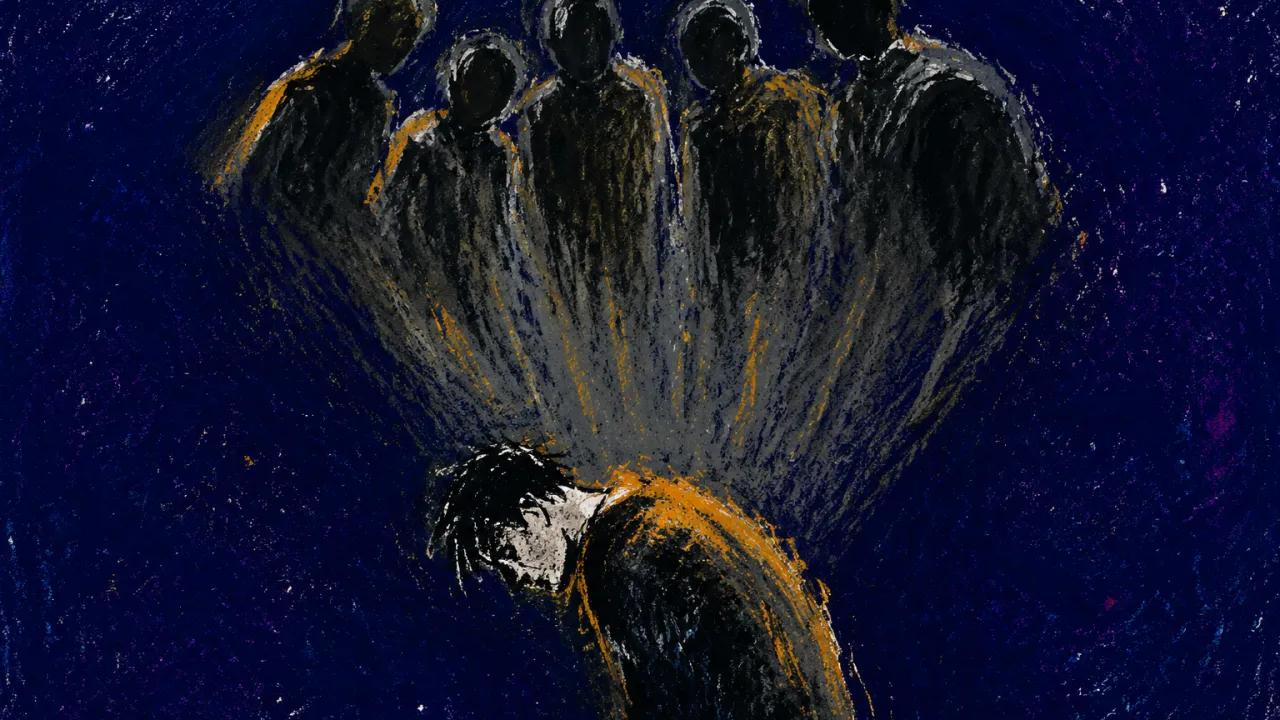
A solitary figure with bent shoulders and back beneath family silhouettes, cool weight settling from above in indigo space

What is this situation?

Inherited Family Role Lock-In: you first notice it at a family dinner when someone asks you to handle the booking, calm a disagreement, or explain what everyone else means, as though that position has always belonged to you. In the family group chat, your messages get tagged when plans need organizing; on calls, relatives bring you the problem before they ask what you have going on. One person is allowed to be difficult, another is treated as fragile, and you are expected to be the dependable one who smooths the room, absorbs the awkward pause, and keeps the plan moving. When you mention changing jobs, moving cities, dating differently, or simply saying no, the conversation shifts toward how unlike yourself you seem, while your old role is praised as the version everyone can count on. The arrangement is reinforced in small, repeatable ways: approval when you comply, surprise when you set a limit, and silence or criticism when you refuse to step back into place. By Sunday evening, your shoulders are already bracing for the next request, and ordinary contact begins to feel like another appointment you have been assigned. You keep carrying the label into adulthood, much like the figure on the Ten of Wands, bent forward beneath a bundle of staffs while the town waits ahead.

Why it's not you?

The problem is the role itself: relatives keep assigning you the same tasks and identity, then treat any change as a disruption. This arrangement belongs to the family, not to your character; its expectations have been kept in place around you for years.

Inherited Family Role Lock-in in Tarot Cards

With Inherited Family Role Lock-In, the shoulders that brace before the next request point back to the same family arrangement repeating across dinners, calls, and group chats. It is an environmental, structural dynamic: the role stays familiar because the surrounding interactions keep directing you toward it. The Tarot Cards below reflect that visible outline without deciding what you should do.

The Emperor
Upright
The Emperor sits on a stone throne with ram heads, armor, and a barren mountain range behind him. You can see authority made physical through a fixed seat, durable boundaries, and a landscape organized around command rather than negotiation. In the family, your competence can be treated like an office that has already been allocated. You are called to organize, explain, or contain disruption because the hierarchy recognizes your usefulness as part of its structure, while other relatives receive more permission to opt out. The upright throne provides order and a legible route through family logistics, but the same stability can make the seat difficult to leave. When you change your life or refuse a task, the family may read it as a challenge to the hierarchy rather than an ordinary adult adjustment.
The Hierophant
Upright
The crowned figure sits between two pillars while two smaller figures kneel below, all arranged around a formal emblem of authority. You can see a social order that makes roles legible by placing some people as interpreters and others as followers. Inside a family, that architecture becomes the inherited rulebook for who organizes, who absorbs conflict, and who is allowed to be difficult. Your reliability is not merely appreciated; it is treated as evidence that you occupy a recognized office within the group. The upright structure offers continuity and a clear place to stand, but access to belonging is tied to repeating the pattern. When you change jobs, move, or say no, relatives can experience an adult boundary as a challenge to the institution that has validated your old role.
The Hanged Man
Upright
The figure hangs by one foot from a living tree, hands held behind the back, with a halo around the head. You can see a person made still while the world continues beneath them, placed in a position that looks chosen from the outside but is socially maintained by the surrounding system. Within family life, your patience and plans are held in reserve for other people’s needs. The ability to wait, mediate, and absorb discomfort becomes a virtue the group can praise while quietly relying on your continued suspension. The upright image gives the pause a usable perspective and a visible route through it, but it does not remove the cost of remaining there. You are granted recognition for sacrifice at the same time that the family arrangement keeps treating your availability as a permanent resource.
Temperance
Upright
A winged figure stands with one foot on land and one in water, pouring between two cups while a path rises toward distant light. You can see the physical work of keeping different environments in balance and making incompatible flows appear shareable. That balancing labor becomes the family peacekeeper position: you translate tone, soften disagreement, and keep the conversation moving between relatives who are allowed to remain polarized. The family gains a smoother surface, while you become the hidden infrastructure that makes the surface possible. The upright image shows a real and usable capacity for coordination, but it also exposes the cost of treating that capacity as an assigned service. The path is available, yet the system keeps asking you to stand between land and water instead of letting the family carry its own friction.
The Devil
Upright
A horned figure towers over two people whose necks are attached to the pedestal by loose chains. You can see attachment maintained through a surrounding structure, with the physical links appearing strong because the familiar environment keeps them in place. Within a family, approval, guilt, usefulness, and fear of disruption can perform the same function. The old role feels compulsory because the group has built access to belonging around your compliance, not because the role is an essential fact about your character. The upright image makes the bond visible and concrete while preserving the looseness of the chains. You remain connected to a system with real social leverage, but the scene distinguishes that leverage from an unchangeable identity and shows how familiarity can keep a role looking permanent.
Six of Cups
Upright
Two children stand in a village courtyard as one offers a flower-filled cup to the other, with an old building and familiar enclosure behind them. You can see how a past exchange can be carried into the present as if its original meaning has never changed. Family contact often reactivates the childhood position that made the household feel organized: the translator, the calm one, the capable one. Warmth and familiarity make the role feel natural, while surprise or criticism appears when your adult behavior no longer matches the remembered version. The upright image preserves tenderness and emotional continuity, but that continuity is not the same as consent to remain the same person. You are welcomed through a familiar script whose comfort can conceal the fact that the family still assigns you a childhood job.
Six of Pentacles
Reversed
A well-dressed figure holds scales above two kneeling people while coins pass downward from one hand. With the card reversed, the vertical arrangement becomes a sharper image of support controlled from above, where access is measured by the person distributing it. That structure maps family approval and practical help onto a conditional exchange. You receive recognition, inclusion, or assistance when you occupy the dependable role, while a limit can make the flow of goodwill narrow or turn the family’s support into a record of what you supposedly owe. The reversed image does not claim that every family resource disappears. It shows how unequal control changes the meaning of receiving, making care feel like leverage and turning your compliance into the informal price of continued access.
Ten of Pentacles
Upright
An older figure sits beneath an arch marked with pentacles while younger figures, a couple, dogs, and a walled estate fill the courtyard. You can see continuity made architectural: generations, resources, and positions are held inside one visible family structure. That structure gives inherited roles their authority. The organizer, interpreter, or peacekeeper can be treated as part of the family’s operating inheritance, a position passed through repeated stories about who is capable, difficult, fragile, or dependable. The upright image offers belonging, continuity, and material or social stability, but those benefits are attached to occupying the expected place. You are welcomed as part of the established pattern while your adult changes are judged as threats to the structure that has made the role feel like family property.
Eight of Swords
Upright
The blindfolded figure, tied hands, and narrow ring of swords create a visual model of attention turned inward before any external request arrives. You can see the body preparing for restriction even though the castle and open ground remain in view. An inherited family role can become an internal monitoring system that scans for disappointment, conflict, or the next task to absorb. The family script keeps running in the background, so your own preferences are edited against anticipated reactions before they reach the surface. The upright image holds both the blockage and the possibility of recognition. The constraints are real in the social environment, but the visible looseness of the ties shows how the role has been reinforced through repeated interpretation, not transformed into an unchangeable fact about who you are.
Seven of Wands
Upright
A figure on high ground grips one staff while six others rise from below. You can see a position being challenged from multiple directions, with the defender forced to make a boundary visible because the surrounding group keeps pressing upward. That image fits the choice between returning to the family role and holding a new line. Saying no to the organizer or peacekeeper assignment turns an ordinary limit into a dispute over who has the right to occupy the familiar position. The upright scene shows that your ground is defensible and that the staff is already in your hands. It also makes the cost concrete: the role may be changing, but the family’s pushback can require repeated effort before a different distribution of responsibility becomes socially recognizable.
Ten of Wands
Upright
The bent figure beneath a bundle of staffs has no free hand and keeps the town in the distance. You can see the physical fact of a job carried forward because it has already been assigned, not because anyone has checked whether the carrier still has capacity. In a family system, that bundle becomes the booking, the translation, the emotional buffering, and the expectation that you will restore movement when the room stalls. The road remains open, but the load makes every step toward your own adult plans costlier. You are treated as dependable because you keep the arrangement moving, while the same reliability becomes evidence that the role belongs to you. The upright image holds both facts together: competence is available, and the family has converted access to that competence into a standing obligation.

Inherited Family Role Lock-in in Tarot Card Reading Insights

For anyone navigating Inherited Family Role Lock-In, this kind of assigned family role has also been brought into readings. Below are Tarot Reading Insights from people who sat with these cards while carrying that expectation.
When

When "Whatever Works" Means Waiting: Making One Preference Visible

Topic:Family Tarot Reading

Struggle:Inherited Role Lock

Context:Family Script Pressure

From Editing a Family Message Six Times to Holding a Steady Boundary

From Editing a Family Message Six Times to Holding a Steady Boundary

Topic:Family Tarot Reading

Struggle:Inherited Role Lock

Context:Responsibility Without Authority
From

From "Whatever Works" to a Present-Tense Preference at Family Dinner

Topic:Family Tarot Reading

Struggle:Belonging-Authenticity Split

Context:Family Infantilization

Shrinking Into the Child Role: Lead One Family Task Without Permission

Shrinking Into the Child Role: Lead One Family Task Without Permission

Topic:Family Tarot Reading

Struggle:Inherited Role Lock

Context:Family Leadership Trial

The Sixth Draft: Letting Present Evidence Lead a Low-Contact Choice

The Sixth Draft: Letting Present Evidence Lead a Low-Contact Choice

Topic:Family Tarot Reading

Struggle:Permission Paralysis

Context:Always On Availability

Changing

Changing "I Have Decided" to "I Hope You Understand": Owning Limits

Topic:Family Tarot Reading

Struggle:Belonging-Authenticity Split

Context:Family Estrangement Threshold

A Deleted Family Boundary, the Hopeful Child, and a Reply on New Terms

A Deleted Family Boundary, the Hopeful Child, and a Reply on New Terms

Topic:Family Tarot Reading

Struggle:Inherited Role Lock

Context:Family Estrangement Threshold

Golden-Cage Adulthood: Taking One Choice Out of the Approval Queue

Golden-Cage Adulthood: Taking One Choice Out of the Approval Queue

Topic:Family Tarot Reading

Struggle:Inherited Role Lock

Context:Golden Cage Comfort

The Train Drafts, One Adult Preference, and a Reshaped Holiday Plan

The Train Drafts, One Adult Preference, and a Reshaped Holiday Plan

Topic:Family Tarot Reading

Struggle:Belonging-Authenticity Split

Context:Family Boundary Negotiation

Family Role Regression: How to Make One Adult Choice Visible

Family Role Regression: How to Make One Adult Choice Visible

Topic:Family Tarot Reading

Struggle:Belonging-Authenticity Split

Context:Family Boundary Negotiation

Family-Role Regression: Saying

Family-Role Regression: Saying "I Want to Finish This Thought"

Topic:Family Tarot Reading

Struggle:Belonging-Authenticity Split

Context:Designated Peacekeeper Role

Family Peacemaker Burnout: Pausing the Chat to Test a Path of Your Own

Family Peacemaker Burnout: Pausing the Chat to Test a Path of Your Own

Topic:Family Tarot Reading

Struggle:Autonomy Guilt Bind

Context:Family Peacemaker Role Reset

Psychological Contexts Related to Inherited Family Role Lock-in