When Your Voice Gets Edited

A grounded look at muted adult voice, related tarot cards, and tarot reading insights from sessions shaped by this pressure.

Adult Voice Erosion
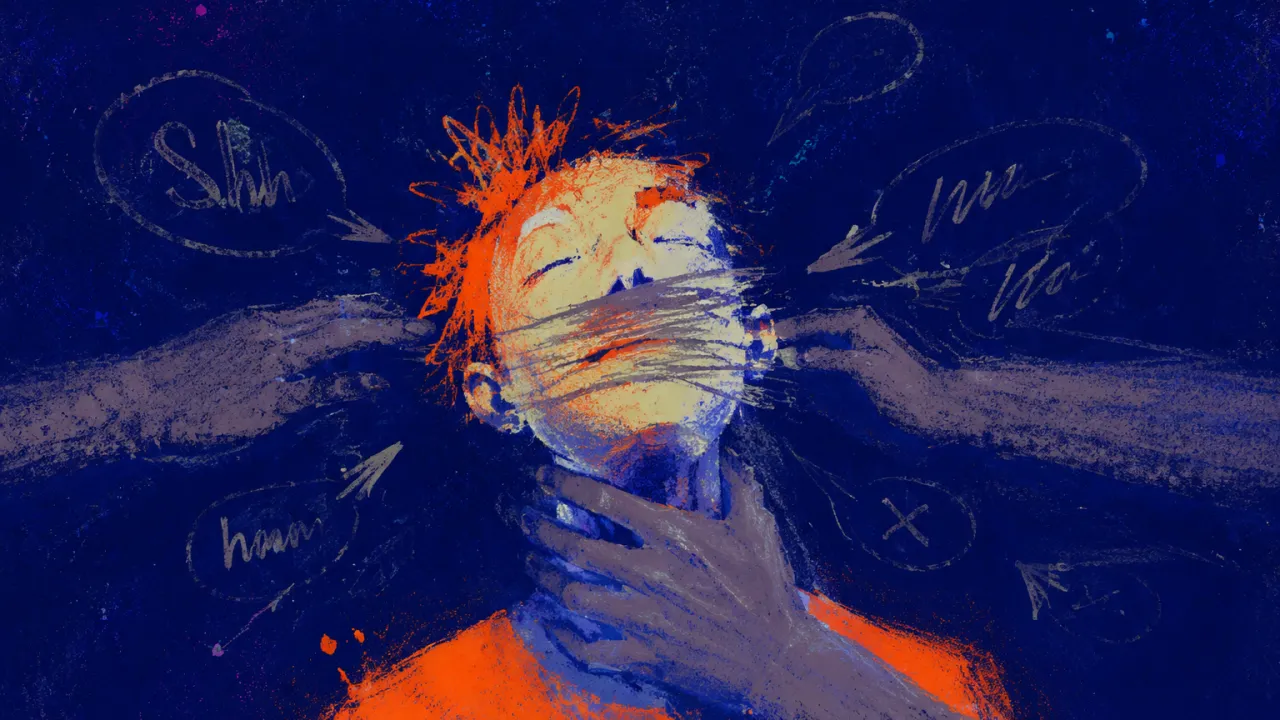
A solitary figure holding their throat while surrounding hands press pale speech lines inward in deep indigo space

What is this situation?

Adult Voice Erosion — you enter adulthood with rent to pay, work to manage, forms to fill out, plans to make, and yet the people around you keep responding as if your voice is still provisional. You explain a decision and someone older, louder, or more established turns it into a debate; you set a boundary and they ask whether you are being dramatic; you speak in a meeting and your point lands only after someone else repeats it with more confidence. In group chats, family calls, shared housing, customer service counters, workplaces, and relationships, your ordinary sentences keep getting filtered through other people's comfort: say it nicer, prove it again, don't make it awkward, are you sure, maybe wait, maybe ask first. The power dynamic is rarely announced outright; it shows up in interruptions, patronizing advice, decisions made around you, jokes about your age, tone corrections, and the subtle expectation that you should make your needs sound harmless before anyone will take them seriously. Over time, the daily cost is practical as much as emotional: emails get rewritten five times, simple requests sit unsent, your throat tightens before a conversation, and your own adult decisions start requiring an invisible committee in your head. What erodes is not your intelligence or maturity, but the public space your voice is allowed to occupy, much like the bound figure on the Eight of Swords, surrounded by upright blades that make even a small step forward feel like it has to pass through someone else's barrier first.

Why it's not you?

The problem is not that your voice is weak; the problem is that this situation keeps rewarding smaller, safer, more edited versions of it. Interruptions, tone-policing, patronizing advice, and decisions made around you are external pressures, not evidence that you need permission to be clear. Adult Voice Erosion has a shape: it is what happens when other people keep treating your adulthood as negotiable.

Adult Voice Erosion in Tarot Cards

Adult Voice Erosion is the situation where your words keep getting interrupted, softened, corrected, or handed back to you as if they need approval before they count. The tightness in your throat before a simple boundary, question, or decision is part of an environmental, structural dynamic, not a private flaw in how you communicate. These Tarot Cards do not tell you to speak louder on command; they reflect the visible pressure around a voice that has been trained to shrink.

The Emperor
Reversed
The armored ruler sits squarely on a stone throne beneath ram symbols, surrounded by a visual language of permanence, command, and inherited status. Reversed, that throne becomes an overextended family authority that keeps issuing judgments after the adult person's responsibilities and consequences have shifted elsewhere. You can bring a clear decision to the conversation and still be placed in the role of someone asking for approval. The rigid seat shows why explaining more may not change the exchange: the obstacle is not missing information, but a hierarchy that treats adult-to-adult contact as a loss of control.
The Hierophant
Upright
The hierophant sits between two pillars while two smaller figures kneel beneath him, making the hierarchy of authorized speech visible in the architecture. Upright, the scene shows tradition functioning as a legitimacy system: the established voice is treated as correct because it occupies the recognized position. You may be expected to ask first, explain your reasons in family-approved language, and accept advice as if your adulthood were still being certified. The ritual setting makes the power dynamic concrete: your voice is not absent, but the family script determines whether it can count as final.
Justice
Reversed
The seated figure holds a sword beside a pair of scales, creating a literal scene of judgment and evidence. Reversed, the sword becomes an instrument that can be turned against delivery, while the scales suggest fairness without guaranteeing that the workplace is actually weighing people equally. You can meet the stated standard and still be told that your tone, timing, or confidence is the real issue. The image names the structural contradiction: the review appears to assess work, but it is also policing who is permitted to sound like an authority.
Six of Cups
Reversed
Two children stand in a walled garden while one offers a flower-filled cup, creating an unmistakably childhood-centered exchange. Reversed, the familiar scene becomes a family role that has outlived the person who was originally assigned to it. You can speak from present-day responsibilities and still be answered as the younger version of yourself. The cup carries the emotional softness that makes the pattern difficult to challenge, while the reversal shows the practical distortion: affection and history are being used to keep your adult authority out of the conversation.
Three of Pentacles
Reversed
Three figures gather around the cathedral plan, with tools, craft, and visible work held in a shared architectural space. Reversed, the collaborative structure breaks down: the plan still exists, but the person whose contribution belongs in it is not given an equal place in the build. You can prepare the analysis, make the suggestion, and carry the practical follow-through while another colleague becomes the recognizable voice of the result. The unfinished teamwork scene makes the cost concrete: professional authority is being separated from contribution by a recognition system that favors established speakers.
Ace of Swords
Reversed
The sword held from the cloud is a visual shorthand for a clean proposition entering a shared field. Reversed, its direction collapses, mirroring a workplace where an accurate point is diverted into questions about tone, confidence, seniority, or whether you should have spoken first. You can provide the analysis and still watch its professional value appear only when another person repeats it. The blade makes the loss specific: the workplace is not simply missing your intelligence, it is disrupting the line between your words, your ownership, and the decision that follows.
Five of Swords
Upright
The victor gathers the swords from the ground while two figures leave behind him, a direct image of one person controlling both the tools and the narrative of a conflict. In a workplace, that structure mirrors idea capture, interruptions, and the quiet redistribution of credit toward whoever sounds most established. You may leave a meeting knowing that your contribution was useful but still feel that it did not enter the official record until someone else delivered it. The scene keeps the cost concrete: the issue is not merely bruised pride, but a professional environment where voice, recognition, and influence are allocated through dominance.
Eight of Swords
Upright
The blindfolded figure is physically bound inside a field of swords, so the image can hold both the external barrier and the internalized rehearsal it produces. Each blade resembles a remembered interruption or anticipated correction that arrives before the next sentence is even sent. You may begin treating a normal request as a case that needs evidence, a softer tone, and several rounds of review. The open space beyond the swords matters: the private committee is a record of repeated social pressure, not a reliable measure of your adult judgment.
Page of Swords
Reversed
A young figure grips a raised sword while facing a windy, unsettled landscape, making the body and the message look inseparable. Reversed, the image captures the family habit of using youth-coded assumptions to disqualify an adult sentence before its content is considered. You may set a normal boundary and have it translated into attitude, impatience, or disrespect. The sword remains a real instrument of speech, but the reversed page shows the social filter placed over it: relatives hear a child being difficult where an adult is stating a limit.
King of Swords
Reversed
The seated king holds the sword upright and faces forward from a rigid stone throne, creating the atmosphere of an authority figure who controls the terms of evidence. Reversed, that arrangement resembles family debate used as a procedural delay: your decision is never quite allowed to become final. You may provide facts, repeat the consequences, and answer every objection while the older voice continues to define what counts as reasonable. The sword makes the dynamic visible as a power over interpretation, not a genuine information gap between two adults.
Six of Wands
Reversed
A mounted figure carries a laurel-topped wand while a crowd surrounds the route, creating a clear scene of public recognition. Reversed, the procession loses its clean connection between achievement and speaker, mirroring a workplace where the applause reaches the idea only after it has been attached to someone else. You may watch a point move through the room, gain approval, and return under another person's name. The inverted victory scene identifies the structural injury: visibility is being allocated through status, so being correct is not enough to make your voice part of the official success story.
Nine of Wands
Upright
The bandaged figure stands behind nine upright staffs, holding one while watching the space ahead. The image records repeated social friction: the person remains capable of speaking, but the body has learned to expect another challenge whenever a boundary is stated. You may enter a group chat, gathering, or shared plan already preparing explanations for a request that should be ordinary. The defensive line makes the cost visible as accumulated vigilance and reduced ease, while the standing figure preserves the fact that endurance is not the same as consent to the pattern.
Ten of Wands
Upright
The figure carries ten wands in both arms, and the bundle blocks the view of the road and town ahead. That image holds the daily reality of adulthood as a full load of rent, work, forms, errands, and plans, while the blocked view represents the added friction of having to justify basic needs to other people. You may have enough responsibility to run a household but still feel required to ask, soften, and explain before a simple request is accepted. The burden is therefore practical as well as emotional: the life system keeps moving, but every task carries the extra weight of social permission.

Adult Voice Erosion in Tarot Card Reading Insights

Adult Voice Erosion often gets brought into readings when someone is tired of being talked over, corrected, or treated as if their choices are still up for review. The readings below shift from the cards themselves into how this situation shows up when people bring that pressure into a session. Tarot Reading Insights from sessions on this kind of muted adult voice.
Psychological Contexts Related to Adult Voice Erosion