Drowning in Money Advice?

Explore the pressure of finance-content overload, related tarot cards, and reading insights from sessions shaped by money comparison.

Personal Finance Content Spiral
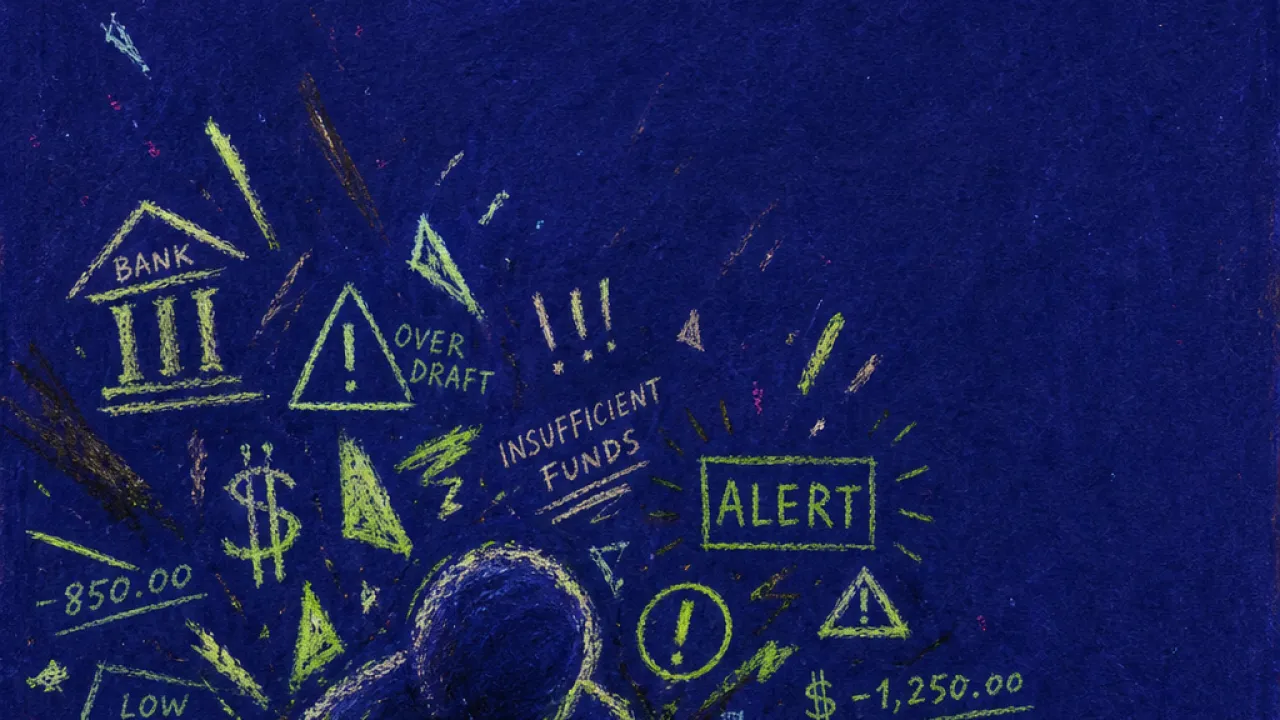
A hunched figure holds a glowing phone as charts, bank alerts, and video panels crowd around their shoulders

What is this situation?

Personal Finance Content Spiral — you open TikTok, YouTube, Reddit, or a newsletter for one practical money tip, and within minutes the feed turns into a wall of budgets, side hustles, investing rules, debt payoff timelines, rent comparisons, and creators telling you what “smart people” are doing before it is too late. One video says you are wasting money on coffee; the next says cutting small purchases is pointless if your income is not high enough; another insists you should be investing, building emergency savings, switching banks, negotiating salary, tracking every dollar, or buying a course that promises a clearer path. The pressure does not stay on the screen. It follows you into the grocery aisle, the train ride home, the group chat where someone mentions their savings goal, the moment you check your banking app and suddenly hear ten different online voices arguing over the same number. The people making the content may sound casual, but the dynamic is not neutral: platforms reward urgency, creators package anxiety into swipeable certainty, and comparison becomes a background noise that makes every ordinary purchase feel like evidence in a trial. By the end, you are not simply learning about money; you are being surrounded by competing instructions, status cues, warnings, and shortcuts until your own next step becomes harder to see, much like the figure in the Seven of Cups standing before a cloud of glittering choices, each one demanding attention while the ground beneath them disappears.

Why it's not you?

The problem is not that you are bad with money or too easily influenced. The spiral is built by feeds that turn financial pressure into endless content, where every scroll adds another rule, warning, or comparison point. That kind of environment is designed to keep the question open so you keep looking for the next answer.

Personal Finance Content Spiral in Tarot Cards

Personal Finance Content Spiral is not just about money management; it's the daily loop of feeds, creators, apps, and comparison points pushing competing versions of what you should be doing next. The tightness in your chest after one more video, one more bank-app check, one more thread about falling behind is part of how this environmental, structural dynamic lands in the body. Tarot Cards can mirror the shape of that pressure without pretending to solve your finances for you. Here are the Tarot Cards that tend to reflect this kind of content-driven money spiral.

The Magician
Reversed
The Magician stands behind a table displaying the full suit of tools, one hand raised and the other directing attention toward the material world. Reversed, that polished demonstration becomes a useful image for finance creators who arrange budgets, investment language, productivity systems, and income strategies into a seamless performance of personal mastery. You may be shown genuine tools while still encountering selective framing, hidden incentives, or certainty that exceeds the creator's evidence. The obstruction grows from presentation power itself: when fluency, aesthetics, and a complete-looking toolkit are treated as proof of fit, the creator's performance can displace scrutiny of who benefits and which material conditions have been omitted.
The High Priestess
Reversed
The High Priestess sits between contrasting pillars before a patterned veil, holding a partially concealed scroll close to her body. Reversed, the threshold becomes difficult to access: surface-level finance content keeps supplying external answers while the quieter information needed to rank them, including personal values, risk limits, obligations, and definitions of enough, remains behind the veil. You may know many financial rules yet struggle to identify which ones belong in your life. The blocked scroll frames this as a knowledge-integration problem rather than an intelligence deficit; the feed expands declarative information while weakening contact with the internal criteria that could turn information into a coherent practice.
The Chariot
Reversed
The charioteer stands above two sphinxes facing different directions, yet no visible reins connect his intention to their movement. Reversed, that physical gap becomes the central obstruction: multiple financial priorities may be legitimate, but they cannot create a coherent route while competing feeds keep pulling the decision system in opposite directions. You can appear highly engaged with money while repeatedly switching targets between debt, savings, investing, income, and lifestyle cuts. The stalled vehicle locates the problem in coordination rather than motivation; the feed supplies acceleration language, but it does not supply a stable hierarchy capable of steering limited resources toward one long-range destination.
Wheel of Fortune
Reversed
The large wheel turns among rising and descending figures while four observers remain stationed at the corners with open books. Reversed, the rotating structure captures the experience of trying to control financial timing through a feed that constantly announces a new market turn, rate change, opportunity window, or deadline for getting ahead. You may feel perpetually early to the wrong move and late to the right one because the platform treats every cycle as an emergency. The fixed observers expose an alternative structural fact without prescribing a transaction: watching a cycle and being carried by its urgency are different positions, even when both involve the same stream of information.
Justice
Reversed
Justice sits between pillars holding a raised sword and a set of scales, turning conduct into evidence to be weighed against a standard. Reversed, the scene mirrors the internal tribunal created when decontextualised finance rules make coffee, groceries, rent, leisure, and savings balances feel like proof of whether you are financially intelligent or irresponsible. You are being measured by standards assembled from creators with different incomes, locations, risks, privileges, and commercial incentives. The unbalanced evaluation reveals why relentless self-auditing does not necessarily produce clarity: the evidence is real, but the borrowed court has merged incompatible benchmarks into a verdict no ordinary purchase can reliably satisfy.
The Devil
Upright
Two figures stand chained to a raised central structure, surrounded by symbols of appetite and material fixation, yet the collars remain visibly loose. The scene reflects an algorithmic relationship in which financial fear, status comparison, and promises of control keep attention attached to a platform that benefits when the money question never feels settled. You are not depicted as inherently weak; the loose chains preserve the distinction between engineered attachment and total powerlessness. The social mechanism becomes visible when each scroll offers temporary certainty while renewing the same underlying insecurity, allowing creators and platforms to convert repeated attention into reach, authority, subscriptions, or course sales.
The Moon
Upright
A narrow path runs between two towers beneath an oversized moon, while a dog and wolf answer the same light from opposite sides and a creature rises from the water behind the traveller's starting point. The landscape captures financial content that illuminates fragments while multiplying incompatible reactions: save more, spend differently, invest now, wait, work harder, or distrust the entire system. You may still have a viable long-range path, but the feed makes every shadow look like a signal and every confident voice sound like evidence. The uncertainty is environmental as well as personal; partial information, market noise, creator incentives, and status cues are being compressed into recommendations that appear clearer on-screen than they are in lived conditions.
Seven of Cups
Upright
The silhouetted figure confronts seven cups suspended in a cloud, each holding a different promise, fear, status object, or concealed risk. That elevated display resembles a recommendation feed where every financial option is visually available but its opportunity cost, eligibility, and relationship to the other options remain hidden. You are not choosing between equivalent buttons; you are being asked to compare different categories of action under manufactured urgency. The card keeps the cups available for examination, but the missing ground exposes the decision bottleneck: a feed optimised for attention can generate options indefinitely without helping you establish which criterion should eliminate most of them.
Two of Pentacles
Reversed
The two pentacles looped together above a rough sea turn money management into continuous juggling, while the distant ships show that external conditions keep moving regardless of how carefully the coins are handled. Reversed, the loop no longer reads as flexible coordination; it becomes a system receiving more financial priorities than one person can sequence within ordinary time and energy. You may carry the feed into groceries, banking checks, subscriptions, savings transfers, and after-work side-hustle plans until every routine seems to require another optimisation layer. The blockage is not a lack of available tips but the absence of a stopping rule that distinguishes today's necessary task from the platform's endless queue of possible improvements.
Six of Pentacles
Reversed
A standing figure holds scales while distributing coins to two kneeling recipients, placing knowledge, resources, and judgment in visibly unequal positions. Reversed, the exchange captures a finance-content hierarchy where creators control what is disclosed for free, what remains behind a paywall, and which audience anxiety can be converted into a sale. You may receive useful information and still participate in an asymmetrical system whose incentives shape the advice. The tilted exchange does not prove that every paid resource is deceptive; it reveals the structural question hidden by casual delivery: whether the apparent gift of clarity also depends on keeping viewers uncertain enough to return or purchase access.
Seven of Pentacles
Reversed
A worker leans on his tool before a slow-growing crop of pentacles, with one coin sitting lower near his feet. Reversed, the waiting scene becomes strained by premature evaluation: finance content supplies accelerated savings timelines, dramatic return screenshots, and age-based benchmarks that make gradual accumulation look like evidence of failure. You may interrupt a workable process because another creator's result has changed the apparent deadline. The crop still represents material effort already underway, but the spiral blocks a clear reading of its timescale by replacing personal conditions with comparison-driven expectations about how quickly money should grow.
Two of Swords
Upright
A blindfolded figure holds two swords in a locked cross while a rocky sea sits behind her beneath a changing moon. The balanced pose shows how conflicting financial claims can each sound defensible, producing a temporary stalemate when neither recommendation includes enough of your real circumstances to outweigh the other. You may become caught between cutting expenses and raising income, paying debt and investing, or preserving cash and acting before a supposed opportunity closes. The seated figure retains possession of both swords, so the decision capacity has not vanished; access to it is obstructed by an information environment that keeps presenting opposition without supplying a shared basis for comparison.
Eight of Swords
Upright
Eight swords form a loose enclosure around a bound, blindfolded figure, while an open stretch of ground remains visible between the blades. The arrangement mirrors a finance feed in which every possible move appears fenced by another warning: spending is irresponsible, cash loses value, investing is risky, waiting is costly, and earning more requires sacrificing time. You can experience the options as a closed system even though the swords do not form a complete wall. That distinction does not dismiss real financial constraints; it reveals how repeated content adds perceived prohibitions around them, making the range of workable choices look narrower than the material situation alone would require.
Nine of Swords
Upright
A person sits upright in bed beneath nine swords aligned across a dark wall, while the patterned quilt brings the outside world into the private resting space. The image matches the moment when finance content leaves the screen but continues as a mental queue of missed opportunities, spending mistakes, delayed milestones, and tasks that supposedly cannot wait. You may replay creator voices while checking a bank balance at night or judging a routine purchase long after the app closes. The swords remain on the wall rather than physically striking the figure, which locates the inner friction precisely: externally supplied warnings have become persistent mental objects competing for attention during moments that offer no useful financial action.
Five of Wands
Upright
Five figures raise crossing wands in a crowded scene where each movement interferes with the others and no shared objective is visible. The image maps directly onto a finance-content ecosystem in which creators compete for attention by promoting incompatible rules, louder warnings, sharper status cues, and more absolute versions of financial responsibility. You encounter the output as advice, but the wider structure is also a contest for reach, authority, and monetisation. The open space around the figures shows that individual claims can still be examined, while the crossed wands reveal why listening to the entire competitive field at once produces noise rather than collective guidance.
Eight of Wands
Reversed
Eight wands cross the open sky at speed with no person visible to receive, sort, or redirect them. Reversed, their shared momentum fragments into an incoming barrage of finance alerts, clips, newsletters, and urgent claims that arrive faster than their relevance can be assessed. You may react to the velocity of a message as though it proves the narrowness of its opportunity window. The obstruction lies between transmission and timing judgment: a fast feed can make everything feel actionable now while leaving no protected interval in which one signal can be compared with your existing plan.
Ten of Wands
Upright
The figure carries ten wands in a bundle so dense that the load blocks his view of the town directly ahead. Each wand resembles another supposedly essential finance task: track every dollar, open a better account, invest, repay debt, earn more, cancel subscriptions, negotiate salary, and keep researching. You can therefore be working hard on money without retaining a clear view of how the tasks fit your actual week. The visible destination matters: the path exists, but the content stack has made the burden of carrying every instruction at once more salient than the limited set of actions your daily system can realistically hold.

Personal Finance Content Spiral in Tarot Card Reading Insights

When Personal Finance Content Spiral follows you from TikTok to YouTube to your bank app, other people have brought that same noisy pressure into readings too. These readings show how the cards can hold the pattern of comparison, urgency, and mixed signals without turning it into advice. Tarot Reading Insights from sessions involving this kind of financial-content overload.

Psychological Contexts Related to Personal Finance Content Spiral