The Tuesday Night When Fun Started Feeling Like Unpaid Work
I have learned that if you're in your late 20s, working a communication-heavy office job in an expensive city, and your quiet Tuesday hobby hour keeps turning into a best-side-hustles-for-creatives search spiral, it is usually not a time-management problem. It is productivity guilt invading leisure. Jordan came to me with the midnight-Google version of the same question: why do I turn every hobby into a side hustle the second it feels fun?
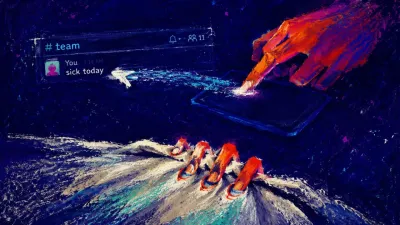
She lived in Toronto, worked in marketing, and described an 8:47 p.m. scene I could picture at once: dinner dishes half done, iPad open on the small kitchen table, dishwasher clicking in the background, blue light sliding across the placemat, phone already warm in her hand. She meant to draw for one quiet hour. Within twenty minutes, Procreate was buried under Etsy pricing guides, creator-income videos, and a Notes page called print ideas. It was the creator-economy version of Severance in reverse: work had wandered into the part of life that was supposed to stay human.
As she spoke, I watched her shoulders creep upward as if some invisible supervisor had entered the room. The feeling in her was not vague. It was guilt with a hard little pulse to it, like anxiety had hired itself as a building inspector and was tapping every burst of pleasure with a clipboard. 'I can't tell if I'm inspired or just panicking about wasted potential,' she said.
'That makes sense,' I told her. 'When fun gets audited for output, rest starts to feel like unpaid work. We're not here to shame ambition. We're here to see why the part of you that wants colour and play keeps getting cross-examined by the part that thinks everything has to earn rent. Let's make a map of that fog, and let's find some clarity inside it.'

Lowering the Ladder: The Shadow Spread for Why a Hobby Keeps Turning into a Side Hustle
I asked Jordan to take one slow breath and finish a single sentence: 'The last moment it still felt fun was...' She answered, I shuffled, and the small ritual did what a good ritual should do: not conjure drama, but concentrate attention.
For this session I chose the Shadow Spread. When people ask me how tarot works in a case like this, my answer is simple: the cards give structure to what the nervous system already knows but has not yet said clearly. Jordan did not need a bigger spread, and she certainly did not need the extra noise of a Celtic Cross. She needed a clean descent into the real issue: the visible symptom, the wound beneath it, the self-protective habit that keeps the loop alive, the healing truth, and the next embodied step. Her real question was the one so many people type into a search bar late at night: how do I enjoy a hobby without monetizing it?
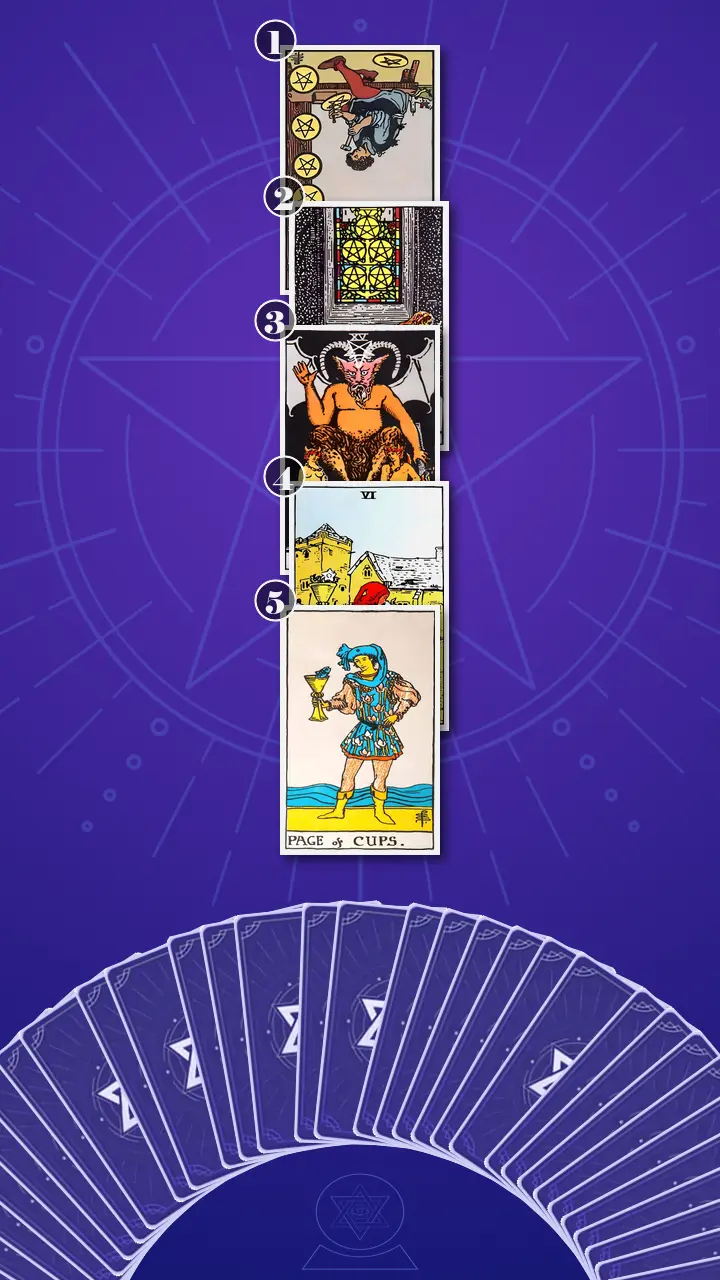
I laid the five cards in a vertical line between us, like a narrow ladder lowered into the self. The first card would show the exact moment hobby time gets hijacked by monetization research. The middle card would reveal the trap that makes the pattern feel responsible instead of exhausting. The fourth card, often the hinge in this spread, would tell us what truth could loosen the whole system. The fifth would answer the only question that matters after insight: what do you do next, in real life, on a Wednesday night?
Reading the Tightening Pattern
Position 1: The Craft Table Gets a LinkedIn Brain Transplant
I turned the first card and said, 'Now we are looking at the position that shows the presenting problem: the visible moment when a hobby gets pulled into productivity pressure and side-hustle research.' The card was the Eight of Pentacles, reversed.
In context, this card was painfully specific. It was Jordan opening her drawing app after work because she genuinely wanted a quiet hour, then splitting that hour into Etsy tabs, pricing calculators, Reddit threads, and a half-finished sketch. In the Rider-Waite image, the craftsperson bends over the bench while the pentacles line up in a neat row. Here that Earth energy was not balanced craft. It was over-monitored craft, attention narrowed into self-surveillance, skill turned into a private performance review. Hobby time had gotten a full LinkedIn-brain transplant.
'This is where practice stops being practice and starts becoming self-auditing,' I said. 'The piece is still alive on the screen, but your body is already behaving as though it's in a salary negotiation. What exact sentence flashes through your mind before the browser opens?'
Jordan gave a short laugh that landed with a sting at the end. 'Shouldn't this be useful somehow?' she said. 'Wow. That's accurate enough to be a little rude.' Her fingers went to the edge of her sleeve and rubbed there once, a quick tell that the card had found the nerve.
Position 2: The Cold Street Outside Other People's Windows
I turned the second card. 'This position reveals the underlying fear around worth, usefulness, and wasted time that sits beneath the monetization urge.' The card was the Five of Pentacles, upright.
This is the card of lack when it has a weather system of its own. Jordan understood the image immediately: the cold street, the thin shoes, the glowing window that seems to belong to other people. In modern life, it looked like payday math, rent, groceries, TTC costs, then one TikTok or Instagram reel from somebody packing print orders at 11 p.m. and saying their templates now cover a bill. Suddenly private creativity feels like standing outside the warm room where everybody else learned how to make adulthood work.
Here the energy was not excess but deficiency, a scarcity story. 'The fear is not really that drawing is frivolous,' I told her. 'The fear is that if it does not produce money, momentum, or proof, then maybe you are the one falling behind.' That is a very different wound from laziness. It is the ache of exclusion.
Jordan's breath paused. Her eyes dropped to the table, then briefly to the rain-beaded window beside us, as if the card had reached past the room and found the colder version of the same evening. 'Yeah,' she said quietly. 'It feels stupid admitting that money reels can make me feel... outside.'
Position 3: When Research Sounds Responsible but Behaves Like a Trap
I turned the center card. 'This position exposes the defense strategy and self-reinforcing loop that keep the problem in motion.' The card at the heart of the spread was The Devil, upright.
Of all the cards in tarot, this one is the clearest image of a rule that borrows the voice of reason and then quietly starts running your life. In Jordan's case, it was simple: the second the hobby starts feeling good, a private contract takes over, if this does not lead somewhere, it should not take up space. So she opens YouTube, Reddit, side-hustle blogs, ChatGPT pricing prompts, whatever will make the hour look strategic. It sounds practical, but it behaves like a trap.
'The loose chains matter more than the horns,' I said. 'This pressure feels absolute, but it is not fate. The research spiral feels practical because it gives anxiety a clipboard.' I have spent enough years around ancient trade routes to know how long a contract can outlive the world that produced it. Looking at this card, I had a flash of museum storerooms full of seals and tablets, authoritative objects from economies that no longer exist. A rule can remain persuasive long after it stops serving life.
'So my tabs are the chains,' Jordan said.
'Exactly. Tabs, rules, rituals, moral language. Closeable in theory. Guilty to close in practice.' I watched the recognition land in sequence: first the stilling of her hand around the mug, then the slight unfocusing of her gaze as she replayed a Saturday coffee-shop spiral, then the sharper exhale. 'I literally call it strategy,' she said. 'That's the worst part.'
'Not the worst part,' I corrected gently. 'Just the most revealing part. The compulsion is persuasive because it is trying to protect you from the vulnerability of unstructured enjoyment. What if the problem is not that you're unserious? What if you're never really allowed to be off the clock?'
When the Six of Cups Opened a Courtyard
Position 4: The Gift That Stays a Gift
When I reached for the fourth card, the room went notably quieter. Even the radiator gave up its little clanking argument with the wall. 'This,' I said, 'is the position that offers the key shift and the healing truth: the perspective that can restore joy without requiring external justification.' The card was the Six of Cups, upright.
Before I said more, I let Jordan sit for a beat inside the contrast. She knew the moment already: the hobby app is open, the body has just started to soften, and then one thought, Shouldn't this be useful somehow? drags her straight back into tabs, pricing notes, and self-evaluation. She was still inside that old equation, the one that mistakes pleasure for wasted potential unless it can be converted.
You do not need to invoice every talent; let the offered flowers of the Six of Cups remind you that some gifts keep their value by staying gifts.
That was the card's message in plain English: her hobby did not need to become income in order to deserve space in her life. To deepen it, I brought in a lens I use often, one shaped by archaeology as much as tarot. I call it Skill Archaeology. On a dig, the first question is never what an object might fetch in a market. The first question is what kind of life it served before commerce got near it. A cup, a spindle, a child's bead, a cooking shard, its original meaning is often domestic, relational, ordinary, alive. 'Your drawings are not failed products,' I said. 'They may be artifacts of restoration. Not every talent is a product waiting to happen. If nobody ever bought it, praised it, or turned it into proof that you're doing life well, what would you still want to make because you feel more like yourself afterward?'
Jordan froze for a heartbeat. Her breath caught high in her chest; then her eyes lost focus as if she were replaying Tuesday night's blue-lit table and seeing, for the first time, the exact second the room changed. After that came the feeling I know well from difficult realizations: her jaw tightened, not with disagreement but with grief wearing anger's coat. 'But if that's true,' she said, 'then have I been doing this to myself the whole time?'
'Not maliciously,' I told her. 'Intelligently. A smart part of you learned to translate fear into usefulness because usefulness felt safer than need. But safety and constant conversion are not the same thing. A hobby can matter because it restores you, not because it scales.'
Only then did her face soften. The skin around her eyes went bright. Her shoulders, which had been sitting near her ears since she arrived, dropped a fraction and then another. There was relief in it, yes, but also that strange lightheadedness that comes when a burden leaves and responsibility returns with it. She exhaled like someone opening a stuck window. I asked, 'Now, with that in mind, think back over last week. Was there a moment when this truth could have changed how your body felt?'
She nodded slowly. 'Tuesday. I could've just... kept drawing.' The sentence came out half amazed, half mournful. That was the real crossing in the reading: not from failure to success, but from self-surveillance to self-trust, from usefulness anxiety to creative permission.
Position 5: Draft Mode Before Launch Mode
I turned the final card. 'This position grounds the transformation into a small, emotionally honest next step that protects leisure and curiosity.' The card was the Page of Cups, upright.
If The Devil is the inner taskmaster, the Page of Cups is the part of the self that learns by surprise. Here the energy was gentle Water returning after a heavy stretch of Earth and control. In modern life, this card looked like one weird, private, unfinished piece made on purpose, a doodle in the wrong colours, a notes-app poem, a tiny melody in a voice memo, a sketch no algorithm ever gets to grade. The fish rising from the cup is exactly that sort of idea: small, odd, alive, and impossible to plan into existence.
'Think draft mode before launch mode,' I said. 'The next step is not a better business plan. It's letting curiosity arrive before evaluation does. Private, unfinished, unmonetized still counts as real.'
Jordan smiled for the first time without flinching afterward. 'A private weird sketch,' she said. 'I could do that.' The way she said it mattered. There was no grand vow in it, only a bit more room in the sentence than there had been an hour earlier.
Keeping One Room Off the Market
When I pulled the whole line together for Jordan, the pattern was almost stark in its logic. The reversed Eight of Pentacles showed the symptom: a hobby session turning into monetization research and self-surveillance. The Five of Pentacles explained why the switch feels urgent: scarcity, cost-of-living pressure, and comparison fatigue make enjoyment alone feel financially suspect. The Devil named the blind spot: she had been mistaking a fear response for strategy, as though every free hour had to audition for profitability before it earned permission to exist. Then the Six of Cups and Page of Cups changed the weather. They did not cancel ambition; they restored a different truth, that some forms of creativity protect the person who later does the ambitious things.
'So this isn't really a reading about whether you should monetize your art,' I said. 'It's a reading about whether everything meaningful in your life has to become cargo.' Ancient traders were clever because they knew not every object in a household was for exchange. Civilizations get brittle when every cup becomes merchandise. People do too.
The direction of change was clear: shift from treating enjoyment as wasted potential to treating enjoyment as a legitimate need that protects creativity. In other words, move from guilt-driven productivity scanning to playful self-permission and steadier self-trust. Because insight without practice evaporates, I gave Jordan three very small next steps.
- Protected Unmonetized SessionChoose one real slot this week, Wednesday after dinner or Saturday morning, and guard 45 minutes for making only. Put your phone on Focus, close every tab except the actual tool you need, keep a sticky note beside you labeled later, and when the timer ends do a 20-second body check: tighter, looser, warmer, flatter, just notice.This is my Megalith Transport rule: move one stone, not the whole monument. If 45 minutes feels too exposed, do 10. If 10 feels impossible, do 3.
- Side-Hustle Parking Lot with Relic AuthenticationMake a note in your phone called Side-Hustle Parking Lot and put every monetization idea there during hobby time instead of opening new tabs. Then schedule a separate 15-minute admin block later in the week to review those ideas on purpose and ask of each one: is this a real opportunity, or is it anxiety polished to look valuable?Use one boundary sentence: this is making time, or this is research time. Not both. Separation is not avoidance; it is noise reduction.
- Private Draft PracticeMake one small, unfinished, slightly odd piece this week, a two-colour sketch, a messy collage, a voice memo melody, and do not post or share it for 24 hours.Private, unfinished, unmonetized still counts as real. If embarrassment appears, let it be a sign that beginner energy is waking up, not evidence that you're doing it wrong.
A Week Later, the Quiet Proof
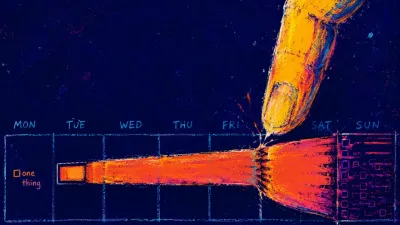
A week later, Jordan sent me a screenshot of her calendar with a block called Protected Unmonetized Session and a cropped, slightly strange character sketch she had not posted anywhere. She wrote, 'I did ten minutes. Then twenty-five.' The next morning, the old thought still arrived, Could this become something? but this time she smiled, wrote later on the sticky note, and let the sketch stay a sketch.
That is how I think a Shadow Spread tarot reading earns its keep. Not by making life certain, and not by issuing moral judgments about money, ambition, or creator-economy culture, but by showing the hidden contract clearly enough that you can stop signing it. Jordan did not need the cards to give her worth. She needed a structure that helped her see where she had been handing worth over to output.
When a free evening finally opens up and your chest tightens instead of softening, it can feel strangely vulnerable to enjoy something that does not prove you're useful. Clarity is sometimes nothing more glamorous than realising you are allowed to keep one small courtyard in your life off the market.
If one creative hour this week were allowed to stay completely off the market, what would you be curious to make inside that courtyard if no pricing tab, no audience, and no metric got a vote?
This story is adapted from psychological research, written so that those in a similar struggle can see their own pattern in it — and find their next step clearly.These insights are not a substitute for professional psychological, medical, legal, or financial advice.
Learn more about our Journey to Clarity.
How did this insight land for you?
🫂 This Resonates Deeply
🌀 Living This Story
✨ Now I See Clearly
🌱 Seeing New Possibilities
🧰 Useful Framework
🔮 The Confirmation I Needed
💪 Feeling Empowered
🚀 Ready for My Next Step
Author Profile
 AI
AI“Having spent a lifetime at Cambridge and on archaeological digs, I’ve witnessed the rise and fall of countless civilizations. Please know that your current struggles are not a permanent fate, but merely a necessary fracture before rebuilding. I won't lecture you; instead, I invite you to sit with me in the ruins, using a patient, historical perspective to gently dust off the true, enduring value hidden beneath your temporary doubts.”
In this Career Tarot Reading :
Core Expertise
- Core Competency Excavation: Digging through the 'strata' of your past roles to uncover undervalued, highly transferable foundational skills.
- Career Epoch Analogies: Contextualizing your career plateau as the end of one professional era and the necessary foundation for the next.
Service Features
- The Resume Stratigraphy Review: A structured framework to rewrite your professional narrative, highlighting immutable assets over obsolete job titles.
Also specializes in :
Explore Related Patterns:
Comparison TrapJordan's private drawing hour changes texture after she sees creators packing print orders and talking about templates that cover a bill. A quiet hobby stops being measured by how it feels in her body and starts being measured against other people's visible monetization wins. Comparison Trap fits because the comparison is not just envy or curiosity. It becomes a cognitive filter that turns someone else's highlight of financial usefulness into evidence that her own leisure may be irresponsible. You can see the attention tunnel form around rent, groceries, transit costs, creator income, and the fear of being outside the room where everyone else has figured out adulthood. This pattern answers the question because the hobby does not stay fun once it is forced to compete with a market-facing version of creativity. The moment comparison enters, the sketch is no longer just a sketch; it becomes a test of whether you are using your potential correctly enough.
Compulsive Self-ImprovementJordan's Tuesday night starts with a real desire to draw, but within twenty minutes the creative space is crowded by pricing guides, income videos, Reddit threads, and print ideas. The behavior looks productive, yet its function is to pull her away from the vulnerable state of making something with no immediate outcome attached. Compulsive Self-Improvement fits because the hobby is not being abandoned; it is being optimized until it stops feeling alive. The mind keeps asking how the activity could become more useful, more strategic, more scalable, or more defensible. You can see the defense mechanism in the way improvement language protects her from the discomfort of unstructured play. The loop matters because it does not resolve the original need. The sketch remains half-finished, the body stays tense, and the question returns the next morning in a softer form: Could this become something? The pattern keeps promising responsible growth while quietly interrupting the very experience that would make the hobby nourishing.
Guilt ConditioningJordan's clearest sentence is the one that arrives right before the browser opens: 'Shouldn't this be useful somehow?' That thought takes a neutral moment of pleasure and places it under evaluation, as if fun needs a defense brief before it can stay in the room. Guilt Conditioning fits because the story shows guilt behaving like a learned internal rule, not a one-off mood. Anxiety inspects each burst of pleasure with a clipboard, and attention narrows toward pricing, output, future proof, and whether the hobby is doing enough. You are seeing a cognitive association in which rest or play automatically triggers the pressure to justify itself. The pattern is powerful because it can feel morally responsible while still draining the life out of the activity. Once guilt has been trained to appear at the edge of enjoyment, the goal is not to shame ambition. The work is to notice when guilt is acting like evidence, even though it is only a conditioned alarm.
Productive ProcrastinationJordan does not avoid drawing by doing nothing. She avoids the exposed, unstructured part of drawing by doing something that looks responsible: researching Etsy pricing, watching creator-income videos, opening Reddit threads, and making notes about print ideas. Productive Procrastination fits because the delay is disguised as useful preparation. The story even names the trap when Jordan says she calls it strategy. That word matters: it shows how the defense mechanism borrows the language of planning so the avoidance can feel intelligent rather than avoidant. This is why the loop is so sticky. You are still near the hobby, still thinking about the hobby, still gathering information around the hobby, but the actual creative contact keeps getting postponed. The pattern offers the emotional relief of being productive while keeping the vulnerable first draft at a safe distance.
Productivity as SafetyJordan opening her drawing app for one quiet hour and then sliding into Etsy pricing guides, creator-income videos, Reddit threads, and pricing prompts shows a very specific defense strategy: enjoyment is being converted into a plan before it can remain enjoyment. The browser tabs are not random distraction. They give anxiety a sense of structure, proof, and future payoff. That is why Productivity as Safety fits the case so closely. The story keeps returning to the private rule that if the hobby does not produce money, momentum, or evidence that life is moving forward, it starts to feel suspicious. You are not simply chasing ambition here; you are watching the nervous system use usefulness as a safety cue. The pressure makes sense in the context of rent, groceries, transit costs, and social content about creative people turning templates into income. But the pattern becomes costly when safety depends on constant conversion. A hobby can no longer restore you if it has to audition for profitability before it is allowed to exist.
Boundary DiscernmentJordan's relief begins when the reading separates making time from research time. The practical boundary is simple: one session for drawing, another separate block for side-hustle ideas, with a parking lot note instead of an open tab. Boundary Discernment fits because the case is not asking her to reject ambition. It is asking her to distinguish between two psychological modes that have been collapsed into one: curiosity and evaluation. You can see the shift in the instruction to keep one small courtyard off the market, where creativity can exist without pricing tabs, audience metrics, or usefulness checks getting a vote. That boundary gives self-trust somewhere to return. When the old thought appears, she can write 'later' and keep sketching, rather than treating every idea as an immediate business decision. The pattern becomes a usable form of clarity: separation is not avoidance; it is noise reduction.
Explore Related Struggles:
Ease-Productivity SplitJordan opens Procreate for one quiet hour after dinner, but within twenty minutes the sketch is buried under Etsy pricing guides, creator-income videos, and a Notes page called print ideas. The body came to the table for color, attention, and a break from the office day; the browser turns that same hour into a demand that the time prove it is useful. The split is not between ambition and laziness. It is between an enjoyment system that restores creative energy and a productivity system that keeps asking leisure to justify its space. You get stuck because fun is allowed to begin, but it is quickly cross-examined until it can show rent, momentum, proof, or a possible launch plan. That is why the hobby starts to feel like unpaid work. One part of you wants a small human room where making can stay alive without being optimized; another part treats unsold pleasure as wasted potential, so the place where play should happen quietly turns into another workplace.
Monitoring-Safety FusionThe reversed craft-table image is precise: the app is open, the drawing is half-finished, and Jordan's attention has narrowed into Etsy tabs, pricing calculators, Reddit threads, and creator-income videos. Even her shoulders creep upward, as though an invisible supervisor has stepped into the room. Monitoring gives the nervous system something concrete to hold. Tabs, notes, pricing prompts, and strategy language create a short-lived sense of control, but they also keep the body in evaluation mode when it came looking for restoration. You are not researching because research is the actual desire; the research is acting like a guardrail against the vulnerability of unstructured enjoyment. The fusion becomes especially sticky because it looks competent from the outside. It resembles planning, professionalism, and responsibility, while the lived result is that the hobby stops being a place of contact and becomes another surface to inspect.
Potential OveridentificationThe Six of Cups lands right on the old equation Jordan has been living inside: pleasure becomes wasted potential unless it can be converted. Her drawing is not treated as a living act of restoration; it is treated like a product waiting for its proof of usefulness. Potential becomes too heavy when every spark has to carry a future business, audience, income stream, or identity verdict. You cannot simply make the private weird sketch, because the moment it feels alive, another part of you asks what it could become and whether failing to develop it would mean wasting something valuable. The struggle is not having too much talent or too many ideas. It is the loss of a clean difference between a gift and a product, between something that makes you more yourself and something that must prove you are doing life correctly.
Productivity Shame BindJordan names the exact sentence that opens the trap: shouldn't this be useful somehow? It arrives while the piece is still alive on the screen, and suddenly the body behaves as though the quiet Tuesday table has become a private performance review. The shame here is not a vague bad feeling. It has a job: it audits pleasure for output and makes unmonetized time feel suspect. You are not simply distracted from the hobby; you are being pulled into a bind where enjoyment has to defend itself before it is allowed to remain. That bind makes rest feel like something you owe an explanation for. The creative act cannot just restore you, surprise you, or make you feel more like yourself; it has to answer the clipboard first, and that is where the fun starts turning into unpaid work.
Productivity-Safety FusionThe center of Jordan's loop is the private contract that appears the second the hobby starts feeling good: if this does not lead somewhere, it should not take up space. So the hour becomes YouTube, Reddit, side-hustle blogs, ChatGPT pricing prompts, and whatever else can make the evening look strategic. Usefulness becomes a safety signal. It protects you from the exposed feeling of needing something that does not scale, sell, impress, or explain itself. The problem is that the protection also takes over the room; the more the hobby is converted into proof, the less it can do the quiet restorative work that made you reach for it in the first place. This struggle is locked because the pressure sounds responsible. It borrows the language of planning, opportunity, and adulthood, while underneath it keeps teaching you that being off the clock is unsafe unless productivity is still nearby.
Scarcity Compass LockThe lack story enters through ordinary details: rent, groceries, TTC costs, payday math, and one more reel about someone whose templates now cover a bill. Private creativity starts to feel like standing outside a warm room where everyone else has figured out how adulthood is supposed to work. Scarcity becomes a compass when it starts choosing the direction before curiosity gets a vote. You may sit down wanting to draw, but the map quickly reorients around whether the drawing could become money, proof, or evidence that you are not falling behind. This does not make money irrelevant, and it does not shame ambition. It names the moment when financial pressure and creator-economy comparison begin steering the inner life so strongly that even a quiet hobby has to face the market before it can belong to you.
Explore Related Emotions:
Optimization FatigueA single drawing session fractures into pricing guides, creator-income videos, Reddit threads, prompts, notes, and possible product ideas. Nothing dramatic happens from the outside, but inside the hour, the hobby is being redesigned into a system. Optimization Fatigue names the tiredness that comes from constantly improving, positioning, and extracting value from what was supposed to restore you. You are not avoiding effort; you are drowning in the demand to make every impulse smarter, cleaner, more strategic, and more defensible. The fatigue deepens because optimization can look like care. It seems practical to research, compare, prepare, and plan. But the body tells the truth: the more the hobby gets optimized, the less room there is for the living part of it to surprise you.
Permission AnxietyJordan wants a quiet hour of drawing, but the hour quickly has to prove why it deserves space. The private rule is blunt: if this does not lead somewhere, it should not take up room. Permission Anxiety is the feeling of needing an inner stamp of approval before you can enjoy something. You may want the hobby, but wanting is not treated as enough. The activity has to become useful, strategic, or future-facing before the body can relax around it. This is why the question “Shouldn’t this be useful somehow?” lands with such force. It turns pleasure into a request waiting to be approved. Naming the anxiety helps separate your actual desire from the approval system that keeps interrupting it.
Productivity GuiltJordan opens her drawing app for one quiet hour, but within twenty minutes the sketch is buried under Etsy pricing guides, creator-income videos, and a Notes page called print ideas. The scene does not read like laziness or lack of discipline; it reads like pleasure being forced to justify its own existence. That is the core logic of Productivity Guilt. You are not simply trying to be efficient. The part of you that wants colour, play, and private restoration gets interrupted by an internal auditor asking whether the time can be converted into proof, money, momentum, or usefulness. The guilt becomes especially sharp because the hobby is genuinely alive before the audit begins. The more fun it feels, the more suspicious it becomes, as if enjoyment without output is a loophole you are not allowed to use. Naming this feeling gives you a cleaner map: the problem is not that you lack ambition, but that ambition has started trespassing into the only room that was supposed to let you breathe.
Rest GuiltWhen a free evening opens, Jordan’s chest tightens instead of softening. The time is technically available, but the body does not experience it as free; it experiences it as something that needs to be defended, explained, or made useful. Rest Guilt shows up when leisure feels morally exposed. You may be doing something nourishing, but part of you treats that nourishment as suspicious unless it comes attached to an outcome. The quiet hour becomes difficult not because it is empty, but because it is not performing. This is why the protected unmonetized session matters. It gives rest a boundary before it gives it a mood. The work is not to become endlessly relaxed on command; it is to stop making every soft hour stand trial.
Scarcity AnxietyJordan is not drawing in a vacuum. She is drawing in Toronto, after a communication-heavy office job, with rent, groceries, transit costs, and social feeds full of people turning templates and prints into bill money. Scarcity Anxiety enters the story through that cold-window feeling: the sense that other people have figured out how to make adulthood work, while your private creative hour looks financially exposed. The hobby starts carrying more than pleasure; it becomes a possible exit, a possible safety net, a possible proof that you are not falling behind. That pressure makes enjoyment feel risky. You can want the sketch for its own sake and still feel the city’s math pressing against the kitchen table. The anxiety is not proof that the hobby must become income; it is proof that your nervous system is trying to create safety using whatever material is closest.
Self-Audit AnxietyThe half-finished sketch is still open, but Jordan’s body is already behaving as though it has entered a performance review. Pricing calculators, Reddit threads, creator-income videos, and business notes gather around the drawing until the original act of making is almost crowded out. Self-Audit Anxiety captures that exact tightening. You start watching yourself while you create, checking whether the pleasure is efficient enough, impressive enough, or strategically useful enough to be allowed to continue. The creative hour stops being a place of contact and becomes a mirror that keeps asking for evidence. What makes this anxiety so persuasive is that it borrows the language of responsibility. It does not arrive saying, “Stop enjoying this.” It arrives saying, “Be smart about this.” Under that voice, your attention narrows until curiosity has to report to a metric before it can move.
Wasted Potential PanicJordan names the split herself: “I can’t tell if I’m inspired or just panicking about wasted potential.” That sentence sits at the center of the story because it shows how quickly aliveness gets mistaken for emergency. Wasted Potential Panic is the rush that appears when something feels promising and immediately starts to feel endangered by not being used correctly. You are not only enjoying the hobby; you are also afraid that enjoyment is the wrong container for something that could become proof, progress, money, or identity. The panic makes the browser tab feel urgent. It tells you the sketch might be a missed opportunity unless you capture it, price it, package it, and turn it into a path. Underneath that urgency is a more vulnerable fear: that if you let something stay small, private, or playful, you may be wasting a version of yourself you were supposed to become.
Grounded Self-TrustA week later, the old thought still arrives: “Could this become something?” Jordan does not have to fight it, dramatize it, or obey it. She writes later on the sticky note and lets the sketch stay a sketch. Grounded Self-Trust is the steadiness that appears when you can notice the productivity impulse without handing it the steering wheel. You are not pretending the impulse is gone. You are building enough internal structure to decide when it gets a vote. The calendar block, the sticky note, and the separation between making time and research time all give that trust a body. This is not abstract confidence. It is the lived experience of keeping a promise to your creative self in a small, repeatable way.
Guilt-Free RestJordan’s shoulders drop when the hobby is allowed to matter without becoming income. That small physical shift matters because her body has spent the session bracing around the idea that rest must be justified by output. Guilt-Free Rest is not a fantasy of having no responsibilities. In this story, it is the quiet permission to let one protected hour remain untouched by pricing tabs, audiences, metrics, and proof. It is rest with a boundary, not rest as collapse. The feeling is still new and slightly fragile. That is why the practice is small: ten minutes, then twenty-five, then a sticky note that says later. Each repetition teaches the body that an unmonetized hour can be real without being wasteful.
Transactional UneaseJordan’s drawings begin to feel like failed products before they have had time to be drawings. The story keeps returning to the same image: something living being moved toward pricing, proof, exchange, and market logic. Transactional Unease is the discomfort that rises when meaning starts to feel inseparable from conversion. You sense that something intimate is being flattened, but the pressure sounds reasonable enough that it is hard to object to it. After all, money matters, ambition matters, and skills can have value. The unease becomes clearer when the reading asks whether everything meaningful has to become cargo. That question gives shape to what your body already knows: some parts of a life lose their texture when they are forced to justify themselves through exchange.
Clarity ReliefJordan exhales like someone opening a stuck window when the hidden contract becomes visible. The pressure has not vanished, but it has a shape now: the rule that everything meaningful must prove its worth through output. Clarity Relief is the release that comes from seeing the mechanism clearly enough to stop mistaking it for your whole personality. You are no longer trapped inside a foggy belief that you simply ruin your own fun. You can identify the moment the contract appears. That relief carries responsibility, but it is a cleaner kind. Once the pattern is visible, you can practice a different response in real time: keep drawing, write later, close the tab, let one small courtyard remain off the market.
Comparison FatigueOne reel of someone packing print orders at 11 p.m. is enough to change the temperature of Jordan’s private hour. The drawing is no longer just a drawing; it is suddenly being compared against someone else’s visible proof of hustle, income, and momentum. Comparison Fatigue here is not ordinary jealousy. It is the exhausted feeling of having your own pace constantly measured against curated evidence that other people are converting creativity into adulthood more successfully than you are. The feed does not need to say anything directly; it only has to imply that everyone else found the door. When that comparison lands, your hobby starts to feel late before it has even begun. The fatigue comes from repeatedly trying to enjoy something while also mentally placing it beside other people’s outcomes, metrics, and stories of profitable discipline.
Explore Related Contexts:
Hustle Culture TrapThe sentence that keeps returning is simple: if this does not lead somewhere, it should not take up space. Once that rule takes over, YouTube, Reddit, side-hustle blogs, and pricing prompts do not function as neutral research; they become the infrastructure of a loop that makes constant optimization feel responsible. You can see the trap because the research calls itself strategy while replacing the activity it claims to support. Ambition is not the problem here; the pressure comes from a culture where every free hour is treated as unreal until it can be attached to output, growth, or income.
Personal Finance Content SpiralThe browser trail is specific: Etsy pricing guides, creator-income videos, Reddit threads, side-hustle blogs, ChatGPT pricing prompts, and reels of people packing orders at night. Each tab appears to offer clarity, but together they move Jordan farther away from the unfinished sketch. You can treat this as an external content environment rather than a simple willpower lapse. Money-oriented creator content keeps supplying new benchmarks, new calculators, and new examples of profitable adulthood, so the search spiral starts managing the hobby before the hobby has had room to be experienced.
Work Life Boundary CreepJordan comes home from a communication-heavy marketing job and sits down to draw, yet her body is described as acting as though it is already in a salary negotiation. The office is not physically in the kitchen, but its evaluation language has arrived through usefulness, output, and private performance review. You are seeing the boundary between work and life lose its practical edge. The pressure does not require a manager, a Slack ping, or a deadline; it travels as a learned scoring system that turns off-clock creativity into another place where the self has to report results.
Cost-of-Living PressureJordan is not thinking about side hustles in an empty room; she is living in Toronto, doing payday math around rent, groceries, and TTC costs while seeing creators claim that templates or print orders can cover a bill. In that setting, a drawing session starts carrying the weight of expensive-city adulthood. You are looking at a material backdrop that makes leisure feel financially suspect. The issue is not that creativity has no value; it is that cost pressure narrows the definition of value until enjoyment feels hard to defend unless it can point toward money, momentum, or proof.