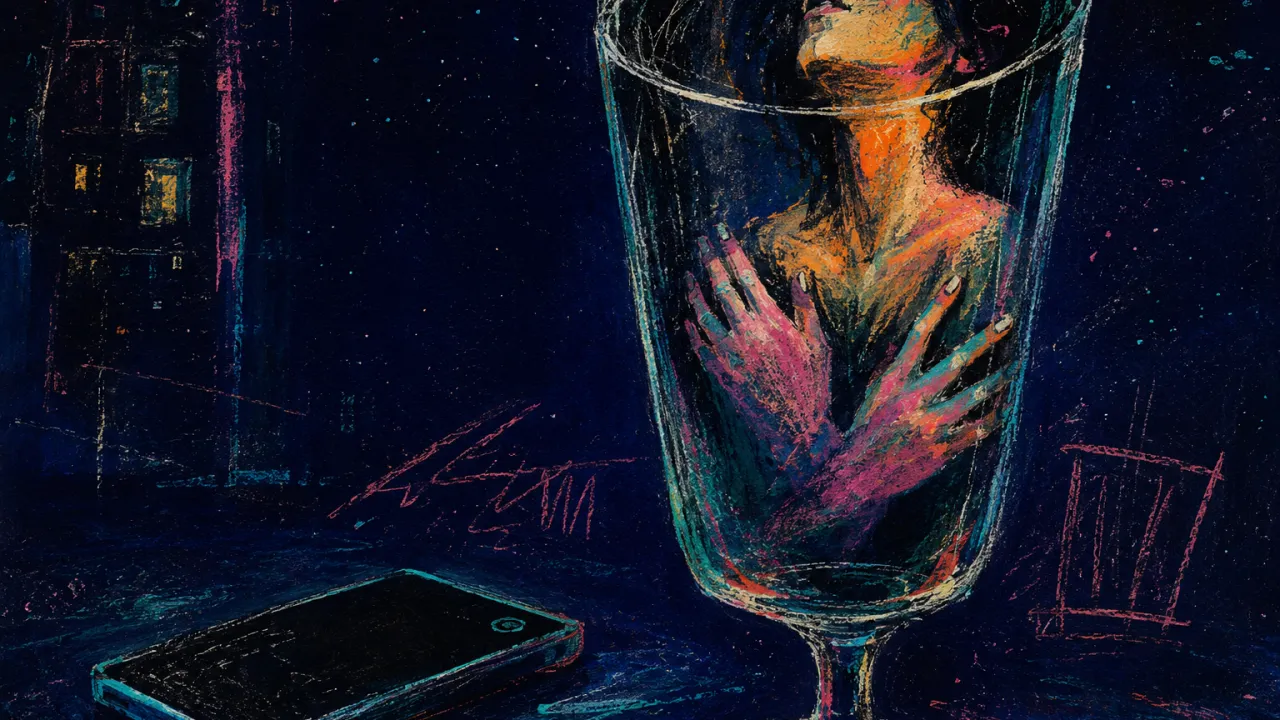
Emotional Containment Strain lives in the gap between looking steady and carrying more feeling than the container of the day can hold. You may recognize it as lifted shoulders after a phone call, a tight throat before a careful answer, or a chest that stays packed after the room goes quiet. From an existential perspective, the structural framework is the cost of becoming the place where feeling is held before it is allowed to move. The Tarot Cards below mirror that vessel, the pressure inside it, and the hands that cannot fully rest.
Page of Cups ReversedThe Page's cup is held steadily, almost ceremonially, while the fish inside it makes the vessel's limitation impossible to ignore. The pose can look composed from the outside, but the image depends on a quiet act of containment: keeping a living water-creature suspended in a small, polished object. Reversed, this structure becomes the lifestyle habit of making everything look manageable while private emotional and sensory demands are packed into whatever container is available. Your room may be clean enough, your planner may be updated, and your routine may still technically exist, yet the system is carrying more feeling than it was designed to process. Emotional Containment Strain names that hidden pressure inside the architecture of everyday life. The card does not frame the strain as failure; it shows the exact place where composure, duty, and tenderness have been forced into the same small vessel.
Knight of Cups UprightThe knight carries a single cup beside a stream, placing a small vessel against a much larger emotional current. The image is calm, but its structure is exact: one contained offering is being asked to travel through a field of feeling that exceeds the size of the container. In family life, this is the strain of trying to hold the conversation, the apology, the mood, the expectation, and the old wound without letting anything spill. You may appear composed because you have learned how to carry emotional material carefully, but the system around you can still be too wide, too inherited, and too fluid for one person to contain. Emotional Containment Strain names the moment when being steady stops feeling like self-possession and starts becoming a private holding task. The card locates the pressure in the mismatch between the fragile cup in your hand and the family current moving around it.
Queen of Cups UprightThe Queen sits at the water's edge with both hands assigned to one covered chalice. The sea is everywhere, but the object she studies is sealed, elevated, and carefully stabilized rather than poured, shared, or released. That posture gives your inner work a precise shape: feeling is present, but processing it requires constant containment. You are not simply too sensitive; the card shows a system where every private emotion has to be held upright before it can be understood. In introspection, this struggle appears when calm self-awareness becomes another load. The cup does not spill, yet keeping it intact consumes the hands that might otherwise move, reach, or rest.
King of Cups UprightThe king sits upright on a shell throne while the ocean moves on every side, holding the cup as a contained vessel against a field of water too large to fully hold. His body does not fight the waves, but it must stay organized enough to keep the cup, crown, scepter, and throne from becoming overwhelmed by the sea around them. That structure mirrors the pressure of personal growth when emotional regulation becomes the platform everything else depends on. You may be trying to stay mature, calm, and self-aware while your inner life keeps producing more material than your current container can process. The struggle is not that you lack depth or discipline. The card locates the strain in the mismatch between a vast emotional ocean and the narrow vessel you are using to keep yourself functional, making self-mastery feel like continuous containment instead of free movement.
ReversedThe king remains composed while the sea keeps rising and folding around the throne. In the reversed state, that composure becomes less like calm mastery and more like a locked brace: the body has learned to hold still because the surrounding field never fully settles. This is the lifestyle struggle of keeping everything contained until containment becomes the infrastructure. You can keep the calendar moving, answer messages, maintain the home, absorb emotional residue, and appear steady, but the cost is that the system has no clean place to release what it has been holding. The cup and scepter stay in hand as if the tools still work, yet their functions blur into one demand: keep control, keep receiving, keep the surface intact. The card names the point where a composed life starts depending on emotional compression rather than real regulation.
Ace of Pentacles ReversedThe thumb presses the pentacle into a stable hold, and the flat disc stays upright only because the hand keeps managing its angle. The surface looks calm, but the calm depends on continuous muscular precision. You can feel this when emotional regulation becomes a grip rather than a living rhythm. The struggle is not that your feelings are too much; it is that the inner system has learned to keep them upright by holding them so tightly that release starts to feel unsafe.
Four of Pentacles UprightThe central pentacle is pressed against the figure’s chest while both arms form a hard ring around it. His lips are closed, his torso is still, and the object that could circulate has become something held directly over the body’s breathing space. This is the shape of emotional material kept from moving because movement feels like exposure. You may sense that something inside needs to be processed, but the card shows why release can feel so costly: the same grip that protects the feeling also prevents it from becoming breathable.
ReversedThe figure is not only holding the pentacles; he is sealing them against his own body. The arrangement has no visible passage for release, and the hands and feet repeat the same immobilizing function until stillness becomes the only way the system can keep working. In friendship, this image speaks to the role of being the container: the person who receives the venting, remembers the secrets, absorbs the tension, and keeps the peace without letting anything spill. The outside may look stable because you are still sitting upright, but the structure shows a body turned into storage. Four of Pentacles names the strain of containment when friendship gives you too much to hold and too little room to be held back. The issue is not that you care too much; it is that the bond has assigned you a holding function without building a return channel.
Queen of Pentacles UprightThe Queen sits in a living garden, but her body is held in formal stillness while both hands contain the pentacle in her lap. The card does not show emotional overflow; it shows containment that has become skillful, elegant, and quietly demanding. That visual tension maps closely to inner work where everything has to be held with care before it is allowed to move. You may know exactly what you are carrying, but the holding itself becomes the strain: the mood, the memory, the self-protection, and the need to stay composed are all gathered into one private object of attention. The garden around her matters because the inner world is not empty; it is full of signals, growth, tenderness, and unfinished movement. Emotional Containment Strain names the moment when your inner life is not chaotic because nothing is there, but because too much is being carefully kept in place.
King of Pentacles UprightThe King reclines in a posture of ease, but his hands and foot keep the scepter, pentacle, and conquered animal fixed in place. The image does not show collapse; it shows a body that has learned to make constant holding look comfortable. That is why this card can mirror the friend who becomes the emotional infrastructure of the group. You may look calm, available, and capable, but the hidden armor under the robe shows that steadiness can require continuous bracing. In friendship, Emotional Containment Strain appears when people come to you because you seem resourced, not because they are tracking the weight you carry. The struggle is not generosity itself; it is the gap between being trusted as a safe container and being treated as if the container does not need refilling.
Two of Swords UprightThe figure's forearms cross directly over the chest, and the swords extend that gesture into a hard steel barrier. Soft fabric, skin, and the heart area sit behind a structure built from pressure, balance, and restraint. That arrangement gives Emotional Containment Strain its physical logic. You may be holding your inner world together by keeping feeling behind a controlled front, but the same barrier that protects the heart also keeps the emotional sea from being processed. The water behind her is calm, yet it is still behind her. In this struggle, composure is not emptiness; it is an active load on the body, a sustained effort to keep the tide from touching the place that most needs relief.
Three of Swords UprightThe heart is not held by hands, protected by a body, or placed inside a room. It is exposed in gray rain while the blades remain fixed, so the image gives emotion movement in the background but no visible container around the wound. That is the pressure point for introspection: feelings can surface, spill, and repeat without becoming held in a structure that helps them change form. You may be able to name what hurts and still feel as if the inner system has nowhere to put it. The card's rain matters because release is present, but containment is missing. Emotional material is not absent; it is too directly exposed, and the struggle is the strain of processing without enough inner architecture to metabolize what has been opened.
Four of Swords UprightThe clasped hands gather all visible action into one small point at the chest. Around that contained gesture, the rest of the body is straight, armored, and silent, while the blades occupy the space that the body cannot reach. Emotional Containment Strain forms when the inner world can hold pressure but cannot circulate it. You may be maintaining composure, staying quiet, or trying to process privately, yet the card shows that containment itself has become a load-bearing structure. The chapel does not offer open movement; it offers enclosure, ritual, and a distant window of color. In introspection, this points to the cost of keeping everything inside long enough that the act of holding becomes heavier than the feeling being held.
ReversedThe figure’s body is so straight and contained that rest begins to resemble preservation. Armor, clasped hands, grey stone, and downward blades turn stillness into a controlled shape, with very little room for spontaneous movement. In a family system, that visual pressure becomes the architecture of emotional containment. You may keep your voice even, your face neutral, and your reactions delayed because showing the full signal would disturb the structure around you. Emotional Containment Strain is the cost of surviving family contact by holding too much inside the body. The card does not frame that containment as weakness; it shows the exact structure that made containment feel necessary and the pressure it creates when it becomes the only available posture.
Six of Swords UprightThe boat sits in open water, but the passengers are not open to the scene around them. Their bodies are enclosed by the vessel, their faces are hidden, and the six swords create a narrow interior wall around the space that carries them. Emotional Containment Strain lives in that contradiction between protection and compression. The psyche has built a controlled vessel so the material can be moved safely, but the same containment reduces contact, visibility, and room to breathe inside the process. In introspection, this card shows why keeping everything composed can become its own form of pressure. You may not be flooded, but you are still enclosed by the structures that make flooding less likely, and the work becomes learning where containment ends and contact begins.
Nine of Swords UprightThe figure sits up in bed with the lower body buried under the quilt, while nine swords press across the head, throat, and heart zones. The body has been forced into wakefulness, but it has not been given a usable channel for motion, speech, or discharge. In a family reading, that structure names the strain of carrying family-triggered pain where it cannot safely be released. You may look functional after the call, visit, or message, but the card shows the impact still trapped in the upper body, turning thought, speech, and feeling into a single pressure field. The black background matters because it removes any wider room around the scene. The struggle is not simply that something hurts; it is that the family system gives the pain nowhere to land except inside you, where containment starts to feel like the only way to keep the peace without disappearing completely.
Queen of Swords UprightThe Queen remains upright and composed while low clouds gather around the hill and the clouded cloak drops all the way to her feet. The body is still, the arms are held in controlled positions, and the emotional weather is present as fabric and atmosphere rather than as visible movement. In inner work, that structure shows the cost of containing too much without giving it a path. You may appear clear, articulate, and steady, but the real strain sits in the continuous muscular work of keeping every feeling organized enough to be allowed in the room.
King of Swords UprightThe King’s upper body holds an active sword while the lower body remains seated and fixed. The card captures a controlled pause where action is present in the hand, but movement through the surrounding space has not begun. That contained posture mirrors the friend who becomes the calm processor for everyone else’s crisis. You can see the pattern, organize the facts, and hold the emotional material, but the relationship may keep placing you in the seat of interpreter instead of letting your own needs enter the field. The crown, throne, and sword all concentrate responsibility into one figure. In a friendship reading, the image names the strain of being treated as the stable one: the person expected to hold the room, make sense of the mess, and stay measured even when reciprocity has thinned out.
ReversedRed warmth is present in the King's clothing, but the blue exterior and stone throne control the surface of the image. The sword is raised, the posture is held, and the body has almost no visible channel for softness to move outward. In social life, that structure becomes the pressure to stay articulate, composed, and reasonable even when the interaction requires warmth, vulnerability, or emotional texture. The person remains legible to the group, but only through the parts of the self that can pass through a narrow filter. Emotional Containment Strain is the cost of keeping feeling controlled enough to remain socially safe. The card does not frame composure as failure; it shows the exact point where composure becomes a container too tight for real connection to circulate.
Nine of Wands ReversedThe white bandage sits on the figure's head while his hands lock the wand across the chest, turning the body into a container for impact that has not fully passed. The face stays alert, the posture stays vertical, and the wound is carried without letting the line of defense drop. In friendship, this is the quiet work of holding hurt, resentment, or depletion inside so the bond can keep functioning. You may still show up, listen, reply, and stabilize the room, while the cost of that containment gathers behind the part of you that looks capable. The card gives form to a strain that is often mistaken for strength. It shows the difference between choosing to support someone and becoming the place where every unprocessed feeling has to be stored.
No cards available for this filter.