One Cue, Whole Verdict?

A clear definition of the rejection scanner, related tarot cards, and reading insights across love, work, and friendship.

Rejection Sensitivity
What is this really?

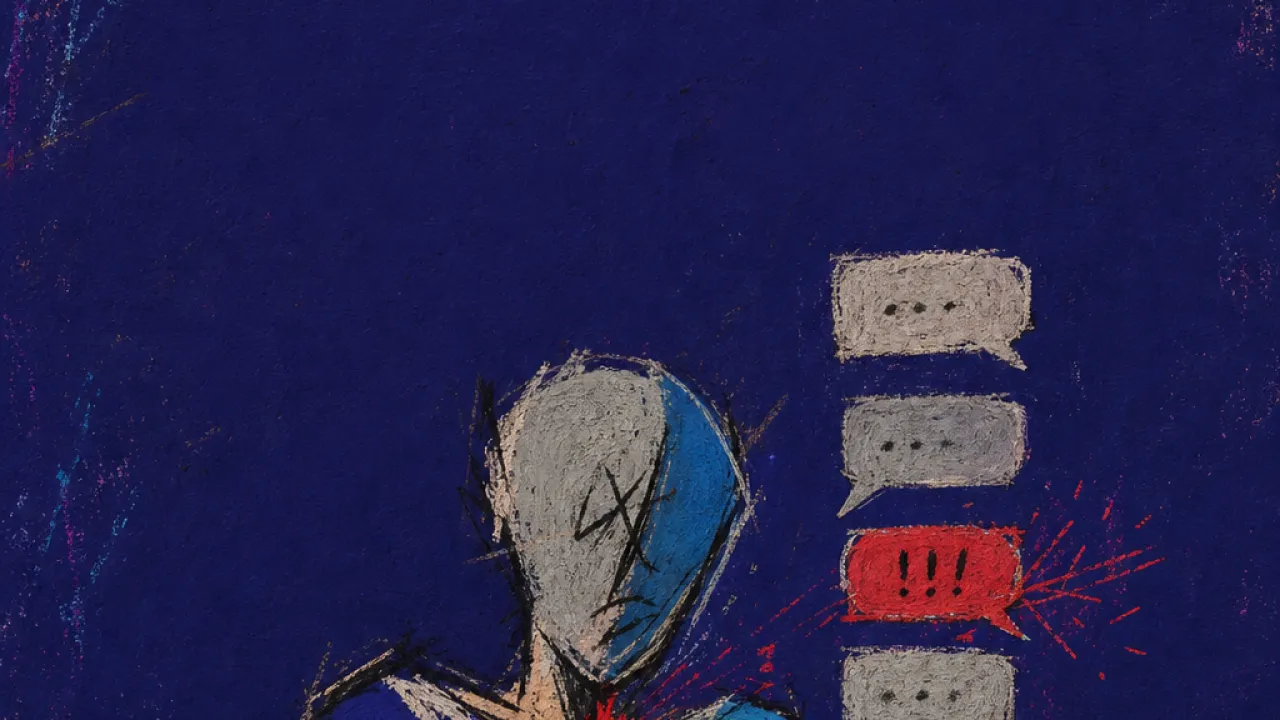
You notice the tiny social glitches first: a delayed reply, a dry text, a missed invite, a Slack message with no emoji, and your cognitive threat filter starts building a confirmation-bias verdict before the full context arrives. Part of you is trying to stay one step ahead of the sting, because if you can spot rejection early, you can pull back, edit your tone, or prepare your face before anyone sees the impact. But the scanner that helps you brace can also shrink the whole room into one painful signal, leaving connection on the edges while the exposed center takes every cue like the red heart in the Three of Swords, pierced before anything has been confirmed.

Why did it happen?

At some point, reading the smallest shift in someone's tone may have helped you stay prepared: you learned to notice the pause before the joke landed, the reply that went colder, the room that changed before anyone named it. Now that old inner pattern can keep running in the background, treating unclear signals as settled answers and leaving you with a tight chest, shallow breathing, or the urge to disappear before the full picture arrives. The subconscious loop is trying to spare you from being caught off guard, but it can also make connection feel like a test you are taking with only half the instructions.

How does it feel?

  • In a group chat, you see three people react to someone else's message while yours sits unanswered; your thumb hovers over the screen, then you type 'lol no worries' and delete it twice. In that pause, your stomach may drop and your breathing can get shallow, like your body has moved before the facts have. You can let the first wave exist without making it decide the whole scene.
  • On a date or with someone you're into, a reply comes back shorter than usual; you reread the period at the end, lock the phone, unlock it, and check the thread again. Afterwards, your chest may feel bare and hot, with a small sting behind the eyes before any tears arrive. Let that sensation have a little room before you answer from it.
  • At work, someone leaves a neutral comment on your doc or sends 'can we tweak this?'; you nod quickly, say 'totally', and keep your smile in place while your cursor stops moving. A tight line can appear across your throat and collarbones, and your hands might feel slightly cold on the keyboard. It is okay for your body to need a beat before the next move.
  • At a party or in a loose friend group, you catch an inside joke you missed; you tilt your head like you got it, take a sip, and shift half a step back from the circle. In the space behind your ribs, there may be a hollow pull, and your jaw might hold the smile a second too long. Not knowing your place for a moment can simply be noticed, not solved on the spot.
  • Alone at night, you replay a conversation and zoom in on one flat tone; your face goes still, your shoulders rise, and you start drafting a casual check-in you may never send. The room can feel too quiet, with a buzz in your skin and a heavy feeling low in your stomach. You can let the unfinished feeling sit beside you without turning it into an immediate answer.

Rejection Sensitivity in Tarot Cards

That stomach drop when your message sits unanswered is the body-level signature of Rejection Sensitivity: one small social cue starts to feel like the whole verdict. From a Jungian perspective, archetypal theory gives this pattern a visual language for the exposed center and the room shrinking around one painful signal. These images reflect the unconscious dynamics beneath the urge to pull back, edit your tone, or brace before context arrives. Below are the Tarot Cards that mirror this pattern.

Five of Cups Reversed
The figure reads the scene from the direction of the fallen cups, while the intact cups and bridge sit outside immediate perception. The landscape contains mixed evidence, but the body is positioned to privilege the signal of loss. Rejection Sensitivity takes that same selective read into social spaces. A delayed reply, a missed invite, or a subtle shift in group energy can land as confirmation before the full context arrives. The pattern is not random insecurity; it is a fast emotional scanner trained to catch exclusion, even when the wider scene still contains connection.
Page of Cups Reversed
The Page's gaze is locked onto the small fish emerging from the cup, while the broad sea and blank sky recede into the background. The whole field of perception condenses around one tiny emotional signal. That narrowed attention is the engine of Rejection Sensitivity. You are not simply noticing social cues; the system is assigning enormous meaning to small, ambiguous movements because the wider field does not feel secure enough to trust. The Page's stillness shows how quickly curiosity can become scanning when belonging feels uncertain. In group chats, social circles, or loose communities, this pattern turns a delayed reply, a quiet tone, or a missed invitation into evidence. The card helps separate actual relational feedback from the inner loop that treats every small signal as a verdict on whether you are wanted.
Five of Pentacles Upright
The figures are outside the lit interior, separated by a wall that makes warmth visible but not directly reachable. Their eyes and bodies turn away before any approach happens, so the scene holds both a possible refuge and a pre-emptive refusal of contact. That is the social logic of Rejection Sensitivity: the system reacts to the possibility of exclusion as if exclusion has already happened. You may read a quiet group chat, an inside joke, or a delayed invitation as proof that you are unwanted, then pull back to avoid the humiliation of asking. The card's cold street externalizes the cost: protection from rejection can start to feel identical to isolation.
Three of Swords Upright
The heart is not protected by a body, a hand, or even a frame. It is the whole subject of the card, exposed in the open air while the swords meet exactly where vulnerability would be hardest to tolerate. Rejection Sensitivity grows from that kind of exposed center. In friendship, small shifts in tone, invitations, response time, or group energy can feel like direct evidence that your place in the bond is no longer secure. The card does not shame that sensitivity; it shows why it feels so immediate. When the emotional organ is already uncovered, every social signal arrives close to the vital point, and the mind begins scanning for impact before the full relational picture is visible.
Reversed
The heart in the Three of Swords has no body around it, no ribs, no hands, and no protective frame. It is pure exposed sensitivity placed in open grey space, where every blade can reach the center without resistance. Rejection Sensitivity grows from that same lack of internal buffering. In academic life, a short email, a crossed-out sentence, a quiet seminar room, or a tutor's neutral expression can feel like direct evidence of disapproval because the system has no pause between signal and wound. The pattern is not weakness; it is an overactive threat-reading structure built around evaluation. The card makes that structure visible by showing a heart with no filter between external contact and internal impact.
Four of Swords Reversed
The sword tips above the knight line up with the head, throat, and chest, turning the resting body into a target zone. The warm stained-glass image of connection remains nearby but separate, so the visual field holds two realities at once: the wish for belonging and the expectation of impact. Rejection Sensitivity forms when ambiguous social cues are filtered through that threat line. You may read a delayed reply, a quieter tone, or a shift in group energy as evidence that exclusion is already coming. The card does not frame that sensitivity as weakness; it shows a nervous system trying to protect connection by monitoring the exact places where social pain would land.
Eight of Swords Reversed
The castle in the distance gives the card a painful social geometry: safety and belonging are visible, but the body remains stranded in the exposed foreground. The woman is not only restricted; she is restricted while seeing the suggestion of a more secure place beyond her current field. Rejection Sensitivity grows from that split between desired belonging and expected threat. You scan the group for signs of being unwanted because the social field feels unstable before anyone has clearly pushed you out. The Eight of Swords makes the sensitivity concrete through the blindfold, the bindings, and the open-but-feared perimeter. In social tarot, it names the exhausting loop where you brace for exclusion, tighten your behavior, and then experience the resulting distance as confirmation that you never belonged.
Nine of Swords Upright
The woman is alone in a dark room, half-covered by the quilt, with the swords passing over and through the space of her head and heart. Nothing in the image shows the group itself, yet the body is already reacting as if judgment has reached her. That is the core texture of Rejection Sensitivity in social life. A small shift in tone, a missed invite, or a cold reply can land in the nervous system as if exclusion has already happened. The threat is not only social loss; it is the speed with which ambiguity becomes felt certainty. The card does not frame this as weakness. It shows a system trying to protect belonging by detecting danger early, but the detection system has become so sharp that it wounds before reality has been confirmed.
Reversed
The covered face cuts the figure off from direct perception, while the swords dominate the field as if threat is the only available information. The black background removes ordinary context, so the fear appears bigger than the event that may have triggered it. Rejection Sensitivity takes that visual structure into friendship. A slow reply, a quieter tone, or a friend spending time with someone else can land as proof of social danger before the relationship has been reality-checked. This pattern is not a character flaw. It is an overactive relational alarm trying to protect you from being blindsided, but its speed can make ambiguous friendship signals feel like confirmed abandonment.
Page of Swords Reversed
The Page turns his face away from the sword's direction, as if the body cannot decide where the real social risk is coming from. The clouds crowd the sky, the ground is uneven, and the figure stands alone with a weapon raised before any clear threat has arrived. That posture turns ambiguity into an alarm. Rejection Sensitivity forms when the nervous system treats small social shifts as early evidence of exclusion, using rapid interpretation to avoid the pain of being caught unprepared. In group settings, this can make a delayed reply, a changed tone, or a missing invitation feel larger than the fact itself. You are not inventing the need to belong; the pattern is overfiring because belonging feels conditional, unstable, and easy to lose.
Queen of Swords Reversed
Low clouds gather around the throne while the Queen's gaze fixes outward and the lone bird marks a far point in the sky. The scene creates a body on alert inside a wide, quiet field, scanning distance for a signal that may or may not be there. In social circles, this pattern converts ambiguity into evidence. A delayed reply, a changed tone, or a group plan you heard about late can feel like a verdict on your place, so the mind starts reading the room before the room has actually spoken.
Seven of Wands Reversed
Six wands point upward from unseen hands, so the source of pressure is real in shape but vague in identity. The young man's focused, slightly tense expression has to respond before he can fully know who is behind the challenge. Rejection Sensitivity forms in that ambiguity. You may read delayed replies, private jokes, shifted tone, or group chat silence as evidence that the circle is turning against you, because the mind tries to identify the attacker before the facts are complete. The card makes the mechanism visible without turning it into a flaw. The nervous system is trying to protect belonging, but when every faceless signal becomes a wand, social uncertainty turns into proof of exclusion before anyone has actually named a boundary.
Nine of Wands Reversed
The white bandage on the figure's head is impossible to ignore, and his gaze does not rest on the open landscape; it stays angled toward the possibility of another approach. His body is not simply standing near the fence, but helping complete it. In a reversed social reading, the old wound starts organizing the present before the present has spoken clearly. A quiet room, an inside joke, or a plan You heard about late can land as confirmation that You are being pushed out, even when the evidence is incomplete. Rejection Sensitivity emerges from this card because the protective system has become too fast for reality testing. It tries to spare You from being blindsided, but it can make social belonging feel like a constant trial where every ambiguous cue is cross-examined for proof of exclusion.

Rejection Sensitivity in Tarot Card Reading Insights

For anyone who has turned a dry text, missed invite, or quiet group chat into a verdict, others have brought the same pattern into readings. The cards show up differently when the question is about love, work, friendship, or belonging. Below are Tarot Reading Insights that speak to this pattern.
Psychological patterns related to Rejection Sensitivity