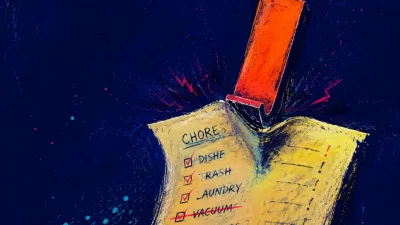
When did fairness become a ledger?

A clear audit of the ledger habit, the tarot cards that mirror it, and reading insights connected to the pattern.

Energy Scorekeeping
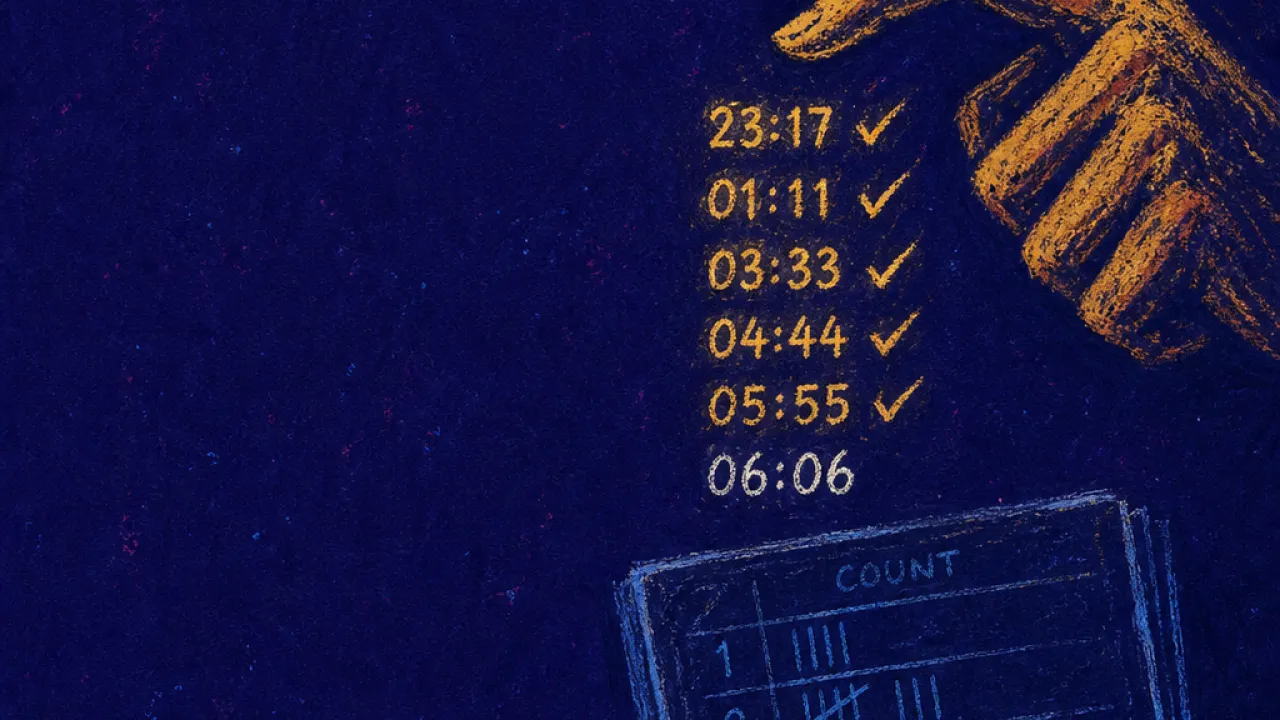
What is this really?

You quietly turn daily effort into a private ledger: who texted first, who cooked, who stayed late, who listened, who spent money, who got rest, who gave more. The defense mechanism makes sense: it protects your time, attention, and boundaries from being drained without reciprocity, especially when direct asking has felt too exposing. But the fairness audit can become a cognitive loop where your body cannot relax until the numbers feel even, so the exchange you wanted to protect starts feeling less like contact and more like the reversed Two of Cups, where matched cups harden into a measuring line between two people.

Why did it happen?

At some point, counting may have helped you stay oriented when effort disappeared into the room: you could notice who showed up, who took more, and where your body began to tighten. Now the same inner pattern can keep the calculator running after the moment has passed, so a text delay, an unwashed plate, or a skipped thank-you starts pulling your attention back to the ledger. The subconscious loop can feel responsible, but it may leave you mentally overdrawn, with rest and closeness waiting for a balance that never quite lands.

How does it feel?

  • In a chat thread, you scroll back with your thumb hovering over old timestamps, checking who last initiated and whether your reply was longer. The check may come with a small pull behind your eyes and a tightened jaw, like your attention has narrowed to one column; it can be enough to let that pull be present for a moment before you answer it.
  • At work, you nod through a shared win, then glance down at your laptop and quietly note who stayed late, who presented, and who got thanked. Afterward, your shoulders may climb toward your ears and your chest can feel crowded; you can let the tightness register without making it settle the whole equation.
  • At home, you pause by the sink, count the plates with your eyes, and press your tongue against your teeth before picking up someone else's mug. In that pause, there may be heat behind your sternum and a held breath you only notice once the water starts running; that signal can be allowed to exist without becoming the final word on the room.
  • When the group bill lands, you keep your face neutral while your eyes flick between items, tips, and who reached for their card last time. The math may show up as a pinch low in your stomach and a quick tightening around your mouth; it is okay for the squeeze to be information, not a command.
  • On a rest day, you open your planner and tap the pen against boxes for sleep, errands, workouts, and screen time before sitting down. Your breath may get shallow as if ease needs a receipt first; you can let the unfinished boxes stay unfinished while your body catches up.

Energy Scorekeeping in Tarot Cards

That private ledger of who texted, cooked, listened, paid, or rested is the same pattern that shows up as a tightened jaw around the count. From a Jungian perspective, archetypal theory gives that inner audit a visual language without turning it into a verdict. These cards mirror the unconscious dynamics beneath measured reciprocity, where contact starts passing through a balance sheet: Tarot Cards for Energy Scorekeeping.

Two of Cups Reversed
The cups are matched so precisely that the gesture can shift from mutuality into accounting. What begins as equal height and balanced posture can harden into an internal ledger: who offered first, who held more, who failed to return the same amount. In friendship, this pattern appears when unmet reciprocity has no spoken channel, so the nervous system starts doing math. You are not wrong for noticing imbalance, but the reversed Two of Cups shows how silent measurement can replace repair until every interaction becomes evidence in a case neither friend has agreed to hear.
Three of Cups Reversed
The harvest is visible at everyone's feet, but the cups rise into one shared celebration. The card shows a collective result more clearly than it shows the exact distribution of labor behind that result. That ambiguity creates the psychological opening for Energy Scorekeeping. In career settings, You may start keeping a private ledger of effort, credit, thanks, and visibility because shared success feels like it can absorb individual value without accurately reflecting who carried what.
Nine of Cups Upright
The cups are arranged one by one, high enough to be counted. The figure sits before them as if the record is complete, with each cup adding to a visible store of satisfaction. The image makes emotional value look measurable. Energy Scorekeeping follows that same ledger logic. In a family system, care can become a tally: who showed up, who paid, who called, who sacrificed, who owes appreciation. The counting may begin as a bid for fairness, but it can harden into a structure where every exchange carries an invisible invoice. You are not wrong for noticing imbalance. The pattern becomes costly when the inner ledger replaces direct boundary setting, turning family connection into an audit of who has earned warmth and who has fallen behind.
Ace of Pentacles Reversed
The pentacle is not embedded in the hand; it has to be kept upright by pressure, attention, and constant stabilization. The visual tension is subtle but exact: if the grip loosens, the symbol of value could tilt, slip, or fall. Energy Scorekeeping in friendship forms when emotional security depends on tracking every sign of giving and receiving. You may count texts, apologies, payments, favors, and who initiated contact, not because you are petty, but because the relationship field has stopped feeling reliably held.
Two of Pentacles Upright
The two pentacles are tangible tokens, and the figure's gaze locks onto one while the other remains tethered through the infinity cord. The scene turns attention into measurement because each movement has to be tracked before a missed handoff throws the whole pattern off. Energy Scorekeeping grows from that measurable loop. You may start auditing who texts first, who initiates plans, and who gives more because numbers feel safer than social ambiguity, but the card shows how that tracking can keep connection suspended in an endless exchange circuit.
Reversed
The Two of Pentacles binds two separate coins into one repeated circuit, and the figure’s hands keep paying attention to the exchange so the system does not drop. The loop gives the motion a structure that looks balanced, even when the body is doing all the work. Energy Scorekeeping forms in friendship when emotional labor has become measurable because it no longer feels naturally mutual. The mind starts tracking who spent more attention, patience, time, and repair effort because the body already knows the exchange is uneven. The card’s insight is precise: counting is not the original wound; it is the compensation. You count because the friendship has stopped giving your system a felt sense of fair circulation. The audit brings the hidden energy economy back into view.
Four of Pentacles Upright
The four pentacles are positioned like countable units across head, heart, and feet, and the figure's limbs act as auditors that keep each unit in place. The scene turns security into an accounting system, with no visible movement toward the town behind him. Within a support network, this becomes the habit of measuring care through inputs and withdrawals: who listened, who texted, who took up space, who gave back. The pattern is an attempt to protect depleted energy by converting emotional reciprocity into a ledger.
Reversed
The figure's posture looks like accounting made physical: one pentacle under each foot, one held at the chest, one balanced at the crown. Every point of the body is tracking what must be protected, and the scene offers almost no sign of exchange or replenishment. Reversed, this turns conservation into a mental ledger. The psyche keeps counting effort, rest, money, time, and return, but the act of tracking becomes another drain on the very energy it is meant to protect. Energy Scorekeeping appears when You start living inside the audit instead of using it. In lifestyle terms, the pattern can make every routine, request, purchase, workout, or recovery block feel like a transaction that must justify itself before the nervous system allows any ease.
Six of Pentacles Upright
The benefactor's two hands divide the scene into an exact psychological ledger: one hand releases coins, while the other keeps the scales visible. Giving is not spontaneous here; it is measured, witnessed, and regulated through a tool of comparison. The falling coins become less about generosity alone and more about the mind's need to quantify what is owed, earned, or deserved. In an introspective reading, that visual structure mirrors the way inner care can become conditional. You may notice yourself tracking whether you have worked hard enough to rest, suffered enough to ask for softness, or behaved well enough to receive compassion. The pattern is not simple selfishness or simple fairness; it is a coping mechanism that tries to create safety by turning emotional energy into an accountable balance sheet. Energy Scorekeeping becomes costly when the audit never ends. The card shows that resources are available, but access still passes through the scales, which means relief can remain psychologically delayed even when nothing external is blocking it. Seeing this pattern clearly helps separate genuine discernment from the compulsive need to prove that every inner need has been earned.
Reversed
The scales make the exchange countable, and the coins make the count visible. In the reversed texture of the image, measurement can harden into a ledger where every unit of effort asks whether the return was fair enough. Energy Scorekeeping appears in academic life when hours studied, grades received, feedback given, and recognition withheld become a running internal account. The pattern can protect you from wasting energy, but it can also make learning feel impossible unless the system first proves that every effort will pay back cleanly.
Seven of Pentacles Upright
The cultivator's eyes stay fixed on the pentacles while one harvested coin sits at the feet and six remain on the vine. Nothing in the body is celebrating; the hoe becomes a support for a private audit of effort, timing, and return. In social life, that visual ledger becomes the Energy Scorekeeping pattern. You may keep measuring texts, invites, favors, emotional labor, and silence as if every interaction has to prove whether the connection has paid back what you invested. The pattern is not coldness; it is a defense against wasting energy in circles where reciprocity has been unclear.
Reversed
The seven pentacles are visually countable: six on the vine, one at the feet, each fruit turned into a unit of measurable return. The figure's gaze stays on the ledger-like crop instead of on the open field around it. Energy Scorekeeping appears when family care becomes internally tallied because direct limits feel too risky. You may count visits, favors, messages, money, and emotional labor as evidence that the imbalance is real. The card links the counting to a deeper boundary problem: the ledger is trying to say what the mouth has not been allowed to say.
Eight of Pentacles Reversed
The line of pentacles makes effort visible, almost countable. In the reversed state, the ordered display no longer reads as simple progress; it starts to feel like a ledger where every strike, every finished piece, and every remaining task becomes evidence of who has done more. Energy Scorekeeping forms when friendship no longer feels emotionally reliable enough to trust without measurement. You begin tracking texts, favors, invitations, listening time, apologies, and crises because the bond has stopped giving You a felt sense of mutual care. The Eight of Pentacles makes this pattern precise because the card is built from repeated work and visible output. It reveals the cost of turning connection into proof: the friendship may still function, but warmth gets replaced by an internal audit of unpaid effort.
Nine of Pentacles Reversed
The nine pentacles hang like counted fruit, and the woman's hand rests on them as if touching the evidence of what has been cultivated. In the reversed field, that gesture becomes less like appreciation and more like repeated checking, where every visible return has to justify the energy spent tending the garden. That visual loop mirrors Energy Scorekeeping in friendship. You may start tracking who initiates, who listens, who remembers, who cancels, and who only appears when they need something. The pattern can begin as a legitimate reciprocity audit, but it turns costly when the inner ledger keeps running even after the friendship itself has stopped feeling alive.
Knight of Pentacles Reversed
The pentacle is held like a value marker in front of the rider, and the surrounding field looks like something that must be worked before it yields. The gaze moves through that coin-shaped filter, so the landscape is not just seen; it is evaluated. Energy Scorekeeping appears when social life starts passing through that same accounting system. The pattern tracks who initiated, who reciprocated, who drained the room, and who made the effort worth it, until belonging becomes a ledger instead of a living exchange. The card captures how a reasonable need for reciprocity can harden into constant internal calculation when You are trying not to waste your limited energy.
Queen of Pentacles Reversed
The pentacle sits directly under the Queen's gaze, turning value into the central point of attention. Reversed, that focus can harden into monitoring, where the hand-held symbol becomes less like nourishment and more like a private accounting object. That is why Energy Scorekeeping fits the card's social shadow. You begin reading invitations, replies, favors, and attention as proof of your place in the group, and the ledger replaces the felt experience of connection.
King of Pentacles Reversed
The King's grip on the scepter and pentacle creates a closed accounting posture: one hand secures authority, the other secures value. The throne, armor, and castle reinforce a world where nothing important is left unguarded or unmeasured. Reversed, that same stewardship can become an internal ledger. The psyche keeps trying to protect itself from being used, but the protection turns into constant counting: who showed up, who gave less, who owed more, who failed the unspoken standard. In friendship, Energy Scorekeeping appears when You can no longer feel the bond without calculating its balance sheet. The card reveals why the habit is understandable after uneven care, while also showing how the counting can replace direct boundary-setting with quiet resentment.
Five of Swords Upright
The card’s attention gathers around the swords the foreground figure has collected, while the emotional cost is pushed into the distance through the bowed figures and bleak shoreline. What has been gained is easy to count; what has been depleted is harder to integrate. That is the visual grammar of Energy Scorekeeping. You may track daily life as a ledger of effort, sacrifice, owed rest, unfinished chores, and proof that you have done enough to deserve relief. The scoring system creates a sense of justice, but it also keeps the body locked in negotiation with itself. Five of Swords sharpens the pattern because the apparent win is inseparable from the aftermath. In lifestyle architecture, the question is not only how much energy was spent, but what kind of inner economy made every expenditure feel like a debt that has to be defended.
Ace of Wands Reversed
The sprouting wand looks like a living resource, but the falling leaves show that every activation releases something from it. Beneath the hand, the river suggests emotional flow, yet the grip above it can turn that flow into something held, counted, and claimed. In friendship, Energy Scorekeeping starts when support stops feeling like movement and becomes an internal ledger of who texted first, who listened longer, and who owes repair. The card's reversed tension shows how real effort can harden into invisible debt when Your vitality keeps leaving the branch without a felt return.
Five of Wands Upright
Every wand is active, but none becomes a bridge. The repeated upward gestures create effort without containment, as if each person is proving contribution while the group still lacks a shared structure for receiving it. That is the mechanism behind Energy Scorekeeping in friendship. Care becomes tracked through effort, availability, memory, money, initiation, and emotional labor, while the deeper question of mutual willingness remains unspoken. The card's crowded movement shows why the ledger feels compelling: when no one can tell whether the exchange is balanced, the mind starts counting. You may be trying to protect fairness, but the pattern can make the friendship feel like a running audit instead of a reciprocal bond.

Energy Scorekeeping in Tarot Card Reading Insights

That private ledger of who texted, cooked, listened, paid, or rested also appears when others bring this pattern into readings. The shift here is from the cards themselves to how the same measuring habit can surface in a spread. Below are Tarot Reading Insights connected to this pattern.
Psychological patterns related to Energy Scorekeeping