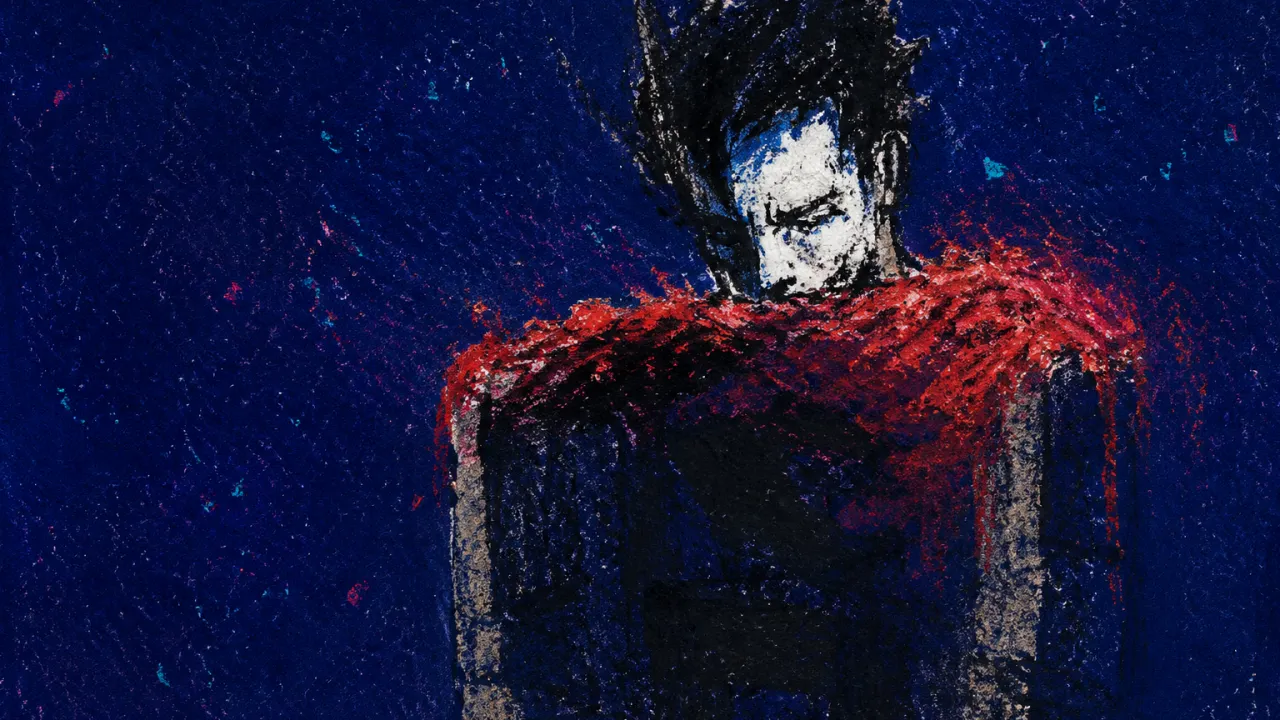
The heaviness of Discipline Fatigue can feel like sitting inside a routine that still stands while your body quietly runs out of ease. That tight, braced feeling in your chest and shoulders gives the emotion a physical shape: upright, capable, and tired at the same time. This is a universal emotional experience, one where structure can be understood as both support and weight. The Tarot Cards below mirror the places where discipline, responsibility, and self-management start to press harder than they restore.
The Emperor UprightThe stone throne gives The Emperor status, but it offers almost no comfort. His armor stays beneath the robe, the feet remain ready, and the hidden stream is visible only at the edges because the seat blocks its passage. That physical arrangement captures the cost of being constantly organized in study. You may have the plan, the timetable, the citations, and the discipline, yet the part of you that wants contact with curiosity is squeezed into the margins. Discipline Fatigue belongs to this card because The Emperor shows structure as both support and load. In academic life, the same system that keeps you functioning can start to feel like a chair you cannot get out of.
ReversedThe Emperor sits ready to rise, armored beneath heavy robes, on a throne that offers status but not comfort. Even the red field around him feels like heat that never fully leaves the body. Discipline Fatigue names the point where self-improvement has become constant readiness. You are still showing up, still holding the line, but the structure is taking more energy than it returns.
The Hierophant ReversedThe heavy crown, rigid throne, fixed hand gesture, kneeling acolytes, and stone interior make the body feel held in ceremony for too long. Even the roses and lilies appear as embroidered signs rather than living growth. Discipline Fatigue arises when structure stops feeling like support and starts feeling like constant compliance. In lifestyle terms, the card mirrors the exhaustion of turning every meal, workout, sleep window, cleaning task, and habit reset into proof that you are managing life correctly. The Hierophant does not make discipline look useless; it makes the emotional cost of over-ritualized discipline visible. You can see the moment when a system meant to guide your day begins taking energy from the very life it was supposed to protect.
The Lovers ReversedThe Tree of Life carries repeated fruits like time markers, while the figures remain still in front of a mountain that gives the scene pressure but no visible route. The body is present, the cycles are present, and yet movement has not begun. Discipline Fatigue appears when routine stops feeling like a chosen rhythm and starts feeling like one more object to maintain. For lifestyle work, The Lovers asks whether the habit system is still connected to desire, because a daily blueprint without felt consent eventually turns self-improvement into a weight the body no longer wants to lift.
The Chariot ReversedThe armor covers the charioteer in layers, and the lower body disappears behind the square body of the vehicle. The figure looks ready for motion, but the chariot itself is still, as if all the effort has been concentrated into holding the posture. In lifestyle readings, this visual field speaks to the exhaustion that comes from turning every part of life into something that must be governed. Sleep, food, exercise, chores, work, and recovery can start to feel like a campaign you are always responsible for commanding. Discipline Fatigue is not laziness hiding under a nicer name. The reversed Chariot reflects the body-level weariness of living inside too much enforcement, where even good habits begin to feel like armor you cannot take off.
Strength ReversedThe woman's lowered posture is active, but it is also held. Her body stays in the work of regulation while the lion's force, the floral loop, and the distant mountain keep the whole scene suspended in effort. Discipline Fatigue emerges when that held posture becomes the emotional baseline. The body is not collapsing dramatically; it is simply tired from staying responsible for every channel of force. For lifestyle tarot, this speaks to the quiet cost of always maintaining the system. Meal planning, sleep hygiene, inboxes, laundry, errands, and health routines can become a single extended taming gesture, and the card helps name the weariness that appears when discipline stops feeling alive and starts feeling endless.
The Hermit ReversedThe fixed elbow, heavy robe, and staff-bearing stance can make the same summit feel less like mastery and more like endurance. The figure remains upright, but the body seems to pay for that uprightness through locked joints and weight carried through the staff. Discipline Fatigue shows up when your lifestyle structure has become another load instead of a source of support. You may still be keeping the schedule, maintaining the room, tracking the habits, and showing up on time, while the inner weather says the system is taking more energy than it returns.
The Hanged Man ReversedThe T-shaped tree is straight, centered, and orderly, while the body attached to it is arranged in an unnatural suspension. The rope is precise, the structure is stable, and yet the figure’s own agency is narrowed to endurance rather than motion. Discipline Fatigue appears when lifestyle order begins to feel like that rope. The planner, routine, habit tracker, cleaning system, workout schedule, or sleep rule may still be rational, but emotionally it starts asking the body to maintain a position it can no longer inhabit with ease. This card reveals the cost of structure without renewal. It does not reject discipline; it shows the point where discipline has stopped feeling like support and started feeling like another demand on an already suspended system.
Death ReversedThe fallen emperor's crown and scepter sit apart from his body while the skeletal rider's armor remains rigid and intact. Authority, order, and command are still present in the image, but the human figure who tried to hold them has dropped below the force of the system. Discipline Fatigue in lifestyle readings comes from living as if every part of the day must be managed by iron. Sleep, food, work, cleaning, fitness, and self-improvement all become another plate of armor, until discipline stops feeling stabilizing and starts feeling like weight. The card reveals the cost of relying on control after control has lost its living center. It gives you a mirror for the exhaustion underneath the schedule, so the next structure can be designed around real energy instead of punishment.
Temperance ReversedThe liquid keeps moving from one cup to another, yet the image never shows a final landing place. Behind the angel, the road continues toward a far-off light, stretching effort into a long horizon rather than a quick reward. Discipline Fatigue lives inside that endless transfer. For lifestyle questions, the card reflects the emotional wear of repeatedly resetting routines, tracking progress, and doing the responsible thing while the body still waits to feel replenished.
The Star ReversedThe fixed kneel, the lowered head, and the two working arms make the scene feel like a ritual held past its natural endpoint. The body stays in position while the vessels continue to empty, turning steadiness into sustained effort. Discipline Fatigue emerges when daily structure becomes something You keep performing after its original nourishment has thinned out. The card shows the emotional cost of holding routines together through force when the system has not been allowed to refill.
Judgement ReversedThe bodies in Judgement rise because a call has reached them, yet the scene does not look physically easy. Pale figures lift themselves from inert containers, surrounded by cold terrain and unstable, water-like ground. In lifestyle terms, that stiffness becomes the tiredness of having to rebuild discipline yet again. The wake-up call is clear, but the body remembers every previous reset, every abandoned routine, and every structure that demanded energy before giving anything back. Discipline Fatigue fits the reversed card because the issue is not a lack of awareness. The signal has arrived; the cost is that responding to it requires one more act of self-organization from a system that already feels overdrawn.
Three of Pentacles ReversedThe renovation is still preparatory, with the pentacles set above a task that has not reached completion. The tool is ready, the plan is present, and the structure is demanding continuity before it has offered much return. Discipline Fatigue is the weariness of carrying a routine through the unglamorous middle. You keep showing up for the system, but the visible reward lags behind the energy required to maintain it. The card's reversed structure captures the point where discipline stops feeling clean and starts feeling extractive. Your life may have a blueprint, but the body is asking whether the build can become nourishing instead of only correct.
Five of Pentacles UprightThe left figure does keep walking, but the movement is uneven: one foot is wrapped, one hand is locked around a crutch, and the body has to negotiate snow with every step. The card does not show clean momentum; it shows forward motion built out of compensation. Discipline Fatigue fits this image because the daily structure is still moving while its support system is visibly inadequate. You may be maintaining routines, chores, health habits, and work obligations, but the felt cost is the sense that discipline has become a weather condition you have to endure rather than a rhythm that carries you.
Seven of Pentacles ReversedThe hoe props up the worker as much as it helps the work. The same tool that made cultivation possible now carries the body's weight, and the garden narrows around a single demanding plant. That visual load translates into fatigue around maintenance. You are not simply tired of one task; you are tired of being held inside a system that needs constant tending before it gives you enough energy back.
Eight of Pentacles ReversedStraddling the bench, repeating the same hammer-and-chisel motion, the figure is surrounded by coins that turn effort into units. The visual order is useful, but it also makes the body look tethered to a cycle of output, one piece after another. In academic life, Discipline Fatigue is the drained feeling that comes when revision schedules, readings, and practice sets keep asking for consistency after the inner spark has thinned out. The card gives that tired steadiness a shape, showing a system that still functions while the person inside it has very little softness left.
Page of Pentacles ReversedThe Page holds the pentacle carefully, but the raised posture also carries the physical cost of maintaining attention over time. Around him the field is green and open, while the mountains remain distant, stretching the sense of effort across a long road rather than a quick result. Discipline Fatigue arises when the lifestyle system asks for repeated care before it gives back visible relief. The sleep routine, meal plan, budget, cleaning rhythm, or health structure may be good in principle, but the body can still register the strain of holding it up every day. The reversed Page makes that strain visible without turning it into failure. It shows the emotional heaviness of early maintenance, when discipline is still mostly effort and has not yet become a source of ease.
Knight of Pentacles ReversedThe knight's armor, saddle, reins, cloak, gloves, and horse all add weight to a body that is not currently moving. What once looked like preparation now feels densely layered, as if every part of the system has become another thing to carry. Discipline Fatigue appears when structure remains intact but stops feeling breathable. You may still have the routine, the plan, and the self-control, yet the method starts pressing against the inner body instead of helping it move. The reversed Knight of Pentacles captures this because its burden is not chaotic; it is orderly, durable, and exhausting. The card names the tiredness that comes from being too well-armored inside your own growth strategy.
Six of Swords ReversedThe long oar, the staggered feet, and the loaded boat turn forward movement into visible effort. The ferryman is not drifting; the passage requires leverage, stance, and repeated force against the water. Discipline Fatigue surfaces when your lifestyle rules have stopped feeling supportive and started feeling like cargo. The routines meant to carry you through work, sleep, food, movement, and home care may still be logical, but they demand so much maintenance that the body reads them as another workload. The reversed texture of this card holds the emotional cost of self-management without turning it into failure. You can be committed to structure and still feel worn down by the amount of structure required to keep ordinary life moving.
King of Swords ReversedThe raised sword and stern face make discipline visible as a bodily act. The King is not merely sitting; he is maintaining a standard, holding a verdict, and keeping the body arranged around a principle. In reversal, that same posture turns into the inner weather of Discipline Fatigue. A lifestyle system built on consistency, restraint, and self-command can become emotionally costly when every ordinary need has to pass through the judge first. The barren mound matters here because it shows structure without much replenishment. You may still be doing the routine, but the card names the exhausted feeling of being governed by standards that no longer return enough life force.
Nine of Wands UprightThe figure is still standing, and every wand is still planted in the ground, but the scene does not feel light or fluid. The body leans on the staff as if structure is present, yet every part of that structure has to be held with effort. That is the emotional logic of Discipline Fatigue in a lifestyle context. The routines may be correct, the habits may be sensible, and the plan may even be working on paper, but the body reads the whole arrangement as another weight to keep upright. The Nine of Wands does not romanticize discipline as endless toughness. It shows the exact moment where consistency remains intact while the person maintaining it has started to run low on usable ease.
Ten of Wands UprightThe man's steps are still moving toward the building, but nothing about the body looks effortless. His chest is compressed, his back is pitched forward, and the wands stay lifted through the whole movement. That rhythm captures the specific tiredness that comes from staying consistent past the point where consistency feels alive. In a personal growth cycle, the routine may still be technically working, but You can feel the difference between grounded discipline and a discipline system that has started to drain the person carrying it. Discipline Fatigue is the emotional weather of continuing because the structure exists, not because the body has recovered its own rhythm. The card gives that tiredness a shape: progress is happening, but the carrier is paying for it in breath, posture, and inner bandwidth.
No cards available for this filter.